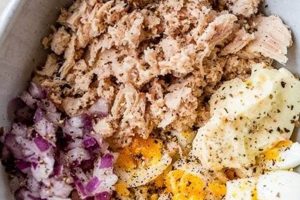
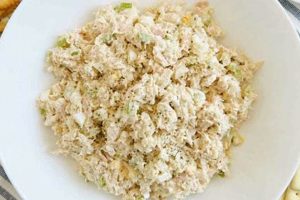
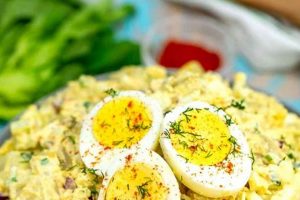
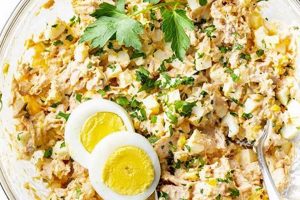
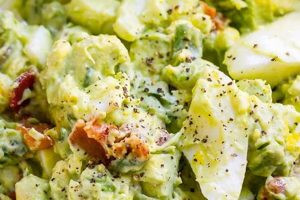
Egg salad takes a flavorful turn with Eastern influences. Typically, this variation incorporates ingredients like soy sauce, sesame oil, rice vinegar, ginger, scallions, and often chili garlic sauce, creating a savory and umami-rich profile distinct from traditional mayonnaise-based versions. One might encounter additions such as seaweed, sriracha, or chopped cilantro for further depth and complexity. This dish can be enjoyed as a sandwich filling, a topping for crackers or rice cakes, or served as part of a larger meal.
The fusion of familiar comfort food with vibrant Asian flavors offers a unique culinary experience. This approach provides a lighter, more refreshing alternative to classic egg salad, often perceived as heavy. The inclusion of fresh herbs and spices also contributes potential health benefits through antioxidants and anti-inflammatory properties. While the precise origins are difficult to pinpoint, the dish likely reflects the increasing globalization of food and the growing popularity of fusion cuisine, offering a delicious example of culinary cross-pollination.
This exploration of egg salad’s Asian-inspired interpretations will cover variations in ingredients, preparation techniques, and serving suggestions, offering a comprehensive guide to creating this delectable dish.
Tips for Crafting Exceptional Asian-Inspired Egg Salad
Elevating egg salad with Asian flavors requires attention to detail and a balance of ingredients. These tips offer guidance for achieving optimal results.
Tip 1: Egg Cooking Technique: Perfectly cooked eggs are essential. Aim for a firm yet creamy yolk. Overcooked yolks can result in a dry, crumbly texture. Steaming or gently boiling eggs ensures even cooking and prevents the yolks from turning green.
Tip 2: Balancing Flavors: The hallmark of Asian-inspired cuisine lies in the harmonious blend of sweet, sour, salty, and umami. Use quality soy sauce, rice vinegar, and sesame oil, adjusting proportions to achieve the desired balance.
Tip 3: Fresh Ingredients: Freshly grated ginger and finely chopped scallions enhance the vibrant flavors. Wilted or dried herbs can detract from the overall quality.
Tip 4: Spice Level Control: Chili garlic sauce provides a welcome kick. Start with a small amount and gradually increase to suit individual preferences. Incorporating finely diced fresh chilies offers an alternative approach to heat management.
Tip 5: Texture Considerations: Achieving the desired texture depends on the intended use. For sandwich fillings, a slightly coarser chop works well. Finely minced ingredients are preferable when serving the salad as a dip or topping.
Tip 6: Ingredient Exploration: Experiment with additions such as toasted sesame seeds, chopped water chestnuts, or shredded nori for added texture and nuanced flavors.
Tip 7: Chill and Serve: Allowing the salad to chill for at least 30 minutes allows the flavors to meld and deepen. This also enhances the overall dining experience.
By following these tips, one can consistently create a flavorful and well-balanced Asian-inspired egg salad. Attention to detail and quality ingredients ensure a delightful culinary experience.
This exploration concludes with suggestions for incorporating this versatile dish into various meal settings.
1. Hard-boiled Eggs

Hard-boiled eggs constitute the foundational element of Asian egg salad. The preparation method significantly influences the final dish’s texture and flavor. Overcooked yolks become dry and crumbly, detracting from the desired creamy consistency. Properly cooked yolks, achieved through methods like steaming or brief boiling, retain moisture and contribute a rich, smooth texture crucial for a successful egg salad. This careful approach to egg preparation highlights the importance of seemingly basic components in achieving a superior culinary outcome. Consider a scenario where overcooked, dry yolks are used; the resulting salad becomes less cohesive and lacks the desired creaminess, impacting overall palatability.
The structural integrity of hard-boiled eggs also plays a critical role. Intact egg whites provide textural contrast and visual appeal within the salad. Roughly chopped whites distribute more evenly throughout the mixture, whereas larger pieces offer distinct textural variation. The degree of chopping influences how the egg interacts with the other ingredients and contributes to the overall sensory experience. For instance, finely chopped egg whites create a smoother, more uniform salad, while coarsely chopped whites offer a more substantial bite.
The interplay between correctly cooked yolks and appropriately chopped whites underscores the significance of hard-boiled eggs within the Asian egg salad context. Attention to these details ensures a balanced, flavorful, and texturally appealing dish. Neglecting these fundamental aspects compromises the overall quality and diminishes the culinary experience. Mastering this seemingly simple component ultimately contributes to a more satisfying and successful Asian egg salad.
2. Mayonnaise (optional)
Mayonnaise plays a nuanced role in Asian-inspired egg salad, offering a textural and flavor component that can either enhance or detract from the overall dish, depending on its application. While traditional egg salad recipes often rely heavily on mayonnaise, its inclusion in the Asian-inspired version requires careful consideration.
- Creaminess and Binding:
Mayonnaise contributes a creamy texture and acts as a binding agent, holding the salad together. This can be advantageous when using drier ingredients or aiming for a smoother consistency. However, excessive mayonnaise can mask the delicate flavors of the Asian seasonings and create a heavier, less refreshing salad. Consider a scenario where a significant amount of mayonnaise is used; the distinct flavors of soy sauce, ginger, and sesame oil might become muted, losing the characteristic balance of an Asian-inspired dish.
- Flavor Balance:
The neutral flavor profile of mayonnaise can provide a backdrop for the more assertive Asian flavors. However, its inherent richness can sometimes clash with the lighter, brighter notes of ingredients like rice vinegar and fresh herbs. In contrast, a small amount of mayonnaise might complement the richness of sesame oil, contributing to a more harmonious flavor profile. The key lies in judicious use and careful consideration of the overall balance.
- Authenticity Considerations:
Traditional Asian cuisine doesn’t typically incorporate mayonnaise. Its inclusion represents a fusion element, potentially deviating from a more authentic approach. While this can be a positive aspect, contributing to the evolution of the dish, it’s essential to consider the desired level of authenticity. For instance, a recipe aiming for a strictly traditional flavor profile might omit mayonnaise altogether, opting for alternative binding agents or accepting a less creamy texture.
- Dietary Adaptations:
Mayonnaise can be a significant source of fat and calories. Omitting or reducing mayonnaise caters to dietary restrictions or preferences for lighter fare. Substituting with ingredients like Greek yogurt or avocado provides alternative creamy textures while reducing fat content and introducing different flavor nuances. This allows for a more health-conscious approach without sacrificing the desired consistency.
The decision of whether to include mayonnaise in an Asian egg salad ultimately depends on individual preferences and the desired balance of flavors and textures. Understanding its potential impact on the final product allows for informed choices that align with specific culinary goals. This optional ingredient, while seemingly minor, exemplifies the complexities of adapting and reinterpreting traditional recipes within a fusion context.
3. Soy Sauce

Soy sauce forms a cornerstone of the Asian-inspired egg salad, contributing a complex umami depth crucial for distinguishing it from traditional Western versions. Its role extends beyond mere seasoning; soy sauce acts as a flavor enhancer, binding the other ingredients and providing a savory foundation. The fermentation process behind soy sauce yields a rich profile of glutamates, compounds responsible for the umami taste, creating a more nuanced and satisfying culinary experience than reliance on salt alone would achieve. For example, the saltiness of soy sauce complements the sweetness of the mayonnaise (if used) and the sharpness of rice vinegar, creating a balanced flavor profile characteristic of many Asian cuisines.
The type of soy sauce employed further influences the egg salad’s final character. Light soy sauce, with its thinner consistency and saltier flavor, is often preferred for seasoning. Dark soy sauce, thicker and slightly sweeter due to added molasses, contributes color and a more robust umami note. Using a combination of light and dark soy sauces can create a layered flavor profile, enhancing complexity. Furthermore, the sodium content in different soy sauces varies, allowing for adjustments based on dietary needs. For instance, using low-sodium soy sauce offers a healthier alternative without sacrificing the essential umami character. One might also explore tamari, a gluten-free soy sauce alternative, for accommodating dietary restrictions while maintaining a similar umami profile.
Understanding soy sauce’s impact on Asian egg salad allows for informed ingredient choices. Careful selection and balanced application maximize its potential, ensuring a final product that exemplifies the harmonious blend of flavors characteristic of this dish. The interplay between soy sauce and other components, such as ginger, garlic, and chili, highlights the importance of considering the whole recipe rather than individual ingredients in isolation. Successfully integrating soy sauce elevates the egg salad from a simple combination of ingredients to a cohesive, flavorful, and culturally inspired culinary creation.
4. Sesame Oil
Sesame oil stands as a defining ingredient in Asian-inspired egg salad, contributing a distinctive nutty aroma and rich flavor that sets it apart from traditional mayonnaise-based versions. Its presence elevates the dish, adding a layer of complexity that complements the other Asian-inspired components.
- Flavor Enhancement:
Sesame oil’s primary contribution lies in its ability to enhance the overall flavor profile. The distinct nutty and slightly sweet notes complement the savory aspects of soy sauce and the sharpness of rice vinegar, creating a balanced and harmonious taste. Even a small amount can significantly impact the final product, adding depth and richness. For instance, the subtle nuttiness of sesame oil can balance the heat from chili garlic sauce, creating a more nuanced flavor profile.
- Aroma Enhancement:
Beyond flavor, sesame oil imparts a distinctive aroma that further distinguishes the Asian-inspired egg salad. The toasted sesame scent adds a layer of complexity to the sensory experience, making the dish more appealing. This aroma also complements other aromatic ingredients commonly used, such as ginger and scallions, creating a synergistic effect. The aroma itself can stimulate appetite and enhance enjoyment of the meal.
- Types and Usage:
Different types of sesame oil offer varying flavor intensities. Toasted sesame oil, derived from roasted sesame seeds, possesses a more pronounced nutty flavor and darker color, suitable for finishing or adding a bold flavor note. Untoasted sesame oil, extracted from raw sesame seeds, offers a milder flavor and lighter color, better suited for cooking or when a subtler sesame flavor is desired. Selecting the appropriate type of sesame oil is crucial for achieving the desired flavor profile in the final dish.
- Health Considerations:
Sesame oil contains beneficial antioxidants and polyunsaturated fatty acids. While these health benefits contribute positively to the overall nutritional value of the egg salad, it’s essential to use sesame oil in moderation due to its high-fat content. Balancing its health benefits with the overall nutritional composition of the meal ensures a healthful and flavorful dish. Combining sesame oil with fresh ingredients such as chopped vegetables further enhances the nutritional value of the egg salad.
The inclusion of sesame oil exemplifies the careful balance of flavors and aromas characteristic of well-executed Asian cuisine. Its unique contribution transforms a simple egg salad into a more complex and satisfying culinary experience, highlighting the transformative power of thoughtfully chosen ingredients. The interplay between sesame oil and other components, such as soy sauce and ginger, demonstrates the synergistic effect of combining ingredients to create a cohesive and flavorful dish.
5. Rice Vinegar
Rice vinegar contributes a crucial acidic element to Asian-inspired egg salad, balancing the richness of other ingredients and providing a characteristic tang that distinguishes it from Western-style variations. Its mild, slightly sweet flavor profile complements the savory and umami notes of soy sauce and sesame oil, creating a harmonious flavor balance fundamental to Asian cuisine.
- Balancing Flavors:
Rice vinegar’s primary function lies in balancing the richness of the egg yolks, mayonnaise (if used), and sesame oil. The acidity cuts through the fattiness, preventing the salad from feeling overly heavy and contributing a refreshing brightness. This balance is crucial for achieving the characteristic lightness and complexity of Asian-inspired flavors. Without the acidity of rice vinegar, the egg salad could become cloying and lack the necessary contrast.
- Flavor Complexity:
Beyond mere acidity, rice vinegar introduces subtle flavor nuances that enhance the overall complexity of the egg salad. Its mild sweetness complements the savory notes of soy sauce and the nuttiness of sesame oil, creating a layered flavor profile. Different varieties of rice vinegar, such as seasoned rice vinegar, can further contribute to this complexity with added sweetness and umami notes. These subtle nuances distinguish the Asian-inspired egg salad from simpler, less nuanced variations.
- Enhancing Freshness:
The bright acidity of rice vinegar enhances the perception of freshness in the egg salad, particularly when combined with fresh herbs like cilantro or scallions. This element of freshness is vital in balancing the richness of other ingredients and creating a lighter, more palatable dish, especially in warmer climates. The acidity also complements the crispness of vegetables like water chestnuts, if included.
- Preservative Qualities:
While not a primary function in this context, rice vinegar’s acidity contributes to the preservation of the egg salad. Its antimicrobial properties help inhibit bacterial growth, extending the shelf life and ensuring food safety. This inherent quality makes rice vinegar a valuable component in many Asian dishes, contributing to both flavor and preservation.
The integration of rice vinegar exemplifies the careful consideration of balance and flavor complexity characteristic of Asian culinary traditions. Its presence is not merely about adding acidity; it’s about achieving a harmonious interplay of flavors that transforms a simple egg salad into a more nuanced and satisfying dish. The subtle interplay between rice vinegar, soy sauce, sesame oil, and other ingredients highlights the synergistic nature of Asian-inspired cuisine, where each component contributes to a greater whole.
6. Aromatic Vegetables
Aromatic vegetables constitute an essential element in Asian-inspired egg salad, providing a foundational layer of flavor and freshness that distinguishes it from traditional variations. These vegetables contribute not only distinct tastes but also aromas and textures that enhance the overall sensory experience. Their strategic incorporation elevates the dish beyond a simple combination of ingredients, transforming it into a complex and nuanced culinary creation.
- Ginger
Ginger’s pungent, slightly sweet, and peppery flavor adds a warming element to the egg salad. Its unique aroma enhances the overall sensory experience, while its subtle heat balances the richness of the eggs and mayonnaise (if used). Freshly grated ginger is preferable to powdered ginger, offering a more vibrant flavor and textural complexity. For example, the sharp bite of ginger complements the umami of soy sauce, creating a dynamic flavor profile.
- Scallions
Scallions contribute a mild onion flavor and a crisp texture, providing a refreshing counterpoint to the richness of the egg salad. Both the white and green parts can be used, offering slightly different flavor profiles. The white part provides a more pungent oniony flavor, while the green part offers a milder, slightly sweeter taste. Finely chopping the scallions ensures even distribution of flavor and texture throughout the salad. For instance, the subtle sharpness of scallions balances the richness of sesame oil, preventing the salad from becoming overly heavy.
- Garlic
Garlic, though used more sparingly, adds a pungent and savory depth to the egg salad. Its presence complements the other aromatic vegetables, creating a more complex and layered flavor profile. Mincing the garlic finely ensures its flavor integrates seamlessly with the other ingredients. Overpowering garlic can easily mask the more delicate flavors of other components. The pungent aroma of garlic further enhances the sensory appeal of the finished dish, stimulating appetite.
- Cilantro
Cilantro, with its bright, citrusy, and slightly soapy flavor, adds a refreshing element to the egg salad. Its delicate leaves provide a textural contrast and visual appeal. Cilantro is best added just before serving to maintain its fresh flavor and vibrant green color. While some individuals have an aversion to cilantro’s flavor profile, its inclusion offers a distinct element characteristic of many Southeast Asian cuisines. Its refreshing notes complement the richness of the egg yolks, creating a balanced flavor profile.
The careful selection and combination of these aromatic vegetables contribute significantly to the overall character of Asian-inspired egg salad. Their interplay creates a symphony of flavors, aromas, and textures that distinguish the dish from traditional variations. The balance between these aromatic elements and the other core ingredients, such as soy sauce, sesame oil, and rice vinegar, exemplifies the complexity and nuance characteristic of Asian culinary traditions. This attention to detail elevates the egg salad from a simple dish to a more sophisticated and satisfying culinary experience.
7. Spice Elements

Spice elements play a crucial role in defining the character of Asian-inspired egg salad, contributing complexity, depth, and a touch of heat that balances the richness of other ingredients. These elements are not merely about adding spiciness; they introduce a range of flavors and aromas that enhance the overall sensory experience, distinguishing this variation from traditional egg salad preparations. The careful selection and application of spice elements contribute significantly to the authenticity and complexity of the dish. Consider the use of chili garlic sauce; its garlicky, savory heat complements the umami of soy sauce and the sweetness of rice vinegar, creating a layered flavor profile characteristic of Southeast Asian cuisine. Alternatively, incorporating fresh chilies, such as serrano or jalapeo, offers a cleaner, brighter heat and a distinct textural element. The choice of spice element influences the overall flavor profile and heat level, allowing for customization based on individual preferences and regional culinary traditions.
The interplay between spice elements and other ingredients is essential for achieving a balanced and harmonious flavor profile. The heat from chilies is often balanced by the sweetness of rice vinegar and the richness of sesame oil, preventing the spice from overpowering the other flavors. The choice of spice element also influences the overall aroma of the egg salad. For example, the inclusion of ground Sichuan peppercorns introduces a unique tingling sensation and citrusy aroma, characteristic of Sichuan cuisine. Similarly, incorporating fresh herbs like cilantro or Thai basil adds a refreshing herbal element that complements the spice. Understanding these interactions allows for a more nuanced approach to spice integration, resulting in a more complex and flavorful dish. A poorly balanced spice profile can overwhelm the delicate flavors of the other ingredients, highlighting the importance of careful consideration and experimentation.
The judicious use of spice elements in Asian-inspired egg salad allows for a wide range of flavor profiles, from mildly spiced to intensely fiery. This adaptability makes the dish appealing to a broader audience, accommodating varying spice tolerances and preferences. Mastering the balance of spice, along with the other core components, is crucial for creating an egg salad that truly embodies the vibrant and complex flavors of Asian cuisine. Furthermore, the selection of spice elements can reflect specific regional influences, adding a layer of authenticity and culinary depth to the dish. This attention to detail transforms a simple egg salad into a more sophisticated and culturally relevant culinary experience. Ultimately, the successful integration of spice elements exemplifies the transformative power of thoughtfully chosen ingredients, elevating a familiar dish to new heights of flavor and complexity.
Frequently Asked Questions
This section addresses common inquiries regarding Asian-inspired egg salad, offering clarity and practical guidance for successful preparation and enjoyment.
Question 1: What distinguishes Asian egg salad from traditional egg salad?
The primary distinction lies in the flavor profile. Asian egg salad incorporates ingredients like soy sauce, sesame oil, rice vinegar, ginger, and often chili garlic sauce, creating a savory, umami-rich experience distinct from the mayonnaise-centric Western versions.
Question 2: Can mayonnaise be used in Asian egg salad?
Mayonnaise is optional. While it contributes creaminess, excessive use can mask the delicate Asian flavors. Consider using a smaller amount than in traditional recipes or exploring alternatives like Greek yogurt for a lighter option.
Question 3: What type of soy sauce is recommended?
Light soy sauce is generally preferred for its balanced saltiness and thinner consistency. Dark soy sauce can add color and a richer umami note. Low-sodium options cater to dietary restrictions.
Question 4: How can spice levels be adjusted?
Start with a small amount of chili garlic sauce or other spice elements and adjust to preference. Fresh chilies offer a more controllable heat source, allowing for precise adjustments.
Question 5: What are suitable serving suggestions for Asian egg salad?
This versatile dish can be enjoyed as a sandwich filling, a topping for crackers or rice cakes, a component in lettuce wraps, or served alongside rice and other Asian-inspired dishes.
Question 6: How long can Asian egg salad be stored?
Properly stored in an airtight container in the refrigerator, Asian egg salad can typically last for 3-5 days. Always check for signs of spoilage before consumption.
Understanding these key aspects ensures a successful and enjoyable experience with this flavorful and versatile dish. Careful attention to ingredients and preparation methods yields optimal results.
This concludes the frequently asked questions section. The following section offers a selection of recipe variations to explore.
Asian Egg Salad Recipe
Exploration of this Asian-inspired dish reveals a nuanced interplay of flavors and textures. From the foundational hard-boiled eggs to the careful balance of soy sauce, sesame oil, and rice vinegar, each component contributes to a unique culinary experience. Aromatic vegetables, such as ginger and scallions, provide freshness and complexity, while spice elements offer adjustable levels of heat. Mayonnaise, an optional addition, introduces a creamy texture but requires judicious use to avoid masking the delicate Asian-inspired flavors. The adaptability of this dish allows for customization based on individual preferences and dietary needs.
Culinary innovation thrives on the fusion of diverse traditions. Asian egg salad exemplifies this principle, offering a fresh perspective on a classic dish. Continued experimentation with ingredients and flavor profiles promises further evolution and exciting culinary discoveries. This exploration encourages a deeper appreciation for the versatility of eggs and the transformative power of global culinary influences.