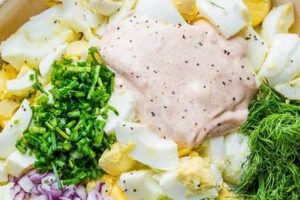
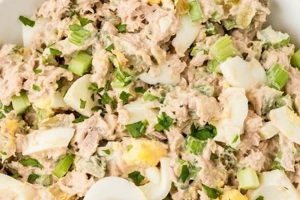
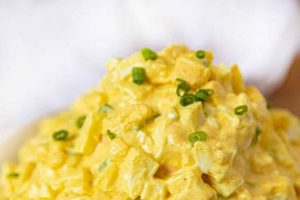
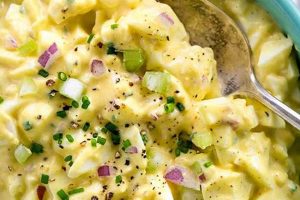
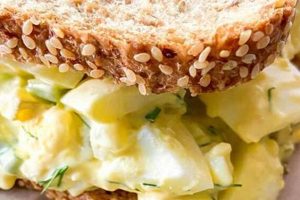
An egg salad elevated by the distinctive, bright flavor of fresh dill offers a refreshing twist on a classic dish. This preparation typically involves combining chopped hard-boiled eggs with mayonnaise, seasonings, and, crucially, fresh dill. Other ingredients, such as mustard, celery, onion, or chives, can further enhance the flavor profile, creating a versatile and customizable dish.
The herbaceous, slightly tangy, and anise-like notes of dill complement the richness of the eggs and mayonnaise, resulting in a lighter, more complex flavor than traditional egg salad. This herb adds a vibrant green color, enhancing the visual appeal. Historically, dill has been prized for its culinary and medicinal properties, dating back to ancient civilizations. Its inclusion in egg salad reflects a modern appreciation for fresh, flavorful ingredients.
The following sections will explore various techniques for achieving the perfect hard-boiled egg, optimal dill preparation methods, and a range of complementary ingredients to create a truly exceptional egg salad experience.
Tips for an Exceptional Egg Salad
Elevating egg salad from simple to extraordinary involves careful attention to detail and a thoughtful selection of ingredients. These tips offer guidance on achieving optimal flavor and texture.
Tip 1: Perfect Hard-Boiled Eggs: Achieving the perfect hard-boiled egg is crucial. Overcooked yolks become dry and chalky. A gentle simmer, rather than a rolling boil, followed by immediate immersion in ice water, yields tender yolks and easy-to-peel eggs.
Tip 2: Fresh Dill is Key: Dried dill lacks the bright, vibrant flavor of fresh dill. Finely chop the dill just before adding it to the salad to maximize its aromatic impact.
Tip 3: Balancing Flavors: Mayonnaise serves as the foundation, but a touch of Dijon mustard adds complexity. A small amount of acid, such as lemon juice or white wine vinegar, brightens the flavors.
Tip 4: Texture Considerations: Finely chopped celery or red onion adds a satisfying crunch. For a smoother texture, these ingredients can be finely minced or grated.
Tip 5: Seasoning Appropriately: Salt and freshly ground black pepper are essential. A pinch of paprika or cayenne pepper can add a subtle touch of heat.
Tip 6: Chilling Time: Allowing the egg salad to chill for at least 30 minutes before serving allows the flavors to meld and develop fully.
Tip 7: Serving Suggestions: Egg salad can be enjoyed on bread, crackers, croissants, or lettuce cups. Garnishing with a sprig of fresh dill enhances visual appeal.
By following these tips, one can create an egg salad that is both flavorful and visually appealing. Attention to detail, from the quality of the ingredients to the chilling time, ensures a truly exceptional culinary experience.
By mastering these techniques, a simple egg salad is transformed into a delectable dish suitable for any occasion.
1. Fresh Dill

Fresh dill stands as a pivotal component in distinguishing a truly exceptional egg salad. Its inclusion elevates the dish beyond the ordinary, imparting a unique flavor profile that complements the richness of the eggs and mayonnaise. Understanding the nuances of using fresh dill is crucial for achieving optimal results.
- Flavor Profile
Fresh dill possesses a bright, herbaceous flavor with subtle anise and citrus notes. This distinctive taste complements the creamy eggs and tangy mayonnaise, creating a more complex and nuanced flavor profile than traditional egg salad. Dried dill lacks this vibrancy and often tastes dull in comparison.
- Aromatic Contribution
The aromatic oils in fresh dill contribute significantly to the overall sensory experience. When chopped, these oils release their fragrance, enhancing the appeal of the egg salad. This aromatic dimension is largely absent in dried dill, further emphasizing the importance of using fresh herbs.
- Visual Appeal
The vibrant green color of fresh dill adds a visual freshness to the egg salad. Its delicate, feathery fronds provide a pleasing aesthetic contrast against the pale yellow of the eggs and the creamy white of the mayonnaise, making the dish more visually appealing.
- Preparation and Incorporation
Fresh dill is best incorporated into the egg salad just before serving. This preserves its vibrant flavor and aroma. Finely chopping the dill ensures even distribution throughout the salad and maximizes its impact. Over-processing can bruise the delicate leaves and diminish their flavor.
The careful selection and proper handling of fresh dill significantly influence the overall quality and enjoyment of the egg salad. Its distinct flavor profile, aromatic properties, and visual appeal create a more sophisticated and satisfying culinary experience, underscoring its importance in the “best egg salad recipe.” The strategic use of this herb transforms a simple egg salad into a flavorful and visually appealing dish.
2. Properly Cooked Yolks
The cornerstone of any exceptional egg salad, including those featuring fresh dill, lies in the proper preparation of the hard-boiled eggs, particularly the yolks. Yolk consistency significantly influences the overall texture and flavor of the final product. Overcooked yolks result in a dry, crumbly texture and a chalky taste, detracting from the desired creamy consistency and delicate flavor balance. Conversely, undercooked yolks create an unappetizing, runny texture that compromises the structural integrity of the salad.
- Texture and Consistency
Properly cooked yolks possess a smooth, creamy texture that binds the other ingredients together, creating a cohesive and palatable salad. Overcooked yolks, dry and crumbly, fail to provide this necessary binding agent, leading to a loose, disintegrated mixture. This undesirable texture detracts from the overall enjoyment of the egg salad. A perfectly cooked yolk contributes a rich creaminess that complements the fresh dill and other ingredients.
- Flavor Enhancement
A properly cooked yolk offers a subtle, rich flavor that enhances the overall taste of the egg salad. Overcooking diminishes this delicate flavor, leaving a bland, almost sulfurous taste that clashes with the fresh, bright notes of the dill. The yolk’s inherent richness acts as a backdrop, allowing the dill’s nuanced flavors to shine.
- Visual Appeal
The visual appeal of egg salad is also affected by yolk consistency. Properly cooked yolks exhibit a vibrant, uniform yellow color that contributes to the salad’s aesthetic appeal. Overcooked yolks appear pale and dull, detracting from the overall presentation. A visually appealing egg salad enhances the dining experience, making it more enjoyable.
- Technique and Timing
Achieving perfectly cooked yolks requires precise timing and technique. A gentle simmer, rather than a vigorous boil, ensures even cooking. Immediately immersing the eggs in ice water after cooking halts the cooking process and prevents the yolks from overcooking. This rapid cooling also aids in peeling the eggs cleanly, further contributing to the ease of preparation and the final presentation.
Mastering the art of cooking hard-boiled eggs to the ideal yolk consistency is paramount to creating the best dill egg salad. The yolk’s texture, flavor, and visual appeal directly impact the final product’s quality. Attention to detail in this crucial step elevates the dish from mediocre to exceptional, allowing the fresh dill and other carefully chosen ingredients to truly shine. The perfectly cooked yolk provides the foundation upon which a truly delicious and visually appealing egg salad is built.
3. Balanced Mayonnaise

Mayonnaise serves as the foundation of egg salad, binding the ingredients and contributing significantly to the overall flavor profile. In a dill-focused egg salad, achieving a “balanced mayonnaise” is crucial. This balance refers to the harmonious interplay of richness, tanginess, and complementary flavors that enhance, rather than overpower, the delicate, herbaceous notes of fresh dill. An excess of mayonnaise can create a bland, heavy salad, while too little results in a dry, crumbly texture. The ideal balance ensures a cohesive mixture where each ingredient contributes to the overall sensory experience.
Consider the impact of acidity. Plain mayonnaise, while rich and creamy, can lack the brightness needed to offset the richness of the eggs. Incorporating a small amount of acid, such as lemon juice or white wine vinegar, cuts through the richness, creating a more nuanced flavor profile. This acidity also complements the dill, accentuating its herbaceous notes. Furthermore, a touch of Dijon mustard adds a subtle tang and complexity that enhances both the mayonnaise and the dill. This balanced approach allows the fresh, vibrant flavor of the dill to shine through, preventing it from being masked by an overly rich or bland mayonnaise base. For example, a dill egg salad served on rye bread benefits from the added tang of a mayonnaise balanced with lemon juice and Dijon, creating a harmonious flavor combination with the bread’s inherent earthiness.
The concept of balanced mayonnaise is essential for a successful dill egg salad. It’s not merely about the quantity of mayonnaise but the careful consideration of its flavor profile and how it interacts with other ingredients. Achieving this balance ensures that the fresh dill, the star ingredient, takes center stage, resulting in a flavorful, well-textured, and ultimately satisfying culinary experience. This understanding empowers one to create an egg salad where the subtle nuances of fresh dill are highlighted and celebrated, rather than masked or overpowered.
4. Complementary Seasonings
Complementary seasonings play a crucial role in elevating a dill egg salad from simple to exceptional. These seasonings work synergistically with the fresh dill, enhancing its inherent flavors and adding depth and complexity to the overall profile. The delicate, herbaceous notes of dill provide a versatile backdrop for a range of seasonings, allowing for customization and creativity.
Consider the interplay of dill with classic seasonings like black pepper. Freshly ground black pepper provides a subtle heat and a pungent aroma that accentuates the brightness of the dill. The slight bitterness of black pepper contrasts beautifully with the subtle sweetness of the mayonnaise and the richness of the egg yolks. Similarly, a pinch of cayenne pepper adds a touch of heat without overpowering the delicate dill flavor. The warmth of cayenne complements the herbal notes, creating a balanced and nuanced flavor profile. Paprika, with its smoky undertones, offers another dimension of flavor, adding depth and complexity. The interplay of these seasonings with fresh dill creates a multi-layered sensory experience.
Beyond traditional seasonings, exploring complementary herbs and spices can further enhance a dill egg salad. A small amount of finely chopped chives adds a subtle onion flavor that harmonizes well with the dill. Alternatively, a pinch of dried tarragon can introduce a hint of anise, amplifying the dill’s inherent anise notes. The choice of seasonings should be guided by the desired flavor profile and the overall balance of the dish. Over-seasoning can mask the delicate flavor of the dill, while careful selection and measured application allows each ingredient to shine. Understanding this interplay of flavors allows for the creation of a truly exceptional dill egg saladone that is both flavorful and balanced, where the fresh dill is complemented and enhanced by the judicious use of complementary seasonings. This approach transforms a simple egg salad into a nuanced and sophisticated dish, showcasing the versatility and complexity of this classic combination.
5. Optimal Chilling Time

Optimal chilling time plays a crucial role in developing the full flavor profile of dill egg salad. This chilling period allows the individual ingredients, particularly the fresh dill, to meld and harmonize, creating a more cohesive and nuanced flavor. Understanding the impact of chilling time on the final product is essential for achieving the “best egg salad recipe dill.” Insufficient chilling results in a disjointed flavor experience, where individual ingredients stand out rather than blending harmoniously. Conversely, excessive chilling can dull the vibrant flavors of fresh ingredients.
- Flavor Development
Chilling allows the volatile aromatic compounds in fresh dill to permeate the other ingredients, creating a more complex and well-rounded flavor profile. The delicate anise notes of the dill meld with the richness of the eggs and the tanginess of the mayonnaise, resulting in a more balanced and harmonious flavor. This fusion of flavors is essential for achieving a truly exceptional egg salad. Without sufficient chilling time, the dill’s flavor remains isolated, failing to integrate with the other components.
- Texture Enhancement
Chilling firms the texture of the egg salad, making it easier to spread and serve. This improved texture contributes to a more satisfying eating experience. The chilling process allows the mayonnaise to further emulsify, creating a smoother, creamier consistency that complements the other ingredients. This textural enhancement is especially noticeable when the egg salad includes crunchy elements like celery or onion; the chilling process allows these textures to soften slightly without becoming soggy.
- Temperature and Palatability
A chilled egg salad is simply more refreshing and palatable, particularly in warmer weather. Serving the salad at the optimal temperature enhances the overall sensory experience, making the flavors more pronounced and enjoyable. The cool temperature contrasts pleasantly with the richness of the eggs and mayonnaise, creating a balanced and refreshing culinary experience.
- Recommended Chilling Time
A minimum of 30 minutes is generally recommended for optimal flavor development and texture enhancement. This timeframe allows sufficient time for the flavors to meld without dulling the brightness of the fresh dill. However, chilling for up to two hours can further intensify the flavors, particularly if the salad includes other aromatic ingredients. Beyond two hours, the benefits of chilling plateau, and the risk of over-chilling and dulling the flavors increases.
Therefore, optimal chilling time represents a critical step in achieving the best dill egg salad. It is not merely a matter of convenience but a crucial element that directly impacts the final product’s flavor, texture, and overall palatability. By understanding the importance of chilling and adhering to the recommended timeframe, one ensures a more enjoyable and flavorful culinary experience, allowing the carefully selected ingredients, especially the fresh dill, to reach their full potential. This attention to detail elevates the dish from a simple mixture of ingredients to a carefully crafted culinary creation.
6. Textural Variety (Celery, Onion)
Textural variety plays a significant role in elevating dill egg salad beyond a homogenous mixture. Incorporating ingredients like celery and onion introduces contrasting textures that enhance the overall sensory experience. These additions provide a counterpoint to the creamy base of the egg salad, creating a more dynamic and engaging culinary experience. The strategic use of textural elements contributes to the “best egg salad recipe dill” by adding complexity and interest.
- Celery’s Crisp Contribution
Celery offers a refreshing crispness that contrasts with the softness of the eggs and the creaminess of the mayonnaise. Finely diced celery provides a subtle crunch, while thinly sliced celery adds a more pronounced textural contrast. This crispness enhances the overall sensory experience, preventing the egg salad from feeling too heavy or monotonous. The clean, slightly vegetal flavor of celery also complements the bright, herbaceous notes of fresh dill.
- Onion’s Pungent Bite
Onion, whether red or white, introduces a sharp, pungent bite that cuts through the richness of the egg salad. Finely minced onion provides a subtle sharpness, while finely diced onion offers a more assertive presence. This pungency balances the creamy richness, adding a layer of complexity. The choice between red and white onion depends on the desired intensity of flavor and color; red onion offers a milder flavor and a pop of color, while white onion provides a more assertive bite.
- Balancing Flavors and Textures
The combination of celery and onion provides a balanced textural and flavor profile. The crispness of celery complements the pungent bite of onion, creating a dynamic interplay of textures. Their respective flavors, while distinct, harmonize well with the fresh dill and the creamy base, adding depth and complexity. This balance prevents any single flavor or texture from dominating, ensuring a well-rounded and enjoyable culinary experience.
- Preparation and Incorporation
Proper preparation is essential for maximizing the textural contribution of celery and onion. Finely dicing or mincing ensures even distribution and prevents large pieces from overwhelming the salad. Soaking diced onion in ice water for a few minutes can mellow its sharpness, making it more palatable for those sensitive to strong onion flavors. Incorporating these ingredients just before serving maintains their crispness and prevents them from becoming soggy.
The strategic incorporation of textural elements like celery and onion elevates dill egg salad from a simple mixture to a more complex and satisfying dish. These additions provide a crucial counterpoint to the creamy base, enhancing the overall sensory experience and contributing to the designation of “best egg salad recipe dill.” The interplay of flavors and textures creates a more dynamic and engaging culinary experience, showcasing the thoughtful combination of ingredients. By considering these elements, one can create an egg salad that is not only flavorful but also texturally interesting, demonstrating a sophisticated approach to this classic dish.
7. Serving Presentation
Serving presentation significantly influences the perceived quality and enjoyment of dill egg salad. While flavor remains paramount, visual appeal enhances the overall dining experience. A thoughtfully presented egg salad elevates the dish, transforming it from a simple meal to a more refined culinary creation. This attention to detail contributes significantly to the concept of a “best egg salad recipe dill,” demonstrating an understanding of the multifaceted nature of culinary excellence. Presentation affects perception; an attractively presented dish appears more appetizing, stimulating the senses and increasing anticipation. For example, a simple garnish of fresh dill sprigs not only adds visual appeal but also reinforces the herb’s central role in the dish.
Consider the choice of serving vessel. A rustic bread bowl creates a casual, inviting presentation, while serving the egg salad in elegant lettuce cups adds a touch of sophistication. The choice of bread or crackers also influences the overall experience. Toasted multigrain bread offers a textural contrast and a nutty flavor that complements the dill, while crisp crackers provide a lighter base. Further visual interest can be achieved through careful plating techniques. Creating a visually appealing arrangement or adding a sprinkle of paprika or chopped chives enhances the dish’s aesthetic appeal, demonstrating attention to detail. Serving the egg salad alongside a colorful salad adds a refreshing contrast and contributes to a balanced meal presentation. These seemingly small details significantly impact the diner’s perception and enjoyment.
Therefore, serving presentation plays a crucial, often overlooked, role in realizing the full potential of a dill egg salad recipe. It transforms a simple dish into a more sophisticated and enjoyable culinary experience. While flavor remains paramount, thoughtful presentation elevates the dish, demonstrating an appreciation for the sensory aspects of dining. This understanding underscores the comprehensive nature of a “best” recipe, encompassing not only flavor and texture but also the visual and aesthetic elements that contribute to a truly satisfying culinary experience. Attention to these details distinguishes a well-prepared dish from a truly exceptional one, highlighting the importance of presentation as a key component of culinary excellence.
Frequently Asked Questions
This section addresses common inquiries regarding dill egg salad preparation, offering clarity and guidance for optimal results.
Question 1: Can dried dill be substituted for fresh dill?
While dried dill can be used in a pinch, it lacks the vibrant flavor and aroma of fresh dill. Fresh dill is strongly recommended for the best flavor profile.
Question 2: How can one prevent overcooked egg yolks?
Overcooked yolks can be avoided by simmering the eggs gently, rather than boiling vigorously. Immediately immersing the cooked eggs in ice water stops the cooking process and helps prevent the yolks from becoming dry and chalky.
Question 3: What can be used in place of mayonnaise?
While mayonnaise is traditional, Greek yogurt or avocado can be substituted for a lighter, healthier option. However, these substitutions will alter the flavor and texture of the final product.
Question 4: How long can egg salad be stored in the refrigerator?
Egg salad should be stored in an airtight container in the refrigerator for no more than three to five days. Always check for spoilage before consuming.
Question 5: How can one enhance the flavor of store-bought mayonnaise?
A touch of Dijon mustard, lemon juice, or white wine vinegar can elevate the flavor profile of store-bought mayonnaise, adding complexity and brightness.
Question 6: Beyond bread, what are other serving suggestions for dill egg salad?
Dill egg salad can be served on crackers, croissants, lettuce cups, or as a filling for tomatoes or avocados. It also pairs well with various salads.
Addressing these common questions ensures a greater understanding of the nuances of dill egg salad preparation. Careful attention to these details contributes to a more successful and enjoyable culinary experience.
The following section provides a complete recipe for crafting the perfect dill egg salad.
Conclusion
Exploration of the optimal dill egg salad recipe reveals the critical interplay of fresh ingredients, precise techniques, and balanced flavors. Properly cooked yolks provide a creamy foundation, while fresh dill contributes a vibrant, herbaceous character. Balanced mayonnaise, complementary seasonings, and textural elements like celery and onion further enhance the sensory experience. Optimal chilling allows flavors to meld, and thoughtful presentation elevates the dish. Each component contributes to a harmonious whole, demonstrating that achieving culinary excellence requires attention to detail at every stage.
Elevating a seemingly simple dish like egg salad to “best” status requires a comprehensive understanding of its individual components and their synergistic potential. This exploration encourages a deeper appreciation for the culinary arts, demonstrating that even familiar dishes can be transformed into exceptional dining experiences through careful consideration and thoughtful execution. The pursuit of the “best” necessitates a commitment to quality ingredients, precise techniques, and a nuanced understanding of flavor dynamics.