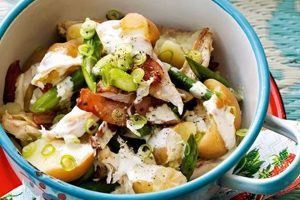
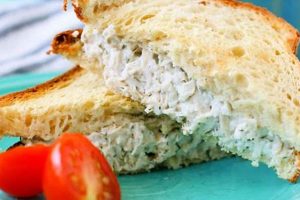
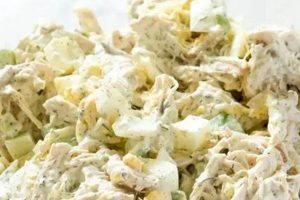
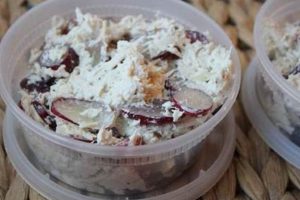
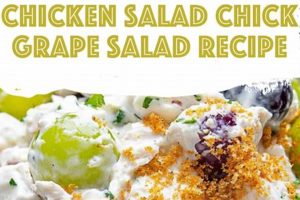
A cold dish typically combines cooked pasta, shredded or diced chicken, and a variety of other ingredients, often including vegetables, fruits, and a creamy dressing. Common additions range from celery and onion to grapes and dried cranberries, while mayonnaise, yogurt, or a vinaigrette serve as the binding agent. Variations may incorporate different pasta shapes, cheeses, herbs, spices, and nuts, offering a wide spectrum of flavors and textures.
This versatile dish offers a convenient and nutritious meal option. Its adaptability makes it suitable for picnics, potlucks, quick lunches, and light dinners. The high protein content from the chicken combined with the carbohydrates in pasta provides sustained energy. Incorporating fresh produce boosts the nutritional value with added vitamins and fiber. Historically, similar chicken-based salads have existed for centuries, but the specific combination with pasta likely emerged more recently as pasta became a readily available staple. The dish’s popularity stems from its ease of preparation, customizable nature, and satisfying blend of flavors.
This discussion will explore various aspects of creating this culinary delight, including choosing the right ingredients, preparing the components, selecting complementary dressings, and presenting the finished product. Further exploration will cover variations to cater to different dietary needs and preferences, as well as tips for storage and serving.
Tips for Creating a Delicious Pasta Chicken Salad
Optimizing the preparation of this dish involves attention to detail in ingredient selection, cooking techniques, and flavor combinations. The following tips offer guidance for achieving optimal results.
Tip 1: Pasta Selection: Opt for short, sturdy pasta shapes that hold their form well and readily absorb dressing, such as rotini, farfalle, or penne. Avoid long, thin noodles like spaghetti or linguine.
Tip 2: Chicken Preparation: Employing pre-cooked chicken, whether rotisserie, grilled, or baked, streamlines the process. Ensure the chicken is cooled and shredded or diced into bite-sized pieces.
Tip 3: Vegetable Enhancement: Incorporating crisp vegetables like celery, bell peppers, or red onion provides textural contrast and enhances flavor complexity. Blanching or lightly steaming vegetables can further improve their texture.
Tip 4: Fruit Incorporation: Sweet and tart fruits, such as grapes, dried cranberries, or chopped apples, offer a refreshing counterpoint to savory elements. Consider the overall flavor profile when selecting fruit additions.
Tip 5: Dressing Selection: Mayonnaise-based dressings provide a classic creamy texture, while Greek yogurt offers a lighter, tangier alternative. Vinaigrettes create a brighter, more acidic profile. Adjust seasonings to complement the other ingredients.
Tip 6: Flavor Balancing: Herbs and spices contribute depth and complexity. Fresh dill, parsley, chives, or a touch of curry powder can elevate the overall flavor profile. Taste and adjust seasonings throughout the preparation process.
Tip 7: Chilling and Serving: Allowing the salad to chill for at least 30 minutes before serving allows flavors to meld and enhances the overall experience. Garnish with fresh herbs or a sprinkle of nuts before serving.
By following these guidelines, one can consistently create a flavorful and well-balanced dish. Attention to these details elevates the final product from simple to exceptional.
The subsequent sections will delve into specific recipe variations and explore advanced techniques for those seeking to further refine their culinary skills.
1. Ingredients
Ingredient selection significantly impacts the overall quality, flavor profile, and nutritional value of pasta chicken salad. Careful consideration of each component contributes to a well-balanced and enjoyable dish. The following facets explore key ingredient categories and their respective roles.
- Protein: Chicken
Chicken serves as the primary protein source, contributing to satiety and nutritional value. Options include cooked chicken breast, rotisserie chicken, or grilled chicken. The choice influences the overall flavor and preparation time. For example, rotisserie chicken offers convenience, while grilled chicken imparts a smoky flavor.
- Base: Pasta
Pasta provides the foundation of the salad, influencing texture and how the dish absorbs the dressing. Short, sturdy pasta shapes like rotini, farfalle, or penne are ideal. Long, thin pasta tends to become tangled and is less suitable. Whole wheat pasta offers a more nutritious alternative.
- Produce: Vegetables and Fruits
Vegetables and fruits introduce texture, color, and flavor complexity. Common vegetable additions include celery, bell peppers, and red onion. Fruits like grapes, dried cranberries, or mandarin oranges offer sweetness and a contrasting textural element. The combination of produce contributes to the nutritional profile and overall appeal of the salad.
- Binding Agent: Dressing
The dressing binds the ingredients together, contributing flavor and moisture. Mayonnaise-based dressings provide a classic creamy texture, while vinaigrettes offer a lighter, tangier alternative. Greek yogurt can be used for a healthier, protein-rich dressing option. The choice of dressing significantly influences the overall flavor profile and caloric content.
The interplay of these ingredient categories defines the character of the pasta chicken salad. Thoughtful selection and combination of high-quality ingredients elevate the dish from simple to exceptional, offering a satisfying and nutritious meal.
2. Preparation Methods

Preparation methods significantly influence the final quality and enjoyment of pasta chicken salad. These methods encompass several crucial stages, each contributing to the overall outcome. From cooking the pasta to incorporating the ingredients, attention to detail ensures optimal texture, flavor, and food safety.
Pasta Cooking: Achieving perfectly cooked pasta is paramount. Overcooked pasta results in a mushy texture, while undercooked pasta remains firm and unappetizing. Cooking pasta al dente, meaning “to the tooth” in Italian, yields a firm yet tender texture. This involves following package directions and testing for doneness by biting into a piece of pasta. Once cooked, rinsing the pasta under cold water stops the cooking process and helps maintain its desirable texture. This step is particularly important for pasta salads, where a firm texture is desired. For instance, if using rotini, the spirals should hold their shape and not be clumped together.
Chicken Handling: Proper handling of the chicken ensures both food safety and optimal flavor. If using raw chicken, it must be cooked thoroughly to an internal temperature of 165F (74C) to eliminate any risk of foodborne illness. Pre-cooked chicken, such as rotisserie or grilled chicken, offers a convenient alternative. Shredding or dicing the chicken into bite-sized pieces facilitates even distribution throughout the salad and enhances the overall eating experience. Overly large chunks of chicken can disrupt the balance of the salad.
Ingredient Incorporation: The order in which ingredients are incorporated can influence the final product. Adding the dressing last helps prevent the salad from becoming soggy. Gently folding the ingredients together ensures even distribution and prevents the pasta from breaking. Overmixing can lead to a less appealing texture. Furthermore, chilling the salad for at least 30 minutes before serving allows the flavors to meld and enhances the overall enjoyment.
Careful execution of these preparation methods results in a pasta chicken salad with a pleasing texture, well-balanced flavors, and optimal food safety. These techniques, while seemingly simple, contribute significantly to the overall culinary experience. Ignoring these details can compromise the quality of the final dish, leading to a less satisfying outcome. Understanding the importance of each step ensures a consistently delicious and enjoyable pasta chicken salad.
3. Flavor Combinations
Flavor combinations constitute a critical element in pasta chicken salad recipes, directly impacting the overall palatability and enjoyment of the dish. A successful recipe hinges on a harmonious balance of flavors, achieved through careful selection and combination of ingredients. This involves understanding the interplay of savory, sweet, acidic, and textural elements within the salad. The potential for flavor combinations is extensive, offering a wide range of culinary possibilities. For instance, the classic combination of chicken, celery, and mayonnaise provides a familiar and comforting flavor profile. Introducing grapes or dried cranberries adds a touch of sweetness and textural contrast, while incorporating pecans or walnuts contributes a nutty element and further textural complexity. Spices and herbs, such as dill, chives, or curry powder, introduce additional layers of flavor and aromatic complexity.
The interaction between these ingredients creates a synergistic effect, where the combined flavors are greater than the sum of their parts. This synergy is crucial for a well-balanced and flavorful pasta chicken salad. For example, the savory notes of the chicken complement the sweetness of the grapes, while the creamy mayonnaise provides a backdrop that unifies the diverse flavors. The crisp texture of the celery and the crunch of the nuts contrast with the soft pasta and tender chicken, adding another dimension to the sensory experience. Furthermore, the judicious use of acid, such as a squeeze of lemon juice or a splash of vinegar, brightens the flavors and prevents the salad from tasting bland. This balance of flavors is essential for a truly satisfying and enjoyable pasta chicken salad.
Mastering flavor combinations in pasta chicken salad recipes allows for customization and creativity. Understanding the underlying principles of flavor pairing empowers culinary exploration and the development of unique and personalized variations. However, achieving balance remains paramount. Overpowering flavors or disharmonious combinations can detract from the overall enjoyment. Careful consideration of ingredient interactions and the judicious use of seasonings are crucial for creating a successful and flavorful pasta chicken salad. A well-executed flavor profile transforms a simple dish into a culinary delight, offering a complex and satisfying experience for the palate. This understanding elevates pasta chicken salad beyond a mere combination of ingredients into a carefully crafted composition of flavors and textures.
4. Dietary Adaptations

Dietary adaptations play a crucial role in expanding the accessibility and inclusivity of pasta chicken salad recipes. Various dietary needs and preferences, such as gluten intolerance, lactose intolerance, low-carbohydrate diets, or vegetarian/vegan lifestyles, necessitate modifications to the traditional recipe. Understanding these adaptations allows for customization without compromising flavor or satisfaction. For example, individuals with gluten intolerance can substitute gluten-free pasta, such as those made from rice, corn, or quinoa. Lactose intolerance can be accommodated by using lactose-free yogurt or mayonnaise alternatives in the dressing, or opting for a vinaigrette-based dressing altogether. Low-carbohydrate diets might involve reducing the amount of pasta or substituting it with alternatives like zucchini noodles or cauliflower rice. Vegetarian or vegan adaptations can replace the chicken with plant-based protein sources such as chickpeas, lentils, or tofu. These adaptations ensure that individuals with diverse dietary needs can enjoy a delicious and satisfying pasta chicken salad tailored to their specific requirements. The adaptability of this dish makes it a versatile option for various dietary restrictions.
Adapting pasta chicken salad recipes involves more than simple substitutions. It requires careful consideration of flavor and texture profiles. For instance, gluten-free pasta often has a different texture than traditional wheat-based pasta, which can affect the overall mouthfeel of the salad. Using plant-based protein sources may require adjustments to seasonings and other ingredients to achieve a balanced flavor profile. The choice of dressing also plays a significant role in dietary adaptations. A vinaigrette-based dressing might be preferable for individuals avoiding dairy or seeking a lower-calorie option. Understanding these nuances allows for informed ingredient choices and preparation techniques that maintain the integrity and enjoyment of the dish while meeting specific dietary needs. For example, adding roasted vegetables or incorporating a variety of spices can enhance the flavor and texture of a vegetarian pasta chicken salad.
In conclusion, dietary adaptations are essential for broadening the appeal and accessibility of pasta chicken salad. By understanding the principles behind these adaptations and employing thoughtful ingredient selection and preparation techniques, individuals with diverse dietary needs can enjoy a flavorful and satisfying meal. This adaptability highlights the versatility of pasta chicken salad and underscores its potential as an inclusive culinary option. Addressing these dietary considerations ensures broader enjoyment and contributes to a more inclusive culinary experience for everyone.
5. Presentation techniques
Presentation techniques significantly influence the perceived appeal and enjoyment of pasta chicken salad. While flavor and texture remain paramount, visual presentation elevates the dining experience. Consideration of color, arrangement, and serving vessel contributes to a more enticing and appetizing final product. For instance, a vibrant mix of colorful vegetables, such as red bell peppers, green celery, and orange carrots, enhances visual appeal. Arranging the salad on a bed of lettuce or incorporating edible garnishes like fresh herbs or a sprinkle of paprika adds an element of sophistication. The choice of serving vessel also plays a role; a clear glass bowl showcases the colorful ingredients, while a rustic wooden bowl provides a contrasting aesthetic.
Effective presentation techniques extend beyond individual servings. For larger gatherings or buffet-style presentations, consider arranging the pasta chicken salad on a platter garnished with strategically placed elements. Sectioning the platter allows for variations in ingredients or dressings, catering to different preferences. Using individual serving spoons or tongs promotes hygiene and allows guests to serve themselves comfortably. Small, individual portions presented in elegant cups or on crisp lettuce leaves offer a refined and visually appealing option for catered events or appetizers. These considerations demonstrate the impact of presentation on perceived value and enjoyment, transforming a simple dish into a visually appealing culinary creation.
In conclusion, presentation techniques play a crucial role in maximizing the appeal of pasta chicken salad. Thoughtful arrangement, color combinations, and appropriate serving vessels enhance the overall dining experience. Whether for a casual lunch or a more formal occasion, attention to presentation elevates the perceived quality and enjoyment of this versatile dish. Understanding these techniques allows one to transform a simple pasta chicken salad into a visually stunning and appetizing culinary presentation.
6. Storage Guidelines

Proper storage guidelines are essential for maintaining the quality, safety, and palatability of pasta chicken salad. These guidelines address factors that contribute to spoilage and bacterial growth, ensuring the dish remains safe and enjoyable to consume. Appropriate storage practices extend the shelf life of the salad and preserve its desirable characteristics. Neglecting these guidelines can lead to foodborne illness and diminish the culinary experience.
- Temperature Control
Maintaining a safe temperature is paramount for preventing bacterial growth in pasta chicken salad. The ideal storage temperature is below 40F (4C). This temperature range inhibits the rapid multiplication of harmful bacteria. Prompt refrigeration after preparation is crucial, minimizing the time the salad spends in the temperature danger zone where bacteria thrive. Leaving pasta chicken salad at room temperature for extended periods significantly increases the risk of spoilage and foodborne illness.
- Airtight Containers
Storing pasta chicken salad in airtight containers is essential for preserving its freshness and preventing contamination. Airtight containers minimize exposure to oxygen, which can accelerate spoilage and lead to undesirable changes in flavor and texture. Properly sealed containers also prevent the salad from absorbing odors from other foods in the refrigerator. Using high-quality, airtight containers helps maintain the optimal quality and safety of the pasta chicken salad.
- Shelf Life
Pasta chicken salad has a limited shelf life, even under optimal storage conditions. Generally, it is recommended to consume the salad within 3-5 days of preparation. Beyond this timeframe, the risk of bacterial growth increases, and the quality of the salad may deteriorate. Visual inspection and smell tests can help determine if the salad is still safe to consume. Any signs of spoilage, such as an off odor, discoloration, or sliminess, indicate that the salad should be discarded.
- Freezing Considerations
While refrigeration is the preferred method for storing pasta chicken salad, freezing is generally not recommended. Freezing can negatively impact the texture of the ingredients, particularly the pasta and mayonnaise-based dressings. Upon thawing, the pasta may become mushy, and the dressing may separate, resulting in an undesirable texture and flavor. If freezing is unavoidable, consider freezing the chicken and other ingredients separately and combining them with freshly cooked pasta and dressing after thawing. This approach helps mitigate some of the negative effects of freezing on the overall quality of the salad.
Adherence to these storage guidelines is crucial for ensuring the safety and enjoyment of pasta chicken salad. Proper temperature control, airtight containers, and awareness of shelf life contribute to maintaining the quality and preventing spoilage. By following these guidelines, individuals can maximize the shelf life of their pasta chicken salad and minimize the risk of foodborne illness, ensuring a safe and satisfying culinary experience. These practices are integral to responsible food handling and contribute to a positive and healthy dining experience.
Frequently Asked Questions
This section addresses common inquiries regarding pasta chicken salad preparation, storage, and variations. Clarity on these points contributes to a more informed and successful culinary experience.
Question 1: What type of pasta is best suited for pasta chicken salad?
Short, sturdy pasta shapes like rotini, farfalle, or penne are recommended. These shapes hold their form well and readily absorb dressing. Long, thin pasta like spaghetti tends to become tangled and clump together in the salad.
Question 2: Can rotisserie chicken be used in pasta chicken salad?
Rotisserie chicken is an excellent and convenient option. Its pre-cooked nature streamlines the preparation process. Ensure the chicken is cooled and shredded or diced into bite-sized pieces before incorporating it into the salad.
Question 3: How long can pasta chicken salad be stored in the refrigerator?
Properly stored in an airtight container, pasta chicken salad can be refrigerated for 3-5 days. Beyond this timeframe, the risk of spoilage increases significantly. Always inspect and smell the salad before consuming it if it has been stored for several days. Discard the salad if there are any signs of spoilage, such as an off odor or discoloration.
Question 4: Can pasta chicken salad be frozen?
Freezing is generally not recommended. Freezing can negatively affect the texture of the pasta and dressing. Upon thawing, the pasta may become mushy, and the dressing may separate. If freezing is necessary, consider freezing the chicken and other components separately and combining them with freshly cooked pasta and dressing after thawing.
Question 5: How can pasta chicken salad be adapted for gluten-free diets?
Substituting gluten-free pasta, such as those made from rice, corn, or quinoa, readily adapts the recipe for gluten intolerance. Ensure all other ingredients, including the dressing, are also gluten-free.
Question 6: What are some healthy variations of pasta chicken salad?
Healthier variations can incorporate Greek yogurt instead of mayonnaise in the dressing, reducing fat and increasing protein content. Adding more vegetables, such as chopped broccoli, bell peppers, or cucumbers, increases nutritional value. Using whole wheat pasta adds fiber and nutrients.
Addressing these common questions provides a foundation for successful pasta chicken salad preparation and enjoyment. Further exploration of specific recipe variations and advanced techniques can enhance culinary expertise.
The following section will offer a collection of diverse and flavorful recipe variations for pasta chicken salad.
Pasta Chicken Salad Recipe
This exploration of pasta chicken salad recipes has provided a comprehensive overview of this versatile dish. Key aspects, including ingredient selection, preparation methods, flavor combinations, dietary adaptations, presentation techniques, and storage guidelines, have been thoroughly examined. Understanding the interplay of these elements allows for the creation of a pasta chicken salad that satisfies both nutritional needs and culinary desires. From classic combinations to innovative variations, the adaptability of this dish offers a wide range of culinary possibilities.
Pasta chicken salad represents more than a simple combination of ingredients; it embodies culinary creativity and adaptability. Its capacity to accommodate diverse dietary needs and preferences underscores its enduring appeal. Continued exploration of flavor profiles, ingredient combinations, and presentation techniques promises further evolution of this classic dish, ensuring its continued presence in culinary traditions for generations to come. The potential for innovation within this seemingly simple dish remains vast, inviting further culinary exploration and personalization.