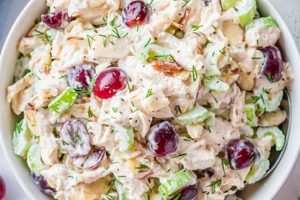
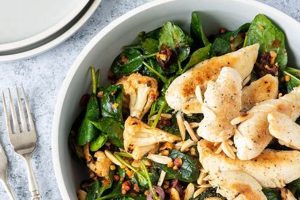
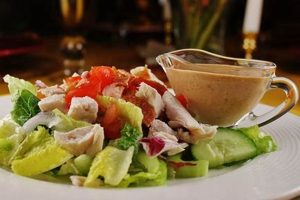
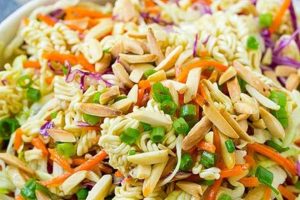
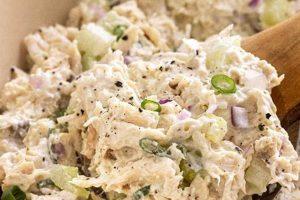
A simple preparation of cooked chicken, typically shredded or diced, combined with mayonnaise, often includes hard-boiled eggs and other complementary ingredients like celery, onion, grapes, or nuts. Variations exist with different seasonings and additions such as mustard, relish, or spices. This dish is commonly served cold as a sandwich filling, on crackers, lettuce wraps, or as a standalone salad.
This type of salad offers a convenient and nutritious meal option, utilizing readily available ingredients. Its adaptability allows for customization to individual preferences and dietary needs. Historically, chicken salad gained popularity as refrigeration became more widespread, enabling safe storage of the prepared dish. Its evolution reflects changing culinary tastes and the availability of ingredients, solidifying its position as a classic comfort food.
The following sections will delve into specific ingredient recommendations, step-by-step preparation instructions, and suggestions for creative variations to enhance this versatile dish.
Tips for Preparing Chicken Salad
Optimizing ingredient selection and preparation techniques enhances the final product, resulting in a superior chicken salad.
Tip 1: Chicken Selection: For optimal flavor and texture, utilize roasted or poached chicken. Pre-cooked rotisserie chicken offers a convenient alternative.
Tip 2: Egg Preparation: Employing older eggs simplifies the peeling process for hard-boiled eggs. An ice bath immediately following cooking further facilitates shell removal.
Tip 3: Mayonnaise Choice: The quality of mayonnaise significantly impacts the overall flavor profile. Consider using full-fat mayonnaise for a richer, creamier result.
Tip 4: Ingredient Proportions: Adjusting the ratio of mayonnaise to chicken and other ingredients allows customization of the salad’s consistency, from creamy to chunky.
Tip 5: Fresh Ingredients: Incorporating freshly chopped celery and onion enhances the salad’s flavor and texture, offering a crisp counterpoint to the richness of the mayonnaise and chicken.
Tip 6: Seasoning: Enhance the flavor profile through the judicious application of salt, pepper, and other seasonings. Paprika, garlic powder, or onion powder offer subtle flavor enhancements.
Tip 7: Chilling: Refrigerate the prepared salad for at least 30 minutes prior to serving. Chilling allows the flavors to meld and enhances the overall dining experience.
Adhering to these guidelines ensures a flavorful, well-balanced, and satisfying chicken salad.
By understanding these preparatory steps, one can confidently create a delicious and personalized chicken salad experience.
1. Simple Ingredients
The ease of preparing a chicken salad often hinges on the simplicity of its ingredients. Accessibility and minimal processing contribute significantly to the convenience of this dish. Utilizing readily available components minimizes preparation time and complexity, making it an ideal choice for quick meals.
- Cooked Chicken:
The foundation of any chicken salad is cooked chicken. Using pre-cooked options, such as rotisserie chicken or leftover baked chicken, drastically reduces preparation time. This allows for rapid assembly, making the recipe exceptionally convenient. The choice of chicken also influences the final flavor profile; roasted chicken imparts a richer flavor while poached chicken offers a milder taste.
- Mayonnaise:
Mayonnaise serves as the binding agent and contributes richness and creaminess. While variations exist, standard mayonnaise is readily accessible and requires no additional preparation. The quality of mayonnaise directly impacts the overall flavor, with full-fat versions offering a more luxurious texture and taste.
- Hard-boiled Eggs:
Eggs contribute protein and texture to the salad. Pre-boiling eggs or utilizing leftover hard-boiled eggs further streamlines the process. Properly cooked eggs, with yolks that are fully set but not dry, contribute optimal texture and flavor.
- Aromatic Vegetables:
Celery and onion are common aromatic additions. While chopping these vegetables requires minimal effort, pre-chopped varieties offer an even faster alternative. These ingredients provide a refreshing contrast to the richness of the mayonnaise and chicken, enhancing the overall sensory experience.
The reliance on these simple, often pre-prepared, ingredients underscores the “easy” aspect of this recipe. This accessibility allows for efficient meal preparation without compromising flavor or nutritional value. The ease of procuring and utilizing these components makes the chicken salad a practical and adaptable dish for various occasions and skill levels.
2. Quick Preparation

The speed of preparation is a defining characteristic of an easy chicken salad recipe. Minimal active cooking time contributes significantly to its convenience, making it a practical choice for time-constrained individuals or those seeking efficient meal solutions. This section explores the elements contributing to the recipe’s rapid assembly.
- Pre-cooked Ingredients:
Utilizing pre-cooked chicken, whether rotisserie, baked, or boiled, eliminates the most time-consuming step. Pre-boiled eggs further expedite the process. The availability of these pre-prepared components significantly reduces active cooking time, allowing for quick assembly. For instance, using leftover roasted chicken from a previous meal transforms what might be a multi-step process into a simple combination of ingredients.
- Simple Procedures:
The recipe primarily involves combining ingredients. Chopping celery and onions, or opting for pre-chopped alternatives, represents the most labor-intensive step. The absence of complex cooking techniques, such as sauting or baking, contributes to the overall speed. This simplicity allows even novice cooks to achieve satisfactory results quickly.
- Minimal Equipment:
Preparation requires minimal equipment. A cutting board, knife, and mixing bowl suffice. The absence of specialized tools further streamlines the process and reduces cleanup time. This contributes to the recipe’s overall efficiency and ease of execution in various settings.
- Adaptability to Variations:
Even with variations, the preparation remains swift. Adding ingredients like grapes, nuts, or dried cranberries requires no additional cooking. This adaptability allows for personalized flavor profiles without sacrificing speed. For example, incorporating pre-chopped apples adds a layer of sweetness and texture without extending the preparation time significantly.
The convergence of these factorspre-cooked ingredients, simple procedures, minimal equipment, and adaptable variationsunderscores the quick preparation aspect of this recipe. This efficiency makes it a highly practical option for various meal occasions, from quick lunches to impromptu gatherings. The minimal time investment yields a complete and satisfying dish, demonstrating the recipe’s value in a time-conscious world.
3. Versatile Serving

Serving versatility significantly contributes to the appeal of an easy chicken salad recipe. Its adaptability to various formats and occasions enhances its practicality, making it a suitable choice for a range of dining experiences. This adaptability stems from the salad’s texture, flavor profile, and ease of portioning.
- Bread and Wraps:
Chicken salad readily complements various bread types, from classic white bread to whole-wheat croissants. Its pliable texture makes it an ideal sandwich filling, adapting well to wraps and pita pockets. This versatility allows for customization based on individual preferences and dietary needs. Examples include a classic chicken salad sandwich on toasted sourdough, a wrap with added greens and vegetables for a lighter option, or a croissant sandwich for a more indulgent approach.
- Salads and Bowls:
Beyond sandwiches, chicken salad functions as a standalone salad component or a protein-rich addition to composed salads. Serving it atop a bed of lettuce with assorted vegetables transforms it into a complete and balanced meal. Incorporating it into grain bowls or pasta salads offers further variety. Examples include a simple green salad topped with chicken salad, a quinoa bowl with chicken salad and roasted vegetables, or a pasta salad featuring chicken salad as a key ingredient.
- Appetizers and Snacks:
The salad’s adaptability extends to appetizers and snacks. Served with crackers, crostini, or vegetables, it provides a flavorful and convenient option for casual gatherings. Portioning it into individual lettuce cups or endive spears creates elegant and easy-to-handle appetizers. Examples include chicken salad served with crackers and sliced cucumbers, stuffed cherry tomatoes for a bite-sized appetizer, or as a filling for deviled eggs for a themed presentation.
- Larger Gatherings and Meal Prep:
Chicken salad’s suitability for larger gatherings enhances its practicality. Its make-ahead nature allows for convenient preparation, freeing up time for other tasks. Scaling the recipe easily accommodates larger groups. Storing it in a single container or individual portions simplifies serving and cleanup. Examples include preparing a large batch for a potluck or picnic, creating individual servings for meal prepping throughout the week, or using it as a filling for a large, crustless sandwich loaf for a visually appealing centerpiece.
This range of serving options highlights the versatile nature of an easy chicken salad recipe. Its adaptability to various formats, from simple sandwiches to elegant appetizers, contributes to its widespread appeal and makes it a practical and satisfying choice for diverse dining occasions and preferences. This versatility extends beyond the immediate meal, offering solutions for meal prepping and larger gatherings, further solidifying its place as a convenient and adaptable culinary staple.
4. Customizable Flavors

Customization represents a significant advantage of chicken salad. The basic recipe provides a neutral foundation readily adaptable to diverse palates and dietary requirements. This inherent flexibility stems from the salad’s simple composition, allowing ingredients to enhance or complement without overpowering the core flavors. This adaptability transforms a basic recipe into a personalized culinary experience.
Consider the impact of incorporating various ingredients. Sweetness can be introduced through dried cranberries or chopped grapes, offering a counterpoint to the savory chicken and mayonnaise. Conversely, a spicier profile can be achieved through the addition of diced jalapeos or a dash of hot sauce. Textural variations are equally achievable. Toasted nuts contribute crunch, while diced apples offer a crisp, juicy element. These examples demonstrate the recipe’s adaptability to individual preferences. One could create a curry-infused chicken salad with golden raisins and chopped cashews for an Indian-inspired twist or a Mediterranean version with Kalamata olives, feta cheese, and sun-dried tomatoes. The possibilities are extensive.
Understanding the potential for customization empowers culinary exploration. Experimentation with herbs, spices, fruits, and vegetables unlocks unique flavor profiles. This adaptability ensures the recipe remains engaging and prevents palate fatigue. Moreover, customization facilitates accommodating dietary restrictions or preferences. Substituting plain Greek yogurt for a portion of the mayonnaise reduces fat content without sacrificing creaminess. Incorporating specific allergen-free ingredients broadens accessibility. Ultimately, the ability to customize flavors elevates a simple chicken salad recipe from a basic dish to a versatile culinary canvas, offering endless possibilities for personalized enjoyment and creative expression.
5. Nutritious Meal
Nutritional value represents a key consideration when assessing an “easy chicken salad recipe with eggs.” While convenience often takes precedence, understanding the nutritional composition provides a more complete perspective. Analyzing the core ingredients reveals a profile rich in protein, healthy fats, and essential vitamins and minerals. This section explores the nutritional facets contributing to the recipe’s potential health benefits.
- Protein Source:
Chicken, a lean protein source, forms the foundation of the dish. Protein plays a crucial role in muscle building, tissue repair, and overall bodily function. Eggs further contribute to the protein content, enhancing the salad’s satiety factor and supporting a balanced diet. The combined protein content of chicken and eggs contributes to sustained energy levels and supports various metabolic processes. For example, a serving of chicken salad can provide a significant portion of the recommended daily protein intake, contributing to muscle maintenance and overall well-being.
- Healthy Fats:
Mayonnaise, while calorie-dense, contributes healthy fats, particularly monounsaturated and polyunsaturated fats. These fats play a role in cardiovascular health and nutrient absorption. Choosing a mayonnaise made with healthy oils, such as olive oil or avocado oil, further enhances the nutritional profile. While moderation is key, these fats contribute to satiety and support overall health. For instance, the healthy fats in mayonnaise facilitate the absorption of fat-soluble vitamins present in other ingredients, optimizing their utilization by the body.
- Vitamins and Minerals:
Beyond protein and fats, chicken salad offers a range of vitamins and minerals. Eggs are a good source of choline, essential for brain health. Depending on the added ingredients, the salad can also provide vitamins A, C, and K, as well as minerals like potassium and folate. Incorporating ingredients like celery and onions further boosts vitamin and mineral content. For example, adding chopped bell peppers increases the vitamin C content, contributing to immune system support.
- Customization for Dietary Needs:
The adaptability of chicken salad allows for customization to meet specific dietary needs. Substituting Greek yogurt for a portion of the mayonnaise reduces fat and calorie content while increasing protein. Incorporating whole-grain bread or serving the salad on a bed of greens further enhances nutritional value. This flexibility allows for a balanced and personalized approach to nutrition. For example, individuals managing blood sugar levels can opt for whole-wheat bread and limit added sugars, creating a more balanced meal that aligns with their dietary requirements.
While an “easy chicken salad recipe with eggs” might be perceived as a simple convenience food, understanding its nutritional components reveals its potential as a balanced and healthy meal option. By focusing on ingredient selection and portion control, individuals can leverage this versatile dish to contribute to a nutritious and satisfying dietary pattern. This awareness empowers individuals to make informed choices, aligning their culinary preferences with their health and wellness goals.
6. Budget-Friendly Option
Affordability often drives meal choices, particularly for those seeking economical and satisfying options. The “easy chicken salad recipe with eggs” aligns well with budget-conscious meal planning due to its reliance on readily available, cost-effective ingredients. This analysis explores the recipe’s affordability through several key facets.
- Inexpensive Core Ingredients:
Chicken, a widely available and relatively inexpensive protein source, anchors the recipe. Eggs, another staple ingredient, further contribute to the affordability. Mayonnaise, a common pantry item, adds richness and creaminess without significant cost. These core ingredients form the foundation of a budget-friendly meal. Purchasing these ingredients in larger quantities or during sales can further reduce costs. For instance, buying a whole rotisserie chicken and utilizing leftovers for chicken salad maximizes value.
- Adaptability to Pantry Staples:
The recipe readily incorporates pantry staples like celery, onion, and seasonings. These readily available items minimize the need for specialized or expensive ingredients. Utilizing existing pantry items reduces food waste and stretches the budget further. For example, incorporating leftover cooked rice or pasta into the salad adds bulk and nutrients without additional expense.
- Flexibility with Optional Add-ins:
While optional add-ins like grapes, nuts, or dried fruit can enhance flavor and texture, their inclusion remains flexible. This adaptability allows individuals to prioritize affordability without sacrificing enjoyment. Choosing less expensive seasonal fruits or omitting non-essential ingredients maintains budget constraints. For instance, using in-season apples instead of imported grapes provides a similar textural element at a lower cost.
- Stretching Ingredients and Reducing Waste:
Chicken salad’s adaptability allows for ingredient stretching. Adding chopped vegetables or cooked grains bulks up the salad, extending servings and maximizing value. Utilizing leftover chicken or incorporating vegetable scraps minimizes food waste and contributes to overall cost savings. For example, using leftover cooked quinoa or brown rice adds volume and nutritional value without significant expense.
The convergence of these factorsinexpensive core ingredients, adaptability to pantry staples, flexibility with optional add-ins, and opportunities for stretching ingredientsestablishes the “easy chicken salad recipe with eggs” as a truly budget-friendly option. This affordability, combined with its ease of preparation and nutritional value, makes it a practical and appealing choice for individuals and families seeking economical, healthy, and satisfying meals. This analysis underscores the recipe’s value as a versatile and budget-conscious culinary solution.
7. Excellent Make-Ahead Dish

The “easy chicken salad recipe with eggs” excels as a make-ahead dish due to several key factors. Its stability after preparation allows for advance preparation without compromising flavor or texture. This characteristic offers significant practical advantages, particularly for meal prepping, entertaining, or busy schedules. The cold-serving nature of chicken salad eliminates the need for last-minute reheating, simplifying meal logistics. Furthermore, the flavors often meld and intensify after chilling, enhancing the overall culinary experience. For example, preparing a batch of chicken salad on Sunday for weekday lunches streamlines meal preparation and ensures readily available, nutritious meals throughout the week. Similarly, creating chicken salad sandwiches in advance for a picnic or potluck eliminates on-site preparation, freeing up time and resources.
The make-ahead nature of this dish contributes significantly to its practicality. Consider scenarios involving large gatherings or limited kitchen access. Pre-preparing chicken salad eliminates cooking demands during events, allowing hosts to focus on other aspects. For those with limited kitchen facilities, such as office workers or travelers, pre-made chicken salad offers a convenient and satisfying meal option. Furthermore, this characteristic promotes portion control and healthy eating habits. Pre-portioning individual servings allows for planned intake, supporting dietary goals. For instance, packing a pre-portioned chicken salad container for lunch avoids reliance on less healthy, on-the-go food options. This proactive approach promotes mindful eating and supports long-term health goals.
In conclusion, the “easy chicken salad recipe with eggs” designation as an excellent make-ahead dish derives from its stability, cold-serving nature, and flavor enhancement upon chilling. These qualities offer significant practical benefits for meal preparation, entertaining, portion control, and convenience. Understanding these advantages allows individuals to leverage this versatile dish effectively, simplifying meal logistics and promoting balanced eating habits. The ability to prepare this dish in advance contributes significantly to its overall value and appeal in various culinary contexts, from everyday meals to special occasions.
Frequently Asked Questions
This section addresses common inquiries regarding the preparation and consumption of chicken salad made with eggs.
Question 1: What is the safest way to store prepared chicken salad?
Chicken salad should be stored in an airtight container in the refrigerator at or below 40F (4C). It is best consumed within three to five days of preparation.
Question 2: Can frozen chicken be used in this recipe?
While frozen chicken can be used, thawing and cooking it thoroughly before incorporating it into the salad is essential. Fresh or pre-cooked chicken is generally recommended for optimal flavor and texture.
Question 3: How can the creaminess of the salad be adjusted?
The amount of mayonnaise directly influences the salad’s creaminess. Adding more mayonnaise results in a creamier consistency, while using less yields a chunkier texture. Plain Greek yogurt can also be incorporated as a lower-fat alternative to mayonnaise.
Question 4: What are common signs of spoiled chicken salad?
Indicators of spoilage include a sour odor, slimy texture, or discoloration. If any of these signs are present, the salad should be discarded immediately.
Question 5: How can one reduce the sodium content in chicken salad?
Using low-sodium mayonnaise and unsalted chicken broth contributes to lower overall sodium content. Additionally, fresh herbs and spices can enhance flavor without adding sodium.
Question 6: Are there suitable alternatives to eggs in this recipe?
While eggs contribute to the classic flavor and texture, they can be omitted or substituted. Mashed avocado or chickpeas can provide a similar creamy texture and nutritional value. However, these substitutions will alter the overall flavor profile.
Addressing these frequently asked questions aims to provide clarity and guidance on safe handling, ingredient selection, and customization options for chicken salad preparation. Understanding these aspects contributes to a safe and enjoyable culinary experience.
For further exploration, the following section offers variations and serving suggestions to enhance the versatility of this classic dish.
Conclusion
Exploration of the easy chicken salad recipe with eggs reveals its multifaceted nature. Simplicity of preparation, utilizing readily available ingredients like cooked chicken, mayonnaise, and eggs, contributes to its widespread appeal. Adaptability to various flavor profiles and serving styles, from sandwiches to salads, further enhances versatility. Nutritional value, budget-friendliness, and suitability for advance preparation amplify its practicality for diverse lifestyles and dietary needs. The recipes enduring popularity stems from its capacity to satisfy various culinary objectives, from quick meals to elegant appetizers. Understanding these facets allows for informed ingredient selection, personalized customization, and optimal enjoyment.
The enduring appeal of this classic dish underscores its significance within culinary traditions. Continued exploration of variations and adaptations ensures its relevance in contemporary cuisine. Practicality, combined with nutritional value and adaptability, positions the easy chicken salad recipe with eggs as a valuable component of a balanced and adaptable dietary repertoire.