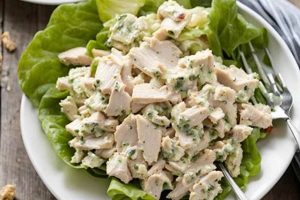
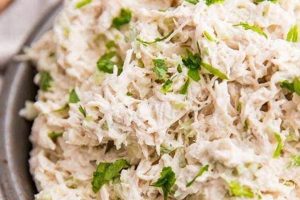
Chicken salad, a staple of Southern cuisine, enjoys numerous variations throughout the region. These recipes often feature common ingredients like shredded chicken, mayonnaise, celery, and onion, but the subtle differences in seasonings, additions like grapes, pecans, or apples, and preparation methods create a diverse culinary landscape. A classic example combines poached chicken with mayonnaise, finely diced celery, and onion, seasoned simply with salt, pepper, and perhaps a touch of paprika or Dijon mustard.
The enduring popularity of this dish in the South stems from its versatility. It can be served as a light lunch, a filling sandwich, or an elegant appetizer for gatherings. The adaptability to different ingredients reflects the resourcefulness of Southern cooking, utilizing readily available seasonal produce and pantry staples. Historically, cold chicken dishes gained prominence as a way to utilize leftover roasted or boiled chicken, showcasing a practical and economical approach to meal preparation. This focus on simple ingredients and straightforward preparation methods contributes to the dish’s enduring appeal, making it a frequent feature in both home kitchens and community cookbooks across generations.
Further exploration of regional variations, ingredient substitutions for dietary restrictions, and tips for achieving optimal flavor and texture will enhance an understanding of this Southern culinary cornerstone.
Tips for Exceptional Chicken Salad
Achieving a flavorful and well-balanced chicken salad requires attention to detail. The following tips offer guidance for elevating this classic dish.
Tip 1: Chicken Selection and Preparation: Using high-quality chicken contributes significantly to the final flavor. Roasting or poaching chicken specifically for the salad yields superior results compared to utilizing pre-cooked or canned chicken.
Tip 2: Mayonnaise Matters: The choice of mayonnaise influences both the flavor and texture. Experimenting with different brands or incorporating homemade mayonnaise allows for customization and flavor enhancement.
Tip 3: Freshness is Key: Utilizing fresh herbs and crisp vegetables enhances the overall quality. Wilted or stale ingredients detract from the salad’s appeal.
Tip 4: Balancing Flavors: Careful consideration of seasonings ensures a well-rounded flavor profile. A blend of herbs, spices, and acidic elements like lemon juice or vinegar creates complexity.
Tip 5: Texture Considerations: Achieving the desired texture requires attention to chopping techniques. Uniformly sized pieces contribute to a pleasant eating experience. Over-processing the chicken can result in a mushy texture.
Tip 6: Chill Time: Allowing the salad to chill for at least an hour before serving allows the flavors to meld and develop depth.
Tip 7: Creative Additions: Incorporating fruits, nuts, or other additions provides textural and flavor contrasts. Consider grapes, pecans, apples, or dried cranberries.
By implementing these tips, one can create a chicken salad that surpasses expectations, offering a delightful balance of flavor and texture.
These culinary insights provide a foundation for creating a truly memorable dish, exemplifying the enduring appeal of Southern cooking.
1. Fresh, High-Quality Ingredients

Fresh, high-quality ingredients form the cornerstone of exceptional Southern-style chicken salad. The emphasis on freshness stems from a culinary tradition that values using seasonal produce and locally sourced products whenever possible. This prioritization directly impacts the final flavor profile, ensuring a vibrant and nuanced taste. For instance, using freshly roasted chicken, as opposed to pre-cooked or canned options, yields a richer, more pronounced chicken flavor that elevates the entire dish. Similarly, incorporating crisp, recently harvested celery and onion provides a satisfying crunch and a brighter, more pronounced vegetal note.
The quality of ingredients extends beyond produce. Selecting high-quality mayonnaise plays a crucial role in achieving the desired creamy texture and balanced flavor. Whether using a preferred brand or crafting homemade mayonnaise, the choice directly influences the richness and overall taste experience. Furthermore, attention to the freshness of herbs and spices ensures that their aromatic contributions enhance the complexity of the chicken salad. A sprinkle of freshly cracked black pepper or a pinch of freshly chopped tarragon offers a more potent and nuanced flavor compared to pre-ground alternatives. Real-life examples abound in Southern kitchens, where cooks often cultivate their own herb gardens and prioritize sourcing ingredients from local farmers’ markets.
Understanding the connection between fresh, high-quality ingredients and Southern-style chicken salad allows for a deeper appreciation of the culinary tradition. This emphasis not only enhances the flavor and texture but also reflects a commitment to using the best available resources. Challenges may arise in sourcing certain ingredients depending on location and seasonality. However, prioritizing freshness remains a paramount consideration in achieving an authentic and satisfying Southern culinary experience. This principle extends beyond chicken salad, influencing a wide range of dishes within the broader context of Southern cuisine.
2. Classic Southern Flavors

Classic Southern flavors play a defining role in shaping the character of Southern Living chicken salad recipes. These flavors, often rooted in agricultural traditions and influenced by historical culinary practices, contribute a unique taste profile that distinguishes the dish from other regional variations. The reliance on readily available ingredients, such as mayonnaise, celery, onion, and a blend of simple seasonings, reflects the resourcefulness of Southern cooking. A key element is the balance of creamy, savory, and subtly sweet notes, achieved through the interplay of these core ingredients. For example, the tangy richness of Duke’s mayonnaise, a Southern staple, provides a foundational flavor that complements the crispness of celery and the pungent bite of onion. The judicious use of salt, pepper, and perhaps a touch of paprika or Dijon mustard further enhances the savory dimension without overpowering the delicate balance.
The emphasis on fresh, local ingredients further reinforces the connection to classic Southern flavors. Recipes often incorporate seasonal produce, such as fresh herbs like dill or chives, and locally sourced pecans or walnuts, adding layers of complexity and textural contrast. These additions not only enhance the flavor profile but also reflect a commitment to using the bounty of the Southern landscape. The impact of these flavors extends beyond mere taste, evoking a sense of place and tradition. A well-executed Southern Living chicken salad recipe can transport individuals back to family gatherings and community potlucks, where the dish often holds a place of honor on the table. Real-world examples of this connection can be found in countless Southern cookbooks and family recipes passed down through generations, showcasing the enduring appeal of these classic flavors.
Understanding the interplay of these classic flavors provides a crucial foundation for appreciating and successfully recreating Southern Living chicken salad recipes. While regional variations exist, the core principles of balance, freshness, and simplicity remain constant. Challenges may arise in sourcing specific ingredients depending on geographic location and seasonal availability. However, the adaptability of these recipes allows for substitutions while maintaining the essence of Southern culinary tradition. This understanding contributes to a broader appreciation of Southern cuisine and its enduring legacy of flavorful, unpretentious dishes.
3. Variety of Textures
Textural variety stands as a defining characteristic of successful Southern Living chicken salad recipes. The interplay of contrasting textures elevates the sensory experience, transforming a simple dish into a more complex and satisfying culinary creation. This dimension adds depth and interest, engaging multiple senses and contributing to a more memorable dining experience. The strategic combination of textures often differentiates a truly exceptional chicken salad from a more commonplace rendition.
- Creamy Base:
The creamy base, typically mayonnaise-based, provides a foundational texture that coats the other ingredients, binding them together while contributing a smooth, rich mouthfeel. This element serves as a blank canvas upon which other textures build, creating a harmonious blend of sensations. Examples include traditional mayonnaise, Greek yogurt, or even avocado for a healthier twist. The creaminess enhances the overall palatability and contributes to the satisfying richness of the salad.
- Chicken Texture:
The texture of the chicken itself plays a crucial role. Shredded or diced chicken provides a tender, yielding texture that contrasts with the creamy base and other additions. The size and consistency of the chicken pieces influence the overall mouthfeel. Over-processed chicken can result in a mushy texture, while larger, more intact pieces offer a more substantial bite. This element contributes to the perceived heartiness of the salad.
- Crunchy Elements:
Crunchy elements, such as finely diced celery, onion, or chopped nuts, provide a sharp contrast to the creamy and tender components. This textural counterpoint adds a refreshing burst and prevents the salad from becoming monotonous. The crispness of these additions contributes to the overall perception of freshness and elevates the sensory experience. Examples include celery, water chestnuts, red onion, or toasted pecans.
- Additions for Contrast:
Further textural variety can be achieved through additions like grapes, dried cranberries, or chopped apples. These ingredients introduce bursts of sweetness and contrasting textures, ranging from the juicy pop of grapes to the chewy texture of dried cranberries. These additions create pockets of flavor and texture, further enhancing the complexity and enjoyment of the salad.
The careful consideration of these various textural elements distinguishes exceptional Southern Living chicken salad recipes. The harmonious blend of creamy, tender, and crunchy components creates a dynamic eating experience that transcends mere sustenance. This focus on textural diversity reflects a broader appreciation for culinary artistry and the pursuit of a more satisfying and memorable meal. The balance achieved through these contrasting textures elevates the dish, contributing to its enduring popularity and its status as a Southern culinary icon.
4. Simple Preparation Methods
Simple preparation methods characterize Southern Living chicken salad recipes, reflecting a culinary tradition that values practicality and resourcefulness. This emphasis on ease of preparation stems from a historical context where cooks often relied on readily available ingredients and straightforward techniques. The inherent simplicity contributes to the widespread popularity and enduring appeal of these recipes, making them accessible to cooks of all skill levels. This ease of execution allows the focus to remain on the quality and freshness of the ingredients, highlighting the flavors rather than complex culinary procedures. Cause and effect are directly linked; simpler methods necessitate high-quality core ingredients to deliver flavorful results. For example, poaching or roasting a chicken, while simple, yields a superior flavor compared to using pre-cooked chicken, compensating for the lack of complex manipulations. This connection underscores the importance of ingredient selection in achieving a satisfying final product.
The practical significance of this understanding lies in its accessibility. Simple preparation methods democratize the culinary experience, enabling individuals with varying levels of culinary expertise to create delicious and authentic Southern chicken salad. This accessibility ensures the continuation of culinary traditions, passing down recipes through generations and fostering a sense of shared heritage. Real-life examples abound in Southern communities, where chicken salad remains a staple at potlucks, family gatherings, and church socials, precisely because of its ease of preparation and consistent results. Furthermore, this simplicity allows for adaptability and customization. Cooks can easily incorporate regional variations or personal preferences, adjusting seasonings, adding fruits or nuts, or modifying the texture based on individual tastes and available ingredients.
In summary, the simplicity inherent in Southern Living chicken salad recipes contributes significantly to their enduring popularity and cultural relevance. This characteristic facilitates accessibility, encourages culinary creativity, and reinforces the connection to Southern culinary heritage. While challenges may arise in sourcing specific ingredients or adapting recipes to dietary restrictions, the underlying principle of simplicity remains a constant, ensuring that these recipes remain a cherished part of Southern cuisine for generations to come. This understanding strengthens the connection between culinary practice, cultural heritage, and the enduring appeal of simple, yet flavorful, Southern dishes.
5. Versatile Serving Options

Versatility in serving options distinguishes Southern Living chicken salad recipes, contributing significantly to their enduring popularity and adaptability within Southern culinary culture. This inherent flexibility allows the dish to seamlessly transition from casual lunches to elegant appetizers, accommodating diverse occasions and palates. The adaptability stems from the salad’s foundational elements: a creamy base, tender chicken, and complementary flavors that harmonize well with various accompaniments. This versatility establishes a cause-and-effect relationship. Because the salad is not confined to a single mode of presentation, it becomes a practical and adaptable culinary solution for a range of scenarios, from everyday meals to special gatherings. This practicality contributes to its frequent appearance in Southern kitchens and its prominence in community cookbooks.
The importance of versatile serving options as a component of Southern Living chicken salad recipes is evident in its practical applications. The salad can be served as a sandwich filling nestled between slices of crusty bread or flaky croissants. It can be presented as a light lunch atop a bed of crisp lettuce, adorned with seasonal vegetables. For more formal occasions, it can be served as an elegant appetizer presented in delicate pastry shells or scooped onto endive leaves. Real-life examples abound. In Southern communities, chicken salad sandwiches are a ubiquitous picnic staple, while more elaborate presentations grace buffet tables at weddings and holiday gatherings. This adaptability underscores its value as a versatile and convenient culinary option.
In summary, the versatility of serving options associated with Southern Living chicken salad recipes enhances its practical value and contributes to its widespread appeal. This adaptability reflects a broader culinary philosophy within Southern tradition, emphasizing resourcefulness and making the most of available ingredients. While regional variations may introduce specific serving customs or flavor profiles, the underlying versatility remains a constant, solidifying the dish’s place as a culinary cornerstone. Understanding this versatility provides insight into the practical and cultural significance of Southern Living chicken salad recipes within the larger context of Southern culinary heritage.
6. Adaptability to Variations

Adaptability to variations represents a defining characteristic of Southern Living chicken salad recipes, reflecting a culinary tradition that embraces regional diversity and individual preferences. This inherent flexibility allows the dish to evolve and adapt across geographic locations and generations, incorporating local ingredients and personal touches while maintaining its core identity. This adaptability stems from the recipe’s straightforward foundation: a blend of chicken, mayonnaise, and aromatics, providing a versatile base upon which variations can be built. This foundation establishes a cause-and-effect relationship; the simplicity of the core recipe allows for additions and substitutions without compromising the essential character of the dish. For example, a coastal community might incorporate fresh shrimp or crab, while an inland region might favor pecans or apples, reflecting the availability of local ingredients. This flexibility ensures that the dish remains relevant and appealing across diverse culinary landscapes.
The importance of adaptability as a component of Southern Living chicken salad recipes lies in its contribution to culinary evolution and personalized expression. The ability to incorporate regional ingredients, seasonal produce, or individual preferences allows cooks to create unique variations that reflect their specific tastes and contexts. Real-life examples abound. In some families, the addition of grapes and pecans is a cherished tradition, while others favor the inclusion of chopped apples or dried cranberries. Some regions prefer a sweeter profile, incorporating sweet pickle relish or a touch of sugar, while others lean towards a more savory rendition, emphasizing herbs and spices. These variations not only enhance the diversity of the dish but also create a sense of personal connection and culinary ownership.
In summary, the adaptability of Southern Living chicken salad recipes underscores its enduring appeal and its capacity to evolve within the dynamic landscape of Southern cuisine. This flexibility facilitates regional variations, personalized interpretations, and creative adaptations, ensuring that the dish remains relevant and engaging across generations. While challenges may arise in maintaining a balance between tradition and innovation, the underlying adaptability empowers cooks to explore new flavors and textures while honoring the fundamental principles of this beloved Southern classic. This understanding underscores the connection between culinary tradition, individual expression, and the ongoing evolution of Southern foodways.
Frequently Asked Questions
This section addresses common inquiries regarding Southern Living chicken salad recipes, providing clarification and guidance for successful preparation and enjoyment.
Question 1: What type of chicken is best suited for Southern-style chicken salad?
While various chicken types can be utilized, roasted or poached chicken generally yields the best results, contributing a richer, more pronounced flavor compared to pre-cooked or canned options. The process of roasting or poaching also allows for greater control over seasoning and moisture content.
Question 2: Can mayonnaise be substituted with a healthier alternative?
Greek yogurt or avocado can serve as healthier alternatives to mayonnaise, offering a lighter texture and different flavor profile. However, these substitutions may alter the traditional taste and consistency of the salad. Adjustments to seasonings may be necessary to achieve a balanced flavor.
Question 3: How long can chicken salad be stored in the refrigerator?
Chicken salad should be stored in an airtight container in the refrigerator for no more than three to five days. Proper storage ensures food safety and maintains optimal flavor and texture. Always check for signs of spoilage before consuming.
Question 4: What are some common variations on the classic Southern chicken salad recipe?
Common variations include the addition of grapes, pecans, apples, dried cranberries, or various herbs and spices. Regional variations might incorporate local ingredients such as peaches or pecans in Georgia, or boiled peanuts in South Carolina. These adaptations reflect the diverse culinary traditions across the South.
Question 5: Can chicken salad be frozen for later consumption?
While freezing chicken salad is possible, it is generally not recommended. Freezing can negatively impact the texture, causing the mayonnaise to separate and the overall consistency to become watery upon thawing. Freshly prepared chicken salad offers the best flavor and texture.
Question 6: How can one achieve the ideal balance of flavors in chicken salad?
Achieving a balanced flavor profile requires careful consideration of seasonings and additions. Start with a high-quality mayonnaise, incorporate fresh herbs, and adjust seasonings like salt, pepper, and Dijon mustard to taste. Consider incorporating a touch of acidity, such as lemon juice or vinegar, to brighten the flavors.
Careful consideration of these frequently asked questions contributes to a greater understanding of Southern Living chicken salad recipes, ensuring successful preparation and enjoyable consumption. Addressing these common concerns facilitates a more informed and satisfying culinary experience.
Further exploration of regional variations and historical context can provide a deeper appreciation of this Southern culinary staple.
Southern Living Chicken Salad Recipes
Southern Living chicken salad recipes represent more than a simple dish; they embody a culinary tradition deeply rooted in Southern history and culture. This exploration has highlighted the importance of fresh, high-quality ingredients, the nuanced interplay of classic Southern flavors, the significance of textural variety, the practicality of simple preparation methods, the versatility of serving options, and the adaptability to regional and personal variations. These elements collectively contribute to the enduring popularity and cultural significance of this Southern staple. From everyday meals to special occasions, these recipes offer a versatile and flavorful culinary solution, reflecting the resourcefulness and adaptability of Southern cooking.
The enduring appeal of Southern Living chicken salad recipes lies in their ability to connect individuals to a rich culinary heritage while simultaneously offering a platform for creative expression. The simplicity of the core recipe allows for endless variations, ensuring that the dish remains relevant and engaging for generations to come. Continued exploration of regional adaptations and historical influences promises to further enrich appreciation for this beloved Southern classic, fostering a deeper understanding of its significance within the broader context of Southern foodways.