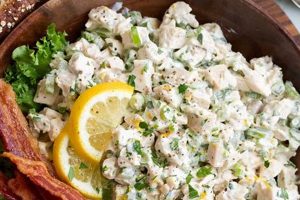
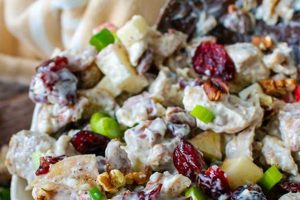
A chilled dish featuring cooked pasta, combined with mayonnaise, cooked chicken, and often other ingredients like vegetables, herbs, or cheese, offers a versatile and customizable meal option. A classic example includes rotini pasta, diced chicken breast, celery, onion, and a simple mayonnaise dressing, seasoned with salt, pepper, and perhaps a touch of mustard.
This type of dish provides a convenient and complete meal, rich in protein and carbohydrates. Its adaptability to diverse ingredients and flavor profiles makes it suitable for picnics, potlucks, and quick lunches or dinners. Historically, similar pasta-based salads, though without refrigeration, have existed for centuries, with the modern version gaining popularity in the mid-20th century alongside the increased accessibility of mayonnaise and refrigeration.
The following sections will explore variations on this classic dish, including ingredient selection, preparation techniques, dressing options, and tips for optimal storage and serving.
Tips for a Superior Chicken and Mayonnaise Pasta Salad
Creating a flavorful and satisfying pasta salad involves attention to detail in ingredient selection, preparation, and storage. The following tips offer guidance for achieving optimal results.
Tip 1: Pasta Selection and Cooking: Opt for short, sturdy pasta shapes that hold their shape well and capture the dressing effectively. Cook pasta al dente to maintain texture and prevent a mushy salad.
Tip 2: Chicken Preparation: Employ cooked, chilled chicken. Rotisserie chicken offers convenience, while home-cooked, seasoned chicken breast provides greater control over flavor profiles.
Tip 3: Mayonnaise Selection: Utilize high-quality mayonnaise. Consider incorporating plain Greek yogurt for a lighter, tangier flavor and reduced fat content.
Tip 4: Ingredient Incorporation: Add ingredients at appropriate temperatures. Ensure pasta and chicken are cooled to prevent mayonnaise from separating. Chop vegetables into uniform sizes for even distribution and aesthetic appeal.
Tip 5: Seasoning and Flavor Enhancement: Freshly ground black pepper, herbs (such as dill, parsley, or chives), and a dash of Dijon mustard enhance the flavor profile. Explore additions like chopped celery, red onion, or bell peppers for added texture and complexity.
Tip 6: Chilling and Serving: Thorough chilling allows flavors to meld. Refrigerate for at least two hours before serving. Garnish with a sprinkle of fresh herbs or a dusting of paprika before presentation.
Tip 7: Storage: Store leftover pasta salad in an airtight container in the refrigerator for up to three days. Avoid freezing, as mayonnaise-based dressings can separate upon thawing.
Adherence to these guidelines contributes to a pasta salad that is both visually appealing and palate-pleasing. Proper preparation techniques enhance flavor development and ensure a safe and enjoyable culinary experience.
By following these tips, one can consistently produce a delicious and satisfying dish suitable for any occasion.
1. Recipe Variations

Adaptability represents a significant advantage of pasta salad recipes featuring mayonnaise and chicken. Variations cater to diverse palates and dietary needs, ensuring broad appeal and culinary exploration.
- Ingredient Flexibility
Core ingredients remain constant: pasta, chicken, and mayonnaise. However, supplemental ingredients offer extensive versatility. Additions such as vegetables (bell peppers, celery, onions, cucumbers), fruits (grapes, dried cranberries, mandarin oranges), cheeses (cheddar, feta, Parmesan), nuts (almonds, walnuts), and herbs (dill, parsley, chives) significantly alter flavor profiles and textures. A Mediterranean-inspired variation might incorporate feta cheese, Kalamata olives, and artichoke hearts, while a Southwestern version could include black beans, corn, and a chipotle-lime dressing.
- Dressing Modifications
While mayonnaise forms the base, its flavor profile can be readily adjusted. Incorporating different mustards (Dijon, yellow, stone-ground), vinegars (apple cider, red wine, balsamic), or citrus juices (lemon, lime) allows for customization of tanginess and acidity. Yogurt or sour cream can be added for a lighter, creamier texture and a subtle tang. A classic example is the addition of sweet pickle relish for a sweeter, tangier dressing.
- Chicken Preparation Methods
Chicken preparation contributes substantially to the overall flavor profile. Options include using rotisserie chicken for convenience, grilling chicken breast for a smoky char, or poaching chicken for a more delicate flavor. Seasoning the chicken before incorporating it into the salad further enhances its impact on the finished dish. For example, using a jerk-seasoned grilled chicken can introduce Caribbean flavors.
- Pasta Shape Considerations
Pasta shape influences both the aesthetic presentation and the eating experience. Small, tubular shapes like rotini and penne effectively hold the dressing, while larger shapes like farfalle (bowtie pasta) offer a more substantial bite. Choosing whole wheat pasta introduces a nutty flavor and increased fiber content. Orzo, a small rice-shaped pasta, creates a salad with a different textural experience altogether.
These variations highlight the adaptable nature of the chicken and mayonnaise pasta salad, demonstrating its suitability for diverse occasions and preferences. By understanding the interplay of ingredients, dressings, and preparation methods, one can create a truly personalized and satisfying dish. The seemingly simple combination of pasta, chicken, and mayonnaise becomes a canvas for culinary creativity.
2. Mayonnaise Quality

Mayonnaise serves as a foundational element in pasta salad recipes incorporating chicken. Its quality directly impacts the overall flavor, texture, and stability of the final dish. Utilizing high-quality mayonnaise, characterized by a rich, creamy texture and a balanced flavor profile, contributes significantly to a more palatable and satisfying outcome. Conversely, lower-quality mayonnaise, often exhibiting a thinner consistency and a less robust flavor, can result in a watery, less flavorful salad. This distinction arises from variations in ingredient sourcing and manufacturing processes. High-quality mayonnaise typically employs higher-grade oils and egg yolks, contributing to a superior flavor and emulsion stability. For instance, a pasta salad made with a premium mayonnaise featuring extra virgin olive oil will possess a richer, more nuanced flavor compared to one made with a mayonnaise containing soybean oil.
The impact of mayonnaise quality extends beyond flavor. Emulsion stability, crucial for preventing separation and maintaining a desirable creamy texture, is directly related to the quality of ingredients and the manufacturing process. A high-quality mayonnaise will maintain its emulsion even when combined with other ingredients and subjected to temperature fluctuations, ensuring a consistent texture throughout the salad. In contrast, a lower-quality mayonnaise may separate, resulting in an oily, unappetizing appearance and a compromised texture. This separation becomes particularly noticeable after the salad has been chilled, highlighting the importance of mayonnaise quality for both immediate enjoyment and storage stability. Consider the difference between a salad made with a premium mayonnaise that holds its form beautifully after refrigeration and one made with a less stable emulsion that separates, leaving an oily residue.
Selecting high-quality mayonnaise constitutes a crucial step in achieving a successful pasta salad. While seemingly a minor detail, the choice of mayonnaise exerts a considerable influence on the overall sensory experience. Prioritizing quality in this key ingredient elevates the dish from merely acceptable to truly exceptional. The subtle nuances of flavor and the consistent, creamy texture facilitated by premium mayonnaise contribute significantly to a more enjoyable and satisfying culinary experience. The investment in a higher-quality mayonnaise translates directly to a more rewarding end product, justifying the often marginal difference in cost.
3. Chicken Preparation

Chicken preparation significantly influences the overall flavor profile and textural experience of a mayonnaise-based pasta salad. Different methods impart distinct characteristics, impacting the final dish. Several factors merit consideration: cooking method, seasoning, and texture.
Cooking Method: Various cooking methods yield diverse results. Poaching produces a moist, tender chicken with a delicate flavor, ideal for salads emphasizing subtler nuances. Grilling imparts a smoky char and a firmer texture, well-suited for robust flavor profiles. Rotisserie chicken offers convenience, providing a pre-cooked option with a seasoned exterior. For example, a salad featuring grilled chicken benefits from the smoky char, while poached chicken complements lighter, herb-forward dressings. The chosen cooking method should align with the desired overall flavor profile.
Seasoning: Seasoning choices further enhance the chicken’s contribution to the salad. Marinades, dry rubs, or simple salt and pepper applications all influence the final taste. A citrus-herb marinade complements a Mediterranean-style salad, while a smoky paprika rub enhances grilled chicken’s flavor. The seasoning should harmonize with other ingredients and the chosen dressing. For instance, a lemon-herb marinade applied to grilled chicken complements a salad featuring feta cheese and Kalamata olives.
Texture: Chicken texture plays a crucial role in the overall enjoyment of the pasta salad. Achieving the desired texture requires careful attention to cooking time and temperature. Overcooked chicken becomes dry and stringy, detracting from the salad’s appeal. Conversely, undercooked chicken presents food safety concerns. Dicing or shredding the chicken after cooking influences how it interacts with the other ingredients and the dressing. Cubed chicken provides a more substantial bite, while shredded chicken distributes more evenly throughout the salad, maximizing flavor dispersion. Consider a salad with diced grilled chicken, offering a satisfying chewiness, contrasted with a salad featuring shredded poached chicken, providing a softer, more delicate textural element.
Careful consideration of these factors ensures that the chicken contributes positively to the overall composition of the pasta salad. A thoughtful approach to cooking method, seasoning, and texture elevates the dish, transforming a simple combination of ingredients into a cohesive and satisfying culinary experience. The interplay of these elements determines the chicken’s role, transitioning it from a mere ingredient to a defining component of the final product.
4. Pasta Shape Selection
Pasta shape selection significantly influences the success of a pasta salad recipe incorporating mayonnaise and chicken. The chosen shape affects not only the aesthetic presentation but also the dish’s overall texture and how effectively the dressing adheres to the pasta. Understanding the relationship between pasta shape and the other components of the saladthe chicken, mayonnaise, and other potential ingredientsproves crucial for achieving a harmonious balance of flavors and textures.
- Surface Area and Dressing Adherence
Pasta shapes with greater surface area, such as rotini, fusilli, and farfalle, tend to hold more dressing. This ensures even distribution of flavor and prevents the salad from becoming dry. Conversely, smoother shapes like penne may require a slightly thicker dressing to achieve adequate coating. The interplay between surface area and dressing consistency ensures a balanced and flavorful experience.
- Shape and Ingredient Compatibility
Certain pasta shapes complement specific ingredients more effectively. For instance, small, shell-shaped pasta like conchiglie works well with smaller ingredients like peas and diced vegetables, creating visually appealing and texturally balanced bites. Larger, flatter shapes like farfalle provide a suitable base for larger chunks of chicken or vegetables. The chosen shape should facilitate a harmonious integration of all ingredients.
- Texture and Mouthfeel
The texture of the pasta contributes significantly to the overall mouthfeel of the salad. Shorter, tubular shapes like penne offer a satisfying chew, while longer, thinner shapes like spaghetti, while less traditional, can create a lighter, more delicate texture. The choice of pasta shape can introduce textural variety and complexity to the dish. For instance, using orzo pasta creates a unique textural contrast against the chicken and vegetables.
- Visual Appeal and Presentation
Pasta shape influences the visual presentation of the salad. A mix of shapes and colors can create a visually engaging dish, while a uniform shape offers a more classic aesthetic. The visual element contributes to the overall dining experience, enhancing enjoyment. A salad featuring tri-color rotini offers a vibrant presentation, while a salad using farfalle creates a more elegant, visually appealing dish.
Consideration of these factors demonstrates that pasta shape selection extends beyond mere aesthetics. It plays a crucial role in creating a well-balanced and enjoyable pasta salad with mayonnaise and chicken. The chosen shape influences how the ingredients interact, how the flavors meld, and ultimately, the overall sensory experience of the dish. A thoughtful approach to pasta shape selection elevates the dish, transforming it from a simple combination of ingredients into a well-considered culinary creation.
5. Salad Freshness

Salad freshness significantly impacts the overall quality and enjoyment of pasta salad incorporating mayonnaise and chicken. Fresh ingredients contribute crisp textures, vibrant flavors, and appealing aromas, enhancing the sensory experience. Conversely, wilted or decaying produce detracts from the dish, introducing undesirable flavors, textures, and potential food safety risks. This principle applies to all salad components, including leafy greens, vegetables, and herbs. For instance, crisp lettuce and brightly colored bell peppers enhance the salad’s visual appeal and provide a refreshing counterpoint to the richness of the mayonnaise and chicken, while limp lettuce and dull-colored peppers diminish the overall aesthetic and flavor profile. The freshness of these components directly correlates with the overall perceived quality of the dish.
Maintaining salad freshness requires careful attention to ingredient selection, storage, and preparation techniques. Selecting produce at peak ripeness and storing it properlyrefrigerated in airtight containers or crisper drawerspreserves optimal quality. Washing and preparing ingredients just before incorporating them into the salad minimizes exposure to air and moisture, further extending freshness. For example, washing and chopping lettuce immediately before assembling the salad prevents premature wilting and maintains its crisp texture. Similarly, storing chopped vegetables in airtight containers in the refrigerator until ready to use helps preserve their vibrant colors and flavors. These practices demonstrate a commitment to quality and enhance the overall dining experience.
Freshness, therefore, represents a critical factor in achieving a successful pasta salad with mayonnaise and chicken. Prioritizing fresh, high-quality ingredients elevates the dish, contributing to a more satisfying and enjoyable culinary experience. Attention to proper storage and handling techniques maximizes freshness, ensuring that the salad remains appealing and flavorful. Neglecting these aspects compromises the overall quality and diminishes the potential for a truly delightful culinary creation. The freshness of the salad components directly correlates with the perceived quality and enjoyment of the dish, underscoring the importance of this often overlooked aspect.
Frequently Asked Questions
This section addresses common inquiries regarding pasta salad recipes featuring mayonnaise and chicken, providing concise and informative responses.
Question 1: How long can this type of pasta salad be safely stored?
Properly stored in an airtight container in the refrigerator, pasta salad with mayonnaise and chicken typically remains safe for consumption for up to three days. Beyond this timeframe, the risk of bacterial growth increases significantly.
Question 2: What are effective methods for preventing the salad from becoming watery?
Several strategies can mitigate wateriness. Ensuring all ingredients, particularly the pasta and chicken, are thoroughly cooled before combining them with the mayonnaise helps prevent emulsion breakdown. Adding ingredients like chopped celery after the initial mixing can also absorb excess moisture.
Question 3: Can frozen chicken be utilized in these recipes?
While not ideal, frozen chicken can be used. However, it must be completely thawed and cooked to a safe internal temperature before incorporation into the salad. Proper thawing methods, such as refrigeration or cold water thawing, are crucial for food safety.
Question 4: What are suitable alternatives to traditional mayonnaise?
Plain Greek yogurt, sour cream, or a combination thereof offer viable alternatives to mayonnaise, contributing a lighter texture and a subtle tang. Avocado-based mayonnaise provides a vegan option. These alternatives impact flavor and texture, requiring potential recipe adjustments.
Question 5: How can one best maintain the freshness of chopped vegetables in the salad?
Storing chopped vegetables separately in airtight containers in the refrigerator until ready to combine them with the other ingredients helps preserve their freshness. Adding them to the salad just before serving further maximizes crispness and flavor.
Question 6: What are some strategies for enhancing the flavor profile of the salad beyond basic seasonings?
Incorporating fresh herbs like dill, parsley, or chives adds brightness and complexity. A dash of Dijon mustard or a squeeze of lemon juice introduces tanginess. Roasted red peppers or sun-dried tomatoes offer depth of flavor and visual appeal. Experimentation with different spices and seasonings allows for customization.
Understanding these key aspects of preparation and storage contributes to a safer and more enjoyable culinary experience. Attention to detail in each step, from ingredient selection to storage practices, ensures a high-quality and flavorful pasta salad.
The following section provides a selection of recommended recipes for exploring diverse variations on this classic dish.
Pasta Salad Recipe with Mayo and Chicken
Exploration of pasta salad recipes incorporating mayonnaise and chicken reveals a dish offering significant versatility and adaptability. Careful consideration of ingredient quality, preparation techniques, and flavor combinations contributes significantly to the overall culinary experience. Mayonnaise quality impacts texture and flavor stability. Chicken preparation methods influence the final dish’s overall taste and texture profile. Pasta shape selection affects both presentation and dressing adherence. Freshness of salad components contributes to both flavor and visual appeal. Understanding these elements allows for informed choices, maximizing enjoyment and culinary success.
Pasta salad, often perceived as a simple dish, presents opportunities for culinary creativity and personalized expression. Thoughtful ingredient selection and meticulous preparation elevate this classic combination beyond mere sustenance, transforming it into a nuanced and satisfying culinary experience. Further exploration of flavor profiles, ingredient combinations, and presentation styles promises continued enjoyment and culinary discovery within this versatile dish’s realm.