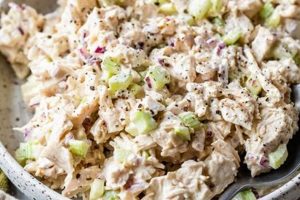
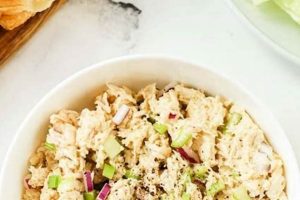
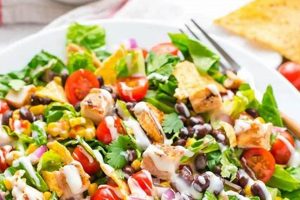
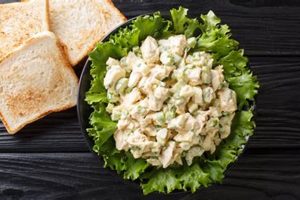
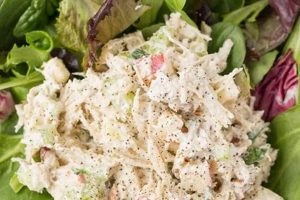
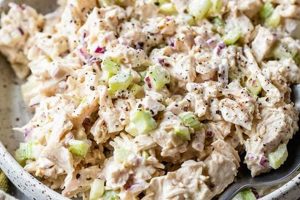
A dish featuring cooked chicken, often shredded or diced, combined with crisp vegetables like cabbage, carrots, and often, crunchy noodles. The dressing typically features a light, savory base, frequently incorporating soy sauce, sesame oil, and ginger. Variations might include mandarin oranges, almonds, or other complementary ingredients, showcasing the adaptability of the core concept.
Quick preparation and readily available ingredients make this salad a popular choice for weeknight meals or casual gatherings. Its nutritional value, derived from lean protein and fresh vegetables, contributes to its appeal as a healthy meal option. From its likely origins as a fusion dish evolving in Westernized Chinese restaurants, this type of salad has become a widely enjoyed and recognized culinary creation.
This discussion will further examine specific component choices, dressing variations, preparation techniques, and tips for optimizing flavor and presentation.
Tips for a Superior Chicken Salad
Optimizing flavor and texture requires attention to detail. The following tips provide guidance for achieving the best results when preparing this dish.
Tip 1: Chicken Selection and Preparation: Using pre-cooked rotisserie chicken expedites preparation. Alternatively, poaching or grilling boneless, skinless chicken breasts offers greater control over seasoning and ensures tender results. Allow the chicken to cool completely before shredding or dicing to prevent wilting the vegetables.
Tip 2: Vegetable Choices and Handling: While Napa cabbage and carrots provide a classic base, other vegetables such as shredded romaine lettuce, bell peppers, or snap peas offer textural and flavor variations. Using a mandoline slicer ensures uniform slicing, promoting even dressing coverage and enhancing visual appeal.
Tip 3: Noodle Selection: Crispy chow mein noodles or wonton strips provide a satisfying crunch. Crunchy noodles should be added immediately before serving to prevent them from becoming soggy. Consider offering them as a separate topping, allowing diners to add them according to their preference.
Tip 4: Dressing Mastery: A well-balanced dressing is crucial. Achieve optimal flavor by combining soy sauce, rice vinegar, sesame oil, and a touch of ginger. Whisking the dressing ingredients thoroughly creates a smooth emulsion.
Tip 5: Ingredient Proportions: Balance is key. Avoid an overabundance of any single ingredient. Strive for a harmonious blend of chicken, vegetables, and dressing.
Tip 6: Freshness is Paramount: Use the freshest ingredients possible. Peak-season vegetables contribute optimal flavor and texture.
Tip 7: Mindful Assembly: Toss the salad components gently to ensure even coating without damaging delicate ingredients. Serve immediately for the best experience.
By following these tips, one can elevate this straightforward dish into a truly satisfying culinary experience. Careful attention to each element ensures optimal flavor, texture, and presentation.
The next section will offer variations on the basic recipe, allowing for further customization and exploration of flavor profiles.
1. Fresh Ingredients

Ingredient freshness significantly impacts the overall quality of a simple Chinese chicken salad. Freshness contributes not only to optimal flavor and texture but also influences the nutritional value and overall enjoyment of the dish. Wilted or less-than-fresh produce can result in a subpar salad experience, diminishing the crispness and vibrancy expected. Conversely, vibrant, recently harvested vegetables elevate the salad’s sensory appeal. For instance, crisp Napa cabbage offers a satisfying crunch, while brightly colored, firm carrots contribute sweetness and visual interest. The difference between a salad made with freshly grated ginger and one made with pre-packaged, older ginger is readily discernible in the final product’s brightness and depth of flavor.
Utilizing fresh ingredients extends beyond produce. The quality of the chicken also plays a crucial role. Freshly cooked chicken offers superior flavor and texture compared to chicken that has been stored for an extended period. Similarly, using freshly made dressing, rather than a bottled alternative, allows for greater control over flavor profiles and avoids preservatives or additives that can detract from the salad’s taste. Freshly toasted sesame seeds, rather than pre-ground, offer a more pronounced nutty aroma and flavor, enhancing the overall sensory experience.
Prioritizing ingredient freshness represents a commitment to quality. This translates to a more vibrant, flavorful, and nutritious salad. While convenience may tempt the use of pre-packaged or less-than-fresh components, the perceptible difference in the final outcome underscores the importance of selecting high-quality, fresh ingredients whenever possible. This attention to detail elevates a simple dish into a truly enjoyable and healthful culinary experience.
2. Balanced Dressing
A balanced dressing is paramount in a simple Chinese chicken salad recipe. The dressing acts as the unifying element, binding the individual components and influencing the overall flavor profile. An imbalanced dressing can either overwhelm the delicate flavors of the chicken and vegetables or leave the salad tasting bland and uninspired. A successful dressing achieves harmony between sweet, sour, salty, and savory elements. Consider a dressing overly reliant on soy sauce: the saltiness would dominate, masking the other flavors present. Conversely, a dressing lacking acidity would fail to cut through the richness of the chicken and nuts, resulting in a cloying, one-dimensional taste. This balance is achieved through careful proportioning of ingredients such as soy sauce, rice vinegar, sesame oil, ginger, and sweeteners like honey or sugar.
The practical significance of a well-balanced dressing is evident in the final product. A harmonious dressing enhances the individual flavors of the ingredients, allowing the nuanced tastes of the chicken, vegetables, and nuts to shine through. It provides a cohesive flavor profile, ensuring that each bite offers a complex and satisfying experience. For instance, the slight sweetness of rice vinegar complements the savory notes of sesame oil, while the ginger adds a subtle warmth and complexity. Furthermore, the dressing contributes to the overall texture of the salad, adding moisture and preventing the ingredients from becoming dry or sticking together. This balance is not merely a matter of taste but also of mouthfeel and enjoyment.
Understanding the importance of dressing balance allows for informed choices in recipe adaptation and customization. One might choose to amplify the ginger notes for a spicier salad or reduce the sweetness for a more savory profile. Recognizing the interplay of these flavors empowers individuals to tailor the recipe to specific preferences while maintaining the integrity of the dish. A balanced dressing elevates the simple Chinese chicken salad from a collection of ingredients to a cohesive and flavorful culinary creation. This attention to detail ensures a consistently enjoyable and satisfying dining experience.
3. Crispy Noodles
Crispy noodles constitute a crucial textural element within a simple Chinese chicken salad recipe. Their presence offers a stark contrast to the softer textures of the chicken and vegetables, introducing a satisfying crunch that elevates the overall sensory experience. This textural interplay prevents the salad from becoming monotonous, adding a dimension of complexity that enhances enjoyment. Consider the difference between a salad with and without crispy noodles: the former offers a dynamic interplay of textures, while the latter might feel somewhat one-dimensional. One can observe this principle in action at numerous Asian-inspired restaurants, where the deliberate inclusion of crispy elements, be it noodles, wonton strips, or fried onions, signifies a conscious effort to create a more engaging culinary experience. This textural contrast transforms a simple salad into a multi-faceted dish.
Beyond their textural contribution, crispy noodles also influence the overall flavor profile. Often fried, they introduce subtle notes of toasted grain, adding depth and complexity. This subtle roasted flavor complements the savory notes of the dressing and the inherent sweetness of the vegetables, creating a well-rounded flavor profile. Furthermore, the oil used in frying the noodles can carry aromatic spices or seasonings, further enhancing the overall taste. For example, noodles fried in sesame oil impart a distinctly nutty aroma and flavor that complements the other components of the salad. This nuanced flavor contribution underscores the importance of carefully selecting the type of crispy noodles used.
The effective incorporation of crispy noodles requires an understanding of their inherent fragility. Their tendency to absorb moisture and lose their crispness necessitates careful timing in the preparation process. Adding them immediately before serving ensures optimal texture, preserving the desired crunch. Prematurely adding them risks a soggy, unappetizing outcome, diminishing their intended contribution. This practical consideration highlights the importance of mindful assembly in achieving the desired culinary result. Therefore, achieving the perfect balance of texture and flavor in a simple Chinese chicken salad requires careful consideration of the type, timing, and quality of the crispy noodles incorporated.
4. Tender Chicken

Tender chicken plays a pivotal role in a successful simple Chinese chicken salad recipe. Texture significantly impacts enjoyment; dry, stringy chicken detracts from the overall experience. Tender chicken, conversely, offers a pleasant contrast to the crisp vegetables and crunchy noodles. This textural harmony is essential for a balanced and satisfying salad. Consider the difference between biting into a succulent piece of chicken versus a tough, overcooked one. The former seamlessly integrates with the other ingredients, while the latter disrupts the intended harmony. This distinction highlights the importance of achieving proper chicken tenderness.
Several factors contribute to chicken tenderness. Cooking method significantly influences the outcome. Poaching or gently simmering chicken breasts in broth results in moist, tender meat. Overcooking, whether by grilling or pan-frying at high heat for extended periods, leads to dryness and toughness. Marinating the chicken prior to cooking also enhances tenderness. A simple marinade of soy sauce, ginger, and garlic not only infuses flavor but also helps to break down muscle fibers, resulting in a more tender product. These culinary techniques demonstrate the practical application of understanding the importance of tender chicken.
Achieving tender chicken in a simple Chinese chicken salad elevates the dish from merely acceptable to genuinely enjoyable. The interplay of textures becomes harmonious, and the overall dining experience is enhanced. Challenges in achieving tenderness may arise from variations in chicken quality or cooking equipment, but attention to detail and adherence to established culinary principles consistently yield positive results. The pursuit of tender chicken, therefore, directly correlates with the goal of creating a superior and satisfying salad.
5. Flavorful Vegetables
Flavorful vegetables contribute significantly to the overall success of a simple Chinese chicken salad recipe. Their presence provides not only essential nutrients and textural variety but also a depth of flavor that complements the other components. Bland vegetables result in a lackluster salad, while vibrant, flavorful options elevate the dish considerably. This cause-and-effect relationship underscores the importance of selecting appropriate vegetables. For instance, incorporating crisp, peppery radishes offers a contrasting bite to the softer lettuce and chicken, while the subtle sweetness of shredded carrots balances the savory notes of the dressing. The choice of vegetables directly impacts the overall complexity and enjoyment of the salad.
Consider Napa cabbage, a staple in many Chinese chicken salads. Its mild, slightly sweet flavor provides a neutral base that allows other, bolder flavors to shine. However, if the cabbage lacks freshness, its flavor diminishes, impacting the overall taste. Similarly, incorporating fresh cilantro adds a bright, citrusy note that complements the savory dressing, while the addition of thinly sliced red onion introduces a pungent bite. These examples illustrate the practical significance of choosing flavorful, fresh vegetables. The interplay of these diverse flavors creates a dynamic and engaging sensory experience, elevating the simple salad to a more complex and satisfying meal.
The selection and preparation of vegetables require careful consideration. While pre-shredded options offer convenience, they often lack the vibrancy and crispness of freshly prepared vegetables. Furthermore, the inclusion of a variety of colors and textures enhances both the visual appeal and the nutritional value of the salad. Potential challenges include seasonal availability and personal preferences, but prioritizing flavor remains paramount. Understanding the impact of flavorful vegetables on the overall composition of a simple Chinese chicken salad allows for informed decisions in recipe adaptation and customization, ultimately leading to a more enjoyable and satisfying culinary outcome.
6. Proper Assembly

Proper assembly is crucial for a simple Chinese chicken salad recipe. It directly impacts the final product’s texture, flavor, and overall appeal. Incorrect assembly can lead to a soggy salad with unevenly distributed dressing and compromised textural elements. Conversely, mindful assembly ensures the ingredients retain their individual characteristics while harmoniously integrating. Consider the consequence of adding crispy noodles too early: they absorb moisture from the dressing and vegetables, losing their defining crunch. Similarly, if the dressing is not evenly distributed, some bites might be overly saturated while others remain bland. Restaurants often assemble salads just before serving, demonstrating an understanding of this principle. This practice maximizes the textural contrast between the components and ensures a consistently flavorful experience.
The practical significance of proper assembly extends beyond the immediate dining experience. It also affects the salad’s shelf life. A properly assembled salad, with crispy elements added just before consumption, can be stored and enjoyed later without significant textural degradation. However, a pre-assembled salad with all components mixed together will likely deteriorate quickly, especially if refrigerated. This understanding informs meal preparation strategies, allowing individuals to optimize both the immediate and later enjoyment of the salad. Consider the scenario of preparing a salad for a picnic: adding the dressing and crispy noodles only upon arrival ensures a fresh, crisp salad rather than a soggy disappointment. This practical application illustrates the value of proper assembly.
Mindful assembly, therefore, represents a fundamental element of a successful simple Chinese chicken salad recipe. While ingredient quality and dressing preparation are essential, the final act of combining these elements dictates the overall dining experience. Challenges can arise from logistical constraints, such as preparing salads in advance for large gatherings, but understanding the principles of proper assembly allows for informed adaptations. Maintaining the integrity of individual components while ensuring harmonious integration through appropriate timing and layering ultimately determines the salad’s success. This attention to detail elevates the simple Chinese chicken salad from a basic dish to a carefully orchestrated culinary creation.
Frequently Asked Questions
This section addresses common inquiries regarding the preparation and enjoyment of simple Chinese chicken salad.
Question 1: Can one substitute rotisserie chicken for freshly cooked chicken?
Rotisserie chicken offers a convenient shortcut. Ensure it is high quality and free of excessive skin or bones. Remove skin and bones before shredding.
Question 2: How can sogginess be prevented?
Add dressing and crispy noodles immediately before serving. Store components separately and combine just prior to consumption.
Question 3: What are suitable alternatives to Napa cabbage?
Shredded romaine lettuce, butter lettuce, or a combination of greens can substitute for Napa cabbage. Consider the texture and flavor profile when selecting alternatives.
Question 4: Can the dressing be prepared in advance?
Preparing the dressing in advance enhances flavor development. Store it in an airtight container in the refrigerator for up to three days.
Question 5: How can one adjust the salad’s spiciness?
Increase or decrease the amount of ginger, chili garlic sauce, or red pepper flakes to modulate spiciness according to preference.
Question 6: What are suitable pairings for this salad?
This salad pairs well with steamed rice, dumplings, or spring rolls. It can also be served as a light meal on its own.
Addressing these frequently asked questions helps to ensure a successful and enjoyable salad preparation experience.
The subsequent section will explore variations on this classic recipe, offering inspiration for customization and flavor exploration.
Simple Chinese Chicken Salad Recipe
Exploration of this popular dish reveals the interplay of fresh ingredients, balanced dressing, and textural elements like crispy noodles and tender chicken as crucial for its success. Careful attention to each component, from vegetable selection to proper assembly, contributes significantly to the final outcome. Understanding these fundamental principles allows for both consistent replication of classic preparations and informed adaptations based on individual preferences.
Mastery of this seemingly simple dish lies in appreciating the nuanced balance of flavors and textures. Further exploration of ingredient variations and regional adaptations offers a pathway to deeper culinary understanding and a more rewarding dining experience. The potential for customization ensures its continued relevance and enjoyment across diverse palates.