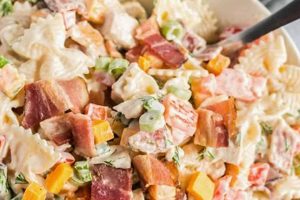
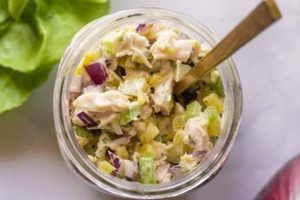
A dish combining cooked pasta, chicken, bacon, and a creamy ranch dressing typically includes additional ingredients like vegetables (e.g., tomatoes, celery, onions) and seasonings. Variations exist, allowing for customization based on dietary preferences and ingredient availability. It serves as a versatile option for picnics, potlucks, or quick meals.
This combination of ingredients offers a balance of protein, carbohydrates, and fats, creating a satisfying and flavorful meal. The customizable nature of the dish allows for adaptability to various dietary needs and preferences. Its popularity stems from its relative ease of preparation and the widespread appeal of the individual components. The dish’s origins are likely rooted in the mid-20th century rise of convenience foods and the increasing popularity of ranch dressing.
Explorations of specific variations, detailed ingredient lists, and step-by-step instructions will follow. Nutritional information and tips for optimizing flavor and texture will also be provided.
Tips for an Exceptional Chicken Bacon Ranch Pasta Salad
Optimizing ingredient selection and preparation techniques elevates this dish from simple to extraordinary. Attention to detail ensures a flavorful and satisfying culinary experience.
Tip 1: Pasta Selection: Opt for rotini, farfalle, or penne. These shapes hold the dressing effectively. Avoid long, thin noodles like spaghetti.
Tip 2: Chicken Preparation: Roasting or grilling chicken enhances flavor. Cubing or shredding the cooked chicken ensures even distribution throughout the salad.
Tip 3: Bacon Enhancement: Crisp bacon adds textural contrast. Crumble the bacon after cooking to prevent large, unwieldy pieces.
Tip 4: Ranch Dressing Customization: Use high-quality ranch dressing. Enhance the flavor profile by adding fresh herbs like dill or chives.
Tip 5: Vegetable Incorporation: Diced celery, red onion, and cherry tomatoes provide color and freshness. Consider blanching or roasting vegetables for enhanced flavor.
Tip 6: Seasoning Considerations: Freshly ground black pepper and garlic powder complement the other flavors. A touch of smoked paprika can add depth.
Tip 7: Chilling and Serving: Chilling the salad for at least 30 minutes allows the flavors to meld. Serve chilled for optimal enjoyment.
By following these guidelines, one can achieve a pasta salad marked by balanced flavors, appealing textures, and visual appeal. These techniques maximize the potential of each ingredient.
This attention to detail elevates a simple pasta salad into a memorable dish suitable for any occasion. The following section provides a complete recipe incorporating these tips.
1. Ingredients

Ingredient selection significantly impacts the flavor profile, nutritional value, and overall quality of a chicken bacon ranch pasta salad. Careful consideration of each component contributes to a well-balanced and satisfying dish.
- Protein: Chicken and Bacon
Chicken and bacon provide the primary protein sources. Chicken offers lean protein, while bacon contributes savory fat and a smoky flavor. The quality of these ingredients directly influences the final taste. For example, using free-range chicken or thick-cut bacon can enhance the overall flavor profile. Proper cooking methods are essential for achieving optimal texture and taste, such as grilling or roasting the chicken and crisping the bacon.
- Base: Pasta
The pasta serves as the foundation of the salad. Shape and texture are important considerations. Short, sturdy pasta shapes like rotini or penne hold the dressing well. Cooking the pasta al dente prevents a mushy texture. Whole wheat pasta offers a more nutritious option. The pasta absorbs the flavors of the other ingredients, making its selection crucial for a well-balanced dish.
- Binding Agent: Ranch Dressing
Ranch dressing binds the ingredients together and adds a creamy, tangy element. Quality and flavor variations in ranch dressings can significantly alter the final product. Homemade ranch allows for greater control over ingredients and flavor customization. Using low-fat or Greek yogurt-based ranch dressing offers a healthier alternative. The consistency of the ranch dressing is important for coating the other ingredients effectively.
- Enhancing Elements: Vegetables and Seasonings
Vegetables contribute texture, color, and nutrients. Common additions include chopped celery, tomatoes, and onions. Other vegetables, like bell peppers or cucumbers, offer variety and visual appeal. Fresh herbs such as chives or parsley can brighten the flavors. Seasonings enhance the overall taste profile. Black pepper, garlic powder, and onion powder are common choices. Considerations for ingredient freshness and quality apply to these elements as well.
The interplay of these ingredient categories determines the final character of the chicken bacon ranch pasta salad. A thoughtful approach to selecting and preparing each element yields a cohesive and enjoyable dish. Balancing the proportions of each ingredient is critical for achieving the desired flavor profile and overall experience. The subsequent section will delve deeper into preparation techniques.
2. Preparation
Preparation significantly influences the final outcome of a chicken bacon ranch pasta salad. Proper techniques ensure optimal flavor, texture, and food safety. This section outlines key preparatory steps.
- Ingredient Preprocessing
Initial steps involve preparing individual ingredients. Chicken requires cooking, either by grilling, baking, or poaching, followed by dicing or shredding. Bacon needs to be cooked until crisp and then crumbled. Pasta should be cooked al dente according to package directions. Vegetables require washing and chopping. Preprocessing ensures that all components are ready for combination and minimizes final assembly time. For instance, pre-cooked and chilled chicken allows for immediate incorporation into the salad, preventing delays during the final stages of preparation.
- Component Combining
Once individual ingredients are prepared, the salad assembly begins. Combining ingredients in a specific order can optimize flavor and texture. For example, adding the dressing last helps prevent the pasta from becoming soggy. Gently tossing the ingredients ensures even distribution of the dressing and prevents damage to delicate components like tomatoes. This stage requires attention to detail to create a visually appealing and evenly flavored salad.
- Chilling and Serving
Chilling the salad allows the flavors to meld. A minimum of 30 minutes in the refrigerator enhances the overall taste experience. Proper chilling also improves food safety by inhibiting bacterial growth. Serving the salad chilled maintains its optimal temperature and prevents ingredient degradation, particularly mayonnaise-based dressings like ranch. The duration of chilling should be balanced to avoid over-softening certain vegetables.
- Timing and Organization
Efficient preparation involves strategic timing and organization. Preparing components in advance, such as cooking the chicken and bacon the day before, streamlines the final assembly process. Having all ingredients readily available and organized before beginning assembly minimizes delays and ensures a smooth workflow. This organized approach contributes to a more relaxed and enjoyable cooking experience.
These preparatory steps contribute significantly to the overall success of the chicken bacon ranch pasta salad. Attention to detail in each phase ensures a delicious, visually appealing, and safe-to-consume dish. Proper preparation enhances the flavor and texture of the individual components and contributes to the harmonious blend of flavors in the final product.
3. Proportions
Proportions play a crucial role in a successful chicken bacon ranch pasta salad. The balance of ingredients affects the overall flavor profile, texture, and satisfaction derived from the dish. Careful consideration of ingredient ratios ensures a harmonious blend of tastes and a pleasing culinary experience. This section explores the key facets of proportion within this specific culinary context.
- Pasta-to-Protein Ratio
The balance between pasta and protein (chicken and bacon) significantly influences the salad’s heartiness and nutritional value. Too much pasta can result in a bland and carbohydrate-heavy dish, while excessive protein can make it feel too dense. A balanced ratio ensures that each bite contains a satisfying combination of both elements. For example, a ratio of 2:1 (pasta to protein) might be suitable for a lighter salad, while a 1:1 ratio creates a more substantial meal. The desired ratio depends on individual preferences and dietary goals.
- Dressing-to-Ingredient Ratio
The amount of ranch dressing affects the salad’s moisture level and flavor intensity. Too little dressing can lead to a dry and unappetizing salad, while too much can make it overly rich and heavy. The ideal amount coats the ingredients evenly without overwhelming them. Factors such as the dressing’s thickness and the ingredients’ absorbency influence the appropriate amount. Experimentation and personal preference ultimately guide the optimal dressing-to-ingredient ratio.
- Vegetable-to-Other-Ingredient Ratio
Vegetables contribute texture, color, and nutritional value. Their proportion relative to other ingredients affects the salad’s overall freshness and complexity. A generous amount of vegetables adds vibrancy and lightness, while a smaller proportion allows the other flavors to take center stage. The type of vegetables used also influences the optimal ratio, as some vegetables have stronger flavors than others. The desired vegetable proportion depends on the intended balance of flavors and textures.
- Bacon-to-Chicken Ratio
The balance between bacon and chicken affects the salad’s savoriness and richness. Bacon contributes a smoky and salty flavor, while chicken provides a milder protein base. Adjusting the ratio of these two ingredients allows for customization of the overall flavor profile. A higher bacon-to-chicken ratio creates a richer, more intense flavor, while a lower ratio emphasizes the chicken’s milder taste. Personal preference dictates the optimal balance.
Understanding and manipulating these proportions allows for customization and optimization of the chicken bacon ranch pasta salad to suit individual preferences and dietary needs. A well-balanced recipe considers each element’s contribution to the final dish, resulting in a harmonious blend of flavors and textures. Achieving the right proportions elevates this simple salad from basic to exceptional.
4. Flavor Balance

Flavor balance is crucial in a successful chicken bacon ranch pasta salad. This dish involves a complex interplay of savory, creamy, tangy, and potentially spicy elements. The goal is to create a harmonious blend where no single flavor dominates, resulting in a more nuanced and enjoyable culinary experience. A well-balanced flavor profile allows each ingredient to contribute without overpowering the others, creating a synergistic effect where the whole is greater than the sum of its parts.
The inherent richness of bacon and ranch dressing necessitates careful balancing with other ingredients. Acidity from ingredients like tomatoes or vinegar helps cut through the richness, preventing the salad from becoming overly heavy. Fresh herbs, such as dill or chives, introduce a bright, contrasting flavor against the creamy ranch. The inherent saltiness of bacon and ranch requires careful seasoning; additional salt may not be necessary, and over-salting can easily ruin the balance. Consider using lower-sodium bacon or ranch dressing to maintain better control over the final salt level. The sweetness of certain vegetables, like bell peppers, can also contribute to flavor complexity and balance. For instance, the sweetness of roasted red peppers can complement the smoky bacon and creamy ranch, adding another layer of flavor dimension.
Achieving flavor balance involves careful consideration of each ingredient’s contribution and adjusting proportions accordingly. Tasting and adjusting throughout the preparation process is essential. Understanding the interplay of flavors allows for informed choices regarding ingredient selection, quantities, and complementary seasonings. This ultimately leads to a more satisfying and well-rounded final product. Failure to achieve this balance can result in a dish that is either too bland, too rich, too salty, or dominated by a single flavor, detracting from the overall enjoyment.
5. Texture
Textural contrast is a defining characteristic of a well-executed chicken bacon ranch pasta salad. The interplay of various textures creates a more engaging and enjoyable eating experience. A successful recipe balances contrasting textures to achieve a harmonious and satisfying result. This section explores the key textural elements that contribute to the dish’s overall appeal.
- Pasta Texture
Pasta, the foundational element, requires careful cooking to achieve the ideal texture. Overcooked pasta becomes mushy and detracts from the overall experience, while undercooked pasta offers an unpleasantly firm bite. The target is al dente firm to the bite but not hard. The pasta’s shape also influences texture; larger shapes offer a more substantial chew, while smaller shapes provide a delicate contrast. The pasta absorbs the dressing, so its texture impacts the salad’s overall moisture and mouthfeel. For example, rotini, with its spirals, provides a different textural experience compared to penne.
- Chicken Texture
Chicken contributes a tender protein element. Overcooked chicken becomes dry and stringy, while undercooked chicken presents food safety concerns. Properly cooked chicken offers a pleasant chewiness without being tough. The method of cooking influences the final texture; grilled chicken develops a slightly charred exterior, while poached chicken retains more moisture. Shredded or diced chicken integrates more readily with the other ingredients and offers a more consistent textural experience throughout the salad.
- Bacon Texture
Bacon provides a crucial textural counterpoint crispness. Achieving crispy bacon requires proper cooking techniques; overcooked bacon becomes brittle and crumbles excessively, while undercooked bacon is unpleasantly chewy. The crisp bacon provides a satisfying crunch against the softer textures of the pasta, chicken, and vegetables. The size of the bacon pieces after cooking also influences texture; smaller crumbles distribute more evenly and offer a more consistent crunch in each bite.
- Vegetable Texture
Vegetables introduce a range of textural possibilities. Crisp vegetables like celery and bell peppers provide a refreshing crunch, while softer vegetables like tomatoes offer a juicy burst. The choice of vegetables and their preparation methods influence the final texture. Raw vegetables offer the most crunch, while blanched or roasted vegetables present a softer, sometimes caramelized, texture. The variety of textures within the vegetable component adds complexity and interest to each bite.
The interplay of these textural elements elevates the chicken bacon ranch pasta salad beyond a simple combination of ingredients. The contrast between the soft pasta, tender chicken, crisp bacon, and varied vegetable textures creates a dynamic and satisfying sensory experience. Careful attention to each component’s texture, from the initial preparation to the final assembly, contributes significantly to the overall success and enjoyment of this dish.
6. Presentation
Presentation elevates chicken bacon ranch pasta salad from a simple dish to a visually appealing culinary creation. While flavor and texture remain paramount, presentation enhances the dining experience, stimulating appetite and conveying care in preparation. Consideration of color, arrangement, and serving style significantly impacts the perceived value and enjoyment of the salad.
Visual appeal begins with ingredient selection. Vibrant colors from vegetables like cherry tomatoes, red onion, and bell peppers create an enticing contrast against the creamy dressing and pale pasta. Fresh herbs, such as parsley or chives, provide a final flourish of color and texture. The arrangement of ingredients also plays a crucial role. Even distribution of components ensures visual balance and prevents the perception of ingredient scarcity. Consider the serving vessel; a clear glass bowl showcases the colorful ingredients, while a rustic wooden bowl provides a more casual aesthetic. Individual portions in small bowls or jars offer a personalized touch for larger gatherings. Garnishing with a sprinkle of paprika or a few strategically placed bacon crumbles further enhances visual interest.
Practical applications extend beyond home kitchens. In catering or restaurant settings, presentation significantly influences customer perception. A thoughtfully presented salad conveys professionalism and attention to detail, enhancing the overall dining experience. Challenges arise when balancing practicality with aesthetics, particularly in large-scale food preparation. Maintaining consistent presentation across multiple servings requires standardized procedures and efficient workflows. Despite these challenges, prioritizing presentation demonstrates a commitment to quality and elevates the perceived value of this otherwise simple dish, contributing to a more positive and memorable dining experience.
Frequently Asked Questions
This section addresses common inquiries regarding the preparation and enjoyment of chicken bacon ranch pasta salad. Clarification on these points aims to enhance understanding and facilitate successful culinary outcomes.
Question 1: Can different pasta shapes be used?
While various pasta shapes are acceptable, short, sturdy varieties like rotini, farfalle, or penne are recommended. These shapes hold the dressing more effectively. Long, thin pasta like spaghetti is less suitable.
Question 2: What are suitable chicken alternatives?
Turkey or ham offer viable alternatives to chicken. For vegetarian options, chickpeas or cooked lentils can provide protein and texture. These substitutions allow for adaptability to dietary preferences and ingredient availability.
Question 3: How can the salad be made healthier?
Using lower-fat ranch dressing, whole wheat pasta, and increasing the vegetable content enhances nutritional value. Reducing the amount of bacon and incorporating leaner protein sources further contributes to a healthier profile.
Question 4: How long can the salad be stored?
Refrigeration in an airtight container allows for storage up to three days. Beyond this timeframe, quality and food safety may be compromised. Prompt refrigeration after preparation is crucial for maintaining optimal freshness.
Question 5: Can the salad be frozen?
Freezing is not recommended. Mayonnaise-based dressings separate upon thawing, negatively impacting texture and consistency. Vegetables also lose their desirable texture after freezing.
Question 6: How can the flavor of the salad be enhanced?
Fresh herbs, such as dill, chives, or parsley, add brightness and complexity. Spices like garlic powder, onion powder, or smoked paprika enhance savory notes. A splash of lemon juice or apple cider vinegar provides a touch of acidity. Customized additions cater to individual preferences.
Understanding these common points of inquiry facilitates successful preparation and enjoyment. Thoughtful consideration of these aspects ensures a positive culinary experience.
The following section offers a comprehensive recipe incorporating these considerations.
Chicken Bacon Ranch Pasta Salad
Exploration of this dish reveals the interplay of ingredients, techniques, and considerations that contribute to a successful outcome. From ingredient selection and preparation to proportion, flavor balance, texture, and presentation, each aspect plays a crucial role in the final product. Understanding these elements allows for customization and optimization, catering to individual preferences and dietary needs. The versatility of this dish, adaptable to various occasions and palates, underscores its enduring popularity.
Culinary success hinges not solely on following a prescribed recipe, but on understanding the underlying principles that govern flavor and texture. This knowledge empowers culinary exploration and innovation, transforming a simple pasta salad into a personalized expression of creativity and taste. This dish serves as a canvas for culinary exploration, inviting experimentation and adaptation to individual preferences and available resources.