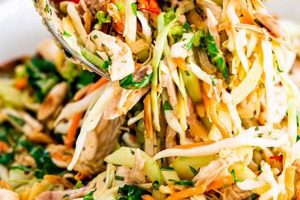
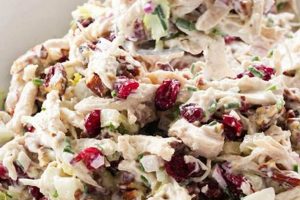
A dish featuring chicken as the primary protein within the classic Cobb salad context typically involves grilled, roasted, or poached chicken breast, diced or shredded. This preparation is combined with other signature Cobb components: crisp bacon, hard-boiled eggs, tomatoes, avocado, blue cheese, and a vinaigrette dressing, often served over a bed of chopped romaine lettuce. Variations can include different greens, cheeses, or additions like corn or chives.
Including chicken in this salad provides a substantial source of lean protein, enhancing its nutritional value and making it a more complete and satisfying meal. This adaptation offers a flexible and healthy option for lunch or dinner, appealing to a broad range of palates. The customizable nature of the salad allows for adjustments to dietary needs and preferences, making it a versatile choice for both casual and more formal settings. Its evolution from a late-night improvisation at the Brown Derby restaurant in Hollywood adds to its enduring appeal.
This exploration will further delve into various methods for preparing the chicken, suggest optimal ingredient combinations, and provide guidance on assembling and serving this popular salad variation.
Tips for an Exceptional Cobb Salad with Chicken
Optimizing each component contributes to a superior culinary experience. Attention to detail, from the chicken preparation to ingredient selection, elevates this classic dish.
Tip 1: Chicken Preparation: Marinating the chicken prior to cooking enhances flavor and tenderness. A simple marinade of olive oil, lemon juice, and herbs works well. Grilling or roasting achieves optimal texture and taste.
Tip 2: Bacon Selection: Thick-cut, high-quality bacon yields the best results. Cook until crisp and crumble before adding to the salad.
Tip 3: Egg Perfection: Properly cooked hard-boiled eggs are essential. Avoid overcooking, which can result in a rubbery texture. Ice baths facilitate easy peeling.
Tip 4: Avocado Handling: Ripe, but not overripe, avocados provide the ideal creamy texture and flavor. Dice just before serving to prevent browning.
Tip 5: Blue Cheese Choice: A quality blue cheese, crumbled, provides pungent notes that balance the other flavors. Gorgonzola or Roquefort are excellent options.
Tip 6: Vinaigrette Preparation: A classic red wine vinaigrette complements the salad’s ingredients. Freshly prepared dressings offer superior flavor compared to bottled varieties. Consider incorporating Dijon mustard and a touch of honey.
Tip 7: Assembly Technique: Evenly distribute ingredients across the bed of greens to ensure a balanced flavor profile in each bite. Add the dressing just before serving to prevent the lettuce from wilting.
Careful consideration of these elements ensures a well-balanced and flavorful salad. The result is a dish that satisfies both visually and gastronomically.
By applying these tips, one can create a truly memorable Cobb salad experience.
1. Chicken Preparation

Chicken preparation forms the cornerstone of a successful Cobb salad featuring this protein. The method employed directly impacts the final dish’s flavor, texture, and overall appeal. Several approaches exist, each offering distinct advantages. Grilling imparts a smoky char and enhances the chicken’s inherent flavors, while roasting yields a tender, juicy result. Poaching offers a healthier, leaner outcome. The chosen technique influences the salad’s overall character. For instance, grilled chicken contributes a robust, savory element, while poached chicken provides a lighter, more delicate counterpoint to the other ingredients. Consider a salad with grilled chicken, where the smoky notes complement the crisp bacon and tangy blue cheese. Conversely, poached chicken allows the flavors of the vegetables and dressing to shine through.
Effective chicken preparation extends beyond cooking methods. Marination plays a crucial role in enhancing flavor and tenderness. A simple marinade of olive oil, lemon juice, and herbs can significantly elevate the chicken’s taste profile. Furthermore, the chicken’s cut influences the final product. Diced breast meat offers a classic presentation, while shredded chicken provides a more integrated textural experience within the salad. Ultimately, the chosen preparation method should align with the desired flavor profile and overall dining experience. One might opt for a citrus-herb marinade and grilled chicken for a summery Cobb salad, while a simpler preparation, such as poached and shredded chicken, might be preferred for a lighter, everyday meal.
In conclusion, optimal chicken preparation is paramount in crafting a truly exceptional Cobb salad. The chosen cooking method, marinade, and cut collectively shape the chicken’s contribution to the final dish. Careful consideration of these factors ensures a harmonious blend of flavors and textures, elevating the Cobb salad from a simple dish to a culinary delight. Understanding the nuances of chicken preparation empowers one to tailor the salad to specific preferences and create a personalized, satisfying meal.
2. Ingredient Quality
Ingredient quality significantly impacts the overall success of a Cobb salad with chicken. This principle applies to every component, from the chicken itself to the supporting ingredients. High-quality chicken, preferably free-range or organic, contributes a superior flavor and texture compared to conventionally raised poultry. Fresh, crisp lettuce, such as romaine or butter lettuce, provides a satisfying crunch and a clean, vegetal flavor. The use of ripe, flavorful tomatoes, ideally heirloom varieties, adds sweetness and juiciness. Other key ingredients, including bacon, avocado, blue cheese, and hard-boiled eggs, also benefit from careful selection. Thick-cut, smoked bacon offers a richer, more intense flavor profile. Ripe, but not overripe, avocados contribute a creamy texture and nutty taste. A quality blue cheese, such as Roquefort or Gorgonzola, provides pungent, salty notes that balance the other flavors. Finally, fresh, properly cooked hard-boiled eggs, with firm whites and creamy yolks, complete the ensemble.
The interplay between ingredient quality and the final result is evident in the overall flavor profile and textural complexity of the salad. Subpar ingredients can detract from the dish, resulting in a bland or unbalanced experience. For example, using flavorless tomatoes or overripe avocados can negatively impact the salad’s taste and texture. Conversely, selecting high-quality ingredients elevates the dish, creating a symphony of flavors and textures that delight the palate. Consider the difference between a Cobb salad made with store-bought bacon versus one made with thick-cut, applewood-smoked bacon. The latter offers a depth of flavor that significantly enhances the overall experience. Similarly, using farm-fresh eggs, rather than older supermarket eggs, results in a noticeable improvement in the yolk’s flavor and texture.
In conclusion, prioritizing ingredient quality is essential for crafting an exceptional Cobb salad with chicken. The selection of each component, from the protein to the produce and supporting elements, contributes to the final dish’s overall quality and enjoyment. By focusing on sourcing the best possible ingredients, one can elevate this classic salad from a simple meal to a truly memorable culinary experience. This dedication to quality showcases an appreciation for the nuances of flavor and texture, resulting in a dish that satisfies on multiple levels.
3. Freshness
Freshness plays a critical role in a successful Cobb salad with chicken, impacting both flavor and texture. The dish relies on the individual components’ inherent qualities, making freshness paramount for an optimal culinary experience. Utilizing fresh ingredients elevates the salad’s overall character, highlighting the vibrancy of each element.
- Produce Quality
Fresh produce contributes significantly to the salad’s overall appeal. Crisp lettuce, vibrant tomatoes, and ripe avocados provide a foundation of flavor and texture. Wilted lettuce, mealy tomatoes, or overripe avocados detract significantly from the experience. Sourcing high-quality, in-season produce ensures optimal flavor and textural integrity. For example, using freshly picked, locally sourced tomatoes in the summer months intensifies their sweetness and juiciness, enhancing the salad’s overall flavor profile.
- Chicken Preparation Timing
The timing of chicken preparation influences its freshness and, consequently, the final dish. Ideally, chicken should be cooked shortly before assembling the salad. This minimizes the risk of bacterial growth and preserves the chicken’s optimal texture. Pre-cooked chicken stored correctly can be utilized, but freshly cooked chicken generally offers a superior culinary experience. For instance, grilling the chicken immediately before assembling the salad ensures its juicy texture and enhances its flavor contribution to the dish.
- Ingredient Storage
Proper storage of individual ingredients maintains their freshness until assembly. Lettuce should be stored in a crisper drawer, unwashed, to prevent premature wilting. Avocados, once cut, benefit from refrigeration with the pit intact to minimize browning. Proper storage techniques prevent spoilage and preserve the integrity of each ingredient. Storing chopped bacon in an airtight container in the refrigerator maintains its crispness, preventing it from becoming soggy.
- Dressing Application
The timing of dressing application influences the salad’s overall freshness. Adding the dressing just before serving prevents the lettuce from wilting and preserves the crispness of other components. Pre-dressed salads often become soggy and less appealing. This approach maintains the integrity of each ingredient’s texture, contributing to a more enjoyable dining experience. For instance, tossing the salad with the vinaigrette immediately before serving prevents the lettuce from becoming limp and maintains the bacon’s crisp texture.
The emphasis on freshness within a Cobb salad with chicken highlights the dish’s dependence on high-quality ingredients. Each component contributes distinct flavors and textures, and freshness amplifies these characteristics. By prioritizing freshness, the Cobb salad transforms from a simple combination of ingredients into a vibrant, flavorful, and texturally satisfying culinary creation. This attention to detail elevates the dining experience, showcasing the inherent quality of each element within this classic dish.
4. Dressing Choice

Dressing choice significantly influences the overall flavor profile and balance of a Cobb salad with chicken. The dressing acts as a unifying element, bringing together the diverse ingredients and enhancing their individual characteristics. A well-chosen dressing complements the richness of the chicken, the saltiness of the bacon, the tanginess of the blue cheese, and the freshness of the vegetables. An inappropriate dressing can overwhelm the delicate flavors or clash with the existing components, detracting from the salad’s overall appeal.
- Classic Vinaigrette
A classic vinaigrette, typically made with red wine vinegar, olive oil, Dijon mustard, and seasonings, serves as a traditional choice for Cobb salad. Its tangy acidity cuts through the richness of the other ingredients, providing a refreshing counterpoint. The vinaigrette’s relatively light consistency avoids overpowering the salad’s components, allowing their individual flavors to shine through. For example, a red wine vinaigrette enhances the savory notes of the chicken and bacon while balancing the creamy avocado and pungent blue cheese.
- Creamy Dressings
Creamy dressings, such as buttermilk ranch or blue cheese dressing, offer a richer, more indulgent alternative. These dressings contribute a creamy texture and a more pronounced flavor profile. However, the richness of creamy dressings can sometimes mask the delicate flavors of the other ingredients. A buttermilk ranch dressing, while flavorful, might overwhelm the subtle taste of fresh vegetables or poached chicken. Careful consideration is required to ensure the dressing complements rather than dominates the salad.
- Variations and Customization
Variations on classic dressings or customized recipes allow for personalized flavor profiles. Adding ingredients like herbs, spices, or citrus zest can further enhance the dressing’s complexity and complement specific ingredients within the salad. A lemon-herb vinaigrette, for example, might pair particularly well with grilled chicken and fresh vegetables. Such customization allows for a tailored dining experience, aligning the dressing with individual preferences and the specific composition of the salad.
- Balance and Proportion
Balance and proportion play a crucial role in dressing application. Too much dressing can overwhelm the salad, making it soggy and heavy. Too little dressing can leave the salad dry and lacking in flavor. The ideal amount coats the ingredients lightly, enhancing their flavors without masking them. A properly dressed salad maintains a balance between the individual components and the unifying element of the dressing, creating a harmonious and enjoyable culinary experience.
The choice of dressing significantly impacts the final character of a Cobb salad with chicken. Careful consideration of the dressing’s flavor profile, consistency, and overall balance with the other ingredients is essential. Selecting a dressing that complements and enhances the existing flavors, rather than overpowering them, ensures a harmonious and satisfying culinary experience. The right dressing elevates the Cobb salad from a simple combination of ingredients to a well-balanced, flavorful, and texturally dynamic dish.
5. Balanced Flavors
Balance forms the cornerstone of a successful Cobb salad with chicken. The dish thrives on the interplay of contrasting yet complementary flavors and textures. This balance distinguishes the Cobb salad from other salads, elevating it from a simple combination of ingredients to a complex and satisfying culinary experience. The interplay of savory, salty, tangy, creamy, and fresh elements creates a harmonious whole. Disrupting this balance, through overemphasis on a single flavor or texture, diminishes the salad’s overall appeal.
The concept of balance manifests in several ways within the Cobb salad. The savory chicken and salty bacon provide a rich foundation. The tangy blue cheese and vinaigrette offer a sharp counterpoint, cutting through the richness. The creamy avocado and fresh vegetables contribute textural contrast and a refreshing element. The crisp lettuce provides a structural base and a clean, vegetal note. Consider the interplay between the salty bacon and the tangy blue cheese. The saltiness of the bacon enhances the blue cheese’s pungent notes, while the blue cheese’s tanginess prevents the bacon from becoming overly salty. Similarly, the creamy avocado balances the crisp lettuce, creating a textural contrast that adds to the salad’s complexity.
Achieving balance requires careful consideration of ingredient proportions and flavor intensities. Too much of any single ingredient can disrupt the equilibrium. An excess of bacon, for example, can make the salad overly salty, while too much blue cheese can overwhelm the other flavors. The goal is to create a harmonious blend where each ingredient contributes to the overall profile without dominating the experience. A well-balanced Cobb salad offers a symphony of flavors and textures, where each bite presents a complex and satisfying interplay of contrasting elements. This balance distinguishes the Cobb salad as a classic dish that continues to appeal to a wide range of palates.
6. Proper Assembly

Proper assembly is crucial for a successful Cobb salad with chicken. It transforms individual ingredients into a cohesive and visually appealing dish. More than simply tossing components together, proper assembly ensures balanced flavors, optimal texture, and an aesthetically pleasing presentation. This attention to detail elevates the salad from a basic mixture to a carefully constructed culinary creation.
- Ingredient Arrangement
Strategic ingredient arrangement maximizes visual appeal and flavor distribution. Rather than randomly mixing ingredients, the classic Cobb presentation involves arranging them in distinct rows or sections atop the bed of lettuce. This allows for an even distribution of flavors and textures in each bite. For example, aligning rows of diced chicken, bacon, tomatoes, avocado, blue cheese, and hard-boiled eggs creates a visually striking presentation and ensures a balanced flavor profile with every mouthful.
- Lettuce Preparation
Proper lettuce preparation provides the foundation for the salad. Crisp, clean lettuce leaves, preferably romaine, create a bed for the other ingredients. Torn or chopped lettuce offers a manageable size and texture, while avoiding overly small pieces that can become soggy. Washing and thoroughly drying the lettuce prevents a watery salad and maintains the crispness of other components. This foundation supports the weight of the toppings and contributes to a pleasant textural experience.
- Dressing Application Timing
The timing of dressing application preserves ingredient integrity. Adding the dressing just before serving prevents the lettuce from wilting and maintains the crispness of the bacon and other components. Tossing the salad with the dressing too early can lead to a soggy, less appealing final product. This practice maintains the desired textures and prevents the flavors from becoming diluted.
- Portion Control
Portion control ensures a balanced and satisfying experience. While the Cobb salad is known for its generous portions, maintaining balance among the ingredients is essential. Too much of any one component can overwhelm the others, disrupting the intended flavor profile. Appropriate portioning ensures that each ingredient contributes to the overall harmony of the dish, creating a balanced and satisfying meal.
Proper assembly elevates the Cobb salad with chicken from a mere collection of ingredients to a thoughtfully composed dish. Attention to detail, from ingredient arrangement to dressing application, maximizes flavor, texture, and visual appeal. This careful construction transforms a simple salad into a satisfying and aesthetically pleasing culinary experience, showcasing the thoughtful combination of flavors and textures.
7. Presentation
Presentation significantly impacts the perceived quality and enjoyment of a Cobb salad with chicken. While flavor and freshness remain paramount, visual appeal enhances the dining experience. A thoughtfully presented salad entices the appetite and elevates the dish from a simple meal to a more engaging culinary experience. Presentation encompasses various aspects, from the arrangement of ingredients to the choice of serving dish and accompanying elements.
- Plating Techniques
Plating techniques influence the visual appeal and perceived value of the salad. The classic Cobb salad presentation involves arranging ingredients in neat rows or sections atop a bed of lettuce. This method showcases the individual components while maintaining a cohesive structure. Alternative approaches, such as layering ingredients or creating a composed salad, offer variations for visual interest. For instance, a chef might create a circular arrangement with a central mound of chicken, surrounded by radiating sections of bacon, tomatoes, avocado, blue cheese, and egg. This radial design provides a modern twist on the traditional presentation.
- Color and Contrast
Color and contrast contribute significantly to visual appeal. The Cobb salad’s inherent variety of colorsthe green lettuce, red tomatoes, white egg, dark bacon, vibrant avocado, and blue cheesecreates a naturally appealing palette. Maintaining this color balance through careful ingredient selection and arrangement enhances the visual presentation. A chef might use a variety of heirloom tomatoes, showcasing different shades of red, yellow, and orange, to amplify the visual interest. This strategic use of color adds vibrancy and depth to the salad’s presentation.
- Serving Dishes and Garnishes
The choice of serving dish further influences presentation. A classic Cobb salad often appears in a shallow, wide bowl or platter, allowing for an expansive arrangement of ingredients. Alternatively, individual plates or smaller bowls can create a more intimate dining experience. Simple garnishes, such as a sprinkle of chopped chives or a grind of black pepper, add a final touch of elegance. Serving the salad on chilled plates enhances the freshness and prevents the ingredients from wilting.
- Context and Occasion
The context and occasion influence presentation choices. A casual lunch might warrant a simpler, more rustic presentation, while a formal dinner might call for a more refined approach. The dining environment and the overall meal structure also play a role. A Cobb salad served as a light lunch might be presented in a smaller portion, with a lighter dressing, compared to a Cobb salad served as a main course for a dinner party. Adapting the presentation to the specific context ensures a cohesive and appropriate dining experience.
Presentation enhances the overall enjoyment of a Cobb salad with chicken. Visual appeal complements the carefully balanced flavors and textures, creating a more complete and satisfying culinary experience. Thoughtful plating techniques, attention to color and contrast, appropriate serving dishes, and consideration of context contribute to a presentation that elevates the dish beyond mere sustenance. A well-presented Cobb salad reflects attention to detail and an appreciation for the interplay between visual aesthetics and culinary enjoyment.
Frequently Asked Questions
This section addresses common inquiries regarding the preparation and enjoyment of Cobb salad with chicken.
Question 1: What is the best way to prevent avocados from browning in a Cobb salad?
Dicing avocados immediately before serving minimizes browning. Alternatively, coating diced avocado with a thin layer of lemon or lime juice helps prevent oxidation and preserves its vibrant green color. Storing the salad properly and promptly also helps maintain freshness.
Question 2: Can other types of chicken be used besides chicken breast?
While chicken breast is the most common choice, other cuts, such as boneless, skinless thighs, offer a richer flavor and greater moisture content. Adjusting cooking times may be necessary depending on the chosen cut.
Question 3: What are suitable alternatives to blue cheese for those with dietary restrictions or preferences?
Feta cheese, goat cheese, or crumbled Gorgonzola dolce offer viable alternatives to blue cheese, each contributing distinct flavor profiles while maintaining a similar textural presence within the salad.
Question 4: How can the nutritional value of a Cobb salad with chicken be maximized?
Incorporating a wider variety of vegetables, such as chopped bell peppers, cucumbers, or shredded carrots, increases nutrient density. Utilizing a lighter dressing or reducing the amount of bacon contributes to a healthier profile.
Question 5: Can Cobb salad with chicken be prepared in advance?
While optimal flavor and texture derive from freshly assembled salads, certain components can be prepared in advance. Cooking and storing chicken, bacon, and hard-boiled eggs separately allows for quicker assembly closer to serving time. Keeping ingredients chilled and combining them just before serving maintains freshness.
Question 6: How can one adapt a Cobb salad with chicken for different dietary needs, such as gluten-free or vegetarian?
Ensuring all ingredients, particularly dressings and bacon, are gluten-free accommodates gluten-free diets. Substituting the chicken with grilled tofu or chickpeas offers a vegetarian option. Omitting bacon altogether accommodates both vegetarian and vegan preferences while still maintaining the core components of a Cobb salad.
Careful consideration of these frequently asked questions enhances the likelihood of a successful and enjoyable Cobb salad experience. Understanding the nuances of ingredient selection, preparation, and assembly contributes to a balanced and flavorful result.
This concludes the FAQ section. The next segment offers concluding remarks and a summary of key takeaways regarding the Cobb salad with chicken.
Cobb Salad Chicken Recipe
This exploration of the Cobb salad with chicken emphasizes the multifaceted nature of this seemingly simple dish. From the careful selection and preparation of the chicken itself to the nuanced interplay of ingredients and the importance of presentation, crafting a truly exceptional Cobb salad requires attention to detail. Key takeaways include the significance of fresh, high-quality ingredients, the impact of dressing choice on overall flavor balance, and the crucial role of proper assembly in achieving both visual appeal and a harmonious blend of textures and tastes. The exploration also highlighted the adaptability of the Cobb salad, showcasing its potential for customization to accommodate various dietary needs and preferences.
The Cobb salad with chicken stands as a testament to the enduring appeal of classic culinary combinations. Its continued popularity underscores the power of balanced flavors, fresh ingredients, and thoughtful presentation. Further exploration and experimentation with variations, such as incorporating different herbs, spices, or cheeses, offer opportunities to personalize this classic dish and discover new dimensions of flavor. Ultimately, the Cobb salad with chicken represents more than just a salad; it embodies a culinary tradition that celebrates the harmonious interplay of fresh, flavorful ingredients.