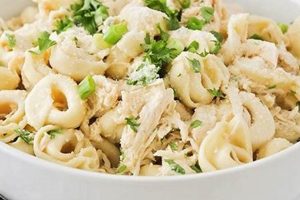
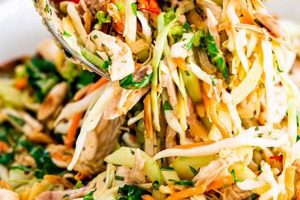
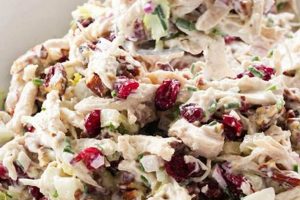
A dish combining shredded cooked chicken with a spicy, tangy buffalo sauce, often incorporating celery, blue cheese, and mayonnaise, this culinary creation can be enjoyed as a sandwich filling, a wrap, or a standalone salad. Variations exist, including the use of different cheeses, the addition of other vegetables like carrots or red onion, and the incorporation of ranch or other dressings.
Its popularity stems from the balance of flavors and textures the creamy dressing, the crunchy vegetables, and the savory, spicy chicken. This versatile dish can be a quick weeknight meal, a crowd-pleasing appetizer for parties, or a satisfying lunch option. Its origins are often linked to American cuisine, specifically the rise of buffalo wings in the mid-20th century. The adaptation of those flavors into a salad format likely evolved as a way to enjoy similar taste profiles in a lighter, more manageable form.
The following sections will delve into specific variations, provide detailed instructions for creating this dish at home, and offer suggestions for ingredient substitutions and serving ideas.
Tips for a Superior Buffalo Chicken Salad
Achieving optimal flavor and texture requires attention to several key aspects of preparation.
Tip 1: Chicken Selection: Rotisserie chicken offers convenience, but poaching or grilling chicken breasts allows for greater control over seasoning and moisture content. For a richer flavor, consider using dark meat.
Tip 2: Sauce Customization: While pre-made buffalo wing sauce provides a convenient base, flavor profiles can be customized by adding ingredients such as hot sauce, cayenne pepper, or garlic powder.
Tip 3: Balancing Flavor Profiles: The heat of the buffalo sauce should be balanced by the cooling properties of the dressing and other ingredients. Ranch or blue cheese dressing are classic choices; Greek yogurt can be used for a lighter alternative.
Tip 4: Enhancing Texture: Incorporating a variety of textures elevates the dish. Chopped celery and red onion provide crunch, while crumbled blue cheese adds a creamy contrast.
Tip 5: Freshness of Ingredients: Using fresh, high-quality ingredients significantly impacts the overall flavor. Opt for crisp vegetables and freshly made dressings whenever possible.
Tip 6: Chilling and Serving: Allowing the salad to chill for at least 30 minutes allows the flavors to meld. Serve on bread, crackers, lettuce wraps, or as a standalone salad.
Tip 7: Portion Control for Spice Level: When adding extra spices or hot sauce, start with small increments and taste-test frequently. Adjusting the spice level gradually prevents overpowering the other flavors.
Attention to these details ensures a flavorful and well-balanced dish.
By following these tips, one can create a delicious and satisfying buffalo chicken salad experience.
1. Ingredients

Ingredient selection significantly impacts the final flavor profile and overall quality of a buffalo chicken salad. Careful consideration of each component ensures a balanced and satisfying dish.
- Chicken
The choice of chicken contributes significantly to the texture and taste. Options include cooked chicken breast (for a leaner protein), shredded rotisserie chicken (for convenience), or dark meat chicken (for richer flavor). The cooking method also plays a role; grilled or poached chicken offers more control over seasoning compared to pre-cooked options. The amount of chicken used influences the heartiness of the salad.
- Buffalo Sauce
This ingredient provides the signature heat and tang. Pre-made buffalo wing sauces offer convenience, while homemade versions allow customization of spice levels and flavor profiles. The quality of the sauce directly impacts the final flavor complexity.
- Dressing
The dressing complements the buffalo sauce and adds creaminess. Common choices include ranch, blue cheese, or mayonnaise-based dressings. The dressing’s flavor profile and consistency must harmonize with the other ingredients. Greek yogurt can be used as a lighter alternative, offering a tangy flavor and lower fat content.
- Vegetables
Vegetables provide textural contrast and contribute to the overall flavor balance. Celery is a traditional choice, offering a refreshing crunch. Other options include chopped carrots, red onion, or bell peppers. The choice of vegetables influences both the nutritional value and the sensory experience of the salad.
The interplay of these core ingredients determines the final character of the buffalo chicken salad. Balancing the heat of the buffalo sauce with the coolness of the dressing and the crunch of fresh vegetables is key to a successful recipe. Further customization can be achieved through the addition of other elements such as crumbled blue cheese, chopped nuts, or dried cranberries, allowing for a wide range of flavor variations.
2. Preparation
Preparation plays a crucial role in the final outcome of a buffalo chicken salad recipe. Proper execution of each preparatory step significantly impacts the texture, flavor, and overall enjoyment of the dish. This involves several key stages, each contributing to the final product.
Firstly, the chicken must be adequately prepared. Whether using rotisserie chicken, pre-cooked breasts, or preparing chicken specifically for the salad, the meat needs to be shredded or chopped to a consistent size. This ensures even distribution throughout the salad and facilitates easier consumption. Overly large or unevenly sized pieces can disrupt the texture and create an unbalanced eating experience. For instance, if using rotisserie chicken, removing the skin and bones and shredding the meat into bite-sized pieces is essential. Similarly, if grilling or poaching chicken breasts, allowing them to cool slightly before shredding prevents a mushy texture.
Secondly, vegetable preparation is equally important. Washing and chopping vegetables, such as celery and carrots, into uniform pieces creates a pleasant textural contrast to the chicken and dressing. The size of these pieces contributes to the overall mouthfeel and aesthetic appeal of the salad. Overly large pieces can overwhelm the other ingredients, while excessively small pieces may become lost in the mix. Furthermore, proper knife skills are essential to ensure even cooking if incorporating ingredients like onions or bell peppers, which might be briefly sauted before adding to the salad.
Finally, combining the ingredients requires careful attention. Simply tossing all components together haphazardly can result in an uneven distribution of flavors and a less appealing presentation. The order in which ingredients are incorporated can also play a role. For example, adding the dressing gradually allows for better control of the final consistency and prevents over-saturation. A well-prepared buffalo chicken salad should have a harmonious blend of flavors and textures, where each ingredient contributes to the overall enjoyment of the dish. Careful preparation ensures that the final product is not only flavorful but also visually appealing and texturally satisfying.
3. Chicken
Chicken serves as the foundational ingredient, defining the character of a buffalo chicken salad recipe. The choice of chickenwhether breast, thigh, or a combinationdirectly influences the final dish’s flavor profile, texture, and overall nutritional value. Leaner breast meat offers a milder taste and lighter texture, while dark meat from thighs contributes a richer, more robust flavor and a slightly more moist final product. Utilizing rotisserie chicken provides convenience, while freshly cooked and shredded chicken allows for greater control over seasoning and ensures optimal moisture content. For example, grilling or poaching chicken breasts allows for the incorporation of specific herbs and spices that complement the buffalo sauce, enhancing the overall flavor complexity.
The quality and preparation of the chicken further impact the overall dining experience. Overcooked chicken can result in a dry, stringy texture that detracts from the salad’s appeal. Conversely, undercooked chicken presents food safety concerns. Proper shredding technique ensures even distribution of the chicken throughout the salad, preventing pockets of excessive or insufficient protein. The amount of chicken relative to other ingredients also influences the perceived heartiness and protein content of the dish. A higher chicken-to-vegetable ratio results in a more protein-rich and potentially more satiating salad. Conversely, a lower ratio emphasizes the vegetable components, contributing to a lighter and potentially lower-calorie meal.
Understanding the role of chicken within a buffalo chicken salad recipe enables informed culinary decisions. Careful consideration of the chicken type, cooking method, and preparation technique allows for the creation of a dish tailored to specific dietary needs and taste preferences. Whether prioritizing lean protein, maximizing flavor, or streamlining preparation, selecting and handling the chicken appropriately is paramount to achieving a successful and enjoyable buffalo chicken salad.
4. Buffalo Sauce

Buffalo sauce forms the cornerstone of a buffalo chicken salad recipe, providing the signature spicy, tangy flavor profile that distinguishes this dish. The sauce’s composition, typically a blend of cayenne pepper hot sauce, butter, and vinegar, imparts a complex heat balanced by subtle acidity and richness. This distinctive flavor profile permeates the chicken, influencing the overall taste and dictating the necessary complementary ingredients. Without buffalo sauce, the dish ceases to be a true “buffalo” chicken salad, losing its defining characteristic. For example, substituting a barbecue sauce would yield a barbecue chicken salad, fundamentally altering the dish’s identity.
The quality and specific formulation of the buffalo sauce significantly impact the final product. Variations in hot sauce brands, butter types, and the inclusion of additional ingredients like garlic powder or Worcestershire sauce introduce nuanced flavor differences. These variations allow for customization, catering to individual preferences for heat levels and flavor complexity. Moreover, the amount of buffalo sauce used determines the intensity of the spice, influencing the balance between heat and other flavors. A higher sauce-to-chicken ratio yields a spicier salad, while a lower ratio allows other ingredients, like the dressing and vegetables, to take a more prominent role in the overall flavor profile. This interplay between ingredients highlights the importance of understanding the buffalo sauce’s contribution to the recipe’s overall balance.
Understanding the crucial role of buffalo sauce enables informed recipe adjustments and substitutions. Recognizing the sauce’s impact on the final flavor profile allows for deliberate customization based on desired heat levels and complementary flavor pairings. This knowledge empowers individuals to adapt recipes to accommodate dietary restrictions, such as using vegan butter alternatives or adjusting spice levels for sensitive palates. Ultimately, appreciating the integral connection between buffalo sauce and the buffalo chicken salad recipe ensures a successful and satisfying culinary outcome.
5. Dressing
Dressing plays a critical role in a buffalo chicken salad recipe, serving as a counterpoint to the heat of the buffalo sauce while contributing to the overall texture and flavor complexity. The dressing acts as a binding agent, uniting the various ingredients and creating a cohesive culinary experience. Its characteristicstanginess, creaminess, and richnessinfluence the final flavor profile, necessitating careful consideration when selecting or preparing a dressing for this specific application.
- Flavor Balancing
The primary function of the dressing is to balance the heat of the buffalo sauce. Dressings with cooling properties, such as ranch or blue cheese, are commonly used to temper the spice. The acidity in some dressings, like those containing buttermilk or vinegar, can also cut through the richness of the chicken and other ingredients, providing a more balanced flavor profile. A creamy dressing, whether mayonnaise-based or utilizing ingredients like Greek yogurt or avocado, provides a textural contrast and mellows the intensity of the spice. For example, a classic ranch dressing offers a herby, cooling contrast to the spicy buffalo chicken, while a blue cheese dressing provides a pungent, creamy counterpoint.
- Texture and Cohesion
Dressing contributes to the overall texture and consistency of the salad. It acts as a binding agent, holding the shredded chicken, vegetables, and other ingredients together. The viscosity of the dressing influences the salad’s mouthfeel, ranging from a light and creamy consistency to a thicker, more substantial texture. A thicker dressing, like a mayonnaise-based blue cheese, creates a richer, denser salad, while a thinner dressing, such as a vinaigrette, results in a lighter, less cohesive mixture. Choosing the appropriate dressing consistency ensures the salad maintains its structure and provides a satisfying textural experience.
- Flavor Enhancement
Beyond balancing heat, the dressing can enhance the overall flavor profile. The specific ingredients within the dressing contribute complementary flavors that interact with the buffalo sauce and other components. For instance, the herbs in ranch dressing or the tang of blue cheese amplify the complexity of the dish. The addition of spices or other flavoring agents to the dressing can further personalize the salad and create unique flavor combinations. A honey mustard dressing, for example, would introduce a sweet and tangy element, while a chipotle ranch dressing would add a smoky dimension.
- Customization and Dietary Adaptations
The choice of dressing offers an opportunity for customization and dietary adaptations. Traditional options like ranch and blue cheese can be substituted with lighter alternatives, such as Greek yogurt-based dressings or avocado-based sauces, to reduce fat and calorie content. Vegan options, like cashew-based cream sauces, cater to plant-based diets. This flexibility allows individuals to tailor the recipe to specific dietary needs and taste preferences without compromising the essential role of the dressing in balancing and enhancing the flavors.
In conclusion, the dressing is not merely a condiment but an integral component of a successful buffalo chicken salad recipe. Its careful selection or preparation directly impacts the final dish’s flavor balance, texture, and overall appeal. The dressings interaction with the buffalo sauce and other ingredients underscores its essential role in creating a cohesive and satisfying culinary experience. Understanding the multifaceted role of the dressing empowers individuals to make informed choices that enhance the flavor and enjoyment of this classic dish.
6. Vegetables

Vegetables contribute crucial textural and flavor dimensions to a buffalo chicken salad recipe, elevating it beyond a simple protein and sauce combination. Their presence introduces contrasting crispness and freshness, counterbalancing the richness of the chicken and the intensity of the buffalo sauce. This textural interplay is paramount; without vegetables, the salad can become overly dense and monotonous. Consider celery, a classic inclusion; its crisp, watery nature offers a refreshing counterpoint to the heavier elements. Similarly, chopped carrots or bell peppers contribute a satisfying crunch. These textural elements prevent the salad from becoming overly heavy or saturated with sauce, creating a more balanced and enjoyable eating experience. The choice of vegetables also impacts the nutritional value, adding vitamins, minerals, and fiber.
Beyond texture, vegetables contribute subtle yet essential flavors that complement and enhance the overall profile of the salad. While the buffalo sauce dominates, the nuanced flavors of vegetables add depth and complexity. For instance, the slight bitterness of celery complements the tangy buffalo sauce, while the sweetness of carrots or bell peppers offers a subtle contrast. Red onion introduces a sharp, pungent note that cuts through the richness of the chicken and dressing. The strategic selection of vegetables allows for a tailored flavor profile, catering to individual preferences. Furthermore, the vibrant colors of various vegetables enhance the visual appeal of the salad, making it a more appetizing and aesthetically pleasing dish. A combination of green celery, orange carrots, and red onion not only adds flavor and texture but also creates a visually stimulating presentation.
In summary, the inclusion of vegetables in a buffalo chicken salad recipe is essential for both textural and flavor balance. They provide crucial contrast to the richness of the chicken and the intensity of the buffalo sauce, elevating the dish beyond a simple protein-sauce combination. Understanding the specific contributions of different vegetables allows for strategic selection, enabling the creation of a well-rounded and satisfying salad that appeals to both the palate and the eye. The practical application of this knowledge ensures a more enjoyable and nutritionally balanced culinary experience.
7. Serving

Serving constitutes the final stage in the creation of a buffalo chicken salad recipe, bridging the gap between preparation and consumption. The chosen serving method significantly influences the overall dining experience, impacting perceived flavors, textures, and presentation. Careful consideration of serving options ensures the dish is presented in a manner that maximizes its appeal and complements its inherent qualities. Serving extends beyond simply placing the salad on a plate; it involves understanding how different vessels and accompaniments can enhance or detract from the overall enjoyment of the dish.
- Vessels
The vessel in which the salad is served plays a significant role in both presentation and practicality. Options range from classic bread for sandwiches, wraps using tortillas or lettuce cups, to more formal presentations on salad plates. The vessel’s texture and flavor can interact with the salad itself, influencing the overall sensory experience. A croissant, for example, adds a buttery, flaky element to the salad, while a crisp lettuce cup offers a refreshing contrast. The vessel’s size and shape also affect portion control and ease of consumption. Smaller vessels like endive leaves create elegant appetizers, while larger bowls accommodate heartier portions for main courses.
- Accompaniments
Accompaniments further enhance the dining experience, complementing the flavors of the buffalo chicken salad. Common choices include crackers, chips, or crudits. These accompaniments provide textural contrast and can be used to scoop or dip, adding an interactive element to the meal. Consider serving the salad alongside a simple green salad dressed with a light vinaigrette to balance the richness of the main dish. Alternatively, a side of potato chips or tortilla chips provides a salty, crunchy counterpoint. Careful selection of accompaniments prevents flavor clashes and enhances the overall enjoyment of the meal.
- Presentation
Presentation elevates the dining experience, transforming a simple meal into a visually appealing culinary creation. Garnishes, such as a sprinkle of chopped chives or a drizzle of extra buffalo sauce, add visual interest and enhance the perceived freshness. The arrangement of the salad within the chosen vessel, whether neatly layered in a sandwich or artfully arranged on a plate, impacts visual appeal. Consider the color contrast between the salad components and the serving vessel; a vibrant green salad served in a white bowl creates a striking visual contrast. Thoughtful presentation demonstrates care and attention to detail, enhancing the overall dining experience.
- Context
The serving context, including the occasion and the intended audience, should inform serving decisions. A casual weeknight meal might call for a simple sandwich or wrap, while a more formal gathering might warrant a more elaborate presentation on individual plates. Dietary considerations also play a role. Offering gluten-free bread or wraps accommodates guests with dietary restrictions. Understanding the context ensures the serving method aligns with the overall dining experience and caters to the specific needs and preferences of those being served. For a buffet-style gathering, serving the salad in a large bowl with various accompaniments and vessels allows guests to customize their portions and serving methods.
In conclusion, serving is an integral part of the buffalo chicken salad recipe, extending beyond mere presentation to encompass a holistic approach to enhancing the dining experience. The careful selection of vessels, accompaniments, and presentation style, informed by the specific context of the meal, ensures that the final dish is not only flavorful but also visually appealing and tailored to the occasion and the diners’ preferences. By considering these elements, one can elevate the buffalo chicken salad from a simple dish to a truly satisfying culinary experience.
Frequently Asked Questions
This section addresses common inquiries regarding buffalo chicken salad preparation and variations.
Question 1: Can the heat level of the salad be adjusted?
The level of spiciness can be easily modified. Using a mild buffalo wing sauce or incorporating less sauce into the recipe reduces the heat. Conversely, adding cayenne pepper, hot sauce, or finely diced jalapeos increases the spiciness. Gradual adjustments and taste testing are recommended.
Question 2: What are suitable substitutions for blue cheese?
Individuals who dislike blue cheese can substitute crumbled gorgonzola, feta, or goat cheese. Ranch dressing also provides a complementary flavor profile and creamy texture, offering a suitable alternative for those sensitive to strong flavors. Plain Greek yogurt can also provide a lighter, tangier substitute.
Question 3: How long can buffalo chicken salad be stored?
Properly stored in an airtight container in the refrigerator, buffalo chicken salad typically remains safe to consume for three to four days. Discard any salad that exhibits signs of spoilage, such as an off odor or discoloration.
Question 4: Can buffalo chicken salad be frozen?
While freezing is possible, the texture of the salad may be affected upon thawing. Mayonnaise-based dressings can separate, and vegetables may lose their crispness. Freezing is generally not recommended for optimal quality.
Question 5: What are healthy variations of this recipe?
Healthier versions can be created by using Greek yogurt instead of mayonnaise-based dressings, incorporating more vegetables like shredded carrots and bell peppers, and opting for leaner chicken breast. Portion control also contributes to a balanced meal.
Question 6: Can this recipe be adapted for vegetarians?
Traditional buffalo chicken salad is inherently non-vegetarian. However, substituting the chicken with chickpeas, crumbled tofu, or jackfruit offers a vegetarian alternative with a similar textural experience. Ensure the chosen substitute absorbs the buffalo sauce effectively for optimal flavor.
Careful consideration of these frequently asked questions facilitates informed recipe adaptation and addresses potential concerns regarding preparation, storage, and variations of buffalo chicken salad.
Explore various recipe adaptations and serving suggestions in the following sections.
Conclusion
Buffalo chicken salad recipes offer a versatile and flavorful culinary experience, adaptable to various tastes and dietary preferences. From the careful selection of ingredientschicken, buffalo sauce, dressing, and vegetablesto the meticulous preparation and serving methods, each step contributes to the final product’s success. Understanding the interplay of these components allows for informed decisions regarding ingredient substitutions, spice level adjustments, and serving variations. The adaptability of this dish extends to accommodating dietary restrictions, with options for lighter dressings, vegetarian alternatives, and gluten-free serving vessels. Proper storage practices ensure food safety and maintain optimal quality.
Exploration of this culinary creation reveals a dish rich in both flavor and adaptability. Continued experimentation with ingredients and preparation methods promises further culinary discoveries, enriching the gastronomic landscape and offering a continuously evolving culinary experience.