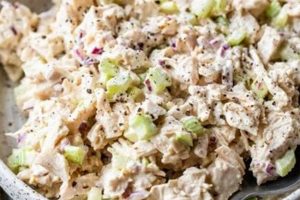
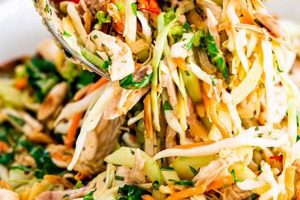
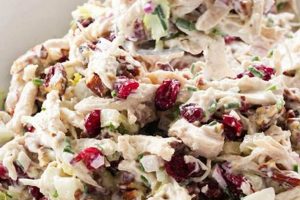
A superb chicken salad featuring cranberries and pecans offers a delightful balance of sweet, tart, savory, and crunchy elements. This type of salad typically incorporates cooked chicken, mayonnaise or a similar creamy dressing, and often includes additional ingredients like celery, red onion, or spices to enhance the flavor profile. Variations exist utilizing dried or fresh cranberries, toasted or candied pecans, and diverse dressing options.
The combination of ingredients provides a nutritionally balanced meal option, offering protein from the chicken, antioxidants from the cranberries, and healthy fats from the pecans. Furthermore, its versatility allows for its enjoyment in various settings, from a light lunch to a picnic dish or even as part of a more elaborate buffet. The dish’s historical origins, though not precisely pinpointed, likely stem from the increasing popularity of chicken salad during the 20th century alongside the creative incorporation of fruits and nuts into savory dishes.
The following sections will delve into specific variations on this culinary theme, exploring diverse recipes and offering guidance on ingredient selection, preparation techniques, and presentation suggestions to achieve an optimal outcome.
Tips for a Superior Cranberry Pecan Chicken Salad
Optimizing a cranberry pecan chicken salad involves careful consideration of ingredients and techniques. The following tips provide guidance for achieving exceptional results.
Tip 1: Toast the Pecans: Toasting pecans intensifies their flavor and adds a desirable crunch. Spread pecans on a baking sheet and toast in a preheated oven at 350F (175C) for 5-7 minutes, or until fragrant.
Tip 2: Balance Sweet and Tart: Dried cranberries offer a concentrated sweetness, while fresh cranberries contribute a brighter, tart flavor. Consider combining both for a complex flavor profile.
Tip 3: High-Quality Chicken is Key: Roasting or poaching chicken specifically for the salad yields superior flavor and texture compared to pre-cooked or deli chicken.
Tip 4: Enhance the Dressing: A simple mayonnaise base can be elevated with additions like Dijon mustard, apple cider vinegar, or a touch of maple syrup. Greek yogurt can be incorporated for a lighter, tangier dressing.
Tip 5: Consider Texture: Dicing celery and red onion finely adds a pleasant crunch and sharpness. Apples also offer a complementary crisp texture and sweetness.
Tip 6: Seasoning is Crucial: Freshly ground black pepper, a pinch of salt, and a dash of poultry seasoning enhance the overall flavor profile. Experiment with herbs like thyme or rosemary for additional depth.
Tip 7: Chill Before Serving: Allowing the salad to chill for at least 30 minutes allows the flavors to meld and enhances the overall experience.
By following these tips, one can elevate this simple salad to a truly exceptional dish, balancing flavors and textures for a satisfying culinary experience.
These insights provide a foundation for crafting a personalized version of this classic dish. Experimentation with ingredients and techniques allows for endless variations tailored to individual preferences.
1. High-quality Chicken

Chicken serves as the foundational ingredient, significantly influencing the overall quality of cranberry pecan chicken salad. Selecting and preparing the chicken thoughtfully elevates the dish from simple to exceptional. High-quality chicken contributes not only to superior flavor but also to optimal texture and overall enjoyment.
- Flavor Enhancement
Chicken quality directly impacts the salad’s flavor profile. Freshly roasted or poached chicken offers a depth of flavor often absent in pre-cooked or processed options. The nuanced taste of high-quality chicken provides a robust base for the other ingredients, allowing the complementary flavors of cranberries, pecans, and dressing to shine.
- Texture Optimization
Tender, moist chicken contributes significantly to a pleasing textural experience. Overcooked or dry chicken detracts from the salad’s overall appeal, whereas properly cooked, high-quality chicken provides a succulent contrast to the crunchy pecans and crisp vegetables. This balance of textures is crucial for a truly satisfying salad.
- Nutritional Value
High-quality chicken typically contains a higher protein content and fewer additives compared to processed alternatives. Choosing lean, unprocessed chicken breasts or thighs maximizes the nutritional value of the salad, contributing to a healthier and more wholesome meal.
- Visual Appeal
The appearance of the chicken also plays a role in the overall presentation of the salad. Freshly prepared chicken exhibits a vibrant color and appealing texture that enhances the visual attractiveness of the finished dish. This contributes to a more appetizing and enjoyable dining experience.
Ultimately, prioritizing high-quality chicken elevates the cranberry pecan chicken salad from a basic dish to a culinary delight. The enhanced flavor, optimal texture, improved nutritional value, and heightened visual appeal contribute synergistically to create a truly exceptional salad experience. Investing in superior chicken is a crucial step in achieving a truly “best” cranberry pecan chicken salad recipe.
2. Fresh Cranberries

Fresh cranberries contribute a distinctive character to cranberry pecan chicken salad, differentiating it from versions using dried cranberries. Their inclusion introduces a unique interplay of tartness, texture, and visual appeal, significantly influencing the overall sensory experience.
- Tartness and Flavor Balance
Fresh cranberries possess a vibrant tartness that balances the richness of the chicken and the sweetness of the pecans. This tartness provides a refreshing counterpoint to the other ingredients, preventing the salad from becoming overly sweet or heavy. The bright, clean flavor of fresh cranberries elevates the overall taste profile, adding a dimension of complexity often absent in salads relying solely on dried cranberries. The natural sugars in fresh cranberries offer a subtle sweetness without the concentrated intensity of dried fruit, allowing for a more nuanced flavor experience.
- Texture and Mouthfeel
The firm, slightly yielding texture of fresh cranberries offers a pleasant contrast to the tender chicken and crunchy pecans. This textural diversity enhances the eating experience, creating a more engaging and satisfying mouthfeel. The “pop” of a fresh cranberry adds a dynamic element that complements the other textures within the salad. The slight juiciness of fresh cranberries also contributes to the overall moisture and succulence of the salad without making it watery.
- Visual Appeal and Presentation
The vibrant red color of fresh cranberries adds a visual vibrancy to the salad, making it more appealing and appetizing. Their jewel-toned hue contrasts beautifully with the creamy dressing and other ingredients, enhancing the overall presentation. This visual appeal adds to the dining experience, making the salad more enticing.
- Nutritional Benefits
Fresh cranberries are a good source of antioxidants and vitamins, adding nutritional value to the salad. While dried cranberries also offer health benefits, fresh cranberries retain more of their natural nutrients due to less processing. This nutritional boost contributes to a healthier and more wholesome meal, aligning with the desire for a “best” recipe that considers both taste and well-being.
The choice between fresh and dried cranberries significantly impacts the final character of the cranberry pecan chicken salad. While dried cranberries offer convenience and concentrated sweetness, fresh cranberries provide a unique tartness, textural complexity, visual appeal, and enhanced nutritional value that contribute to a truly exceptional and “best” recipe. The subtle nuances of fresh cranberries elevate the salad from simple to sophisticated, creating a more balanced and flavorful experience.
3. Toasted Pecans
Toasted pecans represent a crucial element in a truly exceptional cranberry pecan chicken salad recipe. Their inclusion elevates the dish beyond the ordinary, contributing significantly to both flavor and texture. The transformative effect of toasting on pecans unlocks a deeper complexity and richness that complements the other ingredients, ultimately contributing to a more satisfying sensory experience.
- Enhanced Flavor
Toasting pecans intensifies their inherent nutty flavor, bringing forth a richer, more complex taste profile. The application of heat releases aromatic oils, producing a toasty, buttery flavor that complements the sweetness of the cranberries and the savory chicken. Untoasted pecans, while offering a pleasant crunch, lack the depth of flavor achieved through toasting. This amplified flavor profile contributes significantly to the overall balance and complexity of the salad.
- Improved Texture
The toasting process enhances the pecans’ texture, creating a desirable crunch that contrasts with the softer elements of the salad. This textural contrast adds a dynamic element, making each bite more engaging and satisfying. The heat also draws out moisture, resulting in a crisper, more brittle pecan that maintains its crunch even when combined with the other ingredients. This improved texture plays a key role in the overall enjoyment of the salad.
- Extended Shelf Life
While not directly related to the immediate culinary experience, toasting pecans can extend their shelf life by reducing moisture content and inhibiting the growth of mold or bacteria. This is particularly relevant for making larger batches of salad or for storing leftover pecans. The enhanced shelf life reduces food waste and ensures that the pecans maintain their quality for future use.
- Aromatic Contribution
The aroma of toasted pecans adds another dimension to the sensory experience of enjoying the salad. The warm, nutty fragrance enhances the overall appeal of the dish, stimulating appetite and contributing to a more pleasurable dining experience. This aromatic component elevates the salad beyond mere sustenance, transforming it into a more complete sensory experience.
The inclusion of toasted pecans, rather than raw pecans, demonstrates a commitment to maximizing flavor and texture, ultimately distinguishing a truly “best” cranberry pecan chicken salad recipe from a more basic rendition. The amplified nuttiness, enhanced crunch, and alluring aroma of toasted pecans contribute significantly to a more sophisticated and satisfying culinary experience.
4. Balanced Dressing

A balanced dressing is paramount in achieving a “best” cranberry pecan chicken salad recipe. The dressing serves not merely as a binder but as a unifying element, harmonizing the diverse flavors and textures of the chicken, cranberries, pecans, and other ingredients. A well-executed dressing elevates the salad from a simple combination of components to a cohesive and flavorful dish. Its role extends beyond mere moisture; it contributes significantly to the overall taste, texture, and enjoyment of the salad.
- Flavor Harmony
The dressing’s flavor profile must complement, not overpower, the other ingredients. A balanced dressing enhances the inherent flavors of the chicken, cranberries, and pecans without masking their individual contributions. For example, a dressing that is overly sweet would clash with the tartness of the cranberries, while an excessively tangy dressing might obscure the delicate flavor of the chicken. A harmonious blend of sweet, tangy, and savory notes in the dressing allows each ingredient to shine while contributing to a unified flavor profile.
- Texture and Consistency
The dressing’s texture and consistency contribute significantly to the overall mouthfeel of the salad. A dressing that is too thick can make the salad heavy and dense, whereas a dressing that is too thin will result in a watery, unappetizing mixture. The ideal dressing possesses a creamy consistency that coats the ingredients evenly without being gloppy. This allows for a pleasant textural experience, with the creamy dressing complementing the crunch of the pecans and the tenderness of the chicken.
- Acidity and Brightness
A touch of acidity in the dressing brightens the flavors of the salad and provides a refreshing counterpoint to the richness of the other ingredients. Ingredients like lemon juice, apple cider vinegar, or even a touch of Dijon mustard can contribute this necessary acidity. This brightness prevents the salad from feeling heavy or overly rich, enhancing the overall palatability. The acidity also helps to balance the sweetness of the cranberries and any added sweeteners in the dressing.
- Ingredient Compatibility
The dressing should be formulated with ingredients that complement the existing flavors of the salad. For instance, a mayonnaise-based dressing provides a classic creamy backdrop, while the addition of Greek yogurt can introduce a tangy element. Maple syrup or honey can add a touch of sweetness, while herbs and spices like dill, thyme, or chives can contribute complexity and depth. The careful selection of compatible ingredients in the dressing ensures a harmonious blend of flavors that enhance the overall culinary experience.
A well-balanced dressing is the key to unifying the diverse flavors and textures present in a cranberry pecan chicken salad. By carefully considering flavor harmony, texture, acidity, and ingredient compatibility, one can create a dressing that elevates the salad to a truly exceptional dish, worthy of the title “best.” The dressing is not merely a component but a crucial element that transforms a collection of ingredients into a cohesive and delightful culinary creation.
5. Crisp Celery
Crisp celery contributes a crucial textural dimension to a best cranberry pecan chicken salad recipe. Its inclusion offers a refreshing counterpoint to the other ingredients, enhancing the overall sensory experience. Celery’s fibrous stalks provide a satisfying crunch that contrasts with the tender chicken, creamy dressing, and relatively soft cranberries and pecans. This textural complexity elevates the salad beyond a homogenous mixture, creating a more dynamic and enjoyable eating experience. The structural integrity of crisp celery also prevents the salad from becoming overly mushy, maintaining a desirable texture even after being combined with the dressing. One can imagine the difference between biting into a salad with crisp celery versus one where the celery has become limp and soggy; the former offers a refreshing snap, while the latter contributes an unpleasant mushiness. This textural contrast highlights the importance of celery’s crispness.
Beyond texture, crisp celery contributes a subtle, vegetal flavor that complements the sweetness of the cranberries and the richness of the pecans and chicken. This subtle flavor profile enhances the overall balance of the salad, preventing it from becoming overly sweet or rich. Celery’s high water content also contributes to the salad’s overall moisture and freshness, further enhancing its appeal. Consider a salad made without celery; it might lack the refreshing brightness and textural variation that celery provides. In practical application, achieving crisp celery involves proper storage and preparation techniques. Storing celery in the refrigerator in an airtight container or wrapped tightly in aluminum foil helps maintain its moisture and crispness. Cutting the celery just before adding it to the salad also prevents it from drying out and losing its desirable texture. These practical steps underscore the significance of celery’s crispness in achieving a high-quality cranberry pecan chicken salad.
In summary, crisp celery plays a pivotal role in a best cranberry pecan chicken salad recipe, offering a vital textural element and subtle flavor enhancement. Its presence transforms the salad from a simple mixture of ingredients into a dynamic culinary experience, highlighting the interplay of textures and tastes. Understanding the significance of celery’s crispness and employing proper handling techniques ensures a superior final product. The textural contrast offered by crisp celery underscores the importance of considering all sensory aspects when crafting a well-balanced and enjoyable dish. Failing to incorporate crisp celery, or allowing it to become limp, compromises the overall quality and enjoyment of the salad, demonstrating the crucial role this seemingly simple ingredient plays in a “best” recipe.
6. Subtle Sweetness
Subtle sweetness plays a crucial role in a “best” cranberry pecan chicken salad recipe, contributing to a balanced and nuanced flavor profile. The sweetness acts as a counterpoint to the tartness of the cranberries and the savory notes of the chicken, preventing the salad from becoming one-dimensional. Overly sweet salads can quickly become cloying, while those lacking sweetness entirely may taste bland or unbalanced. The goal is to achieve a harmonious interplay of flavors, where the sweetness enhances, rather than dominates, the overall taste experience. This subtle sweetness can be derived from various sources, each contributing unique characteristics to the final product.
Dried cranberries, often a key ingredient, offer a concentrated sweetness due to the dehydration process. However, their sweetness can be intense. Balancing this intensity requires careful consideration of other ingredients. Fresh cranberries provide a tartness that offsets the sweetness of dried cranberries, while the inherent sugars in fresh fruit contribute a more subtle, natural sweetness. The dressing also plays a crucial role in modulating sweetness. A touch of maple syrup or honey in a mayonnaise-based dressing can provide a subtle sweetness that complements the other ingredients without overpowering them. Furthermore, the choice of pecans can influence the sweetness level. Candied pecans offer a more pronounced sweetness than toasted pecans, impacting the overall balance. One might consider a salad with candied pecans and dried cranberries overly sweet, whereas a salad with toasted pecans and fresh cranberries might achieve a more balanced sweetness profile.
Achieving subtle sweetness requires careful consideration of the interplay between all ingredients. It’s not merely about adding a sweet element but about balancing it against the other flavors present. A “best” recipe understands this balance and utilizes ingredients strategically to create a nuanced and harmonious flavor profile. Overly relying on one source of sweetness, such as dried cranberries or candied pecans, can result in an unbalanced salad. The practical application of this understanding involves careful ingredient selection and portioning, taste-testing throughout the preparation process, and adjusting sweetness levels as needed. This attention to detail distinguishes a truly exceptional cranberry pecan chicken salad from a merely adequate one.
7. Proper Seasoning
Proper seasoning distinguishes a truly exceptional cranberry pecan chicken salad from a mediocre one. Seasoning elevates the inherent flavors of the ingredients, creating a balanced and harmonious flavor profile. It’s not merely about adding salt and pepper; it’s about understanding the nuances of each spice and how they interact with the other components of the salad the sweetness of the cranberries, the richness of the pecans, the savory notes of the chicken, and the tanginess of the dressing. Proper seasoning transforms individual ingredients into a cohesive and flavorful whole.
- Salt as a Foundation
Salt is the cornerstone of proper seasoning. It enhances the flavors of other ingredients, making them taste more like themselves. However, too much salt can overpower the delicate flavors of the salad, while too little can leave it tasting bland. The goal is to achieve a balance where the salt enhances the overall flavor profile without dominating it. Consider the difference between a salad seasoned only with salt and one with a more complex blend of seasonings; the former might taste flat, while the latter exhibits a depth and complexity that engages the palate.
- Black Pepper for Depth
Freshly ground black pepper adds depth and complexity to the salad. Its subtle heat and earthy notes complement the sweetness of the cranberries and the richness of the pecans. Pre-ground pepper often lacks the vibrancy and aromatic complexity of freshly ground pepper, which releases its full flavor upon grinding. The subtle bite of black pepper provides a welcome contrast to the other flavors, preventing the salad from tasting overly sweet or rich. Imagine the difference between a salad with freshly ground pepper and one with pre-ground; the former offers a brighter, more pungent flavor, while the latter might taste dull and muted.
- Herbaceous Enhancements
Fresh herbs can elevate the flavor profile of the salad. Chives, parsley, or thyme can add brightness and complexity. However, the choice of herbs should complement, not clash, with the other ingredients. For example, the delicate flavor of chives might be overwhelmed by the boldness of rosemary. The goal is to choose herbs that enhance the existing flavors, creating a harmonious blend. A salad with fresh herbs offers a vibrant, fresh flavor that complements the other ingredients, while a salad without herbs might lack that same level of complexity.
- Balancing Acidity
A touch of acidity can brighten the flavors of the salad. A squeeze of lemon juice or a dash of apple cider vinegar can balance the sweetness of the cranberries and add a refreshing tang. However, too much acidity can make the salad taste sour, so a delicate balance is crucial. This acidity also complements the richness of the mayonnaise-based dressing, creating a more balanced and nuanced flavor profile. Imagine a salad with just the right amount of lemon juice; it offers a refreshing brightness that elevates the other flavors without overpowering them. A salad without that acidic touch might taste flat or overly rich.
Proper seasoning is the final, crucial step in crafting a “best” cranberry pecan chicken salad recipe. It’s the element that transforms a simple combination of ingredients into a culinary masterpiece. By carefully considering the role of each seasoning and how it interacts with the other components of the salad, one can achieve a balanced, nuanced, and ultimately more satisfying flavor profile. This attention to detail is what separates an exceptional salad from a merely adequate one, showcasing the transformative power of proper seasoning.
Frequently Asked Questions
This section addresses common inquiries regarding the preparation and enjoyment of cranberry pecan chicken salad.
Question 1: What is the best way to prevent the salad from becoming watery?
Excess moisture can stem from several sources, including high-water-content ingredients and dressing consistency. Utilizing crisp, dry ingredients and ensuring the dressing is appropriately thick helps maintain the desired texture. Adding the dressing just before serving further minimizes the risk of a watery salad.
Question 2: Can this salad be prepared in advance?
While the salad can be prepared a day ahead, adding the dressing just before serving is recommended. This maintains the crispness of the ingredients and prevents the salad from becoming soggy. Storing the chicken, cranberries, pecans, and other components separately and combining them with the dressing shortly before serving ensures optimal texture and flavor.
Question 3: What are suitable alternatives to mayonnaise in the dressing?
Greek yogurt offers a lighter, tangier alternative to mayonnaise, reducing overall fat content while adding a subtle tang. Avocado can also be used to create a creamy, healthy dressing. Combining either option with a small amount of mayonnaise provides a balance of creaminess and flavor.
Question 4: How can the sweetness level of the salad be adjusted?
The sweetness can be adjusted by varying the ratio of fresh to dried cranberries. Fresh cranberries provide a more tart flavor, balancing the sweetness of dried cranberries. The dressing’s sweetness can also be modified by adjusting the amount of honey or maple syrup added.
Question 5: How should leftover cranberry pecan chicken salad be stored?
Leftover salad should be stored in an airtight container in the refrigerator for up to three days. However, the texture may change slightly due to the continued absorption of dressing by the ingredients. Consuming the salad within two days is recommended for optimal quality.
Question 6: Can other nuts be substituted for pecans?
Walnuts or almonds can substitute for pecans, offering a slightly different flavor profile and texture. Toasting the substitute nuts enhances their flavor and crunch, similar to the process used for pecans. Consider the flavor profile of the chosen nut and how it will interact with the other ingredients when making a substitution.
Addressing these common questions provides further clarity regarding the preparation and enjoyment of this versatile dish. Careful consideration of these points ensures a successful outcome, maximizing flavor and texture for an optimal culinary experience.
The following section will offer a complete recipe incorporating the insights and tips discussed throughout this article.
Best Cranberry Pecan Chicken Salad Recipe
Achieving a truly exceptional cranberry pecan chicken salad requires careful consideration of each ingredient and technique. From selecting high-quality chicken and balancing the sweetness profile to toasting the pecans and crafting a harmonious dressing, every detail contributes to the final product. Understanding the interplay of flavors and texturesthe tartness of cranberries against the richness of pecans, the tender chicken against the crisp celery, and the unifying role of the dressingis essential for culinary success. Proper seasoning further elevates the dish, enhancing the inherent flavors of each component.
The pursuit of the “best” cranberry pecan chicken salad recipe represents a journey of culinary exploration. It encourages thoughtful ingredient selection, precise preparation, and a deep appreciation for the nuanced interplay of flavors and textures. By embracing these principles, one can transform a simple salad into a culinary masterpiece, demonstrating that even seemingly straightforward dishes offer opportunities for creativity and refinement.