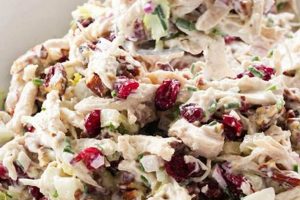
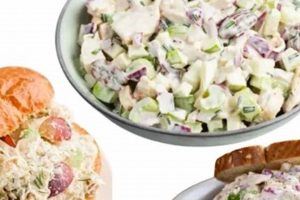
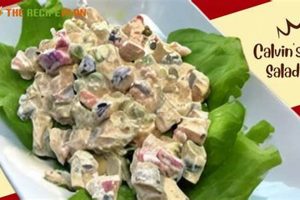
A Waldorf salad, traditionally composed of apples, celery, grapes, and walnuts dressed in mayonnaise, is reimagined in this variation with the addition of chicken. This creates a more substantial dish, transforming the salad into a light meal or a protein-rich component of a larger spread. Typical preparations involve diced or shredded cooked chicken combined with the classic Waldorf ingredients and bound with mayonnaise. Variations may include different types of nuts, dried fruits, or the use of yogurt or sour cream in addition to or in place of mayonnaise.
The evolution from a simple fruit and nut salad to a chicken-inclusive dish offers a versatile and convenient meal option. Its popularity likely stems from the balance of sweet and savory flavors, the satisfying textural contrast of crunchy and creamy elements, and the relative ease of preparation. This adaptability allows for customization to individual preferences and dietary needs, making it a suitable dish for picnics, potlucks, or quick lunches. The inclusion of chicken elevates the nutritional value, providing a good source of protein.
Further exploration will delve into specific variations, tips for ingredient selection and preparation, and suggestions for presentation and serving. Nutritional information and potential modifications for dietary restrictions will also be addressed.
Tips for a Superior Waldorf Salad with Chicken
Optimizing the preparation of this classic dish involves careful consideration of ingredient selection, proportions, and techniques.
Tip 1: Chicken Selection: Poached or roasted chicken breast offers a clean flavor profile, allowing the other ingredients to shine. Avoid pre-seasoned or smoked chicken, which can overpower the delicate balance of flavors.
Tip 2: Apple Choice: Crisp, tart apples like Granny Smith or Honeycrisp provide a pleasing contrast to the creamy dressing. Avoid overly sweet or mealy apples.
Tip 3: Enhancing the Grapes: Red or green seedless grapes offer sweetness and visual appeal. Consider halving larger grapes for easier eating and better distribution throughout the salad.
Tip 4: Nut Selection and Preparation: Walnuts are traditional, but pecans or toasted almonds offer delicious alternatives. To enhance their flavor, lightly toast nuts before adding them to the salad.
Tip 5: Mayonnaise Matters: High-quality mayonnaise is crucial for flavor and texture. Consider using a combination of mayonnaise and Greek yogurt for a lighter, tangier dressing.
Tip 6: Celery Preparation: Dice celery finely for even distribution and a pleasant crunch. Consider using the tender inner stalks for optimal texture.
Tip 7: Seasoning and Flavor Enhancement: Freshly ground black pepper, a pinch of salt, and a squeeze of lemon juice can elevate the overall flavor profile. A touch of Dijon mustard adds complexity.
Tip 8: Chill and Serve: Allowing the salad to chill for at least 30 minutes allows the flavors to meld and enhances the overall experience. Serve chilled on bread, crackers, lettuce cups, or as a standalone dish.
By following these suggestions, one can elevate this simple dish to a culinary masterpiece, maximizing flavor and texture.
These tips provide a foundation for crafting a truly exceptional Waldorf salad with chicken. Experimentation with different ingredients and techniques allows for personalization and further refinement of this versatile dish.
1. Chicken (cooked, diced)

Cooked, diced chicken forms the foundational protein component of a chicken salad Waldorf recipe. Its inclusion transforms the traditional fruit and nut salad into a more substantial dish. The preparation method and type of chicken employed significantly impact the final result. Overcooked chicken results in a dry, less palatable salad, while undercooked chicken presents food safety concerns. Roasting or poaching boneless, skinless chicken breasts yields optimal flavor and texture. Dicing the chicken into uniform pieces ensures even distribution throughout the salad and facilitates consistent flavor in each bite. Shredded chicken may also be used, although it offers a different textural experience.
The choice of chicken influences both the nutritional value and the overall taste profile. Lean chicken breast contributes a significant amount of protein with minimal fat. Dark meat, while offering a richer flavor, contains higher fat content. The cooking process itself can further influence the final flavor. Roasting imparts a subtle char and enhances the chicken’s inherent savory notes, while poaching results in a cleaner, more neutral flavor that allows the other ingredients to shine. Ultimately, the selected cooking method and cut of chicken should complement the desired balance of flavors in the finished salad.
Understanding the role of cooked, diced chicken within the context of a chicken salad Waldorf recipe allows for informed decisions regarding ingredient selection and preparation methods. Proper handling and cooking of the chicken ensure both food safety and optimal flavor and texture, contributing to a successful and enjoyable culinary experience.
2. Apples (crisp, diced)

Apples contribute a crucial textural and flavor dimension to chicken salad Waldorf recipes. Crisp varieties, such as Granny Smith, Honeycrisp, or Fuji, offer a satisfying contrast to the creamy mayonnaise and tender chicken. Their tartness balances the richness of the other ingredients, preventing the salad from becoming overly sweet or heavy. Dicing ensures even distribution of apple pieces throughout the salad, guaranteeing a consistent flavor profile in each bite. The sharp, clean flavor of a crisp apple also cuts through the richness of the mayonnaise and nuts, adding a refreshing element. Mealy or overly sweet apples, conversely, can detract from the desired balance and create an undesirable texture.
Consider a chicken salad Waldorf made with Red Delicious apples. Their soft texture and pronounced sweetness might overwhelm the other flavors, resulting in a less balanced and potentially cloying salad. Substituting a crisp Granny Smith apple, however, provides a tart counterpoint, enhancing the interplay of sweet, savory, and creamy elements. This highlights the practical significance of apple selection. Dicing the apples into consistent, bite-sized pieces further enhances the eating experience, ensuring optimal textural contrast and flavor distribution within each mouthful. Larger chunks of apple can disrupt the balance and create an uneven texture.
Precise apple selection and preparation are essential for a successful chicken salad Waldorf recipe. Crisp, tart apples, diced uniformly, contribute a refreshing counterpoint to the richness of other components. Understanding this interplay allows for informed ingredient choices, enhancing the overall sensory experience. Failure to select appropriate apples can compromise the balance of flavors and textures, highlighting the practical significance of this seemingly simple ingredient.
3. Celery (finely chopped)

Celery, when finely chopped, provides a crucial textural and flavor component within a chicken salad Waldorf recipe. Its crisp, fibrous stalks offer a refreshing counterpoint to the richness of mayonnaise and the tender nature of chicken. Finely chopping the celery ensures its even distribution throughout the salad, preventing overwhelming celery flavor in any single bite and contributing a consistent texture. This contrasts with larger pieces, which can be overpowering and disrupt the balance of flavors. The celery’s slightly bitter, herbaceous notes complement the sweetness of the apples and grapes, adding complexity to the overall flavor profile. Its water content also contributes to the salad’s moistness without making it watery.
Imagine a chicken salad Waldorf prepared with coarsely chopped celery. Large, fibrous pieces can overpower the other ingredients, creating a stringy texture that detracts from the overall experience. Finely dicing the celery, however, transforms it into a subtle yet essential component, adding a refreshing crunch and a nuanced flavor that enhances the other elements. This practical application demonstrates the significant impact of proper celery preparation. Furthermore, celery’s subtle vegetal notes bridge the gap between the sweetness of fruit and the savory aspects of chicken, unifying the diverse flavors within the salad.
Proper celery preparation is thus integral to a successful chicken salad Waldorf recipe. Its contribution extends beyond mere texture, encompassing a nuanced interplay of flavors and moisture content. Understanding this interplay allows for informed decisions regarding ingredient preparation, ultimately enhancing the overall culinary experience. The seemingly minor detail of finely chopping the celery exemplifies the significant impact of precise ingredient preparation in achieving a balanced and flavorful result.
4. Grapes (halved)
Grapes contribute a significant dimension of sweetness and texture to a chicken salad Waldorf recipe. Halving them serves a crucial functional and aesthetic purpose. This seemingly simple act impacts the overall balance of flavors, the ease of consumption, and the visual appeal of the finished dish. The following facets explore the importance of halved grapes within this culinary context.
- Flavor Distribution and Balance
Halving grapes ensures their sweetness is evenly distributed throughout the salad. Whole grapes can create pockets of intense sweetness, disrupting the balanced flavor profile. Smaller pieces allow the grape flavor to meld harmoniously with the other ingredients, contributing a consistent level of sweetness in each bite. This prevents an overwhelming burst of sweetness from a single, large grape and instead allows for a more nuanced flavor experience where the sweetness complements the savory and tart notes of the other components.
- Textural Enhancement
The halved grapes offer a more manageable texture within the salad. Biting into a whole grape can be disruptive, especially when combined with the softer textures of chicken and mayonnaise. Smaller pieces provide a more pleasant and consistent mouthfeel, integrating seamlessly with the diced chicken, apples, and celery. This contributes to a more harmonious textural experience where each ingredient complements the others, creating a balanced and enjoyable culinary experience.
- Visual Appeal
Halved grapes contribute to the visual appeal of the finished dish. The smaller, exposed surfaces of the halved grapes reflect light, adding brightness to the salad. The cross-sections also reveal the juicy interior, enhancing the overall presentation. This visual element elevates the dish beyond mere sustenance, making it more appealing and appetizing. The vibrant color of the grapes, whether red or green, further enhances the visual appeal against the backdrop of the other ingredients.
- Practical Considerations
Halving grapes also offers practical benefits. Smaller pieces are easier to handle and eat, making the salad more convenient for both preparation and consumption. This is particularly relevant for situations like picnics or buffets where ease of serving and consumption is paramount. Furthermore, halved grapes distribute more evenly throughout the salad, ensuring each serving contains a proportionate amount of fruit, preventing uneven distribution and enhancing the overall experience.
The seemingly minor act of halving grapes significantly impacts the overall success of a chicken salad Waldorf recipe. From flavor balance and textural enhancement to visual appeal and practical considerations, this preparation step plays a crucial role in creating a harmonious and enjoyable culinary experience. It underscores the importance of attention to detail in even the simplest of culinary endeavors.
5. Walnuts (chopped)

Walnuts, specifically chopped walnuts, contribute a crucial dimension of flavor, texture, and nutritional value to chicken salad Waldorf recipes. Their inclusion distinguishes the dish from other chicken salads, adding a characteristic richness and complexity. Omitting walnuts alters the sensory experience significantly, resulting in a less nuanced flavor profile and a diminished textural contrast. The act of chopping the walnuts, rather than leaving them whole or coarsely broken, is essential for proper integration and optimal flavor release.
Consider the textural impact. Chopped walnuts provide a satisfying crunch, contrasting with the softer textures of the chicken, grapes, and mayonnaise. This textural interplay elevates the eating experience, offering a dynamic interplay of creamy, crisp, and crunchy elements. Whole walnuts, conversely, would be too large, disrupting the balance and potentially overpowering the other ingredients. The smaller pieces, created through chopping, distribute evenly throughout the salad, ensuring a consistent textural experience in each bite. Furthermore, the increased surface area of chopped walnuts allows for better flavor release, enhancing the overall perception of their nutty, slightly bitter notes.
From a nutritional standpoint, walnuts contribute healthy fats, protein, and fiber, enriching the nutritional profile of the chicken salad. Their inclusion aligns with health-conscious approaches to meal preparation, offering a source of beneficial nutrients alongside the protein from the chicken and the vitamins and minerals from the fruits and vegetables. Chopping the walnuts facilitates easier digestion and allows for more efficient nutrient absorption. Furthermore, the flavor of walnuts complements the sweetness of the fruit and the savory notes of the chicken, creating a harmonious blend of flavors. The absence of walnuts diminishes this complexity, resulting in a less satisfying culinary experience. Therefore, chopped walnuts function as an integral component, contributing essential flavor, texture, and nutritional value to the chicken salad Waldorf recipe.
6. Mayonnaise (or yogurt-based dressing)
Mayonnaise, or a yogurt-based alternative, functions as the unifying element in a chicken salad Waldorf recipe, binding disparate ingredients into a cohesive whole. Its creamy texture provides a backdrop against which the contrasting textures of chicken, apple, celery, grapes, and walnuts can shine. Beyond its textural contribution, mayonnaise imparts a subtle tanginess and richness, enhancing the overall flavor profile. The emulsification within mayonnaise, achieved through the combination of oil and egg yolks, creates a smooth, velvety texture that coats the other ingredients, distributing flavor and preventing the salad from becoming dry or crumbly. A yogurt-based dressing, often chosen for a lighter, tangier profile, requires careful consideration of consistency to achieve a similar binding effect. Overly thin yogurt dressings can result in a watery salad, while excessively thick yogurt can create a dense, heavy consistency. Balancing flavor and texture is key.
Consider the difference between a chicken salad Waldorf made with a high-quality mayonnaise versus a low-fat alternative. The richer flavor and smoother texture of full-fat mayonnaise create a more luxurious mouthfeel and a more balanced interplay of flavors. A low-fat version, often formulated with modified starches and stabilizers, can result in a thinner consistency and a less satisfying flavor profile. Similarly, a Greek yogurt-based dressing, while offering a tangier, lighter alternative, must be carefully selected and potentially augmented with additional ingredients like lemon juice or herbs to achieve the desired flavor complexity and textural cohesion. Practical application often necessitates balancing dietary preferences with the desired sensory outcome.
The choice between mayonnaise and a yogurt-based dressing, and indeed the specific type of either, significantly impacts the final character of a chicken salad Waldorf recipe. Understanding this interplay of texture, flavor, and ingredient interaction allows for informed decision-making, enabling the creation of a salad tailored to specific preferences and dietary needs. Balancing these elements is crucial for a successful culinary outcome, highlighting the practical significance of seemingly simple ingredient choices.
Frequently Asked Questions
This section addresses common inquiries regarding the preparation and variations of chicken salad Waldorf recipes.
Question 1: Can canned chicken be used in this recipe?
While canned chicken offers convenience, using freshly cooked chicken yields superior flavor and texture. Canned chicken can sometimes have a slightly metallic taste and a softer, less appealing texture compared to freshly prepared chicken. If using canned chicken, opt for high-quality brands packed in water and drain thoroughly before incorporating it into the salad.
Question 2: How long can chicken salad Waldorf be stored?
Properly stored in an airtight container in the refrigerator, chicken salad Waldorf can last for up to three days. Beyond this timeframe, the risk of bacterial growth increases, compromising both safety and flavor.
Question 3: What are some suitable alternatives to walnuts?
Pecans, almonds, or even cashews can be substituted for walnuts. Toasted nuts offer enhanced flavor. Seed options, like sunflower or pumpkin seeds, can also provide a textural element and nutritional benefits, though the flavor profile will differ.
Question 4: Can this salad be prepared in advance for a party?
Yes, the salad can be prepared a day in advance. However, to prevent the apples from browning, add them just before serving or toss them lightly in lemon juice before incorporating them into the salad. This helps maintain their fresh appearance and crisp texture.
Question 5: How can the recipe be adapted for different dietary needs?
For gluten-free diets, ensure the chosen mayonnaise and any accompanying bread or crackers are gluten-free. Dairy-free versions can be achieved by substituting a plant-based yogurt or mayonnaise alternative. Adjustments to the sweetness can be made by reducing the amount of grapes or using less sweet apple varieties.
Question 6: What are some creative serving suggestions beyond bread or crackers?
Chicken salad Waldorf can be served in lettuce cups for a lighter presentation. It can also be used as a filling for croissants or wraps, or enjoyed as a topping for baked potatoes or mixed greens.
Careful consideration of these points ensures a successful and satisfying experience when preparing and enjoying chicken salad Waldorf.
Exploring variations and adaptations further enhances the culinary possibilities of this versatile dish.
Chicken Salad Waldorf Recipe
Exploration of this classic dish reveals the interplay of carefully selected ingredients and precise preparation techniques. From the selection of crisp apples and the proper dicing of celery to the nuanced contribution of chopped walnuts and the unifying role of mayonnaise, each component contributes to a harmonious balance of flavors and textures. Understanding these elements allows for informed choices, empowering culinary enthusiasts to craft a chicken salad Waldorf tailored to individual preferences. Variations in ingredients and dressings, such as substituting pecans for walnuts or employing a yogurt-based dressing, offer further avenues for culinary exploration, demonstrating the dish’s adaptability.
Chicken salad Waldorf stands as a testament to the enduring appeal of simple, well-crafted dishes. Its adaptability ensures its continued relevance in a constantly evolving culinary landscape. Further experimentation and refinement of personal techniques will undoubtedly unlock new dimensions of flavor and presentation, allowing this classic recipe to remain a vibrant and satisfying culinary experience for generations to come.