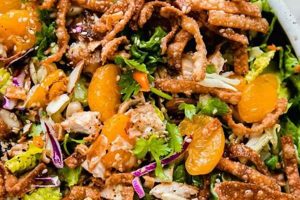
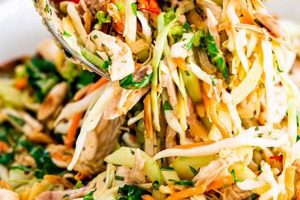
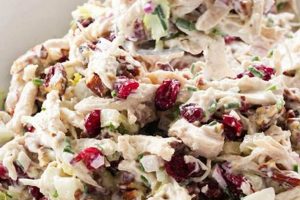
Flavorful dressings are essential for a successful Chinese chicken salad. These typically combine savory, sweet, and acidic elements, often featuring ingredients such as sesame oil, soy sauce, rice vinegar, ginger, and garlic. Variations can include ingredients like honey, chili garlic sauce, or peanut butter for added complexity.
A well-crafted dressing elevates the salad beyond a simple combination of ingredients, creating a harmonious blend of textures and tastes. The balance of sweet, sour, salty, and umami flavors enhances the chicken, vegetables, and crispy noodles or wonton strips often found in this popular dish. Having a selection of dressing recipes allows for customization to individual preferences and dietary needs.
This exploration will delve into various approaches to crafting these dressings, offering options for different flavor profiles and dietary restrictions. From classic combinations to innovative twists, the following recipes provide a range of choices for enhancing any Chinese chicken salad.
Tips for Crafting Exceptional Dressings for Chinese Chicken Salad
Creating a delicious Chinese chicken salad hinges on the quality of the dressing. These tips offer guidance for achieving optimal flavor and balance.
Tip 1: Freshly Grate Ginger and Garlic: Pre-minced or powdered versions lack the vibrant flavor of freshly grated ginger and garlic. These aromatic ingredients form the foundation of many dressings.
Tip 2: Balance Sweet and Sour Elements: Achieve harmony by carefully balancing the sweet and sour components. Taste and adjust the proportions of ingredients like rice vinegar, honey, or sugar as needed.
Tip 3: Incorporate Sesame Oil Judiciously: Sesame oil possesses a potent flavor. Start with a small amount and add more gradually to prevent it from overpowering other ingredients.
Tip 4: Consider Toasted Sesame Seeds: Toasted sesame seeds provide a nutty flavor and pleasant crunch. Add them directly to the dressing or sprinkle them over the finished salad.
Tip 5: Emulsify Thoroughly: Proper emulsification creates a smooth, creamy texture and prevents the dressing from separating. Whisk vigorously or use a blender to combine oil and vinegar effectively.
Tip 6: Adjust to Preference: Palates vary. Don’t hesitate to customize the dressing by adding a touch of chili garlic sauce for heat, or peanut butter for richness.
Tip 7: Taste Before Serving: Always taste the dressing and adjust the seasoning before tossing it with the salad. This ensures the flavors are well-balanced.
By following these tips, one can create dressings that elevate Chinese chicken salad to a new level of culinary enjoyment.
With these foundational principles established, the subsequent sections will explore specific recipes and variations.
1. Flavor Balance (sweet, sour, savory)

Flavor balance is paramount in Chinese chicken salad dressings. The interplay of sweet, sour, and savory elements creates a dynamic and appealing taste profile. This balance prevents any single flavor from dominating, resulting in a harmonious and more complex experience. The sweetness often comes from ingredients like honey, sugar, or fruit juices. Sourness is typically introduced through rice vinegar, lime juice, or other acidic components. Savory notes are derived from soy sauce, sesame oil, ginger, and garlic. The precise ratio of these elements can be adjusted to suit individual preferences, but maintaining a general equilibrium is key.
For instance, a dressing overly reliant on sweetness can become cloying, while excessive sourness can be sharp and unpleasant. An overemphasis on savory elements might make the dressing taste too salty or one-dimensional. Consider a dressing with a base of rice vinegar and soy sauce. The vinegar provides the sourness, the soy sauce the saltiness, and a touch of honey balances these with sweetness. This creates a more nuanced and enjoyable flavor profile than if any single ingredient were dominant. The savory depth of sesame oil and ginger further enhances the complexity. Without this careful balance, the dressing, and consequently the entire salad, can fall flat.
Understanding the importance of flavor balance allows for greater control and customization of Chinese chicken salad dressings. One can tailor the balance to complement specific ingredients in the salad or cater to personal taste preferences. Achieving this balance is a crucial step in creating a successful and satisfying culinary experience. It transforms a simple mixture of ingredients into a well-rounded and flavorful dressing that elevates the entire dish.
2. Ingredient Quality (fresh, flavorful)
Ingredient quality significantly impacts the overall success of Chinese chicken salad dressings. Fresh, vibrant ingredients contribute to a brighter, more nuanced flavor profile. The difference between freshly grated ginger and its powdered counterpart, for example, is substantial. Fresh ginger offers a zesty, pungent aroma and taste, while powdered ginger tends to be dull and less impactful. Similarly, using fresh garlic instead of pre-minced versions results in a more pronounced and aromatic dressing. High-quality soy sauce, made with traditional methods, provides a richer, more complex umami flavor compared to mass-produced alternatives. Selecting premium oils, like cold-pressed sesame oil, contributes desirable aromas and enhances the overall sensory experience. When ingredients are at their peak freshness, their flavors meld harmoniously, resulting in a dressing that elevates the entire salad.
Consider the effect of using stale or low-quality ingredients. Rancid oils introduce unpleasant off-flavors, while wilted herbs or aged garlic lack the vibrancy needed to create a truly delicious dressing. These compromised ingredients can negatively impact the overall flavor profile, making the dressing taste dull or unbalanced. Investing in fresh, high-quality ingredients ensures the best possible outcome. Imagine a dressing made with vibrant, freshly squeezed lime juice versus one made with bottled lime juice concentrate. The fresh juice offers a bright, tangy flavor that complements the other ingredients, while the concentrate often tastes artificial and lacks the same depth. This attention to ingredient quality is not merely a matter of preference but a crucial step in crafting exceptional dressings. A simple vinaigrette, for instance, relies heavily on the quality of the oil and vinegar used. Inferior ingredients will result in a bland and uninspiring dressing, whereas high-quality components create a vibrant and flavorful experience.
Prioritizing ingredient quality is an investment in flavor and overall culinary satisfaction. While convenience sometimes dictates the use of pre-prepared or processed ingredients, understanding the impact of fresh, high-quality components allows for informed choices. Recognizing this connection empowers one to create dressings that truly enhance the Chinese chicken salad, transforming it from a simple dish into a memorable culinary experience.
3. Emulsification (stable, creamy)

Emulsification plays a crucial role in the texture and overall appeal of Chinese chicken salad dressings. A stable emulsion creates a creamy, smooth consistency, preventing the dressing from separating into oily and watery layers. This not only enhances the sensory experience but also ensures that the flavors are evenly distributed throughout the salad.
- Temporary vs. Permanent Emulsions
Emulsions can be temporary or permanent. Temporary emulsions, like a simple vinaigrette, require whisking or shaking before use as the oil and vinegar separate quickly. Permanent emulsions, often achieved with emulsifying agents like egg yolks or mustard, create a more stable mixture that resists separation. In Chinese chicken salad dressings, a temporary emulsion is often sufficient, particularly if the dressing is used immediately. However, for dressings prepared in advance, achieving a more stable emulsion can be beneficial.
- The Role of Emulsifiers
Emulsifiers contain molecules with both hydrophilic (water-loving) and lipophilic (oil-loving) ends. These molecules act as a bridge, binding oil and water droplets together and preventing separation. While not always necessary for Chinese chicken salad dressings, emulsifiers like honey or a small amount of Dijon mustard can contribute to a smoother, more stable emulsion. Honey’s natural sugars act as binding agents, while mustard contains lecithin, a natural emulsifier.
- Achieving a Stable Emulsion
Achieving a stable emulsion requires careful technique. Slowly whisking the oil into the vinegar while continuously stirring allows the emulsifier to properly coat the oil droplets and prevent them from coalescing. Alternatively, a blender can be used to create a more stable emulsion quickly and efficiently by forcing the oil and vinegar to combine on a molecular level. The desired consistency of the dressing dictates the approach. A thicker dressing, such as one containing peanut butter, benefits from the power of a blender, while a lighter vinaigrette can be effectively emulsified by hand.
- Impact on Flavor and Texture
A properly emulsified dressing not only offers a pleasingly smooth texture but also contributes to a more cohesive flavor experience. When the oil and vinegar are evenly dispersed, the flavors blend seamlessly, preventing pockets of excessive acidity or oiliness. This enhances the overall balance and allows the nuances of each ingredient to shine through. A separated dressing, conversely, can deliver uneven bursts of flavor, detracting from the overall enjoyment of the salad.
The stability and creaminess of the emulsion directly influence the sensory experience of a Chinese chicken salad. A well-emulsified dressing coats the ingredients evenly, ensuring that each bite is infused with balanced flavor. This attention to emulsification elevates the dish from a simple combination of ingredients to a cohesive and satisfying culinary creation. Neglecting this crucial step can result in a less appealing texture and a compromised flavor experience, underscoring the importance of understanding and applying the principles of emulsification in Chinese chicken salad dressing preparation.
4. Texture (smooth, consistent)

Texture plays a significant role in the overall enjoyment of Chinese chicken salad. Dressings offer an opportunity to introduce both smooth and contrasting textural elements. A smooth, consistent dressing coats the salad ingredients evenly, ensuring a harmonious blend of flavors in each bite. This consistency is typically achieved through proper emulsification, preventing the oil and vinegar components from separating. A smooth dressing clings lightly to the ingredients, enhancing their individual flavors without overwhelming them. Conversely, a separated or grainy dressing can lead to an uneven distribution of flavor and a less satisfying mouthfeel.
Consider the interplay of textures within the salad itself. Often, Chinese chicken salad incorporates crunchy elements such as crispy wonton strips, toasted nuts, or raw vegetables. A smooth dressing provides a textural counterpoint to these elements, creating a dynamic and engaging sensory experience. The smoothness of the dressing allows the crunch of the other components to stand out, enhancing their individual contributions. Furthermore, a smooth dressing contributes to the overall aesthetic appeal of the salad. It creates a glossy sheen on the ingredients, making them appear more vibrant and appetizing. A dressing that is too thick or too thin can detract from this visual appeal. For example, a thick dressing might clump on the ingredients, while a thin dressing might pool at the bottom of the bowl, leaving the salad looking dry.
Achieving the desired texture requires careful consideration of ingredients and techniques. The choice of oil, the presence of emulsifiers, and the method of combining ingredients all contribute to the final texture of the dressing. For a smoother dressing, a neutral-flavored oil like grapeseed or canola oil is often preferred. Adding ingredients like honey or a small amount of Dijon mustard can help create a more stable and creamy emulsion. Proper whisking or blending techniques ensure that the ingredients are thoroughly combined and that the desired consistency is achieved. Understanding the interplay of these factors allows for greater control over the final texture of the dressing, enhancing the overall enjoyment of the Chinese chicken salad. A smooth, consistent dressing not only elevates the flavor profile but also creates a more pleasurable and satisfying dining experience.
5. Versatility (adaptable, customizable)

Versatility is a hallmark of successful Chinese chicken salad dressing recipes. Adaptability to various ingredients and palates ensures broad appeal and allows for creative culinary exploration. Customization empowers individuals to tailor dressings to specific dietary needs, ingredient availability, and flavor preferences. This adaptability is essential for a recipe to remain relevant and enjoyable across diverse culinary contexts.
- Ingredient Substitution
Ingredient substitution is a key aspect of versatility. Recipes should offer flexibility in core components. For example, honey or maple syrup can replace sugar, offering nuanced sweetness and varying textures. Different vinegars, such as rice vinegar, apple cider vinegar, or white wine vinegar, allow for adjustments in acidity and flavor profiles. Substituting tamari for soy sauce accommodates gluten-free diets while maintaining the savory element. This adaptability ensures that recipes remain accessible and enjoyable regardless of dietary restrictions or ingredient availability.
- Flavor Adjustments
Flavor adjustments demonstrate the customizability of successful recipes. The base recipe provides a foundation upon which individual preferences can build. Adding chili garlic sauce introduces heat, while incorporating peanut butter or tahini creates richness and complexity. Adjusting the amount of ginger or garlic allows for fine-tuning of aromatic intensity. These adjustments enable individuals to personalize the dressing, transforming a standard recipe into a customized culinary creation. A basic vinaigrette, for example, can be transformed with the addition of herbs, spices, or different types of vinegar, demonstrating the adaptability of simple recipes.
- Dietary Adaptations
Dietary adaptations are crucial for inclusivity and demonstrate the versatility of a recipe. Adapting recipes to accommodate dietary restrictions expands their reach and ensures enjoyment for a wider audience. Substituting agave nectar for honey caters to vegan preferences. Using gluten-free soy sauce or tamari addresses gluten sensitivities. Omitting nuts or seeds accommodates allergies. These modifications demonstrate that flavor and enjoyment need not be sacrificed when catering to specific dietary needs. This adaptability ensures that everyone can partake in the culinary experience, regardless of dietary restrictions.
- Creative Exploration
Creative exploration is facilitated by versatile recipes. A well-structured recipe serves as a springboard for culinary innovation. Building upon the foundation of a basic dressing, individuals can experiment with different flavor combinations and ingredients. Adding toasted sesame seeds provides a nutty crunch, while incorporating fresh herbs like cilantro or mint introduces bright, fresh notes. These creative additions transform the basic dressing into a unique culinary expression, reflecting individual tastes and preferences. This flexibility encourages experimentation and allows for a deeper engagement with the culinary process.
The versatility of Chinese chicken salad dressing recipes lies in their adaptability and customizability. These qualities ensure that the recipes remain relevant and enjoyable across a wide range of situations and preferences. From ingredient substitutions to flavor adjustments and dietary adaptations, the ability to tailor the dressing empowers individuals to create personalized culinary experiences. This adaptability fosters creative exploration and ensures that Chinese chicken salad remains a versatile and satisfying dish for diverse palates and dietary needs. By embracing the adaptability of these recipes, one can create a dressing that perfectly complements the salad’s other components and enhances the overall dining experience.
6. Dietary Considerations (allergies, preferences)
Dietary considerations play a crucial role in formulating palatable and inclusive Chinese chicken salad dressing recipes. Accommodating allergies and preferences ensures broader accessibility and allows individuals with specific dietary needs to enjoy this popular dish. Careful ingredient selection and substitution are essential for navigating these considerations effectively. Ignoring these factors can lead to adverse reactions or simply unenjoyable culinary experiences, highlighting the importance of addressing dietary needs when developing or choosing a dressing recipe.
- Nut Allergies
Nut allergies are a prevalent concern, particularly regarding peanut and sesame allergies. Common ingredients in Chinese chicken salad dressings, such as sesame oil and peanut butter, pose significant risks for individuals with these allergies. Recipes must offer clear alternatives, such as sunflower seed butter or alternative oils like grapeseed oil. Careful labeling and ingredient sourcing are crucial to prevent cross-contamination and ensure consumer safety. Failure to address nut allergies can lead to severe allergic reactions, underscoring the importance of providing nut-free options.
- Gluten Sensitivity and Celiac Disease
Gluten sensitivity and celiac disease require careful consideration of soy sauce, a frequent ingredient in these dressings. Many commercially available soy sauces contain wheat. Substituting tamari, a gluten-free soy sauce alternative, or coconut aminos provides a suitable replacement. Ensuring all other ingredients are gluten-free, including any pre-made spice blends or sauces, is vital. Overlooking gluten content can lead to digestive discomfort for those with sensitivities or trigger a damaging autoimmune response in individuals with celiac disease.
- Vegetarian and Vegan Diets
Vegetarian and vegan diets often necessitate ingredient substitutions in dressings. Ingredients like honey, traditionally used for sweetness, are not suitable for vegans. Alternatives like maple syrup, agave nectar, or brown rice syrup provide comparable sweetness without animal products. Ensuring that all other ingredients align with vegetarian or vegan principles is paramount, including any emulsifiers or stabilizers used. Careful recipe adaptation ensures inclusivity and allows individuals following these diets to enjoy the flavors of Chinese chicken salad without compromising their dietary principles.
- Low-Sodium Preferences
Low-sodium preferences present challenges due to the prevalent use of soy sauce in Chinese chicken salad dressings. Reducing or omitting soy sauce altogether and relying on other flavor enhancers, like ginger, garlic, and citrus juices, can create a flavorful yet lower-sodium dressing. Using low-sodium soy sauce or diluting regular soy sauce with water can also be effective strategies. Ignoring sodium content can be detrimental for individuals managing hypertension or other health conditions requiring sodium restriction, emphasizing the importance of offering lower-sodium options.
Addressing dietary considerations expands the accessibility and enjoyment of Chinese chicken salad. By offering allergy-friendly and preference-conscious dressing recipes, individuals can enjoy a flavorful and satisfying culinary experience without compromising their dietary needs. This attention to detail ensures inclusivity and demonstrates a commitment to providing options for a diverse range of individuals. Adapting recipes to accommodate these considerations broadens culinary horizons and allows more people to savor the delightful flavors of Chinese chicken salad. This approach promotes a more inclusive and enjoyable dining experience for everyone.
Frequently Asked Questions
This section addresses common inquiries regarding the preparation and utilization of dressings for Chinese chicken salad.
Question 1: What is the primary role of the dressing in Chinese chicken salad?
The dressing serves to unify the various components of the salad, binding the flavors and textures together. It provides essential moisture and contributes significantly to the overall flavor profile of the dish.
Question 2: Can dressings be prepared in advance?
Dressings can be prepared several days in advance and stored in an airtight container in the refrigerator. This allows flavors to meld and enhances convenience. However, some dressings, particularly those containing fresh ingredients like herbs or citrus juice, are best consumed freshly prepared.
Question 3: How can one adjust the consistency of a dressing?
Consistency can be adjusted by altering the ratio of oil to vinegar. Increasing the oil content creates a thicker dressing, while adding more vinegar results in a thinner consistency. If a thicker dressing is desired without altering the flavor balance, a small amount of cornstarch mixed with water can be whisked in and gently heated until thickened.
Question 4: What are common alternatives to sesame oil if allergies are a concern?
Suitable alternatives to sesame oil include grapeseed oil, avocado oil, or a mild-flavored olive oil. These options offer neutral flavor profiles that will not overpower the other ingredients in the dressing.
Question 5: How can sodium content be reduced in Chinese chicken salad dressings?
Sodium content can be managed by using low-sodium soy sauce or tamari. Alternatively, reducing the amount of soy sauce used and enhancing flavor with other ingredients like ginger, garlic, and citrus juice can create a flavorful yet lower-sodium dressing.
Question 6: How can one prevent a dressing from separating?
Proper emulsification is key to preventing separation. Vigorously whisking the oil into the vinegar or using a blender creates a more stable emulsion. Adding a small amount of honey or Dijon mustard can further stabilize the dressing and prevent separation.
Understanding these key aspects of Chinese chicken salad dressing preparation contributes to a more informed and enjoyable culinary experience.
The following section will explore specific recipes incorporating these principles.
Conclusion
Exploration of optimal Chinese chicken salad dressing recipes reveals the importance of balancing sweet, sour, and savory flavors. Fresh, high-quality ingredients are essential for achieving the desired flavor profile. Proper emulsification creates a desirable texture and prevents separation. Adaptability to various dietary needs and ingredient availability ensures inclusivity and allows for customization. Understanding these core principles empowers culinary exploration and enhances the overall dining experience.
Crafting a well-balanced and flavorful dressing elevates Chinese chicken salad beyond a simple combination of ingredients. Careful consideration of flavor profiles, ingredient quality, and dietary needs unlocks the full potential of this versatile dish, promising a delightful culinary experience for all.