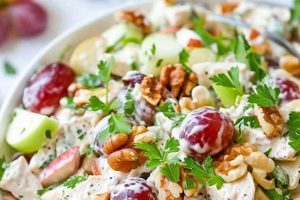
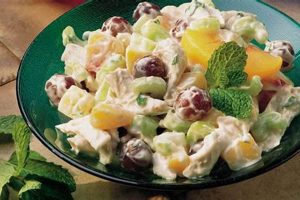
A dish featuring cooked chicken, typically shredded or diced, combined with mayonnaise, curry powder, and sweet grapes creates a flavorful and refreshing salad. Variations may include additional ingredients such as celery, onions, nuts, or dried fruit, offering diverse flavor profiles and textures. This type of salad can be served chilled on bread, crackers, lettuce cups, or as a standalone dish.
The blend of savory chicken, aromatic curry, and sweet grapes offers a balanced flavor profile that appeals to a wide range of palates. This cold salad is a versatile dish suitable for picnics, potlucks, quick lunches, or light dinners. Its adaptability extends to ingredient variations, allowing for customization based on dietary preferences and seasonal availability. Historically, fruit and meat combinations have been featured in various cuisines, and this particular dish reflects a modern take on this classic pairing.
Further exploration into specific ingredient choices, preparation methods, and serving suggestions will provide a comprehensive understanding of this culinary creation. Nutritional information and variations catering to specific dietary needs will also be addressed.
Tips for a Delicious Curry Chicken Salad with Grapes
Achieving optimal flavor and texture requires attention to several key elements. The following tips offer guidance for creating a successful dish.
Tip 1: Chicken Selection and Preparation: Using high-quality, cooked chicken is crucial. Roasting or poaching chicken breasts yields optimal flavor and moisture. Canned chicken can be used for convenience, but ensure it’s well-drained.
Tip 2: Curry Powder Choice: Experimenting with different curry powders allows for customized flavor profiles. Mild, medium, or hot curry powders can be utilized, depending on preferred spice levels. Freshly toasted and ground spices offer the most vibrant flavor.
Tip 3: Grape Selection: Seedless grapes, such as red, green, or black varieties, are recommended for ease of consumption. Halving larger grapes can improve texture and distribution throughout the salad.
Tip 4: Mayonnaise Quality and Alternatives: High-quality mayonnaise enhances the overall richness and flavor. Greek yogurt or avocado can be substituted for a lighter, healthier alternative.
Tip 5: Balancing Sweetness and Tang: A touch of sweetness, such as a drizzle of honey or a pinch of sugar, can balance the savory and spicy elements. A squeeze of lemon juice adds brightness and complements the curry flavor.
Tip 6: Enhancing Texture and Flavor: Incorporating finely diced celery, red onion, or toasted almonds adds textural complexity and depth of flavor. Dried cranberries or apricots provide a complementary sweetness and chewiness.
Tip 7: Chilling and Serving: Chilling the salad for at least 30 minutes allows the flavors to meld and enhances the refreshing quality. Serve on bread, crackers, lettuce cups, or as a standalone dish.
By following these tips, one can create a flavorful and well-balanced salad that offers a delightful combination of textures and aromas.
These considerations contribute to a successful culinary experience and offer a foundation for further exploration of individual preferences and variations.
1. Chicken (cooked, diced)

Cooked, diced chicken forms the foundation of a curry chicken salad with grapes recipe. The chicken provides protein and substance, acting as a canvas for the other flavors. Dicing ensures even distribution throughout the salad and facilitates easy consumption. The cooking method influences the final flavor profile; roasted chicken imparts a richer, more intense taste, while poached chicken offers a milder, cleaner flavor. Using pre-cooked chicken, such as rotisserie chicken, significantly reduces preparation time. Conversely, undercooked chicken presents health risks and negatively impacts the overall dish.
The quality and preparation of the chicken directly affect the final product. Dry, overcooked chicken results in a less palatable salad, while properly cooked, moist chicken enhances the overall texture and enjoyment. Consider marinating the chicken before cooking to infuse additional flavors that complement the curry and grapes. Furthermore, the size of the dice influences the salad’s texture; smaller pieces create a finer texture, while larger pieces offer a more substantial bite. For example, using leftover roasted chicken with charred edges adds a smoky dimension to the salad.
Proper handling and preparation of the chicken are essential for both flavor and food safety. Ensuring the chicken reaches a safe internal temperature eliminates potential health risks. Furthermore, the choice between white and dark meat influences the flavor and nutritional content of the salad. Dark meat offers a richer flavor and higher fat content, while white meat provides a leaner, milder option. Ultimately, the chicken’s quality and preparation are paramount to a successful curry chicken salad with grapes recipe.
2. Curry powder (flavorful)
Curry powder plays a pivotal role in defining the character of a curry chicken salad with grapes recipe. Its complex blend of spices contributes depth and complexity, transforming the dish from a simple chicken salad into a flavorful experience. The specific composition of a curry powder significantly influences the final taste profile. A Madras curry powder, for instance, introduces a vibrant, tangy heat, while a Korma curry powder offers a milder, nuttier flavor. This variability allows for customization based on individual preferences, ranging from mild and aromatic to intensely spicy. The quality of the curry powder directly impacts the overall quality of the dish; freshly ground spices offer superior flavor and aroma compared to pre-ground blends that may have lost their potency over time. For example, using a curry powder with prominent turmeric notes will lend a warm, earthy flavor and a vibrant yellow hue to the salad.
The quantity of curry powder used further modulates the flavor intensity. A smaller amount creates a subtle background note, allowing the other ingredients to shine, while a larger amount brings the curry flavor to the forefront. Balancing the curry powder with other ingredients, such as the sweetness of the grapes and the tanginess of the mayonnaise, is crucial for achieving a harmonious flavor profile. Overpowering the salad with excessive curry powder can mask the other flavors and result in an unbalanced dish. Conversely, using too little curry powder might not provide the intended depth and complexity. Experimentation and careful consideration of the other ingredients are key to achieving the desired balance. Consider blending your own curry powder using individual spices to achieve a truly customized flavor profile tailored to the other ingredients in the salad.
Effective utilization of curry powder requires an understanding of its nuances and potential impact on the final dish. Freshness, quality, and quantity all contribute to the overall flavor profile. Careful consideration of these factors, coupled with an awareness of complementary flavors, ensures a balanced and delicious curry chicken salad with grapes recipe. The ability to adapt the curry powder component allows for endless variations and personalized culinary creations, catering to diverse palates and preferences. Addressing potential challenges, such as balancing spice levels and preventing overpowering flavors, is crucial for culinary success. This nuanced approach elevates the dish beyond a simple combination of ingredients into a carefully crafted culinary experience.
3. Grapes (seedless, halved)

Grapes contribute a crucial element of sweetness and texture to curry chicken salad. Seedless varieties are preferred for ease of consumption and a smoother texture within the salad. Halving the grapes, particularly larger varieties, serves several purposes. It ensures even distribution throughout the salad, preventing pockets of concentrated sweetness. Smaller pieces integrate more seamlessly with the other ingredients, creating a balanced flavor and texture in each bite. Furthermore, halving exposes more surface area of the grape, allowing its juices to mingle with the other ingredients, enhancing the overall flavor profile. This interaction between the grape’s sweetness and the curry’s spice creates a dynamic flavor contrast that characterizes the dish. For instance, using red grapes offers a traditional sweetness, while green grapes provide a slightly tart counterpoint to the curry spices. The choice of grape variety can subtly influence the overall flavor profile.
The interplay between the grapes and the other ingredients is essential for achieving a harmonious balance. The sweetness of the grapes tempers the heat of the curry powder, preventing the spice from becoming overwhelming. Simultaneously, the curry enhances the natural sweetness of the grapes, creating a more complex and nuanced flavor profile. This dynamic interplay is crucial for a successful curry chicken salad. Consider marinating the halved grapes in a small amount of lemon juice or white wine vinegar to add a subtle tang that complements the curry spices and enhances the overall flavor complexity. This technique also helps prevent the grapes from oxidizing and browning, maintaining their visual appeal.
Appropriate grape selection and preparation significantly influence the final product’s quality. Fresh, plump grapes provide optimal sweetness and texture. Halving ensures even distribution and enhances the interaction between the grapes and the other ingredients. Understanding the role of grapes in balancing flavor and contributing to a pleasant textural experience is fundamental to creating a successful and enjoyable curry chicken salad. Addressing potential issues, such as uneven sweetness distribution or textural imbalances, highlights the practical significance of careful grape selection and preparation. This attention to detail elevates the dish beyond a simple combination of ingredients into a carefully constructed culinary experience.
4. Mayonnaise (or alternative)

Mayonnaise serves as a crucial binding agent and flavor enhancer in curry chicken salad with grapes, contributing to its creamy texture and overall palatability. The choice of mayonnaise, or a suitable alternative, significantly impacts the salad’s richness, flavor profile, and nutritional value. Understanding the role of this component allows for informed decisions regarding ingredient selection and recipe customization.
- Texture and Cohesion:
Mayonnaise emulsifies the ingredients, creating a smooth, creamy consistency that coats the chicken and grapes, binding them together. This cohesive texture prevents the salad from becoming dry or crumbly, ensuring a pleasant mouthfeel. Without sufficient mayonnaise or a suitable alternative, the salad may lack the desired creaminess and become disjointed. For example, using a thick, high-quality mayonnaise results in a luxuriously creamy salad, while a thinner, less viscous mayonnaise yields a lighter texture.
- Flavor Enhancement and Balance:
Mayonnaise contributes a subtle tanginess and richness that complements the curry spices and the sweetness of the grapes. Its inherent flavor enhances the other ingredients without overpowering them, creating a balanced flavor profile. The specific type of mayonnaise can further influence the flavor; for example, a mayonnaise made with olive oil imparts a subtle fruity note, while a traditional mayonnaise offers a classic, tangy flavor. A carefully chosen mayonnaise can enhance the complexity of the curry powder’s spice blend, creating a more nuanced and flavorful experience.
- Dietary Considerations and Alternatives:
Traditional mayonnaise is high in fat and calories. For those seeking healthier options, alternatives such as Greek yogurt, avocado, or hummus offer similar creaminess and binding properties while reducing the overall fat content. These alternatives also introduce unique flavor profiles; Greek yogurt adds a tangy element, avocado contributes a creamy richness, and hummus introduces a nutty, earthy flavor. Choosing an alternative requires careful consideration of its impact on the overall flavor profile and texture of the salad.
- Quantity and Incorporation:
The amount of mayonnaise used affects the salad’s final consistency and richness. Too little mayonnaise results in a dry, crumbly salad, while too much can make it overly rich and heavy. Proper incorporation ensures even distribution and prevents pockets of excessive mayonnaise. Gradually adding and mixing the mayonnaise allows for adjustments based on the desired consistency. For example, starting with a smaller amount and adding more as needed helps achieve the perfect balance of creaminess and texture.
Careful consideration of the mayonnaise, or its alternative, is essential for creating a well-balanced and flavorful curry chicken salad with grapes. The chosen option impacts not only the texture and cohesion but also the overall flavor profile and nutritional value. Understanding these facets allows for informed decisions regarding ingredient selection and customization, ensuring a successful and enjoyable culinary outcome. This nuanced approach elevates the dish beyond a simple combination of ingredients into a carefully crafted culinary experience.
5. Optional additions (celery, nuts)

Optional additions, such as celery and nuts, offer opportunities to enhance the flavor, texture, and nutritional value of curry chicken salad with grapes. These additions, while not essential to the core recipe, provide avenues for customization and elevate the dish beyond its basic components. Careful selection and incorporation of these optional ingredients can significantly impact the overall sensory experience.
- Texture and Crunch:
Ingredients like celery and nuts introduce textural contrast to the otherwise soft consistency of the chicken salad. Celery provides a refreshing crispness, while nuts offer a satisfying crunch. This interplay of textures creates a more dynamic and engaging mouthfeel. The specific type of nut influences the intensity of the crunch; for instance, almonds offer a firm crunch, while cashews provide a smoother, more delicate texture. This textural element enhances the overall enjoyment of the salad.
- Flavor Complexity and Depth:
Optional additions contribute nuanced flavors that complement the core ingredients. Celery imparts a subtly herbaceous and slightly bitter note that balances the sweetness of the grapes and the richness of the mayonnaise. Nuts, depending on the variety, introduce flavors ranging from earthy and buttery (walnuts) to subtly sweet and nutty (pecans). These additions create a more complex and layered flavor profile, enhancing the overall culinary experience. Toasted nuts further intensify their flavor, adding a depth that complements the curry spices.
- Nutritional Enhancement:
Incorporating optional ingredients can boost the nutritional value of the salad. Celery is a good source of fiber and vitamins, while nuts provide healthy fats, protein, and essential minerals. These additions contribute to a more balanced and nutritious meal, aligning with dietary preferences focused on health and well-being. For example, adding walnuts increases the omega-3 fatty acid content, while almonds contribute vitamin E and magnesium.
- Visual Appeal and Presentation:
Optional additions can enhance the visual appeal of the curry chicken salad. The vibrant green of celery and the varied colors of nuts create visual interest and contrast against the backdrop of the chicken and grapes. This visual element elevates the presentation, making the salad more appetizing and appealing. Consider using a variety of nuts, such as slivered almonds, chopped walnuts, and whole pecans, to create a visually appealing textural contrast.
Strategic inclusion of optional additions, such as celery and nuts, elevates curry chicken salad with grapes from a simple dish to a more complex and satisfying culinary creation. These additions contribute not only to textural and flavor complexity but also to nutritional value and visual appeal. Understanding the specific contributions of each optional ingredient allows for informed choices and customization, ensuring a balanced and enjoyable culinary experience.
6. Serving (chilled, bread/crackers)
Serving considerations significantly influence the overall enjoyment of curry chicken salad with grapes. Temperature, accompanying elements, and presentation contribute to the sensory experience, impacting flavor perception and palatability. Understanding these factors allows for optimized serving strategies that enhance the dish’s appeal.
- Temperature and Flavor Perception:
Serving the salad chilled enhances the refreshing qualities of the grapes and mayonnaise, creating a pleasant contrast to the warmth of the curry spices. Chilling allows the flavors to meld and intensify, resulting in a more balanced and cohesive flavor profile. A cold temperature also enhances the creamy texture of the mayonnaise, contributing to a more satisfying mouthfeel. Serving the salad at room temperature, or warm, diminishes the refreshing qualities and can dull the flavor nuances.
- Accompanying Elements and Complementary Textures:
Serving curry chicken salad with bread or crackers provides a textural counterpoint to the creamy salad. Crusty bread or crisp crackers offer a satisfying crunch that complements the soft texture of the chicken and grapes. The choice of accompanying element can further influence the flavor experience; for instance, a buttery croissant adds richness, while a whole-wheat cracker provides a nutty, earthy note. These complementary textures and flavors enhance the overall enjoyment of the dish.
- Presentation and Visual Appeal:
Thoughtful presentation elevates the dining experience. Serving the salad on a bed of lettuce adds a fresh, vibrant element, while garnishing with fresh herbs, such as chopped cilantro or mint, enhances the visual appeal and introduces aromatic notes. The choice of serving vessel, whether a simple bowl or a more elaborate platter, further contributes to the overall presentation. An aesthetically pleasing presentation enhances the perceived value and enjoyment of the dish.
- Portioning and Occasion:
Portion size and serving style should align with the occasion. For a light lunch or snack, smaller portions served on crackers or in lettuce cups are appropriate. For a more substantial meal, larger portions served on bread or as a standalone salad are suitable. Adapting the serving style to the context ensures an appropriate and enjoyable dining experience. For example, serving individual portions in small ramekins adds a touch of elegance to a buffet or party setting.
Optimal serving practices enhance the enjoyment of curry chicken salad with grapes. Temperature, accompanying elements, and presentation contribute to the sensory experience, influencing flavor perception, textural contrast, and overall appeal. By considering these factors, one can create a more satisfying and memorable culinary experience. Appropriate serving practices elevate this simple dish, transforming it into a more refined and enjoyable culinary creation.
Frequently Asked Questions
Addressing common inquiries regarding the preparation and enjoyment of this dish provides clarity and facilitates culinary success.
Question 1: What type of curry powder is best suited for this recipe?
The choice of curry powder depends on individual preferences. Mild curry powders offer a gentle introduction to the spice, while medium and hot varieties provide more intense heat. Experimentation is encouraged to discover the ideal flavor profile.
Question 2: Can alternative proteins be used in place of chicken?
While chicken is traditional, cooked turkey, chickpeas, or firm tofu can be substituted for those seeking alternative protein sources or catering to dietary restrictions. These alternatives offer varied textures and flavor profiles.
Question 3: How long can curry chicken salad with grapes be stored?
Properly stored in an airtight container in the refrigerator, the salad can be safely consumed for up to three days. Beyond this timeframe, quality and safety may be compromised.
Question 4: How can the sweetness of the salad be adjusted?
Adjusting the sweetness can be achieved through the addition of a small amount of honey or sugar, or by incorporating sweeter grape varieties. Balancing sweetness with the curry’s spiciness is key.
Question 5: Can this salad be frozen for later consumption?
Freezing is not recommended, as the mayonnaise-based dressing can separate upon thawing, resulting in an undesirable texture. Fresh preparation is advised for optimal quality.
Question 6: What are suitable accompaniments beyond bread and crackers?
Beyond traditional accompaniments, the salad can be served in lettuce cups, as a filling for croissants or wraps, or alongside a green salad for a lighter meal option.
Careful consideration of these frequently asked questions ensures a successful and enjoyable culinary experience. Addressing potential challenges and understanding ingredient variations allows for informed decision-making and customization based on individual preferences and dietary needs.
With a comprehensive understanding of these aspects, exploration of recipe variations and advanced preparation techniques can further enhance culinary expertise.
Curry Chicken Salad with Grapes Recipe
This exploration has provided a comprehensive overview of the elements contributing to a successful curry chicken salad with grapes recipe. From the careful selection and preparation of the chicken to the nuanced use of curry powder and the balancing sweetness of grapes, each component plays a crucial role in the final dish. The importance of the mayonnaise, or its alternatives, in achieving desired texture and flavor has been highlighted, alongside the potential enhancements offered by optional additions like celery and nuts. Finally, optimal serving practices, including temperature considerations and accompanying elements, contribute to a complete and satisfying culinary experience.
The versatility of this dish allows for adaptation and personalization based on individual preferences and dietary needs. Further exploration of flavor profiles, ingredient variations, and presentation styles offers continued opportunities for culinary creativity. Ultimately, understanding the interplay of ingredients and techniques empowers culinary enthusiasts to craft a curry chicken salad with grapes recipe that delivers a delightful balance of flavors, textures, and aromas.