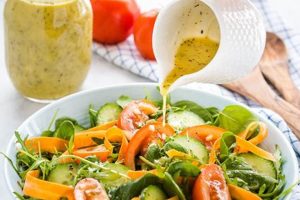
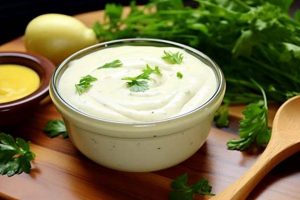
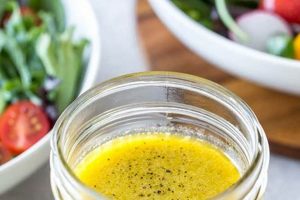
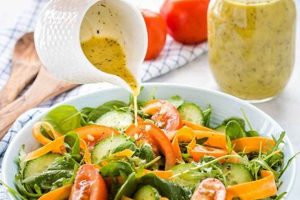
Vinaigrettes and creamy emulsions flavored with the bright, acidic essence of tomatoes offer diverse possibilities for enhancing salads and other dishes. These range from simple blends of pureed tomatoes, oil, and vinegar to more complex preparations incorporating herbs, spices, and additional flavoring agents like garlic, onion, or peppers. Examples include classic tomato vinaigrette, creamy roasted tomato dressing, and spicy tomato-cilantro blends.
Such dressings provide not only a burst of flavor but also potential health benefits due to the antioxidant properties of lycopene found in tomatoes. Historically, tomatoes have played a crucial role in various cuisines, with their use in dressings evolving alongside culinary traditions. The versatility of tomato-based dressings allows them to complement a wide range of ingredients, from leafy greens and vegetables to grilled meats and seafood.
Further exploration will delve into specific formulations, highlighting variations in ingredients, preparation methods, and suitable pairings to showcase the culinary potential of dressings featuring this vibrant fruit.
Tips for Crafting Exceptional Tomato Salad Dressings
Creating a flavorful and well-balanced tomato salad dressing involves careful consideration of ingredients and techniques. These tips offer guidance for achieving optimal results.
Tip 1: Tomato Selection: Ripe, flavorful tomatoes form the foundation of a successful dressing. Consider using heirloom varieties for enhanced complexity or roasting tomatoes to intensify their sweetness.
Tip 2: Balancing Acidity: The natural acidity of tomatoes should be balanced with other ingredients. A touch of sweetness from honey or sugar, along with a pinch of salt, can enhance the overall flavor profile.
Tip 3: Emulsification Techniques: Proper emulsification ensures a stable and creamy dressing. Whisking oil slowly into the tomato base, or using a blender, creates a smooth, cohesive texture.
Tip 4: Fresh Herbs and Spices: Incorporating fresh herbs like basil, oregano, or thyme adds depth and complexity. Spices such as cumin or smoked paprika can introduce intriguing flavor dimensions.
Tip 5: Flavor Infusion: Infusing the dressing with aromatics like garlic, shallots, or roasted peppers enhances the overall savoriness and complexity.
Tip 6: Texture Considerations: The desired texture influences ingredient choices and preparation methods. A chunky dressing might include chopped tomatoes, while a smooth vinaigrette requires blending or straining.
Tip 7: Complementary Pairings: Consider the salad ingredients when selecting a dressing. Lighter dressings often pair well with delicate greens, while bolder flavors complement heartier vegetables or grilled proteins.
By following these guidelines, one can create tomato-based dressings that elevate salads and other dishes, transforming simple meals into culinary experiences.
The subsequent section will provide specific recipe examples demonstrating the application of these tips.
1. Ripe Tomatoes
The foundation of any exceptional tomato salad dressing lies in the quality of the tomatoes themselves. Ripe tomatoes, bursting with flavor and vibrant color, contribute significantly to the final taste and texture of the dressing. Selecting and utilizing optimal tomato ripeness is paramount to achieving a balanced and flavorful outcome.
- Flavor Complexity:
Ripe tomatoes offer a complex interplay of sweetness, acidity, and umami, which directly translates into the depth of flavor in the dressing. Underripe tomatoes lack sweetness and can introduce an undesirable tartness, while overripe tomatoes may be too soft and watery, compromising the dressing’s texture. Peak ripeness ensures a balanced flavor profile.
- Texture and Consistency:
The texture of ripe tomatoes contributes to the final consistency of the dressing. A perfectly ripe tomato, with its firm yet yielding flesh, blends smoothly into a vinaigrette or forms a desirable chunky base for heartier dressings. Overripe or underripe tomatoes can create textural inconsistencies.
- Visual Appeal:
The vibrant color of ripe tomatoes enhances the visual appeal of the finished dressing. Deep red hues signify ripeness and contribute to an appetizing appearance. Dull or pale tomatoes can result in a less visually appealing dressing.
- Nutritional Value:
While not directly impacting flavor, ripe tomatoes are generally at their nutritional peak, offering optimal levels of vitamins and antioxidants. Using the freshest, ripest ingredients enhances the overall healthfulness of the dish.
The careful selection of ripe tomatoes is therefore crucial for achieving a balanced flavor profile, desirable texture, and appealing visual presentation in tomato salad dressing recipes. This attention to detail elevates the final product, transforming a simple dressing into a culinary highlight.
2. Balanced Acidity

Balanced acidity is paramount in crafting successful tomato salad dressings. Tomatoes possess inherent acidity, contributing brightness and tang. However, excessive acidity can create a harsh, unpleasant taste. Balancing this acidity involves incorporating ingredients that temper the tartness without eliminating it entirely. This careful calibration elevates the complexity and overall palatability of the dressing. The interplay between acidity and other flavor components, such as sweetness, saltiness, and umami, contributes to a well-rounded and harmonious flavor profile.
Sugar, honey, or maple syrup introduce sweetness to counteract excessive tartness. A pinch of salt enhances the other flavors while subtly mitigating acidity. Umami-rich ingredients, such as grated Parmesan cheese or a splash of Worcestershire sauce, add depth and complexity, further balancing the acidic notes. For example, a classic vinaigrette benefits from a teaspoon of sugar or honey to offset the vinegar’s sharpness and the tomato’s natural acidity. Similarly, a creamy tomato dressing made with roasted tomatoes can be balanced with a touch of balsamic glaze for a nuanced sweetness.
Achieving balanced acidity is not merely a matter of masking tartness but of creating a symphony of flavors. It requires a nuanced understanding of how different ingredients interact and how their individual characteristics contribute to the overall taste experience. Mastering this balance ensures a harmonious and delicious tomato salad dressing that complements, rather than overwhelms, the accompanying dish. Overly acidic dressings can clash with delicate greens or overpower subtle flavors, while a well-balanced dressing enhances the overall culinary experience.
3. Flavorful Infusions
Flavorful infusions play a pivotal role in elevating tomato salad dressings beyond simple mixtures of tomatoes, oil, and vinegar. These infusions introduce complexity, depth, and aromatic nuances that transform the dressing into a culinary experience. The strategic incorporation of herbs, spices, and other aromatics enhances the inherent flavors of the tomatoes while adding distinct character to the final product. This process involves careful consideration of complementary flavor profiles and the desired intensity of the infusion.
Fresh herbs, such as basil, oregano, thyme, and chives, contribute vibrant green notes and herbaceous complexity. Spices like smoked paprika, cumin, or coriander introduce warm, earthy undertones. Aromatics, including garlic, shallots, ginger, and chili peppers, impart pungent, savory, or spicy dimensions. The method of infusion also influences the final flavor profile. Steeping herbs in warm oil gently extracts their essence, while roasting garlic or shallots intensifies their sweetness and mellows their sharpness. For instance, a tomato vinaigrette infused with fresh basil and a hint of garlic creates a classic Mediterranean flavor profile, while a roasted tomato dressing infused with smoked paprika and chipotle peppers delivers a smoky, spicy kick.
Understanding the impact of flavorful infusions is essential for crafting well-balanced and nuanced tomato salad dressings. The judicious selection and application of these ingredients elevates the dressing from a functional component to a star element of the dish. Challenges may include balancing the intensity of different infusions to avoid overpowering the delicate tomato flavor, but careful experimentation and attention to detail yield rewarding results. Ultimately, flavorful infusions represent a key pathway to crafting truly exceptional tomato salad dressings that complement and enhance a wide range of culinary creations.
4. Emulsification Techniques

Emulsification techniques are crucial for creating stable and visually appealing tomato salad dressings. Emulsification refers to the process of combining two immiscible liquids, such as oil and water-based tomato mixtures, into a homogeneous suspension. This process prevents the dressing from separating, ensuring a consistent texture and flavor distribution throughout. The stability of the emulsion affects the sensory experience, preventing an oily mouthfeel and ensuring the flavors are evenly distributed across each bite. A properly emulsified dressing clings to the salad ingredients, enhancing their flavor rather than pooling at the bottom of the bowl.
Several methods achieve successful emulsification in tomato-based dressings. Vigorous whisking by hand creates a temporary emulsion, suitable for vinaigrettes consumed immediately. For greater stability, a blender creates a more homogenous and longer-lasting emulsion, particularly for creamy dressings. Adding emulsifying agents, such as Dijon mustard, egg yolks, or honey, further enhances stability by binding the oil and water molecules together. For example, a classic tomato vinaigrette benefits from a brisk whisk to combine the olive oil and vinegar with the tomato base. A creamy roasted tomato dressing often incorporates an egg yolk or Dijon mustard to create a smooth, stable emulsion that holds its texture over time.
Understanding emulsification principles allows for greater control over the texture and stability of tomato salad dressings. Challenges arise when the ratio of oil to water-based ingredients is unbalanced or when insufficient force is applied during emulsification. However, careful attention to technique, coupled with the judicious use of emulsifying agents, yields dressings with a smooth, creamy texture that enhance the overall culinary experience. Proper emulsification directly contributes to the visual appeal, textural consistency, and flavor delivery of tomato salad dressings, highlighting its practical significance in recipe development.
5. Complementary Pairings

Complementary pairings represent a crucial consideration in tomato salad dressing recipe development. The success of a dressing hinges not only on its intrinsic flavor profile but also on its interaction with the other components of the dish. Careful consideration of the salad ingredients, including greens, vegetables, proteins, and cheeses, informs dressing selection or creation. A harmonious pairing elevates the overall dining experience, while a mismatch can lead to disjointed or unbalanced flavors. The interplay between the dressing and the salad ingredients should create a synergistic effect, where each element enhances the others.
Several factors influence complementary pairings. The intensity of the dressing should match the robustness of the salad components. A delicate vinaigrette complements light greens and fresh vegetables, while a bolder, more assertive dressing stands up to heartier ingredients like grilled meats or roasted vegetables. Flavor affinities also play a significant role. A tomato vinaigrette with basil pairs well with mozzarella and tomatoes in a Caprese salad, highlighting the Mediterranean flavor profile. Conversely, a spicy tomato-cilantro dressing complements grilled chicken or fish, adding a vibrant, zesty dimension. Textural contrasts further enhance the dining experience. A creamy tomato dressing provides a counterpoint to crunchy greens, while a chunky tomato salsa adds textural interest to grilled fish.
Understanding complementary pairings allows for the strategic creation of balanced and harmonious salads. Challenges arise when flavor profiles clash or when the intensity of the dressing overwhelms the other ingredients. However, careful consideration of flavor affinities, textural contrasts, and the overall balance of the dish leads to successful pairings. This understanding enhances recipe development and elevates tomato salad dressings from functional components to integral elements of a well-crafted culinary experience. The practical application of this knowledge transforms simple salads into sophisticated and satisfying meals.
Frequently Asked Questions
This section addresses common inquiries regarding tomato salad dressing recipes, offering practical guidance for achieving optimal results.
Question 1: How can one prevent tomato salad dressing from separating?
Proper emulsification techniques are key. Vigorous whisking or blending creates a temporary emulsion. For enhanced stability, incorporate emulsifying agents such as Dijon mustard, egg yolks, or honey. These bind the oil and water-based ingredients, preventing separation.
Question 2: What are the best tomato varieties for making salad dressings?
Ripe, flavorful tomatoes are ideal. Heirloom varieties offer complex flavor profiles, while Roma tomatoes provide a meatier texture. Roasting tomatoes intensifies their sweetness and deepens their flavor, suitable for richer dressings.
Question 3: How long can homemade tomato salad dressing be stored?
Properly stored in an airtight container in the refrigerator, homemade tomato salad dressing typically lasts for up to five days. Discard the dressing if any signs of spoilage, such as mold or off-odors, appear.
Question 4: Can tomato salad dressing be frozen?
While freezing is possible, it may alter the texture of the dressing, particularly for emulsions. Freezing is more suitable for tomato-based sauces or purees intended for later incorporation into dressings.
Question 5: How can one adjust the acidity of tomato salad dressing?
A touch of sweetness, from sugar, honey, or maple syrup, balances excessive acidity. A pinch of salt enhances other flavors while subtly mitigating tartness. Incorporating umami-rich ingredients, such as grated Parmesan cheese, adds depth and complexity, further balancing the acidity.
Question 6: What are some versatile uses for tomato salad dressing beyond salads?
Tomato salad dressings serve as marinades for chicken, fish, or vegetables. They can also function as dipping sauces for crudits, chips, or grilled breads. Additionally, they can enhance sandwiches, wraps, or tacos, adding a burst of flavor and moisture.
Careful consideration of these frequently asked questions ensures consistent, flavorful results when preparing and utilizing tomato salad dressings. Addressing these common concerns empowers culinary exploration and elevates the overall dining experience.
This concludes the frequently asked questions section. The subsequent section will offer concluding remarks.
Conclusion
Exploration of tomato salad dressing recipes reveals the multifaceted nature of this culinary staple. From the selection of ripe tomatoes and the balance of acidity to the art of emulsification and the consideration of complementary pairings, each step contributes to the final product. Flavorful infusions, achieved through herbs, spices, and aromatics, further elevate these dressings, transforming them from simple condiments to culinary centerpieces. Addressing frequently asked questions provides practical guidance for achieving consistent, high-quality results.
Tomato salad dressing recipes offer a versatile canvas for culinary creativity. The potential for flavor combinations and textural variations is vast, inviting further exploration and experimentation. Understanding the underlying principles of ingredient selection, preparation techniques, and flavor pairings empowers culinary enthusiasts to craft exceptional dressings that enhance a wide range of dishes. This knowledge fosters an appreciation for the nuanced interplay of flavors and textures, enriching the overall dining experience.