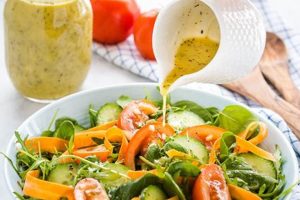
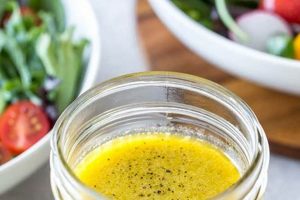
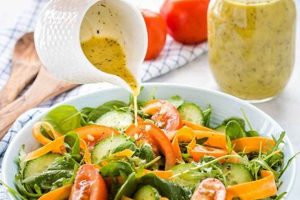
Recipes for salad dressings that minimize caloric intake typically utilize strategies such as substituting high-fat ingredients like mayonnaise and heavy cream with lower-fat alternatives like Greek yogurt, nonfat buttermilk, or pureed fruits and vegetables. Flavor can be enhanced through herbs, spices, citrus juices, and vinegars, reducing reliance on oil. For example, a simple vinaigrette might combine lemon juice, Dijon mustard, and a small amount of olive oil.
Health-conscious individuals often seek such recipes to manage weight or adhere to dietary restrictions without sacrificing flavor or enjoyment of fresh salads. The increasing prevalence of obesity and related health concerns has amplified the demand for lighter culinary options. Historically, salad dressings were often rich and calorie-dense; however, evolving nutritional understanding has led to the development and popularization of lighter alternatives.
This discussion will further explore various strategies for creating flavorful, low-calorie salad dressings, including ingredient substitutions, flavor balancing techniques, and specific recipe examples.
Tips for Creating Delicious Low-Calorie Salad Dressings
Achieving flavorful, low-calorie salad dressings involves careful ingredient selection and preparation. The following tips offer guidance for creating dressings that enhance salads without contributing excessive calories.
Tip 1: Embrace the Power of Vinegar. Vinegar provides acidity and complexity without added calories. Experiment with different varieties like apple cider vinegar, balsamic vinegar, or red wine vinegar to find complementary flavor profiles.
Tip 2: Maximize Flavor with Herbs and Spices. Fresh or dried herbs and spices add depth and interest without increasing caloric content. Consider options like dill, oregano, mint, garlic powder, or paprika.
Tip 3: Utilize Citrus Juices. Lemon, lime, and orange juices contribute brightness and acidity, reducing the need for added oil. These juices also offer valuable vitamins and antioxidants.
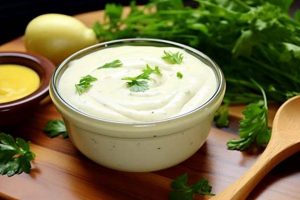
Tip 4: Explore Greek Yogurt as a Base. Plain, nonfat Greek yogurt offers a creamy texture and tangy flavor similar to mayonnaise or sour cream, but with significantly fewer calories and added protein.
Tip 5: Puree Fruits and Vegetables for Added Flavor and Texture. Blended fruits like berries or roasted red peppers can add sweetness, depth, and a vibrant color to dressings.
Tip 6: Emulsify Carefully. When using small amounts of oil, ensure proper emulsification with the other ingredients to create a smooth, well-combined dressing.
Tip 7: Taste and Adjust. Flavor profiles can vary based on specific ingredients. Tasting and adjusting seasonings throughout the preparation process ensures a balanced and desirable outcome.
By following these tips, one can create a wide range of delicious, healthful salad dressings that complement any salad while supporting dietary goals.
These techniques offer a foundation for crafting personalized dressings tailored to individual preferences and dietary needs. Experimentation and mindful ingredient selection are key to achieving satisfying results.
1. Ingredient Selection

Ingredient selection is paramount in formulating a low-calorie salad dressing. The choice of components directly impacts not only the nutritional profile but also the flavor, texture, and overall palatability of the final product. Careful consideration of each ingredient’s contribution is essential for creating a dressing that is both healthful and enjoyable.
- Fat Sources
Traditional dressings often rely heavily on oils, which contribute significantly to caloric density. Low-calorie alternatives minimize oil or substitute it with lower-fat options like Greek yogurt, buttermilk, or pured avocado. The selected fat source influences the dressing’s texture, mouthfeel, and ability to carry flavor.
- Acidic Components
Acidity balances richness and adds brightness to a dressing. Vinegars (e.g., balsamic, apple cider, red wine) and citrus juices (e.g., lemon, lime) are excellent low-calorie sources of acidity. Their distinct flavor profiles offer diverse options for customization.
- Flavor Enhancers
Herbs, spices, and aromatics contribute significantly to the complexity and depth of flavor without adding substantial calories. Fresh or dried herbs (e.g., dill, parsley, oregano), spices (e.g., paprika, garlic powder, onion powder), and aromatics like garlic and shallots provide diverse flavor profiles to complement various salad ingredients.
- Sweeteners (Optional)
A touch of sweetness can balance acidity and enhance certain flavor profiles. Low-calorie sweeteners like honey, maple syrup (used sparingly), or a pinch of sugar can be incorporated. However, caution is advised to avoid excessive sugar intake. Fruit purees can also offer a touch of natural sweetness.
The interplay of these ingredient categories determines the final character of the low-calorie salad dressing. A judicious balance of fat sources, acidity, flavor enhancers, and optional sweeteners allows for the creation of dressings that are both nutritionally sound and flavorful. Careful selection empowers individuals to align their dietary goals with culinary enjoyment.
2. Calorie Control

Calorie control represents a central tenet in formulating recipes for low-calorie salad dressings. The objective is to minimize caloric contribution without sacrificing flavor or satisfaction. This involves careful consideration of ingredient choices and preparation methods. Standard salad dressings, often based on mayonnaise or heavy cream, can contribute significant calories. A low-calorie approach necessitates strategic substitutions and mindful portioning. For example, replacing mayonnaise with Greek yogurt or buttermilk drastically reduces caloric density while maintaining a creamy texture. Similarly, minimizing oil and emphasizing vinegar or citrus juice as the primary liquid reduces overall calories.
The practical significance of calorie control in salad dressings becomes apparent when considering the cumulative effect of dietary choices. Regular consumption of high-calorie dressings can contribute to weight gain and hinder progress toward health goals. Conversely, opting for low-calorie alternatives allows individuals to enjoy flavorful salads without compromising dietary objectives. Furthermore, reducing calorie density in dressings frees up caloric allowance for other nutritious components of the meal, promoting a balanced and satisfying eating experience. For instance, a salad featuring a low-calorie vinaigrette allows for the inclusion of protein-rich grilled chicken or healthy fats from avocado without exceeding overall calorie targets. This balanced approach supports satiety and long-term adherence to dietary plans.
Calorie control in salad dressings is achievable through informed ingredient choices and mindful portioning. This approach allows individuals to enjoy flavorful salads while managing calorie intake and supporting overall health goals. The cumulative impact of these choices underscores the importance of prioritizing low-calorie options within a balanced dietary framework. The availability of diverse low-calorie ingredients and preparation methods empowers individuals to align culinary enjoyment with health-conscious practices.
3. Flavor Enhancement
Flavor enhancement in low-calorie salad dressings presents a unique challenge: maximizing taste impact while minimizing caloric contribution. Traditional flavor boosters, such as oil and rich dairy products, often carry a substantial caloric load. Therefore, crafting flavorful low-calorie dressings necessitates exploring alternative strategies that amplify taste without relying on high-calorie ingredients. The following facets explore key elements of flavor enhancement in this context.
- Acidity
Acidity plays a crucial role in balancing flavors and adding brightness to low-calorie dressings. Vinegars, such as balsamic, red wine, apple cider, and rice vinegar, contribute distinct flavor profiles while adding minimal calories. Citrus juices, like lemon and lime, offer a refreshing tang and boost vitamin C content. The judicious use of acidity can elevate the overall taste experience without relying on high-calorie ingredients.
- Herbs and Spices
Fresh and dried herbs and spices offer a potent arsenal for flavor enhancement. From the earthy notes of oregano and thyme to the vibrant zest of dill and mint, herbs contribute complexity and depth without adding significant calories. Spices like paprika, cumin, and chili powder introduce warmth and subtle heat. The strategic combination of herbs and spices can transform a simple vinaigrette into a culinary masterpiece.
- Aromatics
Aromatics, such as garlic, shallots, ginger, and onions, impart distinct flavors and aromas to salad dressings. These ingredients can be finely minced, grated, or pureed to infuse their essence into the dressing. Roasting or caramelizing aromatics prior to incorporation adds depth and complexity, further enhancing the overall flavor profile.
- Umami
Umami, often described as a savory, meaty flavor, can significantly enhance the complexity of low-calorie dressings. Ingredients like nutritional yeast, soy sauce (used sparingly due to sodium content), Worcestershire sauce, and mushroom powder contribute umami notes without adding excessive calories. Incorporating these elements can elevate the taste experience and provide a satisfying depth of flavor.
By strategically employing these flavor-enhancing techniques, one can create low-calorie salad dressings that are both delicious and health-conscious. The interplay of acidity, herbs and spices, aromatics, and umami allows for a wide range of flavor profiles without reliance on high-calorie ingredients. This approach underscores that flavorful food and healthy eating are not mutually exclusive concepts.
4. Texture Optimization
Texture optimization plays a crucial role in the palatability of low-calorie salad dressings. While reducing caloric content is essential, achieving a desirable texture is equally important for enjoyment and satisfaction. Traditional dressings often rely on high-fat ingredients like mayonnaise and heavy cream to create a creamy, smooth consistency. In low-calorie versions, alternative strategies must be employed to replicate these textural qualities without the associated caloric burden. For example, pureeing fruits or vegetables like roasted red peppers or blended berries can introduce a desirable thickness and body to the dressing, while simultaneously contributing flavor and nutrients. Similarly, incorporating ingredients like Greek yogurt or silken tofu provides a creamy texture with significantly fewer calories than traditional dairy-based options.
The interplay between texture and flavor perception is significant. A thin, watery dressing may not adequately coat salad ingredients or deliver a satisfying mouthfeel, potentially diminishing the overall enjoyment of the meal. Conversely, a well-emulsified, appropriately viscous dressing clings to greens and other components, ensuring even flavor distribution and a more pleasurable eating experience. Emulsification, the process of combining two immiscible liquids (like oil and vinegar), is often crucial for achieving optimal texture in low-calorie dressings. Techniques like whisking vigorously or using a blender can create stable emulsions, preventing separation and ensuring a homogenous consistency. Additionally, incorporating small amounts of healthy fats, like avocado or nut butter, can contribute to creaminess and improve the dressing’s ability to coat salad ingredients.
Achieving desirable texture in low-calorie salad dressings requires an understanding of ingredient interactions and appropriate preparation techniques. Balancing flavor and texture optimization ensures a satisfying culinary experience while adhering to dietary goals. This understanding empowers individuals to create flavorful, healthful dressings that enhance the enjoyment of salads and contribute to a balanced diet. The ability to manipulate texture through ingredient selection and preparation methods offers a significant advantage in crafting appealing low-calorie culinary creations.
5. Preparation Methods

Preparation methods significantly influence the final characteristics of low-calorie salad dressings, impacting texture, flavor, and even nutritional value. Efficient techniques maximize ingredient incorporation and minimize preparation time, promoting convenience without compromising quality. Understanding the nuances of various methods allows for greater control over the final product, enabling customization based on individual preferences and dietary needs.
- Emulsification
Emulsification is crucial for combining immiscible liquids like oil and vinegar, creating a stable, homogenous dressing. Whisking vigorously or using a blender creates an emulsion, preventing separation and ensuring consistent flavor distribution. A stable emulsion enhances the dressing’s ability to coat salad ingredients evenly, maximizing flavor delivery. Improper emulsification can result in a thin, watery dressing with uneven flavor and reduced palatability.
- Ingredient Order
The order in which ingredients are combined can influence emulsion stability and flavor development. Generally, acidic ingredients like vinegar or citrus juice are added gradually to the oil while whisking continuously. This method encourages emulsification and prevents the mixture from breaking. Adding ingredients in the correct sequence maximizes flavor integration and contributes to the overall quality of the dressing.
- Maceration
Maceration, the process of soaking ingredients in liquid to soften and infuse flavor, can enhance the complexity of low-calorie dressings. Soaking minced garlic or shallots in vinegar before adding other ingredients allows their flavors to mellow and permeate the dressing. Maceration also softens the texture of these ingredients, creating a more homogenous final product.
- Blending and Pureeing
Blending or pureeing ingredients like fruits, vegetables, or herbs creates smooth, flavorful dressings with enhanced texture. This technique allows for the incorporation of ingredients that might otherwise be too chunky or fibrous. For example, blending roasted red peppers creates a vibrant, creamy dressing with a unique flavor profile. Pureeing herbs directly into the dressing intensifies their flavor and aroma, eliminating the need for larger quantities of fresh herbs.
Mastering these preparation methods empowers individuals to create high-quality, low-calorie salad dressings tailored to specific preferences. Understanding the principles of emulsification, ingredient order, maceration, and blending/pureeing unlocks the potential for diverse flavor profiles and textures while maintaining a health-conscious approach to salad preparation. Appropriate preparation methods are therefore essential for maximizing both the nutritional and sensory qualities of low-calorie salad dressings.
6. Nutritional Value
Nutritional value represents a critical consideration in the context of low-calorie salad dressing recipes. While calorie reduction is a primary objective, maintaining or enhancing nutritional content is essential for a truly healthful approach. Simply reducing calories without regard for nutrient density can lead to nutrient deficiencies and compromise overall health. Therefore, a balanced approach that prioritizes both calorie control and nutrient optimization is crucial. For example, a low-calorie vinaigrette based on lemon juice, vinegar, and a small amount of olive oil provides vitamin C and antioxidants from the lemon, along with heart-healthy monounsaturated fats from the olive oil. This approach contrasts with commercially produced low-fat dressings that may compensate for reduced fat with added sugar or sodium.
The practical significance of prioritizing nutritional value becomes evident when examining the long-term health implications of dietary choices. A nutrient-rich salad dressing contributes to overall dietary intake of essential vitamins, minerals, and antioxidants. These micronutrients play vital roles in various bodily functions, supporting immune health, cellular function, and overall well-being. Furthermore, choosing nutrient-dense ingredients in salad dressings can indirectly support healthy eating habits by promoting satiety and reducing cravings for less nutritious options. For instance, a dressing rich in healthy fats and fiber can contribute to feelings of fullness, potentially reducing overall calorie consumption at subsequent meals. This effect underscores the interconnectedness of nutritional value and dietary adherence.
Optimizing nutritional value within low-calorie salad dressing recipes requires careful ingredient selection and preparation methods. Prioritizing whole, unprocessed ingredients like fresh herbs, spices, fruits, and vegetables maximizes nutrient density while minimizing empty calories. Minimizing added sugars, sodium, and unhealthy fats further enhances the nutritional profile. Understanding the nutritional contributions of various ingredients empowers individuals to create dressings that not only complement the flavors of their salads but also support their overall health and well-being. This approach highlights the synergy between culinary enjoyment and nutritional optimization, emphasizing that healthful eating can be both delicious and satisfying.
Frequently Asked Questions
The following addresses common inquiries regarding the creation and utilization of low-calorie salad dressings.
Question 1: How can oil be reduced in salad dressings without sacrificing flavor or texture?
Oil contributes significantly to both flavor and texture in traditional dressings. Reduction strategies include substituting a portion of the oil with water, broth, or unsweetened fruit juice. Flavor can be maintained through the increased use of herbs, spices, citrus, and vinegars. Additionally, pureeing fruits or vegetables, such as roasted red peppers or ripe avocado, can add creaminess and body without relying solely on oil. Emulsification techniques also help create a smoother, more cohesive dressing with less oil.
Question 2: What are suitable low-calorie alternatives to mayonnaise or sour cream in creamy dressings?
Plain, nonfat Greek yogurt provides a comparable tangy flavor and creamy texture with significantly fewer calories and added protein. Pureed silken tofu or avocado can also create a creamy base, while buttermilk offers a tangy, lower-calorie alternative.
Question 3: How can sweetness be incorporated into low-calorie dressings without using excessive sugar?
Small amounts of natural sweeteners like honey or maple syrup can be used sparingly. Alternatively, pureed fruits like berries or dates provide sweetness along with added nutrients and texture. A pinch of stevia or another low-calorie sweetener can also be considered.
Question 4: How long can homemade low-calorie dressings be stored?
Refrigeration in airtight containers extends shelf life. Most low-calorie dressings, especially vinaigrettes, can be stored for up to one week. Dressings containing dairy or fruit purees may have a shorter shelf life of 3-5 days. Always check for spoilage before consumption.
Question 5: Are low-calorie dressings suitable for all types of salads?
Flavor profiles should complement salad ingredients. Lighter vinaigrettes pair well with delicate greens and vegetables, while creamy dressings based on Greek yogurt or avocado complement heartier salads with grains, beans, or roasted vegetables. Consider the overall flavor composition when selecting or creating a dressing.
Question 6: How can one ensure adequate flavor when significantly reducing calories in a salad dressing?
Flavor intensity can be achieved through strategic use of herbs, spices, acid, and aromatics like garlic or shallots. Balancing these elements creates a complex flavor profile that compensates for reduced richness from fats. Tasting and adjusting seasoning throughout the preparation process is crucial.
Careful ingredient selection, preparation techniques, and mindful flavor balancing enable the creation of delicious and healthful low-calorie salad dressings.
This information provides a foundation for informed decision-making regarding incorporating low-calorie salad dressings into a balanced dietary approach.
Conclusion
Exploration of recipes for low-calorie salad dressings reveals the potential for culinary enjoyment without compromising health-conscious practices. Strategic ingredient selection, emphasizing fresh produce, herbs, spices, and low-fat alternatives, allows for flavor maximization while minimizing caloric density. Careful attention to preparation methods, including emulsification and maceration techniques, further enhances texture and taste. Nutritional value remains paramount, prioritizing nutrient-dense ingredients and minimizing added sugars and unhealthy fats.
The increasing availability of diverse, flavorful, low-calorie salad dressing options empowers individuals to make informed dietary choices that support both physical well-being and culinary satisfaction. Continued exploration and innovation in recipe development promise further advancements in the pursuit of healthful, delicious culinary experiences.