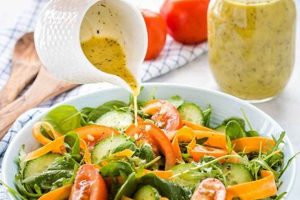
A vibrant and flavorful emulsion designed specifically for pasta, typically involving oil, an acidic component like vinegar or citrus juice, and seasonings, enhances the overall culinary experience by complementing the pasta and other ingredients. Examples include a classic vinaigrette, a creamy Caesar-style dressing, or a tangy lemon-herb blend. The choice depends largely on the specific ingredients within the pasta salad itself. A pesto-based sauce or even a simple olive oil and garlic mixture can also function as a flavorful coating.
The right coating elevates pasta salad from a simple side dish to a star attraction. It provides moisture, flavor, and visual appeal, binding the ingredients together and creating a cohesive, satisfying meal. Historically, chilled pasta dishes, often dressed simply with oil and vinegar, served as refreshing summer meals. The evolution of dressings reflects culinary innovation and the growing diversity of ingredients available. Selecting an appropriate dressing ensures a harmonious balance of flavors and textures within the dish. A well-chosen coating can also enhance the nutritional value by incorporating healthy fats and herbs.
Considerations for choosing the optimal emulsion include the type of pasta, other ingredients present, and the desired flavor profile. Exploring different flavor combinations and understanding the interplay between acidity, oil, and seasonings unlocks a world of culinary possibilities, from light and zesty to rich and creamy.
Tips for Creating the Perfect Pasta Salad Dressing
Developing a flavorful and well-balanced dressing is crucial for a successful pasta salad. These tips offer guidance for crafting dressings that complement diverse ingredients and elevate the overall dining experience.
Tip 1: Emulsify Thoroughly: A stable emulsion prevents the dressing from separating and ensures even distribution of flavor. Whisk the oil slowly into the vinegar or citrus juice until the mixture thickens and becomes homogenous.
Tip 2: Balance Flavors: Achieve harmony by balancing acidity, sweetness, and savory notes. Consider using a combination of vinegar types, incorporating a touch of honey or maple syrup, and adding herbs, spices, or garlic.
Tip 3: Consider the Pasta Shape: The shape of the pasta influences the dressing’s adherence. Robust dressings cling better to larger pasta shapes, while lighter dressings suit delicate shapes.
Tip 4: Match Ingredients: Select dressing ingredients that complement the other components of the pasta salad. For example, a lemon-herb dressing pairs well with vegetables and seafood, while a creamy dressing complements chicken or bacon.
Tip 5: Taste and Adjust: Before tossing the dressing with the pasta, taste and adjust seasonings as needed. This crucial step ensures a balanced and flavorful final product.
Tip 6: Dress Just Before Serving: To prevent the pasta from becoming soggy, add the dressing shortly before serving. This preserves the texture of the pasta and maintains the vibrancy of the dressing.
Tip 7: Experiment with Ingredients: Don’t be afraid to experiment with different ingredients and flavor combinations. Explore various oils, vinegars, herbs, spices, and other additions to discover new and exciting flavor profiles.
By following these guidelines, one can create flavorful, balanced dressings that enhance the overall enjoyment of pasta salad, transforming a simple dish into a culinary masterpiece.
The next section explores specific recipe examples demonstrating these principles in action.
1. Flavor Balance

Flavor balance is paramount in a successful pasta salad dressing. It dictates how well the dressing complements the pasta and other ingredients, impacting the overall enjoyment of the dish. A well-balanced dressing avoids extremes, preventing any single flavor from dominating. This involves a careful calibration of acidity, sweetness, saltiness, and other flavor components. For example, a vinaigrette relying solely on vinegar can be overly sharp, while excessive sweetness can mask other flavors. The interplay of these elements creates a harmonious and palatable experience. Acidity, often from vinegar or citrus juice, provides brightness and cuts through richness. Sweetness, sometimes from sugar, honey, or fruit, balances the acidity and adds depth. Saltiness enhances other flavors and provides a savory foundation.
Achieving flavor balance requires careful consideration of the other ingredients in the pasta salad. A light and tangy dressing complements delicate vegetables and seafood, while a richer, creamier dressing might better suit heartier ingredients like roasted vegetables or meat. Specific herbs and spices can further enhance the flavor profile and contribute to the overall balance. For instance, a lemon-herb dressing harmonizes with Mediterranean flavors, whereas a Dijon-based dressing might accompany a pasta salad with ham and cheese. Understanding the interplay between ingredients and dressing allows for informed choices that maximize flavor synergy.
Mastering flavor balance in pasta salad dressings elevates the dish from simple to sophisticated. It ensures that each bite offers a complex and enjoyable experience, highlighting the individual ingredients while creating a unified whole. This careful orchestration of flavors transforms a basic side dish into a culinary centerpiece. Experimentation and tasting are key to achieving optimal balance, as individual palates and ingredient combinations vary. The ultimate goal is to create a dressing that complements and enhances the other components of the pasta salad, resulting in a delicious and harmonious dish.
2. Ingredient Compatibility

Ingredient compatibility is a critical factor in developing a successful salad dressing recipe for pasta salad. A thoughtfully constructed dressing considers the interplay of flavors and textures between the dressing components and the other salad ingredients, ensuring a harmonious and enjoyable culinary experience. Ignoring ingredient compatibility can result in a dish where flavors clash or textures conflict, diminishing the overall appeal.
- Complementary Flavors
The dressing’s flavor profile should complement, not overpower, the other ingredients. A light vinaigrette with lemon and herbs enhances a pasta salad with fresh vegetables and feta cheese, while a creamy ranch dressing complements a salad with chicken, bacon, and hard-boiled eggs. A mismatch, such as a heavy, creamy dressing on a delicate seafood pasta salad, can mask the subtle flavors of the seafood.
- Textural Harmony
The dressing’s texture contributes significantly to the overall sensory experience. A creamy dressing clings well to heavier ingredients like roasted vegetables or cooked meats, while a lighter vinaigrette is better suited for delicate greens and lighter pasta shapes. Using a thick, creamy dressing on a salad with finely diced vegetables might result in an overly heavy and gloppy dish, while a thin vinaigrette might not adequately coat larger pasta shapes.
- Acidity and Other Ingredients
The acidity level in the dressing needs to balance with the other ingredients. Highly acidic dressings can negatively interact with certain ingredients. For example, a vinaigrette with high vinegar content can cause delicate greens to wilt or discolor, while a creamy dressing with too little acidity might not provide enough brightness to cut through richer ingredients.
- Freshness and Seasonality
When using fresh herbs or seasonal ingredients in the dressing, compatibility with the other salad components is key. Fresh basil might pair beautifully with tomatoes and mozzarella in a pasta salad, but clash with ingredients like roasted root vegetables. Utilizing seasonal ingredients enhances freshness and flavor but requires careful consideration of their interaction with other components.
Careful consideration of ingredient compatibility elevates pasta salad from a simple side dish to a well-composed, flavorful meal. By understanding the interplay of flavors and textures between the dressing and other ingredients, one can create a cohesive and satisfying culinary experience. A well-balanced pasta salad, where each component complements the others, offers a more complex and enjoyable flavor profile than one where ingredients clash.
3. Emulsification Stability

Emulsification stability is crucial for a successful pasta salad dressing. A stable emulsion, where oil and water-based ingredients remain evenly dispersed, ensures consistent flavor and texture throughout the salad. Without proper emulsification, the dressing separates, resulting in an uneven distribution of flavor and a less appealing appearance. Achieving and maintaining stability requires an understanding of the factors that influence emulsion formation and breakdown.
- Emulsifying Agents
Emulsifying agents, such as mustard, egg yolks, or honey, contain molecules with both hydrophilic (water-loving) and lipophilic (fat-loving) ends. These molecules position themselves at the oil-water interface, reducing surface tension and allowing the two phases to mix. The type and amount of emulsifier influence the stability and viscosity of the emulsion. For instance, Dijon mustard provides a stronger emulsifying effect compared to yellow mustard in a vinaigrette, leading to a more stable dressing.
- Ratio of Oil to Acid
The ratio of oil to acid, typically vinegar or citrus juice, significantly affects emulsion stability. A balanced ratio is essential; too much oil can lead to separation, while too much acid can create a thin, watery dressing. A classic vinaigrette often uses a 3:1 ratio of oil to vinegar, providing a balance between flavor and stability. This ratio can be adjusted based on the specific ingredients and desired consistency.
- Mixing Method
The method of mixing ingredients impacts emulsion stability. Slowly whisking or blending the oil into the acid allows the emulsifying agent to effectively coat the oil droplets and prevent coalescence. Rapid mixing can create an unstable emulsion prone to separation. Proper technique ensures a homogenous and stable dressing.
- Temperature
Temperature fluctuations can destabilize emulsions. Extreme heat or cold can cause the emulsion to break, leading to separation. Storing the dressing at a consistent, moderate temperature helps maintain its stability. Serving pasta salad at room temperature also avoids shocking the emulsion and helps preserve its integrity.
A stable emulsion is essential for a high-quality pasta salad dressing. It ensures even flavor distribution, a pleasing texture, and an appealing appearance. Understanding the factors influencing emulsification stabilityemulsifying agents, oil-to-acid ratio, mixing method, and temperatureallows for the creation of dressings that enhance the overall enjoyment of the pasta salad. A well-emulsified dressing contributes to the dish’s sensory appeal and ensures a consistently flavorful experience.
4. Texture Enhancement
Texture enhancement plays a vital role in the overall enjoyment of pasta salad. The dressing contributes significantly to the textural experience, impacting how the salad feels in the mouth and how the flavors interact with the palate. A well-chosen dressing enhances the existing textures of the ingredients and creates a more complex and satisfying sensory experience.
- Coating and Adherence
The dressing’s viscosity and composition influence how effectively it coats the pasta and other ingredients. A thicker dressing clings better to larger pasta shapes and heavier ingredients, ensuring even distribution of flavor. Conversely, a thinner vinaigrette is more suited for delicate pasta and lighter ingredients, preventing them from becoming weighed down. Proper coating enhances the perception of flavor by ensuring that each bite includes both the pasta and the dressing.
- Contrast and Balance
The dressing’s texture can provide a pleasing contrast to the other ingredients. A creamy dressing against crisp vegetables or a smooth vinaigrette against al dente pasta creates a dynamic textural experience. This interplay of textures keeps the palate engaged and adds interest to each bite. A balanced contrast prevents any single texture from dominating, resulting in a more harmonious and enjoyable meal.
- Moisture and Mouthfeel
Dressings contribute moisture to pasta salad, preventing it from becoming dry and unappetizing, particularly when served chilled. The dressing’s ingredients, such as oil, vinegar, or creamy components, influence the overall mouthfeel, impacting how the salad feels in the mouth. A well-balanced dressing provides sufficient moisture without making the salad soggy, contributing to a pleasant and satisfying texture.
- Ingredient Integration
The dressing acts as a binding agent, bringing together the various ingredients and creating a cohesive culinary experience. It helps to meld the flavors and textures, preventing the salad from feeling disjointed. A well-integrated salad, where the dressing complements and enhances the other ingredients, offers a more satisfying and complete sensory experience.
Careful consideration of texture enhancement elevates pasta salad from a simple dish to a more complex and enjoyable culinary creation. By understanding how the dressing’s texture interacts with the other ingredients, one can create a balanced and satisfying dish with a pleasing mouthfeel and a harmonious interplay of flavors and textures. The right dressing transforms individual components into a unified whole, enhancing the overall dining experience.
5. Freshness

Freshness significantly impacts the quality and enjoyment of pasta salad, particularly regarding the dressing. The concept of freshness encompasses several aspects, from the quality of individual ingredients to the timing of dressing preparation and the overall storage of the finished dish. Freshly made dressings, utilizing high-quality oils, vinegars, and herbs, deliver brighter, more vibrant flavors compared to dressings made with older ingredients or pre-made options. For instance, a vinaigrette made with freshly squeezed lemon juice and chopped herbs offers a noticeably superior taste compared to one made with bottled lemon juice or dried herbs. The volatile aromatic compounds in fresh ingredients contribute significantly to the overall flavor profile, dissipating over time or with improper storage.
The impact of freshness extends beyond flavor to encompass texture and overall appeal. Freshly prepared dressings often possess a brighter, more vibrant appearance, enhancing the visual appeal of the pasta salad. Furthermore, using fresh ingredients minimizes the risk of off-flavors or textural degradation that can occur with aging or improper storage. Consider the difference between a pasta salad dressed immediately before serving, maintaining the crispness of vegetables and the integrity of the pasta, and one dressed hours in advance, where the vegetables may become soggy and the pasta absorbs too much dressing. The timing of dressing application plays a crucial role in preserving the desired textures and preventing the emulsion from breaking down, especially in creamy dressings.
Prioritizing freshness in pasta salad preparation, particularly in the dressing, significantly elevates the culinary experience. From the enhanced flavors and vibrant appearance to the superior texture and overall quality, freshness contributes significantly to a more enjoyable and satisfying meal. Challenges to maintaining freshness include ingredient availability and proper storage. However, understanding the impact of freshness allows for informed choices regarding ingredient selection, preparation timing, and storage methods, optimizing the sensory experience and ensuring a delicious and appealing pasta salad.
Frequently Asked Questions
This section addresses common inquiries regarding the creation and utilization of pasta salad dressings, offering practical guidance for optimal results.
Question 1: How far in advance can pasta salad dressing be prepared?
While some dressings, particularly vinaigrettes, can be prepared several days in advance, it is generally recommended to make dressings as close to serving time as possible to maximize freshness and flavor. Creamy dressings are best prepared no more than a day or two in advance and stored properly in airtight containers in refrigeration.
Question 2: What can be done if a vinaigrette separates?
A separated vinaigrette can be easily re-emulsified by whisking vigorously or shaking in a sealed container until the oil and vinegar combine once more. Adding a small amount of additional emulsifying agent, such as mustard or honey, can further aid in stabilizing the emulsion.
Question 3: How can one prevent pasta salad from becoming soggy?
Sogginess can be prevented by dressing the pasta shortly before serving. Slightly undercooking the pasta also helps, as it will absorb some of the dressing without becoming overly soft. Larger pasta shapes tend to hold their shape better than smaller, more delicate shapes.
Question 4: What are some suitable alternatives to vinegar in pasta salad dressings?
Citrus juices, such as lemon or lime juice, offer a bright and flavorful alternative to vinegar. Other acidic ingredients, like yogurt or buttermilk, can also be incorporated into creamy dressings, contributing both flavor and tanginess.
Question 5: How can one adjust the consistency of a pasta salad dressing?
The consistency of a dressing can be adjusted by altering the ratio of oil to acid. For a thicker dressing, increase the amount of oil. For a thinner dressing, increase the amount of acid or add a small amount of water or broth. In creamy dressings, the addition of more mayonnaise or yogurt can increase thickness.
Question 6: How should leftover pasta salad be stored?
Leftover pasta salad should be stored in an airtight container in the refrigerator. It is generally best consumed within two to three days. Note that some ingredients, such as fresh herbs, may lose their vibrancy upon storage.
Understanding these common concerns empowers one to create and enjoy delicious, high-quality pasta salads with confidence. Attention to detail and informed choices regarding ingredients and preparation methods ensure optimal flavor, texture, and overall appeal.
For further culinary exploration, the subsequent section delves into specific pasta salad dressing recipes, offering practical examples of these principles in action.
Conclusion
Exploration of effective pasta salad dressing recipes necessitates careful consideration of several key factors. Flavor balance, achieved through the harmonious interplay of acidity, sweetness, and savory notes, forms the foundation of a successful dressing. Ingredient compatibility ensures the dressing complements the other salad components, preventing flavor clashes and textural inconsistencies. Emulsification stability maintains a homogenous mixture, ensuring even flavor distribution and a pleasing texture. Texture enhancement, through the dressing’s viscosity and adherence, elevates the sensory experience of the dish. Finally, prioritizing freshness maximizes flavor vibrancy and overall quality. Attention to these elements transforms a simple pasta salad into a well-composed, flavorful, and satisfying meal.
The culinary landscape offers a diverse array of possibilities for crafting exceptional pasta salad dressings. Continued exploration of flavor profiles, ingredient combinations, and textural nuances promises further enhancement of this versatile dish. Mastering the fundamental principles discussed herein empowers culinary enthusiasts to create pasta salads that delight the palate and elevate any dining occasion. The journey of culinary discovery extends beyond established recipes, encouraging experimentation and innovation in the pursuit of personalized and exceptional flavor experiences.