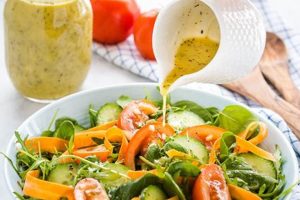
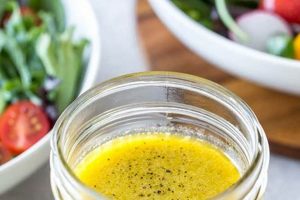
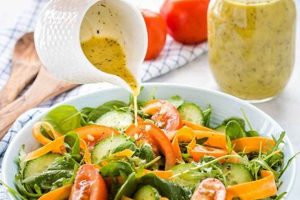
A blend of maple syrup, oil, and acid (typically vinegar or citrus juice) forms the foundation of this type of dressing. Additional ingredients, such as herbs, spices, mustard, or shallots, can create nuanced flavor profiles. A simple example includes maple syrup, olive oil, apple cider vinegar, and Dijon mustard.
The characteristic sweetness of maple syrup offers a unique alternative to traditional vinaigrettes, providing a balanced flavor profile that complements various salads, particularly those with fall ingredients like roasted vegetables, nuts, and fruits. Its rising popularity can be attributed to both its delicious flavor and the increasing consumer demand for natural sweeteners. Historically, maple syrup has been a staple ingredient in North American cuisine, and its incorporation into salad dressings showcases its versatility.
Further exploration will cover various formulations, ranging from basic to gourmet, along with tips for preparation, storage, and pairing with suitable salad ingredients. Variations using different types of maple syrup, oils, and vinegars will also be discussed.
Tips for Maple Salad Dressing
Achieving the perfect balance of sweet, tangy, and savory requires attention to detail. These tips offer guidance for crafting exceptional maple-based dressings.
Tip 1: Maple Syrup Quality Matters: Opt for pure maple syrup, avoiding artificial pancake syrups. Different grades, such as amber, dark, or very dark, offer varying levels of sweetness and intensity.
Tip 2: Oil Selection Enhances Flavor: Extra virgin olive oil provides a robust flavor, while lighter oils like avocado or grapeseed oil offer a more neutral base. Experiment to find preferred pairings.
Tip 3: Acid Creates Balance: Apple cider vinegar, balsamic vinegar, or lemon juice are excellent choices. The acidity balances the sweetness of the maple syrup.
Tip 4: Emulsification is Key: Whisk the ingredients vigorously or use a blender to create a stable emulsion, preventing separation. A touch of Dijon mustard can aid emulsification.
Tip 5: Seasoning Elevates the Dressing: Salt and freshly ground black pepper are essential. Consider adding garlic powder, onion powder, or herbs like thyme or rosemary for added complexity.
Tip 6: Taste and Adjust: Before serving, taste the dressing and adjust seasonings as needed. A pinch of salt or a squeeze of lemon can make a significant difference.
Tip 7: Proper Storage Extends Shelf Life: Store leftover dressing in an airtight container in the refrigerator for up to a week.
By following these guidelines, one can consistently produce flavorful and well-balanced maple dressings that enhance any salad.
This exploration of tips concludes the core discussion on crafting exceptional maple dressings, leading into a final summary of key takeaways.
1. Ingredients

The quality and combination of ingredients significantly impact the final flavor profile of a maple salad dressing. Understanding the role of each component allows for informed choices and creative variations.
- Maple Syrup
Serving as the foundation of the dressing, the type of maple syrup influences the overall sweetness and depth of flavor. Pure maple syrup is preferred over artificial syrups, with options ranging from golden color with delicate taste to very dark color with robust taste. The choice depends on the desired intensity and the other ingredients used.
- Oil
Oil contributes to the texture and mouthfeel of the dressing. Extra virgin olive oil offers a peppery flavor, while avocado oil provides a neutral base. Other options include grapeseed oil or walnut oil, each imparting distinct characteristics.
- Acid
A balance of acidity is crucial to cut through the sweetness of the maple syrup. Apple cider vinegar, white wine vinegar, or lemon juice are common choices. The specific acid chosen can complement or contrast other flavors within the salad.
- Additional Flavorings
Beyond the core ingredients, various additions can enhance complexity. Dijon mustard adds a tangy note and acts as an emulsifier. Fresh or dried herbs, spices like garlic powder or onion powder, and finely chopped shallots can introduce nuanced flavors.
Careful selection and balancing of these ingredient categories allows for a wide range of maple salad dressing variations, from simple vinaigrettes to more complex and flavorful emulsions. The interplay of these components determines the final character of the dressing and its suitability for different salad compositions.
2. Proportions
Proportions play a crucial role in determining the balance and overall success of a maple salad dressing recipe. The ratio of maple syrup to oil and acid dictates the final flavor profile, affecting whether the dressing is predominantly sweet, tangy, or savory. A typical starting point is a 3:2:1 ratio of oil to maple syrup to acid. However, these proportions can be adjusted based on the specific ingredients and desired outcome. For example, a dressing with a higher proportion of maple syrup will be sweeter, while a higher proportion of acid will result in a more tart flavor.
Understanding the interplay of these ingredients allows for tailored adjustments. A robust, dark maple syrup may require less volume compared to a lighter-colored syrup to achieve the same level of sweetness. Similarly, the strength of the chosen acid influences the required amount. Experimentation is encouraged; small adjustments to proportions can significantly impact the final product. Real-life examples include using a 1:1:1 ratio for a balanced flavor or increasing the oil to a 4:2:1 ratio for a richer, less intense dressing.
Mastery of proportions in maple salad dressing recipes allows for greater control over the final product. This knowledge empowers one to create dressings perfectly suited to individual preferences and specific salad components. Careful consideration of ingredient ratios ensures a harmonious balance of flavors, resulting in a well-rounded and enjoyable culinary experience. Balancing these core elements forms the foundation for creating a successful and versatile dressing.
3. Emulsification

Emulsification is crucial for creating a stable and visually appealing maple salad dressing. A proper emulsion prevents the oil and water-based ingredients from separating, resulting in a smooth, cohesive texture rather than a layered or broken mixture. This process involves combining two immiscible liquids, oil and an acid, typically vinegar or citrus juice, into a uniform suspension.
- Temporary Emulsions
A temporary emulsion is achieved through vigorous whisking or shaking. This disperses the oil into small droplets within the vinegar, creating a temporarily homogenous mixture. However, the mixture will eventually separate as the oil and vinegar revert to their natural states. A classic vinaigrette, whisked by hand, exemplifies a temporary emulsion.
- Permanent Emulsions
Permanent emulsions remain stable for extended periods. An emulsifying agent, such as Dijon mustard or egg yolk, helps bind the oil and vinegar together, preventing separation. Mayonnaise is a classic example of a permanent emulsion due to the lecithin in egg yolks.
- Factors Affecting Stability
Several factors influence emulsion stability, including the ratio of oil to acid, the presence and type of emulsifier, temperature, and the intensity of mixing. A higher proportion of oil can lead to a less stable emulsion. Proper balance is crucial for a successful dressing.
- Achieving Emulsification in Maple Dressings
In maple dressings, achieving a stable emulsion often relies on a combination of vigorous whisking and the inclusion of an emulsifier like Dijon mustard. The natural viscosity of maple syrup contributes to the stability, but achieving a homogenous mixture that resists separation requires careful attention to technique and ingredient proportions. Using a blender can help create smaller droplets of oil, further promoting stability.
The emulsification process significantly influences the texture, appearance, and overall quality of a maple salad dressing. A stable emulsion creates a smooth, creamy consistency that coats salad ingredients evenly, enhancing both flavor delivery and visual appeal. Understanding and applying the principles of emulsification elevates the culinary experience, ensuring a well-balanced and satisfying dressing.
4. Flavor Balance
Flavor balance is paramount in a successful maple salad dressing recipe. The inherent sweetness of maple syrup necessitates careful consideration of counterbalancing elements. This interplay of flavors creates complexity and prevents the dressing from being one-dimensional. A well-balanced dressing features a harmonious blend of sweet, sour, salty, and potentially bitter or savory notes. The goal is not to neutralize the sweetness entirely but rather to complement and enhance it.
Acidity plays a crucial role in achieving this balance. Ingredients like vinegar (apple cider, balsamic, or white wine) or citrus juice (lemon or lime) provide the necessary tartness to cut through the sweetness of the maple syrup. The type and quantity of acid used significantly influence the final flavor profile. For instance, apple cider vinegar lends a slightly fruity tartness, while balsamic vinegar contributes a deeper, more complex sweetness. Similarly, the intensity of citrus juices varies, with lemon being more tart than lime. The correct balance avoids excessive sweetness or sourness, creating a harmonious flavor profile.
Beyond acidity, other components contribute to overall flavor balance. Salt enhances the sweetness of the maple syrup while also grounding the other flavors. A pinch of salt can significantly elevate the complexity of the dressing. Additionally, incorporating savory elements, such as Dijon mustard, garlic powder, or onion powder, adds depth and further balances the sweetness. Fresh herbs, like thyme or rosemary, can introduce subtle herbal notes that complement the other flavors. The careful integration of these various elements elevates the maple salad dressing from simply sweet to a more nuanced and sophisticated culinary experience.
5. Maple Syrup Quality
Maple syrup quality significantly impacts the overall flavor profile and success of a maple salad dressing recipe. The syrup’s purity, grade, and production method influence its sweetness, complexity, and how it interacts with other dressing ingredients. Selecting the right maple syrup is crucial for achieving a balanced and desirable outcome.
- Grades and Color
Maple syrup grades, categorized by color and flavor intensity, range from golden color with delicate taste to very dark color with robust taste. Lighter syrups offer delicate sweetness suitable for dressings paired with lighter greens and fruits. Darker syrups possess a more pronounced caramel-like flavor, ideal for robust salads with roasted vegetables or nuts. Choosing the appropriate grade depends on the desired intensity and balance within the dressing.
- Purity and Processing
Pure maple syrup, derived solely from maple sap, offers superior flavor compared to blended syrups containing added sugars or artificial flavorings. The production method also impacts quality. Syrups produced through traditional methods, involving careful evaporation and minimal processing, often retain more nuanced flavors. Avoiding imitation syrups or those with added ingredients is essential for achieving a high-quality dressing.
- Flavor Profiles and Intensity
Maple syrup’s flavor profile extends beyond simple sweetness. Different syrups can exhibit notes of caramel, vanilla, or even hints of spice, depending on the terroir, tree variety, and processing methods. These nuances contribute to the overall complexity of the dressing. Understanding these subtle flavor variations allows for more informed choices when pairing the syrup with other ingredients.
- Impact on Dressing Balance
The quality of maple syrup directly influences the balance of flavors within the dressing. A high-quality, pure maple syrup provides a clean sweetness that interacts harmoniously with acidity and other flavor components. Lower quality syrups, with added sugars or artificial flavors, can create imbalances or mask the delicate nuances of other ingredients. Selecting a premium syrup ensures the dressing’s flavor profile remains balanced and well-defined.
The quality of maple syrup serves as the foundation upon which a successful maple salad dressing is built. Choosing a high-quality syrup not only ensures a superior flavor profile but also allows for greater control over the balance and complexity of the dressing. This attention to ingredient quality elevates the final product, resulting in a more nuanced and satisfying culinary experience.
6. Complementary Pairings

Complementary pairings are essential for maximizing the enjoyment of maple salad dressing. The dressing’s inherent sweetness and nuanced flavor profile necessitate careful consideration of the other ingredients within the salad. Appropriate pairings enhance the dressing’s strengths while mitigating potential clashes. Understanding these relationships allows for the creation of well-balanced and harmonious salads.
Several factors influence pairing decisions. The intensity of the maple syrup used in the dressing dictates the robustness of other ingredients. A delicate maple vinaigrette complements lighter greens, such as spinach or spring mix, and milder cheeses like goat cheese or feta. Conversely, a dressing made with a robust, dark maple syrup pairs well with heartier greens like kale or romaine, and stronger cheeses like blue cheese or aged cheddar. Fruits, nuts, and vegetables also play significant roles. Apples, pears, and cranberries provide complementary sweetness and tartness. Walnuts, pecans, and roasted squash offer earthy notes and textural contrast. Consideration of these elements ensures the salad and dressing enhance each other rather than compete.
Practical examples illustrate the significance of complementary pairings. A maple-balsamic vinaigrette with roasted butternut squash, crumbled goat cheese, and toasted pecans creates a balanced flavor profile where the sweetness of the maple complements the squash, the tanginess of the balsamic cuts through the richness of the cheese, and the pecans provide textural contrast. Conversely, pairing a delicate maple vinaigrette with strong ingredients like blue cheese or assertive vegetables might overwhelm the subtle nuances of the dressing. Successful pairings create a synergistic effect, resulting in a more complex and satisfying culinary experience. This understanding allows for informed ingredient choices, ensuring the maple salad dressing enhances the overall salad composition rather than detracting from it. Careful consideration of complementary pairings elevates a simple salad into a well-balanced and flavorful dish.
7. Storage
Proper storage is essential for maintaining the quality and extending the shelf life of maple salad dressing. Improper storage can lead to flavor degradation, emulsion breakdown, and potential microbial growth. Understanding optimal storage practices ensures the dressing remains flavorful and safe to consume.
- Container Selection
Choosing the right container is crucial for preserving dressing quality. Airtight containers, such as glass jars or sealed plastic containers, minimize oxidation and prevent the absorption of unwanted odors from the refrigerator. Avoid reactive metals, which can interact with the dressing’s acidic components. Properly sealed containers also help maintain the emulsion’s stability, preventing separation.
- Refrigeration
Refrigeration is essential for inhibiting microbial growth and preserving the dressing’s freshness. Maple syrup, while possessing some natural preservative qualities, is still susceptible to spoilage. Storing the dressing in the refrigerator, ideally at a temperature below 40F (4C), significantly extends its shelf life. Placing the dressing towards the back of the refrigerator, where the temperature remains more consistent, further enhances preservation.
- Shelf Life
Even with proper storage, maple salad dressing has a limited shelf life. Generally, homemade dressings last for up to one week in the refrigerator. Factors such as the specific ingredients, the presence of preservatives, and storage conditions can influence this timeframe. Discarding the dressing after one week minimizes the risk of spoilage and ensures optimal flavor and quality. Regularly checking for signs of spoilage, such as mold growth or off-odors, is advisable.
- Freezing (Optional)
While not ideal, freezing can further extend the shelf life of maple salad dressing, especially for larger batches. However, freezing can alter the texture and potentially affect the emulsion’s stability upon thawing. If freezing, use airtight freezer-safe containers and leave some headspace to allow for expansion. Thaw the dressing slowly in the refrigerator and whisk thoroughly before use to re-emulsify if necessary. Freezing offers an option for long-term preservation but may require adjustments upon thawing to restore the dressing’s original quality.
Adhering to proper storage practices ensures the maple salad dressing retains its flavor, texture, and quality for an extended period. These practices maximize the enjoyment of the dressing and minimize the risk of spoilage. Careful storage is an essential final step in the process of creating and enjoying a delicious maple salad dressing.
Frequently Asked Questions
This section addresses common inquiries regarding maple salad dressing recipes, offering concise and informative responses.
Question 1: What type of maple syrup is best for salad dressings?
Pure maple syrup is recommended. Different grades, from golden color with delicate taste to very dark color with robust taste, offer varied sweetness and intensity. The choice depends on the desired flavor profile and other ingredients.
Question 2: Can maple salad dressing be made vegan?
Yes, easily. Ensure all ingredients, particularly the emulsifier if used, are plant-based. Dijon mustard is a suitable vegan emulsifier. Avoid honey or other animal-derived ingredients.
Question 3: How long does maple salad dressing last in the refrigerator?
When stored in an airtight container, it typically lasts up to one week in the refrigerator. Check for signs of spoilage before consuming.
Question 4: What can be used as a substitute for oil in maple salad dressings?
While oil contributes to texture and mouthfeel, reducing the amount or substituting with a small quantity of unsweetened applesauce or pureed silken tofu may offer alternative options with altered characteristics.
Question 5: Can maple syrup be substituted with other sweeteners in salad dressings?
While other sweeteners like honey or agave can be used, they will impart different flavor profiles. The unique character of maple syrup is a defining element of these dressings.
Question 6: How can one prevent maple salad dressing from separating?
Vigorous whisking or blending creates a temporary emulsion. For greater stability, incorporate an emulsifier such as Dijon mustard. A touch of xanthan gum can also enhance stability.
These responses offer practical guidance for achieving optimal results when preparing and storing maple salad dressing.
This FAQ section concludes the comprehensive guide on maple salad dressings.
Maple Salad Dressing Recipe
This exploration of maple salad dressing recipes has provided a comprehensive overview of its core components, highlighting the importance of ingredient quality, balanced proportions, proper emulsification techniques, and complementary pairings. From understanding the nuances of maple syrup grades to mastering the art of flavor balancing, the versatility and potential of this dressing have been thoroughly examined. Storage techniques and answers to frequently asked questions further equip readers with the knowledge necessary to create and enjoy high-quality maple salad dressings.
Maple salad dressing offers a unique and flavorful alternative to traditional vinaigrettes. Its increasing popularity reflects a growing appreciation for natural sweeteners and the desire for innovative flavor combinations. Continued experimentation with various maple syrup grades, oils, acids, and additional flavorings promises further culinary discoveries and a deeper appreciation for the versatility of this remarkable ingredient in salad preparation. The potential for crafting exceptional maple salad dressings remains vast, inviting culinary exploration and personalized adaptations.