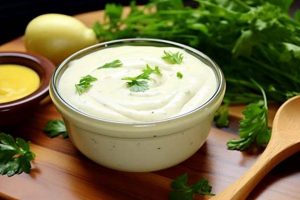
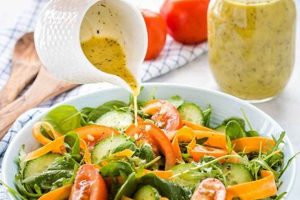
A creamy, mayonnaise-based dressing typically featuring chili sauce, Worcestershire sauce, and other seasonings, this condiment is often associated with seafood salads, particularly crab and shrimp. Variations exist, incorporating ingredients such as chopped green peppers, onions, hard-boiled eggs, and olives.
The rich flavor profile complements the delicate taste of seafood, while the creamy texture provides a satisfying mouthfeel. Its versatility extends beyond seafood, offering a flavorful addition to sandwiches, vegetables, and even as a dip. Originating in the late 19th or early 20th century, this dressing, attributed variously to chefs in New York, Washington, and California, has become a classic element of American cuisine.
This exploration will delve into the nuances of preparing this classic condiment, offering diverse recipes, ranging from traditional preparations to modern interpretations. Furthermore, it will examine the dressing’s historical context and culinary significance, providing a comprehensive understanding of its enduring appeal.
Tips for Crafting the Perfect Dressing
Achieving the ideal balance of flavors and textures is crucial for a successful preparation. These tips provide guidance for creating a truly exceptional condiment.
Tip 1: Emulsion Stability: Utilize a high-quality mayonnaise as a base to ensure a stable emulsion. Adding a small amount of lemon juice or vinegar can further enhance stability.
Tip 2: Chili Sauce Selection: The chili sauce contributes significantly to the final flavor profile. Experiment with different brands and varieties to find a preferred level of sweetness and heat.
Tip 3: Balancing Acidity: A touch of acidity brightens the dressing. Lemon juice, vinegar, or a combination of both can be used. Taste and adjust accordingly.
Tip 4: Seasoning Nuances: Worcestershire sauce adds depth and complexity. A pinch of paprika or cayenne pepper can introduce a subtle smoky note or enhance the heat.
Tip 5: Fresh Ingredients: Finely chopped fresh ingredients like green peppers, onions, or chives elevate the dressing’s flavor and visual appeal. Ensure ingredients are finely chopped for optimal texture.
Tip 6: Customization: Adapt the recipe to individual preferences. Consider additions like hard-boiled eggs, olives, or relish for personalized variations.
Tip 7: Chilling and Resting: Allow the dressing to chill for at least 30 minutes before serving. This allows the flavors to meld and enhances the overall experience.
By following these guidelines, one can create a dressing that complements a wide array of dishes, from classic seafood salads to innovative culinary creations.
These techniques, coupled with an understanding of the dressing’s historical origins and culinary applications, offer a comprehensive approach to mastering this versatile condiment.
1. Mayonnaise (base)

Mayonnaise serves as the foundational element of Louis dressing, providing its characteristic creamy texture and richness. The quality and type of mayonnaise significantly influence the final dressing’s flavor profile, stability, and overall appeal. Understanding the role of mayonnaise is essential for crafting a successful Louis dressing.
- Emulsion and Texture:
Mayonnaise is an emulsion of oil and egg yolks, creating a smooth, viscous texture. This emulsion provides the body of the Louis dressing, coating ingredients and contributing to a luxurious mouthfeel. A stable emulsion is crucial for preventing separation and maintaining the desired consistency. Choosing a high-quality mayonnaise, ideally one with a higher oil content, contributes to a more stable and flavorful end product.
- Flavor Foundation:
Mayonnaise imparts a subtle tanginess and richness that complements the other ingredients in Louis dressing. Its neutral flavor profile acts as a canvas for the bolder notes of chili sauce and Worcestershire sauce. Different mayonnaise varieties, such as those made with olive oil or flavored with herbs, can subtly influence the final flavor complexity of the dressing.
- Binding Agent:
Mayonnaise acts as a binding agent, holding the various components of the dressing together. This cohesive property ensures that the flavors meld harmoniously and that the dressing clings evenly to the salad ingredients. The emulsifying properties of mayonnaise contribute to a unified and well-integrated dressing.
- Variations and Adaptations:
While traditional Louis dressing relies on a classic mayonnaise base, variations can incorporate flavored mayonnaises or additions like sour cream or crme frache to adjust the richness and tanginess. These adaptations allow for customization and exploration of different flavor profiles while maintaining the fundamental creamy texture characteristic of Louis dressing.
The careful selection and utilization of mayonnaise are paramount to achieving a well-balanced and flavorful Louis dressing. The mayonnaise base not only contributes to the texture and richness but also acts as a unifying element, harmonizing the diverse flavors of the other ingredients. A thorough understanding of mayonnaise’s role provides a foundation for crafting exceptional versions of this classic dressing.
2. Chili Sauce

Chili sauce forms an integral part of Louis dressing, contributing a complex interplay of sweet, tangy, and spicy notes that define its character. This condiment’s presence is not merely for heat; it provides a crucial balance against the richness of the mayonnaise and the savory depth of the Worcestershire sauce. The type and quality of chili sauce significantly impact the final flavor profile. A chili sauce with a pronounced sweetness, for instance, yields a milder, tangier dressing, while one with a higher concentration of chili peppers creates a spicier, more robust flavor. Recipes often specify a particular brand or type of chili sauce to achieve consistency, reflecting the ingredient’s nuanced impact.
Consider a classic Louis dressing served with Dungeness crab. The sweetness of the crab meat is complemented by the tangy chili sauce, creating a harmonious flavor pairing. Alternatively, a spicier chili sauce applied to a shrimp Louie salad adds a contrasting kick that enhances the shrimp’s delicate flavor. These examples highlight the chili sauce’s adaptability and its capacity to elevate different seafood profiles. Furthermore, the chili sauce contributes to the dressing’s visual appeal, lending a vibrant reddish-orange hue that enhances the overall presentation.
Understanding the role of chili sauce is crucial for achieving balance and complexity within Louis dressing. It offers a crucial bridge between the richness of the base and the other savory components. Careful selection and balanced incorporation of chili sauce ensure the final product achieves the desired flavor profile, enhancing the culinary experience. This knowledge empowers culinary practitioners to tailor the dressing’s heat and sweetness to complement specific ingredients and individual preferences, showcasing the versatility and importance of this key component.
3. Worcestershire Sauce

Worcestershire sauce contributes a complex layer of umami and subtle spice to Louis dressing, playing a crucial role in its distinctive flavor profile. Composed of fermented ingredients like anchovies, tamarind, molasses, vinegar, and spices, Worcestershire sauce introduces a savory depth that balances the richness of the mayonnaise and the sweetness and heat of the chili sauce. The intricate interplay of these ingredients creates a nuanced flavor dimension that elevates the dressing beyond a simple creamy base. Its presence adds a subtle tang and a savory backbone, enhancing the overall sensory experience. Without Worcestershire sauce, Louis dressing would lack the depth and complexity that define its character.
Consider the impact of Worcestershire sauce in a classic seafood salad dressed with Louis dressing. The umami notes of the sauce complement the delicate flavors of seafood like crab or shrimp, creating a harmonious and balanced flavor profile. The subtle spice notes further enhance the seafood’s natural sweetness. In a vegetarian context, Worcestershire sauce adds depth to Louis dressing served with roasted vegetables or a simple green salad. Its savory complexity provides a counterpoint to the vegetables’ natural sweetness, creating a well-rounded flavor combination. These practical examples demonstrate Worcestershire sauce’s versatility and its ability to enhance various culinary applications.
Understanding the role of Worcestershire sauce is fundamental to achieving a balanced and flavorful Louis dressing. It bridges the gap between the creamy richness and the sweet and spicy elements, unifying the diverse flavors into a cohesive whole. Recognizing its contribution empowers culinary practitioners to adjust the dressing’s savory depth, tailoring the final product to complement specific ingredients and individual preferences. Ultimately, the inclusion of Worcestershire sauce elevates Louis dressing from a simple condiment to a sophisticated culinary creation with a rich and nuanced flavor profile.
4. Lemon juice/vinegar
Acidity plays a crucial role in Louis dressing, balancing the richness of the mayonnaise and other components. Lemon juice or vinegar, commonly white wine vinegar or apple cider vinegar, provides this essential acidity. The choice between lemon juice and vinegar, or a combination of both, influences the final flavor profile and overall balance of the dressing. Understanding the impact of these acidic elements is essential for crafting a well-rounded and flavorful Louis dressing.
- Balancing Richness
The primary function of lemon juice or vinegar is to cut through the richness of the mayonnaise base. This acidity brightens the dressing, preventing it from becoming overly heavy or cloying. The sharp, acidic notes contrast with the creamy texture and richness, creating a more balanced and palatable flavor profile. This balance is particularly important when the dressing accompanies rich ingredients like seafood or hard-boiled eggs.
- Flavor Enhancement
Beyond balancing richness, lemon juice and vinegar contribute distinct flavor nuances. Lemon juice imparts a bright, citrusy note that complements seafood particularly well. Vinegar, depending on the type, can introduce subtle complexities. White wine vinegar offers a crisp, clean acidity, while apple cider vinegar adds a slightly sweeter, fruitier note. These subtle flavor variations allow for customization and tailoring the dressing to specific ingredients and personal preferences.
- Emulsion Stability
The addition of an acidic element also contributes to the stability of the mayonnaise emulsion. The acidity helps prevent the emulsion from breaking down, maintaining the desired creamy texture and preventing separation. This stability ensures a consistent and visually appealing dressing that clings evenly to the ingredients it accompanies.
- Preservation
While not the primary function in Louis dressing, the acidic properties of lemon juice and vinegar contribute to the preservation of the dressing. The lower pH created by the acidity inhibits bacterial growth, extending the shelf life of the prepared dressing. This preservation aspect is particularly relevant for large-batch preparations or when the dressing is not consumed immediately.
The careful incorporation of lemon juice or vinegar is essential for a well-executed Louis dressing. These acidic elements not only balance the richness and enhance the flavor profile but also contribute to the emulsion’s stability and preservation. Understanding their multifaceted role empowers culinary practitioners to fine-tune the dressing’s acidity, creating a balanced and flavorful condiment that elevates a variety of dishes.
5. Optional additions (e.g., chives)

Optional additions represent an opportunity to personalize and enhance the flavor profile of Louis dressing, moving beyond the foundational ingredients. These additions, while not essential to the core definition, contribute textural and flavor nuances that elevate the overall culinary experience. Common additions include finely chopped chives, parsley, hard-boiled eggs, green bell peppers, red onion, and olives. The selection and incorporation of these optional ingredients allow for customization based on personal preference or the specific dish the dressing accompanies.
Consider the impact of chives on a classic shrimp Louis salad. The subtle onion flavor of chives complements the sweetness of the shrimp, while their vibrant green color enhances the visual appeal. Alternatively, the addition of chopped hard-boiled eggs to a crab Louis salad adds a creamy richness and textural contrast. These examples illustrate how optional additions can create a more complex and satisfying sensory experience, elevating the dish beyond the basic flavor profile of the core ingredients. The judicious use of these additions allows chefs and home cooks to tailor the dressing to specific pairings, creating a harmonious balance of flavors and textures.
Understanding the role and potential impact of optional additions provides a deeper appreciation for the versatility of Louis dressing. While the core ingredients provide the foundation, these additions offer a pathway to personalization and culinary exploration. Careful consideration of flavor pairings and textural contrasts ensures these additions enhance, rather than detract from, the overall balance of the dressing and the dish it accompanies. This knowledge empowers culinary practitioners to create unique and flavorful variations of this classic dressing, catering to diverse palates and culinary contexts.
6. Preparation Technique
Preparation technique significantly influences the final quality and flavor profile of Louis dressing. While the ingredient list provides the foundation, the methods employed during preparation dictate the texture, emulsification, and overall balance of the final product. Understanding these techniques is crucial for achieving a consistent and desirable result.
- Ingredient Incorporation Order
The order in which ingredients are combined impacts the emulsification and flavor development of the dressing. Typically, starting with the mayonnaise base and gradually whisking in other ingredients ensures a stable emulsion and prevents separation. Adding acidic elements like lemon juice or vinegar after the initial emulsion helps maintain stability. Incorporating dry seasonings towards the end allows for even distribution and prevents clumping.
- Emulsification Method
Proper emulsification is crucial for a smooth and creamy Louis dressing. Whisking vigorously or using a blender creates a stable emulsion that prevents the oil and water-based ingredients from separating. Slow and gradual incorporation of ingredients, especially liquids, while continuously whisking, promotes a stable emulsion and a homogeneous texture. Over-mixing, however, can lead to a thinner consistency, so a balanced approach is essential.
- Chilling and Resting
Chilling the prepared dressing for at least 30 minutes allows the flavors to meld and develop fully. This resting period enhances the overall flavor profile and allows the ingredients to harmonize. Chilling also firms the emulsion, contributing to a more desirable texture. Serving the dressing chilled enhances its refreshing qualities, especially when paired with chilled seafood or salads.
- Scaling and Adaptation
Adapting the recipe to different batch sizes requires careful consideration of ingredient ratios and preparation techniques. Maintaining the balance between the core components mayonnaise, chili sauce, and Worcestershire sauce is essential when scaling the recipe up or down. Adjusting the quantities of optional ingredients should also be proportionate to maintain the desired flavor profile.
Mastery of these preparation techniques elevates Louis dressing from a simple mixture of ingredients to a carefully crafted condiment. Attention to detail throughout the preparation process ensures a consistently smooth, flavorful, and visually appealing dressing that complements the accompanying dish. These techniques demonstrate that the creation of a successful Louis dressing relies not only on quality ingredients but also on a thorough understanding and skillful execution of the proper preparation methods.
Frequently Asked Questions
This section addresses common inquiries regarding the preparation and utilization of Louis dressing, providing clarity and guidance for culinary practitioners.
Question 1: What distinguishes Louis dressing from Thousand Island dressing?
While both are mayonnaise-based dressings, Louis dressing typically relies on chili sauce for its primary flavor profile, while Thousand Island dressing often incorporates sweeter elements like pickle relish and sometimes hard-boiled eggs. This distinction results in Louis dressing having a tangier, spicier flavor compared to the sweeter profile of Thousand Island.
Question 2: Can Louis dressing be prepared in advance?
Preparation in advance is possible. Storing the dressing in an airtight container in refrigeration for up to three days allows flavors to meld. However, incorporating fresh ingredients like chopped chives or parsley immediately before serving is recommended to maintain optimal flavor and texture.
Question 3: What are suitable alternatives to chili sauce in Louis dressing?
In the absence of chili sauce, alternatives such as sriracha or a combination of ketchup and hot sauce can provide a similar flavor profile. However, these substitutions will subtly alter the final taste, potentially increasing spiciness or reducing sweetness. Careful adjustment of other ingredients may be necessary to achieve the desired balance.
Question 4: How can one adjust the thickness of Louis dressing?
Adjusting thickness can be achieved through small additions of lemon juice or water to thin, or additional mayonnaise to thicken. Gradual incorporation and thorough mixing are crucial to maintain a stable emulsion and prevent separation.
Question 5: Beyond seafood, what other applications exist for Louis dressing?
The dressing’s versatility extends to various culinary applications. It can be used as a sandwich spread, a dip for vegetables, a topping for baked potatoes, or a flavorful component in wraps and burgers, showcasing its adaptability beyond traditional salad applications.
Question 6: How can one ensure a stable emulsion when making Louis dressing?
Emulsion stability is crucial. Utilizing high-quality mayonnaise and incorporating ingredients gradually while whisking constantly contributes to a stable emulsion. Adding a small amount of acid, such as lemon juice or vinegar, can further enhance stability. Avoiding over-mixing also helps maintain the desired consistency.
Understanding these frequently asked questions provides a foundation for successful preparation and utilization, empowering culinary exploration and customization of this classic dressing.
This comprehensive guide aims to provide a thorough understanding of Louis dressing, from its history and core components to its preparation and versatile applications.
Louis Salad Dressing Recipe
Exploration of the Louis salad dressing recipe reveals a condiment built upon a foundation of mayonnaise, chili sauce, and Worcestershire sauce. Nuances in flavor and texture arise from the careful balance of these core components, further enhanced by acidic elements and optional additions. Preparation techniques, including emulsification and chilling, significantly influence the final product’s quality and consistency. The dressing’s versatility extends beyond traditional seafood salads, finding application as a sandwich spread, vegetable dip, and component in other culinary creations. Understanding these elements allows for both appreciation and skillful execution of this classic recipe.
The enduring appeal of Louis dressing lies in its adaptability and capacity for personalization. Continued exploration of variations, ingredient sourcing, and complementary pairings offers opportunities for culinary innovation. Mastery of this classic recipe provides a foundation for crafting flavorful experiences that resonate across diverse palates and culinary traditions.