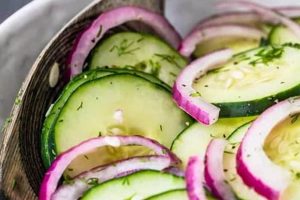
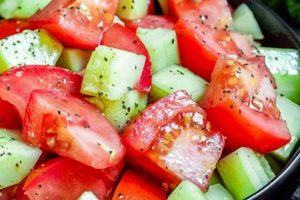
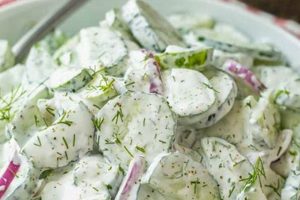
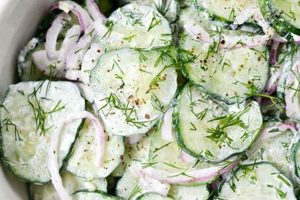
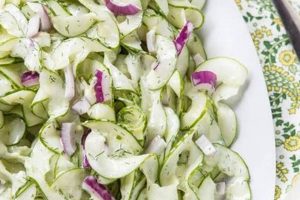
A refreshing and light dish, this type of salad typically combines thinly sliced cucumbers with a creamy dressing, often based on sour cream, yogurt, or mayonnaise. Variations can include additions such as dill, red onion, vinegar, or garlic, offering a spectrum of flavor profiles from tangy to savory. A basic version might involve just cucumbers, sour cream, and salt, demonstrating the inherent simplicity of this culinary creation.
The appeal of such salads lies in their ease of preparation, affordability, and nutritional value. Cucumbers, being primarily water, contribute to hydration and offer a cooling element, making these salads particularly popular in warmer months. Historically, cucumbers have been cultivated for thousands of years and incorporated into various cuisines worldwide, demonstrating their enduring culinary significance. Creamy cucumber salads provide a palatable way to incorporate fresh vegetables into one’s diet, offering a healthy and satisfying side dish or light meal.
Further exploration will delve into specific variations of this salad, including vegan and dairy-free options, along with tips and techniques for achieving optimal flavor and texture. Culinary advice on ingredient selection, preparation methods, and presentation will also be provided, equipping readers with the knowledge to create their own delicious iterations.
Tips for a Perfect Creamy Cucumber Salad
Achieving a desirable balance of flavor and texture requires attention to detail throughout the preparation process. The following tips offer guidance for creating a consistently excellent salad.
Tip 1: Salt the cucumbers. Salting draws out excess moisture from the cucumbers, preventing a watery salad. Place sliced cucumbers in a colander with salt and let them sit for 15-20 minutes before rinsing and patting dry.
Tip 2: Choose the right dressing base. Sour cream provides a classic tang, while Greek yogurt offers a lighter, more tart flavor. Mayonnaise contributes richness. Consider the desired flavor profile when selecting the base.
Tip 3: Balance the flavors. Acidity is crucial. A splash of vinegar or lemon juice brightens the flavors and complements the richness of the cream. Fresh dill adds a herbaceous element, while a touch of garlic provides a subtle pungent note.
Tip 4: Slice cucumbers thinly and uniformly. Evenly sliced cucumbers ensure consistent texture and allow the dressing to coat each piece effectively. A mandoline slicer can be helpful for achieving uniform slices.
Tip 5: Chill before serving. Chilling allows the flavors to meld and enhances the refreshing qualities of the salad. Refrigerate for at least 30 minutes before serving.
Tip 6: Don’t overdress. Start with a small amount of dressing and add more as needed. Overdressing can make the salad soggy.
Tip 7: Consider additions. Thinly sliced red onion adds a sharp bite, while chopped fresh chives or parsley contribute visual appeal and subtle flavor. Crumbled feta cheese can also be a delicious addition.
By following these tips, one can consistently create a creamy cucumber salad that is both flavorful and refreshing. Attention to these details elevates this simple dish, making it a delightful addition to any meal.
With a firm understanding of these preparation techniques, one can confidently explore the versatility of this classic dish and adapt it to individual preferences.
1. Cucumbers

Cucumbers serve as the foundational ingredient in a simple creamy cucumber salad recipe, contributing not only texture but also a refreshing, hydrating element. Their high water content provides a cooling effect, making them particularly suitable for warm weather consumption. The mild flavor profile of cucumbers allows them to readily absorb the flavors of the creamy dressing and other accompanying ingredients, creating a harmonious blend. Consider, for example, the contrast between the subtle cucumber taste and the tang of a sour cream-based dressing, or the interplay with the sharpness of thinly sliced red onions. This inherent neutrality allows for extensive customization and flavor experimentation within the basic recipe framework.
The structural integrity of cucumbers also plays a crucial role. While delicate enough to be easily sliced, they retain sufficient firmness to maintain their shape even after being dressed and chilled. This textural resilience ensures a pleasant eating experience, avoiding a mushy consistency that could detract from the salad’s appeal. Furthermore, different cucumber varieties offer subtle variations in taste and texture, providing options for recipe adaptation. English cucumbers, for instance, possess a thinner skin and fewer seeds, lending a more refined texture, while Kirby cucumbers offer a slightly sweeter flavor, potentially influencing the choice of complementary ingredients.
In conclusion, the selection and preparation of cucumbers directly impact the overall quality and enjoyment of a simple creamy cucumber salad. Understanding the inherent characteristics of different cucumber varieties and the interplay between their flavor, texture, and moisture content provides valuable insight for optimizing recipe outcomes. From the refreshing crunch to the delicate flavor absorption, cucumbers form an essential component of this classic dish.
2. Creamy Base

The creamy base forms the backbone of a simple creamy cucumber salad recipe, binding the ingredients and contributing significantly to the overall flavor profile. This element provides the characteristic richness and smooth texture that distinguishes this salad from other cucumber-based preparations. The choice of creamy base directly influences the final taste, ranging from the tangy brightness of sour cream or yogurt to the heavier, more decadent quality of mayonnaise. The fat content within the creamy base also plays a critical role, impacting both the mouthfeel and the way flavors are carried and perceived. For instance, a full-fat sour cream will offer a more luxurious experience compared to a low-fat alternative, which might result in a thinner, less satisfying consistency. The creamy base also acts as a canvas for incorporating additional flavors. Herbs, spices, and acidic elements like vinegar or lemon juice are readily emulsified within the creamy matrix, ensuring their even distribution throughout the salad.
The interplay between the creamy base and the cucumbers themselves is crucial. The base coats the cucumber slices, adhering to their surface and allowing for maximum flavor transfer. This interaction is further enhanced by the moisture content of the cucumbers. As the cucumbers release water, particularly if salted beforehand, the creamy base thins slightly, creating a harmonious balance between the crispness of the cucumber and the smoothness of the dressing. This dynamic equilibrium prevents the salad from becoming overly watery while ensuring that each bite offers a cohesive blend of textures and tastes. The creamy base also contributes to the salad’s visual appeal, providing a backdrop against which the vibrant green of the cucumbers and any additional ingredients, such as colorful herbs or red onion, can stand out.
Understanding the function and impact of the creamy base is essential for achieving a well-balanced and flavorful simple creamy cucumber salad. Careful consideration of the type of creamy base, its fat content, and its interaction with the other ingredients will significantly influence the final outcome. This knowledge empowers one to tailor the recipe to specific preferences, whether aiming for a light and tangy salad or a richer, more indulgent experience. Mastering this element provides a foundation for creating a consistently delicious and satisfying dish.
3. Flavor Enhancers
Flavor enhancers play a crucial role in elevating a simple creamy cucumber salad recipe from agreeable to exceptional. While the foundational elements of cucumbers and a creamy base provide a pleasant baseline, it is the judicious use of flavor enhancers that truly unlocks the dish’s potential. These additions introduce complexity, balancing the richness of the cream and the mildness of the cucumbers, resulting in a more dynamic and satisfying sensory experience.
- Fresh Herbs
Fresh herbs contribute brightness and aromatic complexity. Dill, with its delicate anise-like notes, is a classic pairing with cucumbers and creamy dressings. Chives offer a subtle oniony flavor, while parsley provides a clean, fresh taste and visual appeal. Mint can introduce a cooling element, particularly effective in warmer months. The quantity of herbs used should be carefully considered; too much can overpower the delicate cucumber flavor, while too little might not provide sufficient impact.
- Acidity
Acidity is essential for balancing the richness of the creamy base and brightening the overall flavor profile. A splash of white vinegar or lemon juice introduces a sharp counterpoint to the creamy dressing, enhancing the other flavors and preventing the salad from tasting bland. The type of acid used can also contribute unique nuances; apple cider vinegar offers a subtle sweetness, while red wine vinegar imparts a more robust tang. Balancing acidity with the other flavor components is crucial for achieving a harmonious result.
- Alliums
Alliums, such as red onion, shallots, or garlic, introduce pungent notes that complement the cool cucumbers and creamy dressing. Thinly sliced red onion provides a sharp bite and a pop of color, while finely minced shallots offer a milder onion flavor. A small amount of minced garlic can add depth and complexity, but should be used sparingly to avoid overpowering the other ingredients. The intensity of these alliums can vary, so careful consideration should be given to their quantity and preparation.
- Spices
While often subtle, spices can add intriguing layers of flavor to a creamy cucumber salad. A pinch of black pepper provides a subtle warmth and enhances the overall taste. A dash of paprika can introduce a smoky note, while a sprinkle of cayenne pepper adds a touch of heat. The choice of spices should align with the desired flavor profile and be used judiciously to avoid overwhelming the delicate balance of the salad.
The interplay of these flavor enhancers is essential for creating a truly exceptional creamy cucumber salad. Careful consideration of the individual contributions of herbs, acidity, alliums, and spices, along with their interaction with the cucumbers and creamy base, allows for a nuanced and well-balanced flavor profile. By understanding the role and impact of each element, one can customize the recipe to create a dish that is both refreshing and complex, showcasing the versatility of this simple yet elegant salad.
4. Simple Preparation

Ease of preparation is a defining characteristic of the simple creamy cucumber salad recipe. Minimal culinary expertise and limited time investment are required to achieve satisfying results. This accessibility stems from the straightforward nature of the ingredients and the uncomplicated assembly process. Cucumbers require only slicing, while the creamy dressing typically involves combining readily available ingredients like sour cream, yogurt, or mayonnaise with chosen flavor enhancers. The absence of complex cooking techniques, such as sauting, roasting, or baking, further streamlines the process, making this recipe ideal for quick meals, impromptu gatherings, or beginner cooks. For instance, a basic version can be prepared in mere minutes by simply combining sliced cucumbers with sour cream, salt, and pepper. More elaborate variations, incorporating additional herbs, spices, or vegetables, still require minimal effort, preserving the fundamental simplicity of the recipe.
The simplicity of preparation extends beyond the immediate act of assembling the salad. The ingredients themselves are generally readily available, requiring no specialized sourcing or advanced preparation. Furthermore, the salad can be prepared in advance and chilled, allowing flavors to meld and enhancing convenience. This characteristic makes it a practical choice for potlucks, picnics, or meal prepping, where time constraints and logistical considerations are paramount. The ability to adapt the recipe to available ingredients further contributes to its ease of preparation. If fresh dill is unavailable, dried dill can be substituted, and the choice of creamy base can be adjusted based on dietary preferences or pantry staples. This inherent flexibility ensures that the recipe remains accessible regardless of specific circumstances.
The emphasis on simple preparation directly contributes to the widespread appeal of this dish. Its uncomplicated nature removes barriers to entry for individuals with limited cooking experience or time constraints. This accessibility democratizes the culinary experience, allowing a wider audience to enjoy a fresh, flavorful, and healthy salad without significant investment of time or effort. The simplicity, however, does not compromise the potential for flavor and satisfaction. With careful selection of quality ingredients and thoughtful balancing of flavors, a simple creamy cucumber salad can be a truly rewarding culinary experience, demonstrating that complexity is not a prerequisite for deliciousness.
5. Refreshing Taste
The refreshing taste of a simple creamy cucumber salad stems from a confluence of factors, primarily the inherent qualities of its core ingredients and their synergistic interaction. Cucumbers, composed predominantly of water, offer a naturally cooling effect, amplified by the typical serving temperature. This inherent coolness is further enhanced by the creamy base, which often includes ingredients like sour cream or yogurt, known for their light, tangy flavors. The combination creates a palate-cleansing effect, particularly welcome in warmer weather or after heavier meals. This refreshing quality distinguishes the salad from richer, denser options, positioning it as a light and revitalizing dish. Consider, for example, a summer picnic where this salad provides a welcome counterpoint to grilled meats or heavier pasta salads. The coolness and lightness of the cucumbers and creamy dressing cut through the richness of other dishes, offering a refreshing respite and preventing palate fatigue.
Beyond the inherent qualities of the individual components, the refreshing taste is further heightened by the addition of flavor enhancers. A judicious use of fresh herbs, such as dill or mint, introduces aromatic complexity while maintaining the overall lightness. The herbaceous notes complement the cool cucumbers and creamy base, creating a multi-layered sensory experience that is both refreshing and satisfying. Acidity, often introduced through vinegar or lemon juice, plays a crucial role in amplifying the refreshing quality. The tartness brightens the flavors, cutting through the richness of the cream and adding a stimulating dimension. This acidic element contributes significantly to the palate-cleansing effect, further enhancing the perception of refreshment. Imagine the contrast between a creamy cucumber salad with a touch of lemon juice and one without; the former offers a brighter, more invigorating experience.
Ultimately, the refreshing taste of a simple creamy cucumber salad derives from a carefully orchestrated interplay of ingredients and flavors. The cool cucumbers, the light and tangy creamy base, the aromatic herbs, and the brightening acidity converge to create a dish that is not only flavorful but also revitalizing. This refreshing quality positions the salad as a versatile culinary option, suitable for a variety of occasions and palates, underscoring its enduring appeal and its value as a light, healthy, and satisfying dish.
6. Versatile Adaptations
The inherent simplicity of a creamy cucumber salad recipe provides a remarkably adaptable foundation for culinary exploration. This adaptability stems from the neutral flavor profile of cucumbers, which readily accepts a wide range of complementary ingredients and flavor profiles. Modifications can range from subtle tweaks in seasoning to the incorporation of entirely new components, allowing for customization based on individual preferences, dietary restrictions, or seasonal ingredient availability. This inherent versatility contributes significantly to the enduring popularity of this dish, transforming it from a basic side dish into a canvas for culinary creativity.
- Dietary Modifications
Adapting the recipe to accommodate dietary restrictions is a key aspect of its versatility. Vegan versions can be readily achieved by substituting the traditional dairy-based creamy element with plant-based alternatives such as cashew cream, coconut yogurt, or silken tofu. These substitutions maintain the creamy texture and provide a similar mouthfeel while adhering to vegan principles. Similarly, individuals with lactose intolerance can opt for lactose-free dairy products or explore non-dairy options. These modifications ensure that the refreshing and flavorful experience of a creamy cucumber salad remains accessible to a wider audience, regardless of dietary constraints.
- Cultural Influences
Creamy cucumber salads transcend cultural boundaries, appearing in various forms across different cuisines. These variations often incorporate region-specific ingredients and flavor profiles, demonstrating the adaptability of the core concept. For example, a Mediterranean-inspired version might include feta cheese, olives, and oregano, while a Scandinavian iteration could feature dill, lemon juice, and a touch of sweetness. These culturally influenced adaptations highlight the global appeal of the dish and its capacity to embrace diverse culinary traditions.
- Seasonal Variations
The versatility of creamy cucumber salads extends to seasonal adaptations. While cucumbers are readily available year-round, their peak season during the warmer months allows for pairings with other seasonal produce. Incorporating fresh summer herbs like basil or mint can enhance the refreshing quality, while the addition of ripe tomatoes or sweetcorn can add depth and complexity. These seasonal variations celebrate the bounty of fresh produce and offer a dynamic culinary experience that reflects the changing seasons.
- Textural Contrasts
Introducing textural contrasts can elevate a simple creamy cucumber salad by adding another dimension of sensory interest. Toasted nuts, such as slivered almonds or chopped walnuts, provide a satisfying crunch, while croutons offer a crispy element. Adding ingredients like chopped bell peppers or shredded carrots can introduce a contrasting firmness to the otherwise soft and yielding texture of the cucumbers and creamy dressing. These textural variations create a more engaging and enjoyable eating experience.
The capacity for versatile adaptations underscores the enduring appeal of the simple creamy cucumber salad recipe. By embracing modifications based on dietary needs, cultural influences, seasonal ingredients, and textural contrasts, this basic dish transforms into a platform for culinary expression. This adaptability not only broadens its accessibility but also enhances its potential for delivering a consistently satisfying and engaging culinary experience, demonstrating that simplicity can be a gateway to remarkable versatility.
Frequently Asked Questions
This section addresses common inquiries regarding creamy cucumber salads, providing concise and informative responses to facilitate a deeper understanding of this versatile dish.
Question 1: How can excess moisture in cucumber salad be prevented?
Salting the sliced cucumbers prior to dressing draws out excess water. Place cucumber slices in a colander, sprinkle with salt, and allow them to sit for approximately 15-20 minutes. Rinse thoroughly and pat dry before combining with other ingredients. This process helps maintain the desired texture and prevents a watery salad.
Question 2: What are suitable alternatives to sour cream in the dressing?
Greek yogurt offers a lighter, tangier alternative to sour cream. For a richer flavor profile, mayonnaise can be used. Plant-based options, such as cashew cream or silken tofu, provide suitable alternatives for vegan diets. The choice depends on individual preference and dietary needs.
Question 3: How long can creamy cucumber salad be stored?
Properly stored in an airtight container in the refrigerator, creamy cucumber salad can typically be kept for up to three days. However, the quality and texture may begin to deteriorate after the first day, especially if using more delicate herbs or additions. It is recommended to consume the salad within 48 hours for optimal freshness.
Question 4: Can creamy cucumber salad be frozen?
Freezing is not recommended. The high water content of cucumbers makes them susceptible to textural changes upon thawing. Freezing can result in a mushy, less palatable salad. It is best to prepare and consume this dish fresh.
Question 5: What can be added to a creamy cucumber salad for additional flavor?
Fresh dill, chives, or parsley add herbaceous notes. Thinly sliced red onion contributes sharpness, while a small amount of minced garlic provides pungent depth. A splash of lemon juice or vinegar enhances brightness. Crumbled feta cheese or toasted nuts offer additional textural and flavor complexity.
Question 6: How can one prevent the dressing from becoming too thin?
Ensuring the cucumbers are adequately dried after salting helps prevent excess moisture from thinning the dressing. Adding the dressing just before serving also minimizes the time the cucumbers have to release water. Starting with a thicker creamy base, such as Greek yogurt, can also help maintain the desired consistency.
Addressing these common inquiries provides clarity and guidance for preparing a consistently satisfying creamy cucumber salad. Understanding these aspects empowers culinary exploration and ensures optimal results.
The following section will offer a collection of recipe variations, showcasing the adaptability and versatility of this classic dish.
Simple Creamy Cucumber Salad Recipe
Exploration of the simple creamy cucumber salad recipe reveals a dish characterized by refreshing simplicity and surprising versatility. From the foundational elements of cucumbers and creamy base to the nuanced interplay of flavor enhancers, each component contributes to a harmonious balance of taste and texture. Preparation ease further distinguishes this culinary creation, making it accessible to a broad audience regardless of skill level. Adaptability shines through the myriad variations, accommodating dietary restrictions, cultural influences, and seasonal ingredients. From the selection of cucumbers to the careful balancing of flavors, attention to detail elevates this seemingly simple dish, demonstrating that culinary excellence can be achieved through straightforward techniques and readily available ingredients.
The enduring appeal of the simple creamy cucumber salad recipe lies in its ability to satisfy a range of culinary desires, from a light and refreshing side dish to a more complex and nuanced culinary creation. Continued exploration of variations and flavor combinations promises further evolution of this classic dish, ensuring its continued presence in culinary repertoires for generations to come. This exploration encourages culinary experimentation, empowering individuals to personalize the recipe and discover new dimensions of flavor within this timeless framework.