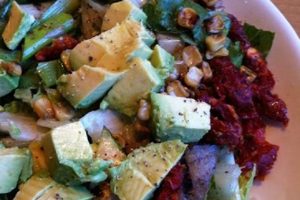
A vibrant and flavorful dish, typically composed of cooked beets, crumbled feta cheese, and other complementary ingredients such as leafy greens, nuts, and a vinaigrette. Variations exist, incorporating diverse greens like arugula or spinach, different nuts like walnuts or pistachios, and citrus fruits like oranges or grapefruit. The beets’ earthy sweetness pairs well with the salty, tangy feta, creating a balanced flavor profile.
This colorful combination offers nutritional benefits, as beets are rich in nitrates and antioxidants, while feta contributes calcium and protein. Historically, ingredients like beets and cheese have been dietary staples across various cultures, and the modern salad format allows for creative combinations, showcasing seasonal produce and catering to diverse palates. Its refreshing nature makes it a suitable appetizer, side dish, or light meal.
The following sections will delve into specific variations, offer detailed preparation instructions, and explore the nutritional value of this culinary creation.
Tips for a Perfect Beet & Feta Salad
Optimizing ingredient selection and preparation techniques elevates this simple salad to a culinary masterpiece.
Tip 1: Roasting vs. Boiling Beets: Roasting beets intensifies their sweetness and concentrates their flavor, while boiling results in a milder, less earthy taste. Choose the cooking method based on preference.
Tip 2: Selecting Beets: Opt for firm, smooth-skinned beets with vibrant color and attached greens, indicating freshness. Smaller beets tend to be more tender.
Tip 3: Handling Beets: Wear gloves when handling beets to prevent staining. Trim the greens, leaving about an inch of stem to avoid bleeding color during cooking.
Tip 4: Feta Selection: Authentic Greek feta, made from sheep’s milk or a blend of sheep and goat milk, offers a distinct tangy flavor. Consider experimenting with different feta varieties for nuanced taste profiles.
Tip 5: Balancing Flavors: The sweetness of beets and the saltiness of feta are effectively balanced by incorporating acidic elements like citrus juice or vinegar in the dressing.
Tip 6: Enhancing Texture: Toasted nuts, such as walnuts, pecans, or pistachios, add a satisfying crunch and complement the creamy feta and tender beets.
Tip 7: Presentation: Consider the visual appeal by arranging the salad components thoughtfully. Crumble the feta rather than slicing it, and distribute the beets and other ingredients evenly.
By following these tips, one can achieve a harmonious balance of flavors and textures, transforming a basic salad into a delightful culinary experience.
These guidelines provide a strong foundation for crafting a satisfying beet and feta salad. The subsequent section offers specific recipe variations to further inspire culinary exploration.
1. Ingredient Quality

Ingredient quality significantly impacts the overall success of a beet and feta salad. Fresh, vibrant beets offer a sweeter, earthier flavor compared to older, dull-looking beets, which can be tough and less flavorful. The type of feta also plays a crucial role. Authentic Greek feta, made primarily from sheep’s milk, possesses a distinct tangy, salty flavor that complements the sweetness of the beets. Lower-quality feta cheeses, often made from cow’s milk, lack this complexity and can result in a blander salad. Similarly, the choice of other ingredients, such as the type of greens, nuts, and vinaigrette, influences the final flavor profile and overall quality of the dish. Using fresh, high-quality olive oil, for instance, contributes a fruity and peppery note to the vinaigrette, elevating the entire salad.
Consider the example of using pre-packaged, pre-cooked beets versus fresh beets roasted at home. Pre-cooked beets often lack the vibrant flavor and firm texture of freshly roasted beets. Their flavor can be muted, and their texture can be mushy, detracting from the overall sensory experience. Similarly, using wilted greens or stale nuts diminishes the salad’s freshness and appeal. Choosing high-quality ingredients ensures that each element contributes positively to the final dish. Investing in fresh, seasonal produce and authentic feta cheese results in a more flavorful and satisfying salad.
Understanding the impact of ingredient quality empowers informed choices during recipe preparation. This knowledge enables the creation of a beet and feta salad that is not only visually appealing but also delivers a complex and satisfying flavor profile. The quality of ingredients directly correlates with the overall culinary experience, highlighting the importance of sourcing the best possible components for this seemingly simple, yet nuanced, dish.
2. Flavor Balance

Flavor balance is paramount in a successful beet and feta salad recipe. The inherent sweetness of beets, the salty tang of feta, and the acidity of the dressing must harmonize to create a delectable culinary experience. A well-balanced salad avoids overpowering any single flavor, allowing each component to contribute to the overall taste profile. This balance is achieved through careful consideration of ingredient selection and proportion.
- Sweetness of Beets
The natural sweetness of beets forms the foundation of the salad’s flavor profile. Roasting beets intensifies their sweetness, while boiling results in a milder flavor. This sweetness needs to be balanced by other elements to prevent the salad from being overly sugary. The variety of beet also plays a role; some varieties are inherently sweeter than others. Choosing appropriately sweet beets, and adjusting the cooking method, allows for control over this key flavor component.
- Saltiness of Feta
Feta cheese provides the crucial salty counterpoint to the beets’ sweetness. Different feta varieties offer varying levels of saltiness. Authentic Greek feta, typically made from sheep’s milk, tends to be more robust in flavor, while cow’s milk feta can be milder. The amount of feta used also impacts the overall saltiness of the salad. A judicious amount provides a pleasant contrast without overwhelming the other flavors.
- Acidity of the Dressing
The vinaigrette provides the necessary acidity to balance both the sweetness of the beets and the saltiness of the feta. Common acidic ingredients include lemon juice, red wine vinegar, or balsamic vinegar. The level of acidity should be carefully calibrated to brighten the flavors without making the salad too tart. The vinaigrette also acts as a unifying element, binding the other ingredients together harmoniously.
- Earthy and Other Supporting Flavors
Beyond the core trio of sweet, salty, and acidic, other flavors contribute to the overall balance and complexity of the salad. The earthiness of beets can be enhanced by adding toasted walnuts or pecans, which also introduce a textural element. Fresh herbs, like dill or mint, provide a refreshing counterpoint, while spices, such as black pepper, add a subtle warmth. These supporting flavors should be used judiciously to complement the main ingredients without overshadowing them.
Achieving optimal flavor balance in a beet and feta salad involves a delicate interplay of these key elements. Careful consideration of each components intensity and how they interact creates a symphony of flavors that elevates the dish beyond a simple combination of ingredients. The final result is a salad that is both refreshing and satisfying, showcasing the harmonious blend of sweet, salty, acidic, and earthy notes.
3. Textural Contrast

Textural contrast significantly enhances the sensory experience of a beet and feta salad. The interplay of different textures creates a more dynamic and engaging culinary experience, moving beyond mere flavor and appealing to a broader range of palates. A successful beet and feta salad strategically incorporates contrasting textures to elevate the dish from simple to sophisticated. The inherent smoothness of cooked beets and creamy feta cheese benefits from the addition of contrasting textural elements.
Several ingredients contribute textural variety. Crispy elements, such as toasted nuts (walnuts, pecans, or pistachios), provide a satisfying crunch. These nuts also complement the flavor profile, adding a nutty depth that harmonizes with the beets and feta. Leafy greens, like spinach, arugula, or romaine, offer a refreshing crispness. Their slightly bitter notes contrast the sweetness of the beets and the saltiness of the feta, further enhancing the complexity of the salad. Seeds, such as toasted sesame or sunflower seeds, introduce another layer of crunch. Other textural elements could include thinly sliced red onion for a sharp bite or crumbled bacon for a smoky, savory crunch.
Consider a beet and feta salad composed solely of smooth, cooked beets and creamy feta. While flavorful, the experience might lack dynamism. Introducing toasted walnuts provides a satisfying crunch that contrasts with the soft beets and feta. Similarly, incorporating peppery arugula adds a crisp, leafy texture that further diversifies the mouthfeel. This interplay of textures elevates the salad, making each bite more engaging. Understanding the role of textural contrast allows for strategic ingredient selection and preparation methods, turning a simple salad into a multi-dimensional culinary creation. This attention to detail transforms the eating experience from passive consumption to active engagement with a variety of textures and flavors.
4. Preparation Methods
Preparation methods significantly influence the final flavor, texture, and overall quality of a beet and feta salad. Different techniques applied to each ingredient contribute uniquely to the dish’s overall composition. Understanding these methods allows for informed choices that maximize flavor and create a well-balanced salad.
- Beet Cooking Techniques
Beets can be roasted, boiled, or even pickled, each method yielding distinct characteristics. Roasting concentrates the beets’ natural sweetness and creates a tender, slightly caramelized texture. Boiling results in a milder flavor and softer texture, while pickling introduces a tangy, acidic dimension. The chosen method directly impacts the beet’s contribution to the salad’s overall flavor profile.
- Feta Handling
While feta is typically not cooked, its preparation influences the final presentation and texture. Crumbling feta creates a more even distribution throughout the salad and allows it to mingle more readily with other ingredients. Alternatively, slicing feta into larger pieces provides a more pronounced salty, tangy burst in each bite. The choice depends on the desired balance and intensity of feta within the salad.
- Vinaigrette Preparation
The vinaigrette acts as a unifying element, binding the ingredients and contributing acidity to balance the sweetness and saltiness. Whisking together oil, vinegar, and seasonings emulsifies the dressing, creating a cohesive texture that coats the other ingredients evenly. The choice of vinegar, oil, and additional flavorings like herbs or spices, significantly impacts the final taste profile.
- Ingredient Combination and Order
The order in which ingredients are combined affects the salad’s overall texture and presentation. Adding delicate greens last prevents them from wilting, while incorporating the vinaigrette just before serving ensures a crisp, fresh texture. Thoughtful layering of ingredients during assembly enhances visual appeal and creates a more balanced distribution of flavors in each bite.
The interplay of these preparation methods determines the final character of the beet and feta salad. Careful consideration of each step, from beet cooking techniques to vinaigrette preparation, contributes to a more flavorful, texturally diverse, and visually appealing dish. Mastery of these techniques empowers culinary creativity and allows for personalized variations that cater to individual preferences, ensuring a delightful and satisfying culinary experience.
5. Presentation Techniques

Presentation techniques play a crucial role in elevating a beet and feta salad from a simple dish to a visually appealing culinary creation. While flavor and texture are paramount, visual presentation enhances the dining experience, stimulating appetite and adding an element of sophistication. Thoughtful plating transforms the salad into a feast for the eyes, complementing the delightful combination of flavors and textures.
- Color Contrast and Harmony
The vibrant colors of beets and feta provide a natural starting point for an aesthetically pleasing presentation. Deep red and golden beets contrast beautifully with the bright white of feta. Incorporating complementary colors through other ingredients further enhances visual appeal. Green spinach or arugula provide a refreshing contrast, while orange segments or yellow bell peppers introduce analogous color harmony. Considering the color palette of the chosen ingredients allows for a visually balanced and attractive presentation.
- Arrangement and Plating
Strategic arrangement of ingredients elevates the presentation beyond simply tossing everything together. Consider layering elements for visual depth, placing beets and feta strategically amongst the greens. Instead of simply crumbling feta over the salad, consider arranging small mounds or slices strategically for visual interest. Using a circular or rectangular plate can also influence the overall presentation. White plates often provide a clean backdrop that accentuates the vibrant colors of the salad.
- Garnishing and Finishing Touches
Garnishes provide the final flourish, adding a touch of elegance and enhancing visual appeal. A sprinkle of chopped fresh herbs, like dill or mint, adds a pop of color and freshness. A drizzle of high-quality olive oil or a sprinkle of toasted nuts adds textural and visual interest. These small details elevate the presentation, signaling attention to detail and enhancing the perceived value of the dish.
- Serving Style and Context
The serving style should align with the overall context of the meal. For a casual setting, a large bowl for family-style sharing might be appropriate. For a more formal occasion, individual plates allow for more intricate plating designs. Serving the salad as a starter in smaller portions emphasizes its elegance, while a larger portion might serve as a light main course. Considering the dining context informs appropriate presentation choices.
These presentation techniques demonstrate that visual appeal plays a significant role in the overall enjoyment of a beet and feta salad. By considering color contrast, arrangement, garnishes, and serving style, one transforms a simple salad into a visually stunning and appetizing culinary creation. These techniques, combined with attention to flavor and texture, create a holistic dining experience that delights the senses and elevates the humble beet and feta salad to a new level of culinary artistry.
6. Nutritional Value
Nutritional value represents a significant aspect of a beet and feta salad recipe. This dish offers a combination of vitamins, minerals, and antioxidants beneficial for overall health. Beets are a good source of nitrates, which can help lower blood pressure and improve athletic performance. They also provide folate, essential for cell growth and development, and fiber, promoting digestive health. Feta cheese contributes calcium, crucial for bone health, and protein, supporting muscle growth and repair. Furthermore, the inclusion of leafy greens, such as spinach or arugula, boosts the salad’s vitamin and mineral content, adding vitamins A and K, important for vision and blood clotting, respectively.
The nutritional profile of this salad can be further enhanced through ingredient selection. Opting for a variety of colorful beets, such as red and golden, increases the diversity of phytonutrients, beneficial plant compounds with antioxidant properties. Choosing extra virgin olive oil for the vinaigrette provides healthy monounsaturated fats and further enhances the antioxidant content. Including a variety of nuts and seeds, like walnuts or pumpkin seeds, adds healthy fats, fiber, and minerals such as magnesium and zinc. Modifying ingredients based on dietary needs and preferences allows for customization of the nutritional profile. For example, individuals seeking to reduce sodium intake could opt for lower-sodium feta varieties or use a smaller quantity.
Understanding the nutritional composition of a beet and feta salad allows for informed choices that maximize health benefits. This knowledge empowers individuals to tailor the recipe to meet specific dietary requirements and optimize nutrient intake. While the salad offers inherent nutritional value, conscious ingredient selection and preparation methods further enhance its health-promoting properties. This awareness transforms the salad from a simple dish into a nutritionally dense meal that contributes to overall well-being.
Frequently Asked Questions
This section addresses common inquiries regarding beet and feta salad preparation and variations.
Question 1: Can canned beets be used in this salad?
While canned beets offer convenience, they often lack the vibrant flavor and firm texture of fresh beets. If using canned beets, opt for those packed in water rather than syrup, and drain them thoroughly before adding to the salad. Roasting fresh beets is generally recommended for optimal flavor and texture.
Question 2: What type of feta cheese is best for this salad?
Authentic Greek feta, made from sheep’s milk or a blend of sheep and goat milk, provides the classic tangy, salty flavor that complements the sweetness of beets. Cow’s milk feta can be used, but its milder flavor may not provide the same level of complexity.
Question 3: How can the salad be made vegan?
Vegan feta alternatives, typically made from tofu or cashews, can be substituted for traditional feta. Nutritional yeast can also be added for a cheesy flavor. Ensure the chosen vegan feta provides a similar salty, tangy profile to maintain flavor balance.
Question 4: How long can the salad be stored?
The salad is best consumed fresh, but it can be stored in an airtight container in the refrigerator for up to three days. Adding the vinaigrette just before serving helps maintain the crispness of the greens.
Question 5: What other vegetables can be added?
Cucumber, bell peppers, red onion, and avocado complement the flavors of beets and feta well. Roasted vegetables, such as sweet potatoes or Brussels sprouts, can also be incorporated for added complexity.
Question 6: Can the beets be prepared in advance?
Beets can be cooked and stored in the refrigerator for up to five days. Roasting or boiling them in advance streamlines the salad assembly process, particularly when entertaining.
Addressing these frequently asked questions provides clarity on key aspects of beet and feta salad preparation and customization. Understanding these points empowers informed choices, ensuring a successful and satisfying culinary experience.
The following section will provide a sample recipe, incorporating the information and guidance presented throughout this article.
Beet Feta Salad Recipe
Exploration of the beet feta salad recipe reveals a dish greater than the sum of its parts. Careful selection of ingredients, attention to flavor balance and textural contrast, and considered preparation methods elevate this seemingly simple salad to a culinary achievement. From the earthy sweetness of roasted beets to the salty tang of feta, each element contributes to a complex and satisfying flavor profile. Nutritional value further enhances the appeal, offering a dish rich in vitamins, minerals, and antioxidants. Understanding the interplay of these elements allows for informed choices, empowering culinary creativity and personalization.
The beet feta salad recipe provides a foundation for culinary exploration and innovation. Its adaptability allows for endless variations, catering to diverse palates and dietary preferences. Continued experimentation with ingredient combinations, dressings, and presentation techniques promises further evolution of this versatile dish. This exploration underscores the potential of simple ingredients to create culinary masterpieces, enriching the dining experience and promoting healthful eating.