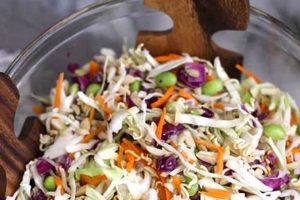
A vibrant and refreshing salad featuring shredded cabbage, often combined with carrots and other vegetables, distinguishes itself with a uniquely Asian-inspired dressing. This dressing typically incorporates ingredients such as soy sauce, sesame oil, rice vinegar, and ginger, creating a savory, tangy, and sometimes slightly sweet flavor profile. Variations may include additions like peanuts, cilantro, or other herbs, and some versions incorporate proteins like shredded chicken or tofu.
This style of salad offers a lighter alternative to mayonnaise-based coleslaws, presenting a flavorful and healthy option. The blend of crisp vegetables and umami-rich dressing provides a satisfying textural and flavor contrast. Its adaptability allows for customization to suit individual preferences and dietary needs, making it a versatile dish for various occasions, from casual meals to festive gatherings. Its increasing popularity reflects a growing interest in Asian-inspired cuisine and lighter, healthier eating habits.
This discussion will further explore the core components of this salad, highlighting variations in ingredients and preparation methods, and offering practical tips for achieving optimal results. Nutritional information and potential health benefits will also be examined.
Tips for Preparing an Excellent Cabbage Salad with Asian-Inspired Dressing
Achieving optimal flavor and texture requires attention to detail throughout the preparation process. The following tips offer guidance for creating a truly exceptional salad.
Tip 1: Cabbage Selection and Preparation: Opt for fresh, crisp cabbage, such as Napa or Savoy, for the best results. Thinly slice or shred the cabbage for optimal texture and to ensure the dressing coats evenly.
Tip 2: Dressing Balance: The balance of sweet, sour, salty, and umami flavors is crucial. Adjust the proportions of soy sauce, vinegar, and sweeteners like honey or sugar to achieve the desired profile.
Tip 3: Enhancing Flavor with Aromatics: Incorporating freshly grated ginger, minced garlic, and finely chopped scallions adds depth and complexity to the dressing.
Tip 4: Oil Selection: Sesame oil provides a distinctive nutty flavor. Toasted sesame oil offers a more intense flavor, while regular sesame oil is milder. A small amount of a neutral oil, like grapeseed or canola, can be combined with sesame oil for a balanced flavor.
Tip 5: Adding Crunch and Texture: Toasted sesame seeds, chopped peanuts, or crispy fried noodles provide textural contrast and enhance the overall sensory experience.
Tip 6: Marinating for Optimal Flavor: Allowing the salad to marinate for at least 30 minutes, or even longer in the refrigerator, allows the flavors to meld and the cabbage to soften slightly.
Tip 7: Garnishing and Serving: Fresh cilantro, chopped red pepper flakes, or a sprinkle of black sesame seeds can be used as garnishes for visual appeal and added flavor. Serve the salad chilled.
By following these tips, one can create a salad that balances freshness, flavor, and textural appeal, resulting in a truly satisfying culinary experience.
These insights provide a foundation for creating a personalized version of this versatile salad. Experimentation with different ingredients and flavor combinations can lead to unique and delicious results.
1. Fresh, Crisp Cabbage

Fresh, crisp cabbage forms the foundation of a successful Chinese coleslaw salad recipe. Its texture and flavor contribute significantly to the overall sensory experience, differentiating this salad from other variations. Selecting and preparing the cabbage correctly is crucial for achieving optimal results.
- Variety Selection
Different cabbage varieties offer varying textures and flavors. Napa cabbage, with its tender leaves and mild sweetness, is a popular choice. Other suitable options include Savoy cabbage, which has a slightly peppery flavor and crinkled leaves, and regular green cabbage, offering a more robust texture and flavor. The choice of cabbage influences the final taste and texture of the salad.
- Crispness and Freshness
The cabbage should be firm and free from blemishes or wilting. Crisp cabbage provides a satisfying texture that contrasts with the richness of the dressing. Limp or wilted cabbage will result in a less appealing salad. Proper storage, such as refrigeration in a sealed container, helps maintain freshness.
- Preparation Techniques
Thinly slicing or shredding the cabbage is essential for creating a pleasant texture and ensuring the dressing coats the leaves evenly. Cutting the cabbage too thickly can result in an unwieldy salad and uneven flavor distribution. Different cutting techniques, such as slicing or shredding, can also subtly influence the final presentation.
- Flavor Pairing
The mild flavor of cabbage provides a neutral backdrop for the bold, savory flavors of the Asian-inspired dressing. This allows the nuances of the dressing, such as the tanginess of rice vinegar and the nuttiness of sesame oil, to shine through. The cabbage’s subtle sweetness also complements the savory elements, creating a balanced flavor profile.
The careful selection and preparation of fresh, crisp cabbage contributes significantly to the success of a Chinese coleslaw salad recipe. By understanding the nuances of variety selection, maintaining crispness, employing proper cutting techniques, and considering flavor pairings, one can elevate this simple salad to a delightful culinary experience.
2. Flavorful Asian Dressing

The defining characteristic of a Chinese coleslaw salad recipe lies in its flavorful Asian-inspired dressing. This dressing elevates the simple combination of shredded cabbage and other vegetables, transforming it into a vibrant and complex culinary experience. The interplay of sweet, sour, salty, and umami flavors creates a unique taste profile that sets this salad apart from traditional mayonnaise-based coleslaws.
- Balancing Key Flavors
A successful Asian dressing achieves a harmonious balance of fundamental tastes. Soy sauce provides saltiness and umami, while rice vinegar contributes acidity. Sweetness is often introduced through sugar, honey, or mirin. The precise ratio of these ingredients can be adjusted to create variations ranging from tangy to subtly sweet. This balance is crucial for complementing the mild flavor of the cabbage and other vegetables.
- The Role of Aromatics
Aromatic ingredients contribute depth and complexity to the dressing. Freshly grated ginger adds a pungent warmth, while minced garlic provides a sharp, savory note. Scallions or other alliums offer a subtle oniony flavor. These aromatics enhance the overall sensory experience and contribute to the distinctive character of the salad.
- Enhancing with Sesame Oil
Sesame oil plays a vital role in imparting a characteristic nutty aroma and flavor to the dressing. Toasted sesame oil offers a more intense, roasted flavor, while regular sesame oil provides a milder option. The quantity of sesame oil used can significantly impact the final taste profile. It can be used alone or in combination with other oils, such as grapeseed or canola oil, for a balanced flavor.
- Customization and Variation
The versatility of Asian dressings allows for a wide range of customization. The addition of chili garlic sauce introduces heat, while incorporating ingredients like fish sauce or oyster sauce adds further umami depth. Freshly squeezed citrus juices, such as lime or lemon, can provide a brighter, more citrusy note. These variations allow for tailoring the dressing to individual preferences and complementing specific ingredients in the salad.
The flavorful Asian dressing is integral to the identity of the Chinese coleslaw salad recipe. The careful balance of key flavors, the strategic use of aromatics, the distinctive contribution of sesame oil, and the potential for customization create a dressing that elevates this simple salad to a truly remarkable dish. This nuanced approach to flavor distinguishes the Chinese coleslaw salad from other variations and contributes to its growing popularity.
3. Balanced Sweet and Savory

The interplay of sweet and savory flavors forms a cornerstone of Chinese culinary tradition, and the Chinese coleslaw salad exemplifies this principle. Achieving a harmonious balance between these contrasting tastes is crucial for creating a dressing that complements the inherent flavors of the vegetables and delivers a satisfying sensory experience. This balance prevents the salad from being overly sweet or excessively savory, allowing the nuanced flavors of the individual ingredients to shine through.
The sweet element in the dressing often comes from ingredients like sugar, honey, or mirin. These sweeteners provide a subtle sweetness that counterbalances the saltiness of the soy sauce and the tanginess of the rice vinegar. This balance is not merely about achieving a neutral flavor profile; rather, it’s about creating a dynamic interplay where each taste enhances the others. For example, a touch of sweetness can heighten the umami notes of the soy sauce and temper the sharpness of the vinegar. This dynamic interplay creates a more complex and satisfying flavor profile than either sweet or savory could achieve alone. A salad leaning too heavily on sweetness might become cloying, while an overly savory version could be harsh and unappealing.
The practical significance of understanding this balance lies in the ability to adjust the dressing to suit individual preferences and complement the specific ingredients in the salad. If the salad includes ingredients with inherent sweetness, such as shredded carrots or dried fruit, the dressing might require less added sugar. Conversely, if the salad features more savory elements, such as grilled chicken or tofu, a touch more sweetness in the dressing might be desirable. Mastering this balance allows for greater control over the final flavor profile, ensuring a consistently delicious and well-balanced salad. This understanding allows for adaptability and customization, key elements in creating a truly personalized culinary experience.
4. Optional Added Protein
While not a traditional component, the addition of protein transforms the Chinese coleslaw salad from a side dish into a more substantial meal. This adaptability contributes to the recipe’s versatility, catering to diverse dietary needs and preferences. The choice of protein significantly influences the overall flavor profile and nutritional value of the salad. Consideration of protein types, preparation methods, and their interplay with the other salad components is essential for a well-balanced and satisfying result.
Common protein choices include shredded cooked chicken, roasted or grilled tofu, thinly sliced beef, shrimp, or edamame. Each option offers a distinct flavor and textural contribution. For example, shredded chicken provides a mild, savory flavor that blends well with the dressing, while crispy tofu offers a contrasting texture and a slightly nutty taste. The preparation method also impacts the final flavor; grilled chicken imparts a smoky char, while steamed shrimp offers a delicate sweetness. Understanding these nuances allows for informed choices that align with individual preferences and dietary goals. One might pair grilled tofu with a spicier dressing or opt for shredded chicken with a milder, more savory dressing.
The inclusion of protein not only enhances the nutritional value but also contributes to greater satiety, making the salad a more complete and fulfilling meal. This is particularly relevant for those following higher-protein diets or seeking a lighter yet satisfying meal option. However, it’s crucial to ensure the chosen protein complements the existing flavors of the salad. An overly strong or heavily seasoned protein can overpower the delicate balance of the dressing and other ingredients. Therefore, careful consideration of protein choice and preparation is essential for a harmonious and flavorful outcome. Understanding this interplay allows for a more informed and personalized approach to creating a Chinese coleslaw salad tailored to individual needs and preferences.
5. Crunchy Textures

Textural contrast plays a significant role in the overall appeal of a Chinese coleslaw salad recipe. The interplay of crisp and crunchy elements elevates the sensory experience, offering a more dynamic and satisfying meal. A well-executed Chinese coleslaw salad balances the tender crispness of the cabbage with contrasting crunchy components, creating a multi-faceted textural profile.
- Nuts and Seeds
Toasted sesame seeds, peanuts, cashews, or slivered almonds contribute a satisfying crunch and nutty flavor. These additions enhance the complexity of the salad, providing a counterpoint to the softer texture of the cabbage. The choice of nuts or seeds can be tailored to individual preferences and dietary considerations. Toasted sesame seeds offer a subtle nutty flavor and delicate crunch, while peanuts provide a more robust flavor and firmer texture. These additions also introduce healthy fats and protein, further enhancing the nutritional value of the salad.
- Crispy Noodles
Crispy chow mein noodles or wonton strips introduce a light and airy crunch. These elements add a contrasting texture and visual appeal. The delicate crispness of these noodles complements the softer vegetables and adds a playful element to the salad’s texture. However, it’s important to add these elements just before serving to prevent them from becoming soggy and losing their desirable crunch.
- Vegetables
Incorporating vegetables like shredded carrots, julienned bell peppers, or chopped water chestnuts provides additional textural nuances. These additions not only contribute to the overall crunch but also introduce varying degrees of sweetness and subtle vegetal flavors, complementing the primary flavors of the salad. The crispness of these vegetables adds another layer of textural complexity, enhancing the overall sensory experience.
- Preparation Techniques
Specific preparation techniques can further enhance textural contrast. Lightly toasting nuts and seeds intensifies their flavor and crunch. Ensuring vegetables are properly chilled before adding them to the salad maintains their crispness. Properly draining the cabbage after washing prevents excess moisture, which can compromise the crunch of the added elements. Attention to these details contributes significantly to the overall textural success of the salad.
The strategic incorporation of crunchy textures elevates the Chinese coleslaw salad from a simple dish to a more complex and satisfying culinary experience. The careful consideration of various crunchy elements and their interplay with the other components creates a balanced and engaging textural profile. This attention to texture enhances the enjoyment of the salad and demonstrates a nuanced understanding of flavor and sensory perception.
6. Versatile Ingredients
The versatility of ingredients inherent in a Chinese coleslaw salad recipe contributes significantly to its adaptability and widespread appeal. This characteristic allows for customization based on individual preferences, dietary restrictions, and seasonal ingredient availability. The core componentscabbage and an Asian-inspired dressingprovide a foundation upon which numerous variations can be built. This inherent flexibility distinguishes the Chinese coleslaw salad from more rigid recipes, offering a broader range of culinary possibilities.
This adaptability manifests in several ways. Different cabbage varieties, such as Napa, Savoy, or even red cabbage, can be used to achieve varying textures and subtle flavor differences. The dressing, while typically based on soy sauce, vinegar, and sesame oil, can be customized with additional ingredients like ginger, garlic, chili flakes, or other aromatics. Sweetness levels can be adjusted based on preference, using sugar, honey, or other sweeteners. Beyond the core components, the inclusion of additional vegetables, proteins, nuts, and seeds further expands the potential for variation. Adding shredded carrots, bell peppers, edamame, or bean sprouts introduces textural and nutritional complexity. Incorporating cooked chicken, tofu, or shrimp transforms the salad into a more substantial meal. Toasted sesame seeds, peanuts, or crispy noodles contribute contrasting textures. These examples demonstrate the inherent flexibility of the recipe, allowing for endless variations tailored to specific needs and preferences.
The practical significance of this versatility lies in its ability to accommodate diverse dietary needs and preferences. Vegetarian and vegan adaptations are easily achieved by focusing on plant-based proteins and omitting animal products. Gluten-free versions can be created by using tamari or coconut aminos in place of soy sauce and ensuring other added ingredients are gluten-free. The adaptability also extends to seasonal variations. Utilizing readily available seasonal vegetables not only ensures optimal freshness and flavor but also aligns with sustainable eating practices. This adaptability contributes to the enduring popularity of the Chinese coleslaw salad, offering a framework for culinary creativity and personalized expression within a simple, yet flavorful dish. Ultimately, the versatility of ingredients within the recipe empowers individuals to create personalized versions that reflect their unique tastes and dietary requirements.
7. Simple Preparation
The relative simplicity of preparation contributes significantly to the appeal of the Chinese coleslaw salad recipe. Minimal culinary expertise or specialized equipment is required, making it an accessible option for a wide range of individuals, from novice cooks to experienced chefs. The straightforward nature of the recipe allows for quick assembly, making it suitable for weeknight meals or impromptu gatherings. This ease of preparation does not, however, compromise the flavor or complexity of the final dish. A well-executed Chinese coleslaw salad, despite its simple preparation, delivers a complex interplay of flavors and textures.
The recipe’s simplicity stems from several factors. The core componentsshredded cabbage and a readily prepared dressingrequire minimal processing. The dressing typically involves whisking together readily available pantry staples, such as soy sauce, vinegar, and sesame oil. Additional ingredients, like chopped vegetables, nuts, or proteins, typically require minimal cooking or preparation. The entire salad can often be assembled in under 30 minutes, making it a convenient and efficient meal option. For example, a basic version might involve combining shredded cabbage with a pre-made dressing and a sprinkle of toasted sesame seeds. More complex variations, incorporating additional vegetables or proteins, still require relatively minimal active preparation time. This efficiency is particularly appealing for individuals with busy schedules or limited kitchen resources.
The practical significance of this simple preparation extends beyond mere convenience. It democratizes access to flavorful and healthy meals, regardless of culinary skill level. It also encourages experimentation and customization. The straightforward nature of the recipe provides a foundation for culinary exploration, allowing individuals to readily adapt the recipe to their preferences and available ingredients. The ease of preparation also makes the Chinese coleslaw salad an ideal teaching tool for novice cooks, introducing fundamental culinary concepts such as flavor balancing and texture layering within a manageable framework. This accessibility and adaptability contribute to the enduring popularity of the Chinese coleslaw salad, solidifying its place as a versatile and convenient culinary staple.
Frequently Asked Questions
This section addresses common inquiries regarding the preparation and enjoyment of Chinese coleslaw salad.
Question 1: What type of cabbage is best suited for this salad?
Napa cabbage is generally preferred for its delicate texture and mild sweetness. Savoy and regular green cabbage offer viable alternatives, each contributing distinct textural and flavor nuances.
Question 2: Can the dressing be prepared in advance?
The dressing can be prepared several days in advance and stored in an airtight container in the refrigerator. This allows the flavors to meld and intensifies the overall taste profile.
Question 3: How long can the salad be stored?
For optimal quality, consume the salad within two to three days of preparation. Storage in an airtight container in the refrigerator helps maintain freshness and prevents the cabbage from becoming soggy.
Question 4: What are suitable protein additions?
Shredded cooked chicken, grilled tofu, or shrimp complement the salad well. The choice of protein should align with individual dietary preferences and desired flavor profiles.
Question 5: Can this salad be adapted for gluten-free diets?
Substituting tamari or coconut aminos for soy sauce effectively adapts the recipe for gluten-free diets. Ensuring all other added ingredients are gluten-free is crucial.
Question 6: How can one prevent the salad from becoming watery?
Thoroughly drying the shredded cabbage after washing and adding crunchy elements, such as nuts or crispy noodles, just before serving helps maintain desirable texture and prevents excess moisture.
Addressing these common questions provides further clarity regarding the preparation and enjoyment of Chinese coleslaw salad. Understanding these aspects allows for a more informed and successful culinary experience.
The following section will offer variations on the classic Chinese coleslaw salad recipe, exploring diverse flavor profiles and ingredient combinations.
Chinese Coleslaw Salad Recipe
Exploration of this culinary creation reveals a dish characterized by its fresh, crisp base, vibrant Asian-inspired dressing, and balanced sweet and savory notes. The potential for incorporating various proteins, adding crunchy textures, and utilizing diverse ingredients underscores its adaptability. Simplicity of preparation further enhances its appeal, making it an accessible and versatile culinary option.
This adaptable recipe offers a canvas for culinary creativity, inviting exploration of diverse flavor profiles and ingredient combinations. Continued experimentation promises further evolution and refinement of this already popular dish, solidifying its place as a staple in kitchens worldwide.