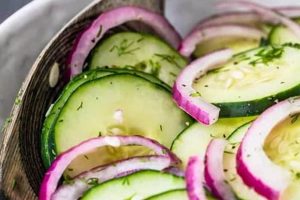
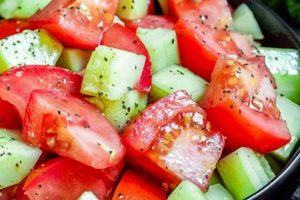
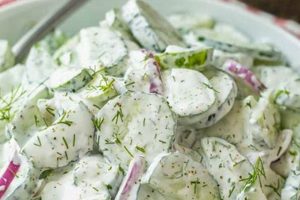
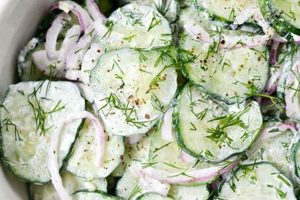
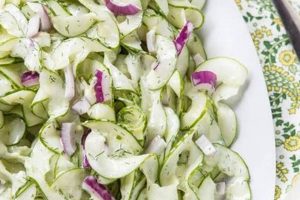
A refreshing and flavorful dish, typically composed of thinly sliced cucumbers, fresh dill, and a light dressing. Variations may include ingredients such as red onion, vinegar, sour cream, or yogurt, offering a spectrum of flavor profiles from tangy to creamy. This simple salad can be prepared quickly, making it an ideal side dish for various meals.
Cool and hydrating, this type of salad offers nutritional benefits from cucumbers, a good source of vitamins and antioxidants. Dill, with its distinct aroma and taste, contributes to potential digestive health benefits. Historically, both cucumbers and dill have held culinary significance across different cultures, with their combined use in salads reflecting a timeless appeal. Such salads provide a light and healthy complement to richer dishes, offering a palate cleanser and textural contrast.
Further exploration may include specific variations, nutritional information, preparation techniques, and complementary pairings. Considerations regarding ingredient sourcing and seasonal availability can also enhance appreciation for this culinary staple.
Tips for a Perfect Cucumber Dill Salad
Achieving optimal flavor and texture requires attention to detail. These tips offer guidance for creating a truly exceptional cucumber dill salad.
Tip 1: Salt the cucumbers: Salting sliced cucumbers draws out excess moisture, preventing a watery salad. After salting, gently pat the cucumbers dry with a paper towel before combining with other ingredients.
Tip 2: Use fresh dill: Dried dill lacks the bright, vibrant flavor of fresh dill. Finely chop the fresh dill just before adding it to the salad to maximize its aromatic impact.
Tip 3: Balance the dressing: The dressing should complement, not overpower, the cucumbers and dill. A simple vinaigrette of vinegar, oil, and a touch of sweetener often works best. Taste and adjust seasonings as needed.
Tip 4: Consider chilling: Chilling the salad for a short time before serving allows the flavors to meld and enhances the refreshing quality of the dish. Avoid over-chilling, as it can dull the flavors.
Tip 5: Choose the right cucumber: English cucumbers, with their thin skin and fewer seeds, are ideal for this salad. Alternatively, peel and seed standard cucumbers before slicing.
Tip 6: Explore variations: Red onion, thinly sliced, adds a pungent bite. A dollop of sour cream or Greek yogurt creates a creamy variation. Experiment with different ingredients to discover preferred flavor combinations.
Tip 7: Serve promptly: For optimal texture and flavor, serve the salad soon after preparation. Extended storage can lead to a watery and less appealing dish.
Attention to these details ensures a cucumber dill salad that is both flavorful and refreshing. The combination of crisp cucumbers, fragrant dill, and a balanced dressing creates a delightful culinary experience.
By understanding the nuances of preparation, one can elevate this simple salad to a truly remarkable dish.
1. Fresh Ingredients

Ingredient freshness is paramount in a cucumber dill salad. The salad’s delicate flavor profile relies heavily on the vibrant, crisp character of fresh cucumbers and the bright, herbaceous notes of fresh dill. Compromised ingredient quality directly translates to a diminished sensory experience. A wilted cucumber or dried dill results in a flat, less appealing salad lacking the intended refreshing and aromatic qualities. The crispness of the cucumber and the pungency of the dill are essential textural and flavor components that create the desired balance. Using subpar ingredients undermines this balance, resulting in a less satisfying dish. For instance, a cucumber past its prime contributes excess moisture, diluting the dressing and compromising the overall texture. Similarly, dried dill lacks the vibrant aroma and flavor of fresh dill, resulting in a muted, less complex taste.
Practical implications underscore the importance of fresh ingredients. Sourcing produce from local markets or ensuring proper storage techniques can significantly impact the final product. Selecting firm cucumbers with vibrant green skin and fragrant, verdant dill is crucial. Proper storage, such as refrigerating cucumbers in a crisper drawer and storing dill in a damp paper towel within a sealed container, preserves freshness and optimizes flavor. Furthermore, preparing the salad close to serving time helps maintain the desired crispness and vibrancy. Pre-made salads often suffer from diminished quality due to ingredient degradation over time.
Ultimately, prioritizing fresh, high-quality ingredients is fundamental to a successful cucumber dill salad. This commitment ensures the intended bright, refreshing, and aromatic characteristics are fully realized. Ignoring this principle compromises the delicate balance of flavors and textures, resulting in a less satisfying culinary experience. The investment in ingredient quality directly translates to a superior and more enjoyable dish.
2. Proper slicing technique

Proper slicing technique significantly impacts the final quality of a cucumber dill salad. Uniformly thin slices ensure even flavor distribution and contribute to a pleasing textural consistency. Thin slices allow the dressing to coat the cucumbers effectively, maximizing flavor penetration. Conversely, uneven or thick slices create an imbalance, with some pieces absorbing more dressing than others. This leads to an inconsistent flavor profile and a less enjoyable eating experience. Moreover, thin slices offer a delicate, almost translucent quality, enhancing the salad’s aesthetic appeal. Thick slices, on the other hand, can appear clunky and less refined, detracting from the overall presentation. Consider a salad with some pieces overly saturated with dressing while others remain bland, coupled with a mixture of thick, unwieldy chunks and paper-thin slivers. This lack of uniformity compromises both the sensory experience and visual appeal.
Several practical methods achieve optimal slicing. Using a sharp knife or mandoline ensures clean, even cuts, minimizing bruising and maximizing visual appeal. A dull knife can crush the delicate cucumber flesh, resulting in uneven slices and a less appealing texture. A mandoline provides consistent thickness, particularly beneficial for achieving very thin slices. For a rustic look, hand-slicing can be employed, but attention must be paid to maintaining consistent thickness. Regardless of the method chosen, attention to detail is crucial. For instance, cutting cucumbers at an oblique angle creates elegant oval slices, further enhancing the visual presentation. Conversely, unevenly sized and shaped pieces detract from the aesthetic appeal, even if the flavor profile remains balanced.
Therefore, proper slicing technique functions as a foundational element in a successful cucumber dill salad. It directly influences flavor distribution, textural consistency, and visual presentation. Mastery of this technique, whether through the use of specialized tools or honed knife skills, elevates the final product from a simple side dish to a carefully crafted culinary creation. This understanding empowers one to create a salad that is not only flavorful and refreshing but also visually appealing and texturally satisfying. Neglecting this crucial step can compromise the overall quality, underscoring the importance of precise and consistent slicing in achieving the desired outcome.
3. Balanced Dressing
Balanced dressing is crucial to a successful cucumber dill salad. The dressing should complement, not overwhelm, the delicate flavors of the cucumbers and dill. An overly acidic dressing can mask the subtle cucumber notes, while an excessively rich or creamy dressing can overshadow the dills herbaceous freshness. A harmonious balance allows each ingredient’s distinct character to shine through. For instance, a dressing heavily reliant on vinegar might create a sharp, acidic flavor profile that dominates the palate, obscuring the cucumber’s subtle sweetness and the dill’s refreshing aroma. Similarly, an overly creamy dressing, while potentially pleasant in isolation, can coat the palate and prevent the nuanced flavors of the cucumber and dill from being fully appreciated. The ideal dressing enhances, rather than masks, the inherent flavors of the primary ingredients.
Achieving this balance often involves careful consideration of acidity, sweetness, and richness. A classic vinaigrette, combining vinegar or lemon juice with oil, often provides a suitable foundation. A touch of sweetness, from a small amount of sugar or honey, can further enhance the overall flavor profile by balancing the acidity and creating a more rounded taste. Consider the addition of other complementary flavors, such as garlic or onion, which can introduce complexity without overwhelming the core ingredients. The quantity of each component should be carefully calibrated to achieve a harmonious blend. Over-reliance on any single element can disrupt the balance, negatively affecting the overall taste of the salad. Practical applications of this principle include taste-testing the dressing throughout the preparation process and adjusting the proportions of ingredients as needed. A well-balanced dressing elevates the cucumber dill salad, transforming it from a simple combination of ingredients into a cohesive and flavorful dish.
In summary, a balanced dressing acts as a unifying element in a cucumber dill salad. It harmonizes the individual components, allowing their distinct flavors to emerge while contributing to a cohesive and refreshing whole. This understanding of balance is essential for creating a cucumber dill salad that is not only flavorful but also showcases the inherent qualities of each ingredient. A well-executed dressing enhances the overall culinary experience, transforming a simple side dish into a truly satisfying culinary creation. The failure to achieve this balance, on the other hand, can result in a dish where the core flavors are masked or overpowered, diminishing the overall enjoyment and failing to realize the salads full potential.
4. Chilling Time
Chilling time plays a crucial role in the final quality of a cucumber dill salad. Proper chilling enhances the salad’s refreshing qualities while also allowing the flavors to meld and develop more fully. However, excessive chilling can have detrimental effects, impacting both texture and taste. Understanding the nuances of chilling time is essential for optimizing the sensory experience of this seemingly simple dish.
- Flavor Development
Chilling allows the flavors of the cucumbers, dill, and dressing to meld and harmonize. The cool temperature slows down enzymatic activity, preserving the fresh flavors and preventing the development of off-notes. This melding of flavors creates a more cohesive and complex taste profile. For instance, the subtle sweetness of the cucumbers can intertwine with the herbaceous notes of the dill and the tanginess of the dressing, creating a balanced and nuanced flavor that is greater than the sum of its parts. Insufficient chilling may result in a less integrated flavor profile, where the individual ingredients remain distinct rather than harmonizing into a cohesive whole.
- Texture Enhancement
Chilling firms the cucumbers, enhancing their crispness and providing a more satisfying textural contrast against the softer dill. This crispness is a key element of the salad’s refreshing quality. Over-chilling, however, can have the opposite effect, causing the cucumbers to become mushy and lose their desirable texture. The ideal chilling time strikes a balance between enhancing crispness and avoiding undesirable softening. Consider the difference between a chilled cucumber’s firm, satisfying crunch and a room-temperature cucumber’s slightly softer texture. Over-chilling can result in a watery, limp cucumber, significantly detracting from the overall enjoyment.
- Temperature and Palate Perception
A chilled salad provides a more refreshing sensory experience, particularly in warmer weather. The cool temperature enhances the perception of crispness and provides a welcome contrast to richer or heavier dishes. Serving the salad at room temperature, particularly during hot weather, can diminish its refreshing qualities and make it seem less appealing. A chilled salad offers a welcome respite on a hot day, providing a cooling and invigorating sensory experience. This effect is diminished when the salad is served at room temperature or, worse, warm.
- Optimal Chilling Duration
The ideal chilling time typically ranges from 30 minutes to an hour. This duration allows for sufficient flavor melding and texture enhancement without the risk of over-chilling. The specific chilling time can be adjusted based on personal preference and ambient temperature. Over-chilling, which can occur with prolonged refrigeration, can negatively impact both texture and flavor. For instance, leaving the salad in the refrigerator overnight can lead to a noticeable decline in quality, with the cucumbers becoming watery and the dill losing its vibrancy.
Therefore, chilling time is a critical factor influencing the overall quality of a cucumber dill salad. Understanding the delicate balance between flavor development, texture enhancement, temperature, and chilling duration allows for optimization of this refreshing and flavorful dish. Mastering this aspect of preparation elevates the cucumber dill salad from a simple side dish to a carefully crafted culinary experience. Neglecting the importance of chilling time, however, can result in a less satisfying outcome, diminishing the salad’s intended refreshing qualities and compromising its full potential.
5. Suitable Cucumber Variety

Cucumber selection significantly influences the texture, flavor, and overall success of a cucumber dill salad. Choosing the right variety ensures optimal crispness, minimizes water content, and complements the delicate flavors of dill and dressing. Different cucumber varieties possess unique characteristics that affect their suitability for this specific application.
- English Cucumbers
English cucumbers, also known as hothouse cucumbers, are a popular choice for cucumber dill salad. Their thin skin eliminates the need for peeling, and their lower seed count contributes to a more refined texture. The mild flavor and high water content offer a refreshing base that readily absorbs the flavors of the dill and dressing. This variety’s delicate nature makes it ideal for salads where a crisp, clean flavor is desired. For example, in a salad with a light vinaigrette, the English cucumber’s subtle flavor allows the dill and dressing to shine without being overpowered.
- Persian Cucumbers
Persian cucumbers share similar characteristics with English cucumbers, making them another suitable choice. They are thin-skinned, relatively seedless, and possess a mild, refreshing flavor. Their smaller size makes them convenient for individual servings or smaller salads. Like English cucumbers, their high water content ensures a hydrating and refreshing salad. In a salad with a yogurt-based dressing, for example, the Persian cucumber’s mild flavor complements the creamy dressing without clashing.
- Garden Cucumbers
Garden cucumbers, the most common variety, can be used, but require additional preparation. Their thicker skin often necessitates peeling, and the higher seed content requires removal for optimal texture. Their stronger flavor, while refreshing, can sometimes overpower the delicate dill. Therefore, if using garden cucumbers, careful preparation is essential to prevent the salad from becoming overly watery or dominated by a strong cucumber taste. In a salad with strong flavors, such as a spicy dressing or pungent additions like red onion, a garden cucumber might hold its own, but its thicker skin and seeds require extra attention.
- Pickling Cucumbers
Pickling cucumbers, due to their small size and firm texture, are generally not recommended for cucumber dill salad. Their intended use for pickling imparts a flavor profile less suited for fresh salads. While their firmness might seem appealing, their flavor profile is typically too assertive for a delicate cucumber dill salad. The flavor, intended for pickling brines, can clash with the fresh dill and other salad components, creating an unbalanced and potentially unpleasant taste.
Selecting the appropriate cucumber variety is fundamental to a successful cucumber dill salad. English and Persian cucumbers offer convenience and a delicate flavor profile, while garden cucumbers require more preparation and careful balancing of flavors. Avoiding pickling cucumbers ensures the salad retains its fresh, refreshing character. Careful consideration of these varietal characteristics allows for a more informed choice, optimizing the final dish’s flavor, texture, and overall appeal.
6. Optimal dill quantity
Dill quantity significantly impacts the flavor profile of a cucumber dill salad. The delicate, slightly tangy, and anise-flavored herb plays a crucial role in balancing the cucumber’s subtle sweetness. However, the optimal quantity of dill depends on individual preferences and the overall balance of flavors desired. Too little dill can result in a bland salad lacking the herb’s characteristic brightness, while too much can overpower the other ingredients, creating a dish that tastes primarily of dill. The goal is to achieve a harmonious blend where the dill enhances the cucumber’s flavor without dominating it. Consider a salad with a minimal amount of dill; the cucumber’s flavor might be prominent, but the overall profile could lack complexity and depth. Conversely, an excessive amount of dill can create an overpowering aroma and taste, masking the subtle cucumber notes and potentially creating an unpleasantly pungent experience.
Practical application of this principle involves considering the other ingredients and the desired intensity of dill flavor. A salad with a simple vinaigrette might benefit from a more generous amount of dill to provide a pronounced herbal counterpoint. However, a salad with additional ingredients, such as red onion or feta cheese, might require a more restrained dill presence to prevent flavor competition. Furthermore, individual sensitivities to dill’s flavor should be considered. Some individuals appreciate a strong dill presence, while others prefer a more subtle hint. Consider a scenario where a recipe calls for a specific quantity of dill. Adjusting this quantity, even slightly, can significantly alter the final taste. Reducing the amount might create a milder, more cucumber-forward flavor, while increasing it can amplify the dill’s presence, potentially appealing to those who enjoy a more pronounced herbal note. Therefore, experimentation and taste-testing are essential to achieving the desired dill presence in a given recipe.
In conclusion, achieving the optimal dill quantity in a cucumber dill salad involves a nuanced understanding of flavor balance and individual preferences. While specific recipes provide guidance, adjusting the dill quantity allows for customization and optimization of the flavor profile. The goal is to harness dill’s unique flavor profile to enhance the cucumber’s natural sweetness and create a refreshing, well-balanced salad. This understanding empowers one to create a dish tailored to specific tastes, ensuring a satisfying and enjoyable culinary experience. Ignoring the importance of dill quantity can lead to an unbalanced salad, either lacking the herb’s characteristic brightness or overwhelmed by its pungent aroma and taste.
7. Complementary Additions

Complementary additions enhance the complexity and textural diversity of a cucumber dill salad. While the foundational elementscucumbers and dillprovide a refreshing base, judicious additions elevate the salad from simple to sophisticated. These additions contribute nuanced flavors, textural contrasts, and visual appeal, broadening the culinary experience. Consider the addition of thinly sliced red onion. Its sharp, pungent flavor provides a counterpoint to the cucumber’s mild sweetness, adding depth and complexity. Similarly, crumbled feta cheese introduces a salty, creamy element, contrasting with the cucumber’s crispness and the dill’s herbaceous notes. These additions, while optional, significantly impact the overall sensory experience.
Several factors influence the choice of complementary additions. The desired flavor profile plays a central role. For a brighter, more acidic salad, ingredients like chopped fresh mint or a squeeze of lemon juice can be incorporated. For a richer, creamier profile, a dollop of Greek yogurt or sour cream can be added. Textural considerations are also important. Toasted nuts or seeds provide a satisfying crunch, contrasting with the cucumber’s softness. Visual appeal also plays a role. Brightly colored ingredients, like cherry tomatoes or bell peppers, add vibrancy and visual interest. For example, a sprinkle of paprika adds a warm, smoky note and a vibrant red hue, while a scattering of toasted sunflower seeds contributes both nutty flavor and textural contrast.
Understanding the interplay between complementary additions and the core ingredients is crucial. The additions should enhance, not overpower, the cucumbers and dill. A balanced approach ensures that each element contributes to the overall harmony of flavors and textures. Practical applications include starting with small quantities of complementary additions and tasting the salad before adding more. This allows for adjustments and prevents any single ingredient from dominating the flavor profile. Ultimately, thoughtful consideration of complementary additions transforms a basic cucumber dill salad into a multifaceted culinary creation, demonstrating an understanding of flavor balance, textural interplay, and visual presentation.
Frequently Asked Questions
This section addresses common inquiries regarding cucumber dill salad preparation and variations.
Question 1: Can dried dill be substituted for fresh dill?
While dried dill can be used in a pinch, fresh dill is strongly recommended for optimal flavor and aroma. Dried dill tends to have a muted flavor profile compared to the bright, herbaceous notes of fresh dill.
Question 2: How can excess moisture in the salad be prevented?
Salting the sliced cucumbers and allowing them to sit for about 15 minutes before incorporating them into the salad draws out excess moisture. Gently patting the cucumbers dry with a paper towel further reduces moisture content.
Question 3: What type of vinegar is best suited for the dressing?
White wine vinegar, apple cider vinegar, or rice vinegar are commonly used. The choice depends on personal preference and the desired level of acidity. Experimentation with different vinegars can yield interesting flavor variations.
Question 4: How long can cucumber dill salad be stored?
For optimal quality, cucumber dill salad is best consumed within a few hours of preparation. Storage beyond this timeframe can lead to a watery consistency and diminished flavor.
Question 5: Can other herbs be added to the salad?
Fresh mint, parsley, or chives can complement the dill and add complexity to the flavor profile. However, additions should be judicious to avoid overwhelming the delicate cucumber and dill flavors.
Question 6: What are some suitable pairings for cucumber dill salad?
Cucumber dill salad complements grilled meats, fish, and poultry. It also serves as a refreshing counterpoint to heavier, richer dishes.
Understanding these frequently asked questions provides a foundation for successful cucumber dill salad preparation and enjoyment. Attention to detail and ingredient selection ensure a flavorful and refreshing culinary experience.
For further exploration, consider specific recipe variations and detailed nutritional information.
Cucumber Dill Salad Recipe
Exploration of cucumber dill salad recipes reveals a dish reliant on fresh, high-quality ingredients and precise techniques. From cucumber selection and proper slicing to dill quantity and dressing balance, each element contributes to the final product. Chilling time, complementary additions, and an understanding of flavor interactions further refine the culinary outcome. Addressing common inquiries regarding ingredient substitution, moisture control, vinegar selection, storage, herb pairings, and complementary dishes provides a comprehensive understanding of this seemingly simple yet nuanced salad.
Cucumber dill salad, in its simplicity, offers a canvas for culinary creativity. Mastery of technique and thoughtful ingredient selection elevate this dish beyond a mere side item to a refreshing and flavorful culinary experience. Continued exploration of variations and flavor combinations promises further enjoyment and appreciation of this versatile culinary staple.