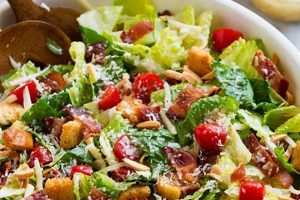
A Lyonnaise salad is a classic French bistro dish featuring frise, or curly endive, as its base. Bacon or lardons, a poached egg, and croutons provide richness and texture, while a warm vinaigrette, often incorporating Dijon mustard and vinegar, binds the elements together. Variations may include tomatoes, shallots, or other vegetables, but the core components remain consistent across most interpretations.
This combination of bitter greens, rich pork fat, and tangy dressing creates a balanced and satisfying meal. Its popularity stems from its accessible ingredients and simple yet elegant preparation. Historically, the salad originated in the culinary landscape of Lyon, France, hence the name “Lyonnaise.” Its enduring presence on menus worldwide speaks to its timeless appeal and adaptability.
Further exploration will delve into specific ingredient selections, variations on the classic preparation, techniques for achieving the perfect poached egg and croutons, and tips for balancing the flavors to create an authentic Lyonnaise salad experience.
Tips for a Perfect Lyonnaise Salad
Achieving a truly exceptional Lyonnaise salad relies on attention to detail and an understanding of the interplay between its core components. The following tips offer guidance for elevating this classic dish.
Tip 1: Crisp Frisee is Key: Ensure the frisee is thoroughly washed and dried to maintain its crisp texture. Residual moisture will dilute the dressing and result in a soggy salad. A salad spinner is highly effective for drying delicate greens.
Tip 2: Rendering Bacon Properly: Slowly render the bacon or lardons to achieve optimal crispness. Avoid overcrowding the pan, which can lead to steaming rather than frying. Reserve the rendered fat for the vinaigrette.
Tip 3: Poaching Eggs with Precision: Use fresh, high-quality eggs for poaching. A gentle simmer and a splash of vinegar in the water will help the egg whites coagulate quickly and maintain a neat shape. Aim for a runny yolk that will enrich the salad.
Tip 4: Crouton Consistency: Day-old bread is ideal for croutons, as it absorbs the rendered bacon fat more readily. Cut the bread into uniform sizes to ensure even toasting. Achieve a golden-brown color and a crisp texture for optimal flavor and contrast.
Tip 5: Balancing the Vinaigrette: The vinaigrette should be tangy and well-balanced. Whisk the Dijon mustard, vinegar, and reserved bacon fat together thoroughly to create an emulsion. Season with salt and pepper to taste.
Tip 6: Assembling the Salad Strategically: Toss the frisee with the warm vinaigrette just before serving. Top with the warm bacon or lardons, croutons, and the poached egg. Serve immediately to prevent the egg from overcooking and the croutons from becoming soggy.
Tip 7: Ingredient Quality Matters: Opt for high-quality ingredients, including fresh, crisp frisee, thick-cut bacon, and farm-fresh eggs. The quality of the ingredients directly impacts the final flavor and overall experience.
By following these guidelines, one can create a Lyonnaise salad that showcases the harmonious balance of flavors and textures that define this beloved bistro classic. This sets the stage for a truly satisfying culinary experience.
The subsequent conclusion will summarize the essential elements of crafting a perfect Lyonnaise salad and offer final recommendations for enjoying this timeless dish.
1. Fresh, Crisp Frisee

Fresh, crisp frisee forms the foundation of a successful Lyonnaise salad. Its slightly bitter flavor profile and delicate, curly texture offer a crucial counterpoint to the richness of the bacon or lardons and the creamy poached egg. The structural integrity of crisp frisee also allows it to hold the warm vinaigrette without becoming soggy, a critical factor in maintaining the desired textural contrast within the salad. Imagine, for example, substituting romaine lettuce. Its robust leaves and less nuanced flavor would overwhelm the other components, fundamentally altering the balance of the dish. Similarly, wilted frisee would result in a limp, unappetizing salad, lacking the necessary textural interplay.
The importance of fresh, crisp frisee extends beyond mere flavor and texture. Its delicate nature requires careful handling throughout the preparation process. Thorough washing and meticulous drying are essential to prevent the leaves from wilting. A salad spinner proves invaluable for removing excess moisture, which could otherwise dilute the vinaigrette and compromise the overall texture of the salad. Furthermore, the frisee should be dressed with the vinaigrette immediately before serving to maintain its crispness and prevent it from wilting under the heat of the other ingredients.
Ultimately, the success of a Lyonnaise salad hinges on the quality and proper handling of the frisee. Its unique characteristics contribute significantly to the overall balance and appeal of this classic dish. Overlooking its importance compromises the intended flavor profile and textural complexity, highlighting the essential role fresh, crisp frisee plays in a true Lyonnaise salad experience.
2. Thick-Cut Bacon/Lardons
Thick-cut bacon or lardons constitute an essential component of a classic Lyonnaise salad, contributing significantly to its characteristic flavor profile and textural complexity. Their rendering process not only provides a savory, smoky element but also yields valuable fat for the vinaigrette, further enhancing the dish’s overall richness.
- Flavor Contribution
The rendered fat imbues the salad with a savory richness that complements the slight bitterness of the frisee. The smoky notes, particularly pronounced when using smoked bacon, add depth and complexity. The crisp texture of the bacon or lardons provides a satisfying contrast to the tender poached egg and the crisp greens.
- Vinaigrette Enrichment
The rendered bacon fat serves as the base for the vinaigrette, replacing traditional oils and adding a unique depth of flavor. This fat carries the smoky, savory notes from the bacon, infusing the dressing with a richness that harmonizes with the other salad components. Emulsifying the rendered fat with vinegar and Dijon mustard creates a luxurious, flavorful vinaigrette that coats the frisee evenly.
- Textural Contrast
The crisp texture of properly rendered bacon or lardons offers a delightful contrast to the other elements in the salad. This textural interplay enhances the overall sensory experience, preventing the salad from feeling monotonous. Consider the difference between crispy lardons and soft, flabby bacon; the former adds a desirable crunch, while the latter detracts from the overall enjoyment.
- Sourcing and Preparation
While thick-cut bacon offers convenience, traditional lardons, diced from a slab of pork belly, provide a more authentic experience. Careful rendering over medium heat ensures even cooking and optimal crispness. Overcrowding the pan can lead to steaming rather than frying, resulting in less desirable, chewy bacon. The rendered fat should be reserved and strained before incorporating it into the vinaigrette.
The careful selection and preparation of thick-cut bacon or lardons significantly influence the final outcome of a Lyonnaise salad. Their contribution extends beyond mere flavor, encompassing texture, vinaigrette enrichment, and overall balance. Understanding the nuanced role of this ingredient allows for a more informed approach to crafting a truly exceptional Lyonnaise salad, showcasing the harmonious interplay of its components.
3. Perfectly poached egg

The perfectly poached egg holds a pivotal position within the composition of a salad Lyonnaise, contributing not only richness and visual appeal but also a textural dimension that elevates the dish beyond a simple combination of ingredients. Its execution requires precision and a keen understanding of the delicate balance between heat and timing. A runny yolk, achieved through careful temperature control during poaching, is essential; it serves as a luscious sauce, enriching the salad with its golden, velvety texture. A firm, overcooked yolk, conversely, detracts from the intended experience, resulting in a dry, crumbly texture that disrupts the harmonious interplay of the other components. Consider the contrast between a vibrant, flowing yolk enriching the vinaigrette and a chalky, solidified yolk offering little more than a bland addition. This distinction underscores the profound impact of proper poaching technique.
The practical significance of a perfectly poached egg extends beyond its immediate sensory contribution. The visual appeal of a pristine white encasing a vibrant, runny yolk enhances the overall presentation of the salad, adding an element of elegance to this otherwise rustic dish. Furthermore, the act of piercing the yolk and allowing its contents to flow over the other ingredients creates an engaging, interactive dining experience. The yolk, mingling with the warm vinaigrette, coats the frisee and binds the flavors of the bacon or lardons and croutons, creating a unified, harmonious flavor profile. This dynamic interaction elevates the salad Lyonnaise from a mere assembly of ingredients to a cohesive culinary experience.
Mastery of the poached egg, therefore, represents a crucial step in achieving an authentic and satisfying salad Lyonnaise. Challenges in achieving the perfect poach, such as maintaining a consistent water temperature and achieving a cohesive egg white, can be overcome through practice and attention to detail. The resulting reward, a visually stunning and texturally complex salad, justifies the effort required. This single element, when executed correctly, elevates the entire dish, solidifying its status as a timeless classic within the French culinary repertoire.
4. Crunchy Croutons

Crunchy croutons provide a necessary textural counterpoint within the salad Lyonnaise, their contrasting crispness playing a crucial role against the soft poached egg, the tender frisee, and the rich bacon or lardons. This textural interplay elevates the salad beyond a simple combination of ingredients, transforming it into a multi-sensory experience. The croutons’ structural integrity is paramount; they must maintain their crunch even when exposed to the warm vinaigrette and the runny egg yolk. Soggy croutons detract from the intended textural contrast, diminishing the overall enjoyment of the dish. Consider, for instance, the difference between biting into a crisp crouton that shatters delicately and encountering a soft, yielding piece of bread. The former contributes a satisfying crunch, enhancing the other textures present, while the latter contributes a displeasing mushiness.
Achieving this desired crunch often involves utilizing day-old bread, which possesses a drier texture that absorbs the rendered bacon fat more readily during the toasting process. This absorption not only contributes to flavor but also aids in achieving a desirable golden-brown color and crisp exterior. Furthermore, uniform sizing ensures even toasting and prevents some croutons from burning while others remain undercooked. This uniformity enhances both the visual appeal and the textural consistency of the salad. Imagine, for example, a mix of perfectly toasted croutons interspersed with burnt, bitter pieces; this inconsistency detracts from the overall quality and enjoyment. The practical application of these principles leads to a more satisfying culinary experience, highlighting the significant impact of seemingly minor details.
The contribution of crunchy croutons to the salad Lyonnaise extends beyond mere texture. They also serve as a vehicle for flavor, absorbing the rendered bacon fat and imparting a savory richness to the salad. Furthermore, their presence adds visual appeal, providing golden-brown accents against the backdrop of green frisee and white poached egg. Mastering the art of crouton preparation, therefore, represents a critical step in achieving an authentic and satisfying salad Lyonnaise. This seemingly simple element plays a complex role in shaping the overall sensory experience, highlighting the interconnectedness of ingredients and techniques in classic French cuisine.
5. Tangy Dijon Vinaigrette

The tangy Dijon vinaigrette serves as the unifying element in a salad Lyonnaise recipe, binding the individual components into a cohesive whole. Its carefully balanced flavor profile, characterized by a bright acidity and subtle pungency, complements the other ingredients without overpowering their individual characteristics. The vinaigrette’s role extends beyond simply dressing the greens; it actively contributes to the overall sensory experience, balancing the richness of the bacon or lardons, the creaminess of the poached egg, and the slight bitterness of the frisee.
- Acidity as a Balancing Agent
The vinaigrette’s acidity, derived primarily from vinegar, plays a crucial role in cutting through the richness of the bacon or lardons and the poached egg. This prevents the salad from feeling overly heavy or greasy. The specific type of vinegar used, such as red wine vinegar or sherry vinegar, can subtly influence the overall flavor profile, offering nuanced variations within the classic framework. Consider the contrast between a vinaigrette made with a sharp, acidic vinegar and one with a milder, sweeter vinegar; the former provides a more pronounced contrast to the rich elements, while the latter offers a more subdued counterpoint.
- Dijon Mustard’s Pungency
Dijon mustard contributes a subtle pungency and depth of flavor to the vinaigrette. Its creamy texture also aids in emulsifying the vinaigrette, helping it cling to the frisee and distribute its flavor evenly. The specific type of Dijon mustard used can further nuance the flavor profile; for example, a coarse-grained mustard will provide a more textured experience than a smooth Dijon. The interplay between the mustard and the vinegar creates a complex flavor dynamic that elevates the salad beyond a simple sum of its parts.
- Emulsification and Texture
A properly emulsified vinaigrette is essential for ensuring that the dressing coats the frisee evenly and does not separate. The emulsification process, facilitated by whisking the vinegar, Dijon mustard, and rendered bacon fat together, creates a stable mixture that clings to the leaves, delivering a consistent flavor in every bite. A broken vinaigrette, on the other hand, results in an uneven distribution of flavor and a less appealing, oily texture.
- Temperature Considerations
Serving the vinaigrette warm, rather than cold, enhances its ability to meld the flavors of the salad together. The warmth gently wilts the frisee, allowing it to absorb the dressing more readily. It also amplifies the aroma of the bacon fat and the other components, contributing to a more immersive sensory experience. The temperature of the vinaigrette, therefore, represents a critical factor in the final execution of the salad.
The tangy Dijon vinaigrette, therefore, functions as much more than a simple dressing in a salad Lyonnaise. Its carefully calibrated balance of acidity, pungency, and texture plays a crucial role in unifying the disparate elements of the salad, transforming them into a harmonious whole. Each element within the vinaigrette contributes to this synergy, showcasing the complexity and sophistication of this classic French dish.
6. Proper Ingredient Ratios

Proper ingredient ratios are essential for achieving a balanced and harmonious salad Lyonnaise. The success of this classic dish hinges on the careful interplay of its components: frisee, bacon or lardons, croutons, poached egg, and vinaigrette. An imbalance in any of these elements can disrupt the intended flavor profile and textural complexity. Understanding the appropriate proportions allows for a consistent and satisfying culinary experience.
- Frisee to Other Ingredients
The frisee provides the base upon which the other ingredients rest. Too little, and the salad becomes overly rich and heavy; too much, and the other flavors become diluted. The proper ratio ensures that the frisee provides a canvas for the other components while still contributing its characteristic slightly bitter flavor and delicate texture. Consider a salad with a mound of frisee and a few scattered lardons; the balance would be clearly off, highlighting the importance of proportion.
- Bacon/Lardons to Frisee
The bacon or lardons provide a crucial element of richness and smokiness. An excess can overwhelm the other flavors, while too little leaves the salad wanting for depth. The ideal ratio ensures that the bacon contributes its savory character without overpowering the delicate frisee. Imagine a salad dominated by the taste of bacon; the nuanced flavors of the other ingredients would be lost.
- Croutons to Overall Salad
Croutons contribute textural contrast and absorb the flavorful bacon fat. Too many croutons lead to a dry, overly crunchy salad, while too few diminish their textural impact. The correct proportion ensures that the croutons provide a pleasant crunch without overwhelming the other components or absorbing too much of the vinaigrette. A salad with an excessive amount of croutons, for instance, would lack the necessary balance of textures.
- Vinaigrette to Frisee
The vinaigrette provides essential acidity and binds the salad together. Too much vinaigrette results in a soggy salad, while too little leaves the frisee undressed and the flavors disconnected. The ideal ratio ensures that the frisee is adequately coated without becoming saturated, allowing the other ingredients to shine. Consider a salad swimming in vinaigrette; the delicate frisee would wilt, and the other flavors would be masked.
Achieving the proper ingredient ratios in a salad Lyonnaise is akin to composing a musical piece. Each ingredient plays a distinct role, contributing to the overall harmony of the dish. A skilled chef understands the importance of balance, ensuring that no single element dominates the others. This meticulous attention to detail elevates the salad Lyonnaise from a simple combination of ingredients to a carefully orchestrated culinary experience, where each component contributes to a unified and satisfying whole.
7. Timely Assembly
Timely assembly is paramount in executing a successful salad Lyonnaise. The delicate nature of the components, particularly the frisee and the poached egg, necessitates a precise and orchestrated approach to combining the elements. Delaying the assembly can lead to undesirable consequences, compromising the intended textural and flavor profile of the dish. For example, allowing the dressed frisee to sit for too long before adding the warm elements will result in wilted greens and a diluted vinaigrette. Similarly, placing the poached egg on the salad too far in advance will cause it to overcook from the residual heat of the other ingredients, resulting in a firm, undesirable yolk. These seemingly minor timing issues can significantly detract from the overall dining experience.
The practical significance of timely assembly lies in preserving the intended characteristics of each ingredient. The frisee, when dressed immediately before serving, maintains its crisp texture and delicate flavor. The poached egg, when added at the last moment, retains its runny yolk and contributes its rich, velvety texture to the salad. The warm bacon or lardons and croutons, placed atop the freshly dressed greens, maintain their optimal temperature and contribute their contrasting textures. This orchestrated assembly ensures that each element is experienced at its peak, showcasing the harmonious interplay of flavors and textures characteristic of a well-executed salad Lyonnaise. Consider the contrast between a salad assembled just before serving and one assembled an hour prior; the former will exhibit a vibrant freshness and textural complexity, while the latter will likely be wilted, soggy, and less appealing.
Mastering the timing of assembly, therefore, represents a crucial step in achieving a truly satisfying salad Lyonnaise. This understanding allows one to appreciate the nuances of the dish and highlights the importance of precise execution in classic French cuisine. While the individual components contribute significantly to the overall experience, the timely assembly acts as the conductor, orchestrating the final presentation and ensuring that each element performs its intended role in creating a harmonious and balanced culinary masterpiece. This emphasis on timing underscores the fundamental principle that cooking is not merely a combination of ingredients but a carefully orchestrated process that demands precision and attention to detail.
Frequently Asked Questions about Salad Lyonnaise
The following addresses common inquiries regarding the preparation and enjoyment of Salad Lyonnaise.
Question 1: Can other greens be substituted for frisee?
While other greens can be used, frisee offers a unique slightly bitter flavor and delicate texture crucial to the salad’s balance. Substitutions may alter the intended flavor profile and textural complexity.
Question 2: Is it essential to use rendered bacon fat in the vinaigrette?
Rendered bacon fat contributes significantly to the richness and flavor of the vinaigrette. While other oils can be substituted, they may not replicate the authentic Lyonnaise experience. Olive oil, for example, offers a different flavor profile.
Question 3: What techniques can ensure a perfectly poached egg?
Using fresh eggs, a gentle simmer, and a splash of vinegar in the water aids in achieving a cohesive egg white and a runny yolk. Creating a swirl in the water before adding the egg can also help.
Question 4: Can croutons be made in advance?
While croutons can be made ahead, optimal texture is achieved by toasting them just before serving. Storing them in an airtight container can help maintain some crispness.
Question 5: What type of vinegar is best suited for the vinaigrette?
Red wine vinegar or sherry vinegar are commonly used, offering a balanced acidity. Experimentation with other vinegars, like champagne vinegar, can offer subtle flavor variations.
Question 6: Can the salad be assembled in advance?
For optimal flavor and texture, the salad should be assembled immediately before serving. Premature assembly can lead to wilted frisee, a soggy poached egg, and less crisp croutons.
Careful attention to these details ensures the successful execution of a classic Salad Lyonnaise, highlighting the importance of both ingredient selection and proper technique.
The following section will provide a complete recipe for preparing Salad Lyonnaise, incorporating the insights and recommendations discussed throughout this exploration.
Salad Lyonnaise Recipe
Exploration of the salad Lyonnaise recipe reveals a deceptively simple dish demanding precision and an understanding of balanced flavors and textures. Fresh, crisp frisee provides the foundation, complemented by the rich, smoky notes of thick-cut bacon or lardons. Crunchy croutons offer textural contrast, while a perfectly poached egg contributes a luxurious creaminess. The tangy Dijon vinaigrette, emulsified with rendered bacon fat, binds these elements, its acidity cutting through the richness and unifying the flavors. Proper ingredient ratios and timely assembly are crucial for achieving the intended balance and preventing a soggy, unbalanced salad. Each component plays a distinct yet interconnected role, highlighting the importance of both ingredient quality and culinary technique.
Mastery of the salad Lyonnaise recipe represents an attainable culinary achievement, offering a rewarding experience for both the cook and the diner. This classic dish exemplifies the elegance of French cuisine, demonstrating that simplicity, when executed with precision and care, can yield extraordinary results. Further exploration and experimentation with variations, while respecting the core principles outlined, can deepen one’s appreciation for this timeless culinary creation.