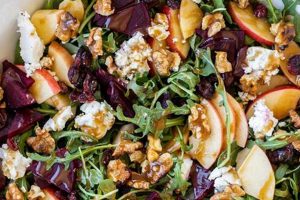
A dish combining the leafy green vegetable, kale, with the grain-like seed, quinoa, typically includes additional ingredients like vegetables, fruits, nuts, and a dressing. Variations can range from simple combinations with lemon vinaigrette and dried cranberries to more complex versions incorporating roasted vegetables, toasted nuts, and flavorful cheeses.
This type of dish offers a nutritionally dense meal option, providing essential vitamins, minerals, fiber, and protein. Quinoa contributes complete protein, all nine essential amino acids, while kale offers vitamins A, K, and C, alongside antioxidants. Such a combination promotes health benefits ranging from improved digestion and heart health to boosted immunity and sustained energy levels. Its adaptability makes it suitable for diverse dietary preferences, including vegan, vegetarian, and gluten-free diets.
The following sections will explore preparation methods, ingredient variations, nutritional information, and tips for creating a delicious and balanced meal incorporating these two key components.
Tips for Preparing a Kale and Quinoa Salad
Optimizing ingredient preparation and combining flavors enhances the overall culinary experience. The following tips offer guidance for creating a flavorful and satisfying meal.
Tip 1: Massage the Kale: Massaging kale leaves with olive oil and a bit of lemon juice or vinegar tenderizes the leaves, reducing their bitterness and making them more palatable.
Tip 2: Rinse the Quinoa: Rinsing quinoa before cooking removes its natural coating of saponins, which can contribute a bitter or soapy taste.
Tip 3: Toast the Quinoa: Lightly toasting quinoa in a dry pan before cooking enhances its nutty flavor and adds a pleasant crunch to the salad.
Tip 4: Balance Flavors and Textures: Consider incorporating a variety of ingredients to achieve a balance of flavors and textures. Combine creamy elements like avocado or cheese with crunchy elements like nuts or seeds. Sweet and tangy components, such as dried fruit and citrus vinaigrette, further enhance complexity.
Tip 5: Dress Strategically: Avoid overdressing the salad. Start with a small amount of dressing and add more as needed. Consider adding the dressing just before serving to prevent the leaves from becoming soggy.
Tip 6: Proper Storage: Store leftover salad components separately, combining them just before serving to maintain optimal freshness and texture.
Tip 7: Explore Variations: Experiment with different ingredients to discover preferred flavor combinations. Roasted vegetables, grilled chicken or fish, and various cheeses can add depth and variety to the salad.
By following these tips, one can elevate a simple combination of ingredients into a nutritionally rich and enjoyable culinary creation.
The preceding information provides a comprehensive guide for creating a delightful and healthful meal.
1. Ingredient Selection

Ingredient selection significantly impacts the final quality, nutritional value, and overall enjoyment of a kale and quinoa salad. Thoughtful choices create a balanced and flavorful dish, maximizing both health benefits and culinary appeal. The following facets highlight key considerations for ingredient selection.
- Kale Variety
Different kale varieties offer unique flavor profiles and textures. Curly kale provides a robust, slightly bitter taste and hearty texture, while Tuscan kale (also known as lacinato or dinosaur kale) offers a milder, sweeter flavor and more tender texture. Baby kale presents a delicate option with a less pronounced flavor. The chosen variety influences the overall taste and mouthfeel of the salad.
- Quinoa Type
While white quinoa is most common, red and black quinoa varieties offer distinct flavors and textures. Red quinoa retains its shape well after cooking, providing a chewier texture, while black quinoa has a slightly earthier flavor and firmer bite. Choosing a specific quinoa type can add visual appeal and subtle flavor nuances.
- Complementary Ingredients
A wide array of ingredients complement kale and quinoa. Vegetables like bell peppers, carrots, and red onion add crunch and sweetness. Fruits such as dried cranberries, chopped apples, or pomegranate seeds introduce bursts of flavor and texture. Nuts and seeds, like toasted almonds, pumpkin seeds, or sunflower seeds, offer healthy fats and satisfying crunch. These additions create a balanced and more complex flavor profile.
- Dressing Selection
The dressing ties the salad together and enhances the flavors of the other ingredients. A simple lemon vinaigrette offers a bright, acidic counterpoint to the earthiness of the kale and quinoa. Tahini dressings provide a creamy, nutty element, while a citrus-ginger dressing adds a vibrant, zesty touch. The dressing should complement the other ingredients and not overpower their individual flavors.
Consideration of these elements during ingredient selection ensures a well-balanced and flavorful kale and quinoa salad. The combined flavors and textures of carefully chosen ingredients elevate this dish from a simple combination of components into a complex and satisfying culinary experience.
2. Preparation Techniques
Preparation techniques significantly influence the palatability and overall quality of a kale and quinoa salad. Proper execution of these techniques optimizes flavor, texture, and nutritional value. The following facets detail essential preparation steps.
- Kale Preparation
Kale’s inherent texture and sometimes bitter flavor benefit from specific preparation methods. Washing and thoroughly drying the leaves ensures optimal texture and removes any residual grit. Removing the tough stems and ribs improves palatability. Massaging the leaves with a small amount of olive oil and lemon juice or vinegar tenderizes the kale, reducing bitterness and enhancing flavor. This process also helps the leaves absorb the dressing more effectively.
- Quinoa Cooking
Properly cooked quinoa contributes a light, fluffy texture to the salad. Rinsing quinoa before cooking removes saponins, which can impart a bitter taste. The standard cooking ratio is one part quinoa to two parts liquid. Bringing the mixture to a boil, then reducing heat and simmering covered for approximately 15 minutes, or until all liquid is absorbed, achieves optimal doneness. Fluffing the cooked quinoa with a fork after it has rested for a few minutes ensures a light and airy texture.
- Ingredient Combination
The timing of ingredient combination preserves the integrity and texture of individual components. Adding more delicate ingredients, such as fresh herbs or avocado, just before serving prevents them from becoming bruised or overdressed. Incorporating heartier vegetables and cooked components earlier allows flavors to meld. Strategic layering ensures each ingredient contributes its unique character without compromising overall texture.
- Dressing Incorporation
Proper dressing incorporation enhances flavor distribution and prevents sogginess. Adding the dressing just before serving ensures the leaves remain crisp and vibrant. Tossing the salad gently and evenly distributes the dressing without damaging delicate ingredients. This technique maximizes flavor while maintaining textural integrity.
These preparation techniques contribute significantly to the success of a kale and quinoa salad. Proper execution elevates the dish, transforming simple ingredients into a cohesive and enjoyable culinary experience. Attention to these details optimizes both flavor and texture, ensuring a satisfying and nutritionally rich meal.
3. Flavor Combinations
Flavor combinations play a crucial role in transforming a kale and quinoa salad from a simple dish into a culinary delight. A well-balanced combination of flavors enhances palatability and elevates the nutritional value of the ingredients. Understanding the interplay of sweet, savory, acidic, and bitter elements allows for the creation of a complex and satisfying sensory experience.
- Sweet and Savory Balance
The inherent slight bitterness of kale and the nutty earthiness of quinoa provide a foundation for exploring contrasting flavors. Sweet elements, such as dried fruits like cranberries or raisins, roasted sweet potatoes, or a touch of maple syrup in the dressing, balance the savory notes. This interplay creates a dynamic flavor profile that prevents the salad from tasting bland or one-dimensional.
- Acidity as a Brightening Agent
Acidity introduces brightness and complexity to the salad. Citrus fruits, like lemon or lime juice, or vinegars, such as apple cider or red wine vinegar, cut through the richness of the other ingredients and enhance their individual flavors. A well-balanced vinaigrette provides a refreshing counterpoint to the earthiness of the kale and quinoa.
- Textural Contrast and Flavor Enhancement
Textural variety further elevates the salad’s appeal. Crunchy elements, such as toasted nuts, seeds, or chopped raw vegetables, contrast with the softer textures of cooked quinoa and massaged kale. This interplay of textures creates a more engaging and enjoyable eating experience, while simultaneously contributing additional flavor nuances.
- Umami and Spice Integration
Incorporating umami-rich ingredients, such as crumbled feta cheese, toasted sesame seeds, or a sprinkle of nutritional yeast, adds depth and complexity. A touch of spice, from a pinch of red pepper flakes or a dash of chili oil, can further enhance the flavor profile, creating a more dynamic and stimulating sensory experience. These additions broaden the flavor spectrum beyond basic sweet and savory.
Strategic flavor combinations elevate the kale and quinoa salad, transforming it into a nutritionally balanced and exceptionally flavorful meal. Understanding these flavor dynamics allows for endless customization and the creation of a dish that satisfies both nutritional needs and culinary desires. A well-crafted kale and quinoa salad demonstrates the power of flavor synergy in creating a truly enjoyable and healthful culinary experience.
4. Nutritional Balance

Nutritional balance forms a cornerstone of a well-composed kale and quinoa salad recipe. This dish offers an opportunity to combine nutrient-dense ingredients, creating a meal that contributes significantly to overall dietary health. Quinoa provides complete protein, containing all nine essential amino acids crucial for muscle building and repair. It also contributes dietary fiber, promoting digestive health and satiety. Kale offers an abundance of vitamins, including vitamin K for blood clotting and bone health, vitamin A for vision and immune function, and vitamin C, a potent antioxidant. Furthermore, kale provides minerals like calcium and potassium, essential for bone health and fluid balance, respectively.
The nutritional profile of this salad extends beyond individual ingredients. The combination of kale and quinoa creates a synergistic effect, maximizing nutrient absorption and utilization. For example, the vitamin C in kale enhances iron absorption from plant-based sources, making the iron in quinoa more bioavailable. Additionally, the fiber in both kale and quinoa promotes stable blood sugar levels, preventing energy crashes and supporting sustained energy release. Incorporating other nutrient-rich components, such as nuts, seeds, and a variety of colorful vegetables, further amplifies the nutritional value of the salad, providing a wider range of essential vitamins, minerals, and antioxidants. A strategically crafted dressing, utilizing healthy fats like olive oil and flavorful additions like lemon juice or herbs, further contributes to the overall nutritional value, offering beneficial monounsaturated fats and enhancing flavor without relying on excessive sodium or unhealthy additives. An example of a nutritionally balanced kale and quinoa salad could include chopped kale, cooked quinoa, roasted sweet potatoes, sliced almonds, dried cranberries, and a lemon-tahini dressing.
Understanding the nutritional interplay within a kale and quinoa salad provides a framework for creating meals that contribute meaningfully to dietary goals. This approach shifts the focus from simply consuming calories to prioritizing nutrient intake. Challenges may arise in balancing flavor preferences with nutritional objectives. However, the versatility of this salad allows for substantial customization, accommodating individual dietary needs and preferences. Experimentation with different ingredients and dressings enables individuals to discover flavorful combinations that align with both their palate and health goals, demonstrating the potential of culinary creativity to support optimal well-being.
5. Presentation
Presentation elevates a kale and quinoa salad from a simple mixture of ingredients to a visually appealing and appetizing dish. Consideration of visual elements enhances the dining experience, influencing perceived flavor and enjoyment. Strategic arrangement of components highlights the diversity of textures and colors, stimulating appetite and creating a sense of anticipation. For instance, arranging the salad on a platter rather than simply tossing it in a bowl allows individual components, such as roasted vegetables, toasted nuts, or crumbled cheese, to stand out. This visual distinction adds interest and encourages engagement with the various flavors and textures present.
Thoughtful plating techniques contribute significantly to the overall presentation. A bed of vibrant green kale can serve as a backdrop for artfully arranged quinoa, colorful vegetables, and other toppings. Using a variety of cutting techniques for vegetables adds visual appeal and textural contrast. Garnishes, such as fresh herbs, edible flowers, or a sprinkle of spice, provide finishing touches that elevate the dish’s aesthetic appeal. In a restaurant setting, a professionally plated kale and quinoa salad can entice diners and enhance their perception of the meal’s value. Even in a home setting, attention to presentation transforms a simple weeknight dinner into a more engaging culinary experience.
While nutritional value and flavor remain paramount, presentation plays a crucial role in the overall enjoyment and appreciation of a kale and quinoa salad. Visual appeal stimulates the senses and enhances the dining experience. Investing time in thoughtful plating elevates the perceived value of the dish, whether served in a restaurant or at home. This attention to detail transforms a healthy meal into a truly satisfying culinary creation, demonstrating that visual presentation contributes significantly to the overall appreciation of food.
6. Storage

Proper storage of a kale and quinoa salad preserves its freshness, texture, and flavor, maximizing its lifespan and minimizing food waste. Understanding appropriate storage techniques ensures optimal enjoyment and maintains the nutritional integrity of the dish. Neglecting these considerations can lead to undesirable outcomes such as wilted greens, mushy quinoa, and compromised flavor profiles.
- Component Separation
Storing components separatelykale, quinoa, dressing, and other additionsprevents premature wilting or sogginess. This practice maintains the distinct textures of each ingredient, contributing to a more enjoyable eating experience upon reassembly. For example, storing the dressing separately prevents the kale from becoming soggy, while keeping the quinoa isolated helps it retain its fluffy texture. Upon consumption, the individual components can be recombined, resulting in a salad that closely resembles its freshly prepared state.
- Container Selection
Appropriate container selection plays a crucial role in maintaining optimal storage conditions. Airtight containers protect ingredients from exposure to oxygen, minimizing oxidation and preserving freshness. Durable, reusable containers offer a sustainable alternative to single-use plastics. For kale, a container lined with a slightly damp paper towel can help maintain moisture and prevent wilting. Quinoa should be stored in a sealed container, preferably glass, to prevent moisture absorption and maintain its texture.
- Refrigeration Guidelines
Refrigeration at appropriate temperatures, typically between 34F and 40F (1C and 4C), is essential for preserving the quality of kale and quinoa salad. Promptly refrigerating leftover salad after a meal minimizes bacterial growth and maintains food safety. Placing the salad towards the back of the refrigerator, where temperatures tend to be more consistent, further safeguards its quality. Adhering to these guidelines prevents spoilage and ensures the salad remains safe and enjoyable for consumption.
- Consumption Timeframe
While proper storage extends the lifespan of a kale and quinoa salad, consuming it within a reasonable timeframe, ideally within 2-3 days, ensures optimal flavor and nutritional value. Beyond this period, the quality of the ingredients may begin to deteriorate, impacting both taste and nutritional integrity. Planning portion sizes and meal preparation accordingly minimizes food waste and maximizes the enjoyment of the salad at its peak freshness.
By understanding and implementing these storage practices, individuals can maximize the enjoyment and nutritional benefits of their kale and quinoa salad creations while minimizing food waste. Proper storage preserves the intended flavors and textures, ensuring a satisfying culinary experience even after initial preparation. These techniques highlight the importance of proper food handling practices in maximizing both the quality and longevity of prepared meals.
7. Dietary Adaptations

Dietary adaptations represent a crucial aspect of kale and quinoa salad preparation, allowing for customization to accommodate diverse nutritional needs and preferences. The inherent versatility of this dish makes it readily adaptable to a wide range of dietary restrictions, including vegan, vegetarian, gluten-free, and dairy-free diets. This adaptability stems from the core ingredients themselveskale and quinoawhich are naturally compatible with many dietary restrictions. Quinoa, a complete protein source, provides a suitable base for plant-based diets, while kale offers a wealth of nutrients without containing gluten or dairy. This foundation permits modifications to other ingredients and the dressing without compromising the essence of the dish.
Specific adaptations demonstrate the practical application of this versatility. For vegan diets, omitting cheese and ensuring the dressing contains no animal products, such as honey, maintains alignment with dietary principles. A simple lemon-tahini dressing provides a flavorful, plant-based alternative. Vegetarian diets can incorporate dairy products like feta cheese or yogurt-based dressings, adding richness and complexity. Gluten-free adaptations require attention to ingredient selection, ensuring all additions, including sauces and dressings, are certified gluten-free. Dairy-free versions benefit from plant-based milk alternatives in creamy dressings or the use of nutritional yeast for a cheesy flavor. An example of a specific adaptation is substituting maple syrup for honey in a dressing to accommodate vegan preferences. Adapting a recipe to be low-sodium involves careful ingredient selection, avoiding high-sodium additions like olives or certain cheeses, and opting for low-sodium or homemade dressings.
Understanding the adaptability of kale and quinoa salad recipes empowers individuals to cater to diverse dietary requirements while maintaining nutritional value and flavor. This flexibility expands the dish’s accessibility, making it a suitable meal option for a broader audience. While challenges may arise in finding appropriate substitutes for certain ingredients, the expanding availability of specialized dietary products provides ample opportunities for creative and satisfying adaptations. This adaptability highlights the potential of thoughtful recipe modifications in creating inclusive and enjoyable culinary experiences for all.
Frequently Asked Questions
This section addresses common inquiries regarding kale and quinoa salad preparation, offering practical solutions and clarifying potential misconceptions.
Question 1: How can bitterness in kale be mitigated?
Massaging kale leaves with olive oil and a touch of acid, such as lemon juice or vinegar, helps break down tough fibers and reduce bitterness. This process also tenderizes the leaves, making them more palatable.
Question 2: What is the optimal cooking method for quinoa?
Rinsing quinoa before cooking removes saponins, which can contribute a bitter taste. A 1:2 ratio of quinoa to water is generally recommended. Bring the mixture to a boil, then reduce heat and simmer covered until all liquid is absorbed, typically around 15 minutes. Fluffing with a fork after a brief resting period enhances texture.
Question 3: How can sogginess in a prepared salad be prevented?
Storing components separately, particularly the dressing, prevents premature wilting. Adding the dressing just before serving maintains the crispness of the kale and other ingredients. Proper storage in airtight containers also contributes to preserving texture.
Question 4: What are suitable protein additions for a more substantial meal?
Grilled chicken or fish, chickpeas, lentils, or tofu offer excellent protein complements to kale and quinoa. These additions enhance the salad’s nutritional value and provide greater satiety.
Question 5: Can this salad be adapted for specific dietary needs?
The versatility of kale and quinoa allows for easy adaptation to various dietary preferences. Vegan adaptations involve ensuring all ingredients, including the dressing, are plant-based. Gluten-free versions require using certified gluten-free ingredients. Dairy-free adaptations focus on plant-based alternatives for dairy products.
Question 6: How long can a prepared kale and quinoa salad be stored safely?
Properly stored in airtight containers in the refrigerator, kale and quinoa salad typically remains fresh for 2-3 days. Storing components separately, especially the dressing, helps maximize shelf life.
Addressing these common concerns ensures optimal preparation, storage, and enjoyment of a kale and quinoa salad. Careful consideration of these points elevates the culinary experience and maximizes nutritional benefits.
Additional resources and recipe variations can be explored in the following sections.
Kale and Quinoa Salad Recipe
Exploration of kale and quinoa salad recipes reveals a versatile dish offering both culinary delight and nutritional richness. From ingredient selection and preparation techniques to flavor combinations and dietary adaptations, careful consideration of each element contributes to a successful outcome. Balancing flavor profiles, optimizing textures, and maximizing nutritional value through strategic ingredient choices and preparation methods elevates this simple combination to a sophisticated and healthful meal. Proper storage techniques further extend enjoyment and minimize food waste. Adaptability to various dietary needs expands accessibility, making kale and quinoa salads a suitable choice for a diverse audience.
Culinary exploration extends beyond mere sustenance; it represents a journey of discovery, creativity, and nourishment. Kale and quinoa salad recipes provide a canvas for culinary expression, enabling individuals to personalize their meals while prioritizing well-being. This approach fosters a deeper appreciation for the interconnectedness of food, health, and individual expression, encouraging continued exploration of flavors, textures, and nutritional possibilities within the culinary landscape.