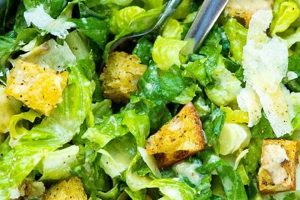
A structured set of instructions for preparing this classic dish typically involves romaine lettuce, croutons, Parmesan cheese, and a distinctive dressing made with ingredients like garlic, lemon juice, olive oil, egg, Worcestershire sauce, and black pepper. Variations exist, including additions such as grilled chicken, anchovies, or different types of cheese.
The accessibility and adaptability of this culinary creation contribute to its enduring popularity. Its straightforward preparation makes it suitable for both novice and experienced cooks, while the ability to customize ingredients allows for endless variations to suit individual preferences. From a historical perspective, its creation is often attributed to restaurateur Caesar Cardini in Tijuana, Mexico, in the early 20th century, adding a layer of culinary heritage to its appeal.
This exploration will delve into diverse aspects of the dish, from classic preparations to innovative adaptations, ingredient selection, and nutritional considerations. Further sections will offer step-by-step guides for creating the perfect emulsion and achieving optimal crouton texture.
Tips for an Exceptional Caesar Salad
Achieving a truly remarkable Caesar salad involves attention to detail and an understanding of key techniques. The following tips offer guidance for elevating this classic dish.
Tip 1: Emulsify the Dressing Thoroughly. A stable emulsion is crucial for a creamy, cohesive dressing. This can be achieved by gradually whisking the oil into the egg yolk and other ingredients, ensuring a smooth, well-combined mixture.
Tip 2: Utilize Fresh, High-Quality Ingredients. The foundation of a great Caesar salad lies in the freshness of its components. Opt for crisp romaine lettuce, freshly grated Parmesan cheese, and freshly squeezed lemon juice.
Tip 3: Make Croutons from Scratch. Homemade croutons offer superior flavor and texture. Cubing day-old bread and toasting it with olive oil, garlic, and seasonings yields a delightful crunch.
Tip 4: Season the Salad in Stages. Seasoning the lettuce, the croutons, and the dressing individually ensures a balanced and well-distributed flavor profile.
Tip 5: Customize to Preference. While the classic recipe provides a solid foundation, adaptations with ingredients like grilled chicken, anchovies, or different cheeses can enhance the dish based on individual tastes.
Tip 6: Use Quality Olive Oil. A good quality extra virgin olive oil contributes significantly to the flavor of both the dressing and the croutons.
Tip 7: Serve Immediately. For optimal texture and flavor, a Caesar salad is best served immediately after preparation, preventing the lettuce from wilting and the croutons from becoming soggy.
By adhering to these tips, one can consistently produce a Caesar salad that stands out in both flavor and presentation. These techniques contribute to a balanced, delicious, and visually appealing dish.
In conclusion, mastering these nuances allows for a more refined and enjoyable culinary experience.
1. Fresh Romaine Lettuce

Fresh romaine lettuce constitutes a fundamental ingredient in a Caesar salad, providing the crisp, refreshing base upon which the other components build. Its structural integrity and slightly bitter flavor profile complement the richness of the dressing and the savory notes of the other ingredients. An understanding of romaine lettuce’s characteristics is crucial for a successful Caesar salad.
- Flavor Profile
Romaine offers a subtly bitter and slightly sweet flavor that balances the richness of the Caesar dressing. This inherent bitterness contrasts pleasantly with the salty, umami notes of the anchovies and Parmesan, contributing to the complexity of the overall flavor profile. Using other lettuce varieties, such as iceberg, would result in a blander, less nuanced salad.
- Textural Contribution
The crisp, sturdy leaves of romaine lettuce provide a satisfying crunch and hold the dressing well without becoming soggy quickly. This structural integrity is essential for maintaining the salad’s appealing texture and preventing a wilted, unappetizing appearance. Consider the difference between biting into a crisp romaine leaf and a softer, less substantial leaf of butter lettuce; the romaine’s texture is key for the Caesar experience.
- Nutritional Value
Romaine lettuce contributes vitamins A and K, along with folate and other beneficial nutrients, to the dish. Incorporating fresh, nutrient-rich romaine enhances the salad’s overall health benefits, aligning with the increasing consumer demand for healthy and flavorful meal options. While the dressing and cheese contribute other nutrients, the romaine forms a healthy base.
- Visual Appeal
The vibrant green color and elongated leaves of romaine contribute to the visual presentation of the salad. Its aesthetic appeal enhances the dining experience, making the salad more inviting and appetizing. The visual contrast between the deep green romaine, the white Parmesan shavings, and the golden croutons contributes to the dishs overall impact.
The careful selection and proper handling of fresh romaine lettuce significantly impact the final quality of the Caesar salad. These facets, from flavor and texture to nutrition and visual appeal, underscore romaine lettuce’s integral role in a truly successful and enjoyable Caesar salad experience.
2. Homemade Croutons
Homemade croutons represent a pivotal element within the Caesar salad, significantly impacting the overall sensory experience. Their contribution extends beyond mere texture, influencing flavor, visual appeal, and even the perceived freshness of the dish. Distinguishing homemade croutons from store-bought alternatives reveals the nuanced role they play in elevating the Caesar salad from satisfactory to exceptional.
- Texture and Crunch
Homemade croutons offer a superior textural experience compared to their pre-packaged counterparts. Controlling the bread type, size, and toasting method allows for customization of the desired level of crunch, from a delicate crispness to a robust bite. This control ensures the croutons maintain their texture within the salad, contrasting pleasantly with the crisp lettuce and creamy dressing. Imagine the difference between a freshly toasted crouton and a stale, store-bought one; the textural disparity becomes immediately apparent.
- Flavor Enhancement
The ability to infuse croutons with complementary flavors presents a significant advantage of homemade preparation. Toasting the bread with olive oil, garlic, herbs, and spices creates a depth of flavor that store-bought options often lack. This customization allows the croutons to harmonize with the other salad components, enhancing the overall flavor profile. Consider the impact of garlic-infused croutons compared to plain ones; the flavor enhancement becomes a key element of the salad’s success.
- Visual Appeal
Homemade croutons afford control over size, shape, and color, contributing to the visual presentation of the salad. Uniformly sized and golden-brown croutons enhance the aesthetic appeal, signaling freshness and care in preparation. This visual enhancement elevates the dining experience, adding to the overall enjoyment. Compare the visual appeal of evenly sized, golden croutons to irregularly shaped, pale ones; the visual impact significantly influences perception.
- Freshness and Quality
Preparing croutons from scratch ensures the use of fresh, high-quality ingredients, free from preservatives and additives often found in commercial products. This commitment to quality translates to a more flavorful and wholesome salad experience, aligning with consumer preferences for natural and unprocessed foods. The difference between using fresh, flavorful bread and pre-packaged croutons impacts not only the taste but also the perceived quality of the entire dish.
The integration of homemade croutons elevates the Caesar salad from a simple dish to a culinary experience. By focusing on texture, flavor, visual appeal, and ingredient quality, homemade croutons contribute significantly to the overall enjoyment and satisfaction derived from this classic salad. The attention to detail in crafting these seemingly simple components reflects a dedication to culinary excellence, ultimately enhancing the perception and appreciation of the entire dish.
3. Classic Caesar Dressing
Classic Caesar dressing forms an integral part of a Caesar salad recipe, serving as the defining element that distinguishes it from other salads. The dressing’s distinctive flavor profile, derived from a combination of ingredients like raw egg yolks, anchovies, garlic, lemon juice, Worcestershire sauce, and olive oil, imparts the characteristic richness and tang that are synonymous with the Caesar salad experience. Omitting or substituting the classic dressing fundamentally alters the dish, resulting in something other than a true Caesar salad. Consider, for example, a salad composed of romaine lettuce, croutons, and Parmesan cheese dressed with a vinaigrette; while potentially palatable, it lacks the essential characteristics conferred by the classic Caesar dressing.
The classic Caesar dressing’s importance extends beyond mere flavor. Its emulsified nature contributes to the overall texture and mouthfeel of the salad. The dressing coats the lettuce leaves and croutons, creating a cohesive and satisfying sensory experience. Furthermore, the dressing’s viscosity plays a crucial role in binding the ingredients together, ensuring that each bite incorporates the full spectrum of flavors and textures. A poorly emulsified or overly thin dressing fails to achieve this cohesion, resulting in a less satisfying and potentially messy experience. One can readily envision the difference between a salad with a perfectly emulsified, creamy dressing and one with a watery, separated dressing; the former exemplifies the classic Caesar, while the latter falls short.
Understanding the relationship between classic Caesar dressing and the Caesar salad recipe provides a foundation for both appreciating and executing the dish effectively. Recognizing the dressing’s essential contribution to flavor, texture, and overall culinary experience allows for informed decisions regarding ingredient selection, preparation techniques, and potential adaptations. While variations exist, adhering to the core principles of the classic dressing ensures the preservation of the Caesar salad’s distinct identity and enduring appeal. Challenges may arise in sourcing high-quality ingredients or mastering the emulsification process, yet overcoming these hurdles contributes to a deeper appreciation of the dish’s complexity and rewards the effort with a truly authentic Caesar salad experience.
4. High-Quality Parmesan Cheese

High-quality Parmesan cheese stands as a cornerstone of an authentic Caesar salad recipe, contributing significantly to its distinctive flavor profile and overall culinary experience. Its presence extends beyond mere garnish, playing a crucial role in balancing the other ingredients and elevating the dish to its recognized status. Selecting an inferior substitute or omitting it altogether compromises the integrity of the salad, diminishing its complexity and overall enjoyment.
- Flavor Complexity
Genuine Parmesan, typically aged for extended periods, offers a complex flavor profile encompassing salty, nutty, and umami notes. This depth of flavor contrasts and complements the other ingredients, such as the tangy dressing and crisp lettuce. Consider the difference between the robust flavor of aged Parmesan and the blandness of a pre-grated cheese product; the disparity in flavor complexity directly impacts the overall salad experience.
- Textural Contribution
The firm, granular texture of high-quality Parmesan adds a pleasant counterpoint to the other elements in the salad. Shavings or finely grated Parmesan provide a delicate yet perceptible texture, enhancing the mouthfeel. Contrast this with the often powdery consistency of lower-quality substitutes; the textural difference significantly affects the overall sensory experience.
- Umami Enrichment
Parmesan, particularly aged varieties, contributes a significant amount of umami, a savory taste often described as the fifth basic taste. This umami richness adds depth and complexity to the salad, enhancing the overall flavor profile and contributing to a more satisfying culinary experience. Think of the difference between the savory depth provided by Parmesan versus a milder cheese like mozzarella; the presence of umami becomes a defining characteristic of the Caesar salad.
- Visual Enhancement
High-quality Parmesan, whether shaved or grated, offers visual appeal, enhancing the presentation of the salad. The contrast in color and texture between the cheese, the green lettuce, and the golden croutons adds to the overall aesthetic. Imagine the visual difference between freshly grated Parmesan and pre-grated cheese product; the visual impact contributes to the perception of quality and freshness.
The selection of high-quality Parmesan cheese represents a critical decision in crafting an exceptional Caesar salad. Its impact on flavor, texture, and visual appeal underscores its significance within the recipe. Substituting lower-quality alternatives diminishes the authenticity and overall enjoyment of the dish, highlighting the integral role of genuine Parmesan in a truly successful Caesar salad experience. Understanding the nuances of Parmesan selection empowers informed choices, ensuring a more rewarding and authentic culinary outcome.
5. Correct Emulsification Technique

Correct emulsification technique stands as a critical factor in achieving a successful Caesar salad dressing, directly influencing its texture, stability, and overall palatability. A properly emulsified dressing exhibits a smooth, creamy consistency, clinging evenly to the lettuce and other ingredients. Conversely, a poorly emulsified dressing separates, resulting in an oily, watery mixture that detracts from the sensory experience. Understanding the principles of emulsification and their application to Caesar salad preparation is essential for achieving the desired outcome.
- Stable Emulsion Formation
Emulsification involves combining two immiscible liquids, typically oil and water, into a stable mixture. In Caesar dressing, the egg yolk acts as an emulsifier, containing lecithin which binds the oil and water molecules together. This binding creates a homogenous mixture that resists separation, ensuring a consistent texture and preventing the oil from pooling on top of the salad. Imagine the difference between a smooth, creamy mayonnaise (a stable emulsion) and separated oil and vinegar; the former demonstrates successful emulsification.
- Gradual Incorporation of Oil
The gradual addition of oil to the egg yolk and other ingredients allows the emulsifier to effectively coat the oil droplets, preventing them from coalescing and separating. Whisking or blending constantly during this process ensures even distribution and facilitates the formation of a stable emulsion. Adding the oil too quickly overwhelms the emulsifier, resulting in a broken emulsion and a separated dressing. Think of slowly drizzling oil into a vinaigrette while whisking constantly versus dumping it all in at once; the former promotes emulsification, the latter hinders it.
- Temperature Considerations
Temperature plays a role in emulsion stability. Room temperature ingredients generally emulsify more readily than cold ingredients. However, excessive heat can denature the emulsifier, leading to a broken emulsion. Maintaining a consistent temperature throughout the emulsification process promotes stability and ensures a smooth, creamy texture. Consider the process of making hollandaise sauce, another emulsion; temperature control is crucial for preventing separation.
- Ingredient Quality
The quality of ingredients, particularly the olive oil and egg yolks, can influence the success of the emulsification process. Fresh, high-quality ingredients contribute to a more stable and flavorful emulsion. Using inferior ingredients may compromise the emulsion’s stability and negatively impact the overall taste of the dressing. The difference between using fresh, high-quality olive oil and a rancid or low-quality oil can significantly affect the final result, much like using fresh eggs versus older ones.
Mastering the correct emulsification technique represents a crucial step in crafting a truly exceptional Caesar salad. A stable, well-emulsified dressing elevates the dish, providing a smooth, creamy texture that complements the other ingredients. By understanding the factors that contribute to successful emulsification, one can consistently produce a Caesar salad dressing that enhances the overall dining experience. This attention to detail demonstrates a commitment to culinary excellence and ultimately results in a more satisfying and authentic Caesar salad.
6. Proper Seasoning

Proper seasoning plays a crucial role in the success of a Caesar salad recipe, impacting the overall flavor profile and highlighting the individual components. It goes beyond simply adding salt and pepper; it involves a nuanced approach, considering the balance of flavors and the timing of seasoning application. The interplay of salty, savory, tangy, and bitter notes within a Caesar salad necessitates careful seasoning to achieve a harmonious and well-balanced final product. An improperly seasoned salad can mask the delicate flavors of the ingredients or result in an unbalanced, one-dimensional taste experience.
Seasoning occurs at multiple stages during the preparation of a Caesar salad. The romaine lettuce often benefits from a light initial salting, which not only seasons the leaves but also helps draw out excess moisture, contributing to a crisper texture. The croutons, whether homemade or store-bought, gain depth of flavor from seasoning during the toasting process. The dressing itself requires careful balancing of salty elements like anchovies and Parmesan with the acidity of lemon juice and the pungency of garlic. Finally, a final touch of freshly ground black pepper can add a subtle layer of complexity. Consider, for example, a Caesar salad where the dressing is overly salty due to improperly seasoned anchovies; this excess salt can overwhelm the other flavors, resulting in a less enjoyable experience. Conversely, a salad lacking sufficient seasoning can taste bland and fail to showcase the individual components’ potential. The specific types and amounts of seasonings used can be adapted to individual preferences, allowing for customization while maintaining the core principles of balanced flavor.
Understanding the importance of proper seasoning elevates the Caesar salad from a simple dish to a carefully crafted culinary creation. It demonstrates an attention to detail that significantly impacts the final result. Challenges in seasoning can arise from variations in ingredient quality or personal preferences, but consistent practice and thoughtful consideration of flavor profiles lead to a more rewarding and consistently delicious Caesar salad experience. This mastery of seasoning extends beyond the Caesar salad itself, informing broader culinary practices and enhancing the appreciation of flavor balance in a wide range of dishes.
Frequently Asked Questions
This section addresses common inquiries regarding Caesar salad preparation, offering clarity and guidance for achieving optimal results.
Question 1: What is the traditional method for preparing Caesar salad dressing?
Traditional Caesar dressing involves emulsifying raw egg yolks with olive oil, lemon juice, Worcestershire sauce, garlic, anchovies, and black pepper. Variations exist, but this combination forms the foundation of the classic preparation.
Question 2: Can Caesar dressing be prepared without raw eggs due to safety concerns?
Raw egg alternatives exist, such as coddled eggs or pasteurized egg yolks, which mitigate potential health risks associated with raw eggs while maintaining a similar flavor profile and texture.
Question 3: What type of lettuce is traditionally used in Caesar salad?
Romaine lettuce constitutes the traditional choice for Caesar salad, providing the appropriate texture and subtle bitterness that complements the other ingredients. Substitutions can alter the authentic character of the dish.
Question 4: How can one achieve optimally textured croutons?
Optimally textured croutons are achieved by using day-old bread, cubing it evenly, and toasting it with olive oil and seasonings until golden brown and crisp. This method ensures a satisfying crunch that contrasts pleasantly with the other components.
Question 5: What type of cheese is traditionally used in Caesar salad?
Parmesan cheese, specifically high-quality aged Parmesan, is the traditional choice, contributing a complex salty, nutty flavor and a pleasant granular texture.
Question 6: How long can Caesar salad be stored after preparation?
Caesar salad ideally is consumed immediately after preparation to maintain optimal texture and prevent the lettuce from wilting. Storage beyond a short period is generally not recommended due to quality degradation.
Addressing these common queries facilitates a deeper understanding of Caesar salad preparation, enabling consistent and successful outcomes. These insights provide a foundational framework for approaching the recipe with confidence and precision.
The following sections will delve further into specific techniques and variations, expanding upon the knowledge provided in this FAQ.
Caesar Salad Recipe
This exploration of Caesar salad recipes has provided a comprehensive overview of the dish’s essential components, from the foundational romaine lettuce and homemade croutons to the crucial emulsification techniques for the classic dressing and the importance of high-quality Parmesan cheese. Proper seasoning throughout each stage of preparation has been emphasized as crucial for achieving a balanced and flavorful outcome. Addressing frequently asked questions has further clarified key aspects of the recipe, offering guidance for both novice and experienced cooks.
The enduring popularity of the Caesar salad underscores its adaptability and timeless appeal. Continued experimentation with variations while respecting the core principles of the recipe promises further culinary innovation. A deeper understanding of the ingredients and techniques involved elevates the Caesar salad experience, transforming a simple dish into a testament to culinary expertise and appreciation.