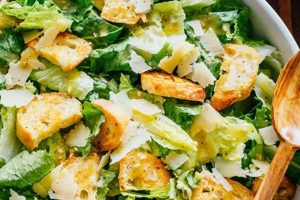
A Caesar salad, prepared from scratch using fresh ingredients, typically consists of romaine lettuce, croutons, Parmesan cheese, and a distinctive dressing. This dressing traditionally combines olive oil, raw egg yolks, lemon juice, Worcestershire sauce, garlic, anchovies, Dijon mustard, black pepper, and Parmesan cheese. Variations may include grilled chicken, seafood, or other additions. A classic example involves making the croutons by cubing day-old bread, tossing them with olive oil and seasonings, and baking until golden brown.
Crafting this dish at home allows for control over ingredient quality and freshness, resulting in a superior flavor profile compared to pre-made versions. Avoiding processed dressings minimizes additives and preservatives, contributing to a healthier meal. Furthermore, customization possibilities are endless from adjusting the dressing’s tanginess to incorporating unique ingredients based on personal preferences or dietary needs. The historical origins trace back to Tijuana, Mexico, in the 1920s, adding a layer of culinary heritage to the dish.
The following sections will delve into specific techniques for preparing a perfect Caesar salad dressing, discuss variations and substitutions for dietary restrictions, and provide expert tips for achieving optimal flavor and presentation.
Tips for an Exceptional Caesar Salad
Elevating a Caesar salad from satisfactory to exceptional involves attention to detail and an understanding of key techniques. The following tips provide guidance for achieving optimal flavor and presentation.
Tip 1: Emulsify the Dressing Thoroughly: A properly emulsified dressing is crucial for a creamy texture and balanced flavor. Whisking ingredients vigorously, or using a blender, creates a stable emulsion that prevents separation.
Tip 2: Use Fresh, High-Quality Ingredients: The foundation of any great Caesar salad lies in the freshness of its components. Opt for crisp romaine lettuce, freshly grated Parmesan, and high-quality olive oil.
Tip 3: Make Croutons from Scratch: Homemade croutons offer superior flavor and texture compared to store-bought alternatives. Cubing day-old bread and toasting it with olive oil and seasonings yields perfectly crispy croutons.
Tip 4: Balance the Dressing’s Acidity: The balance between lemon juice, vinegar, and other acidic elements is essential. Taste and adjust accordingly to achieve the desired tanginess.
Tip 5: Don’t Overdress the Salad: Too much dressing can make the salad soggy. Lightly coat the lettuce leaves to maintain their crispness.
Tip 6: Add the Parmesan Last: Adding the grated Parmesan just before serving prevents it from becoming soggy and ensures optimal flavor.
Tip 7: Consider Anchovy Paste: If fresh anchovies are unavailable or undesirable, anchovy paste offers a convenient and flavorful alternative.
By implementing these tips, one can consistently create a Caesar salad that is both flavorful and visually appealing. Attention to detail, from the quality of ingredients to the emulsification of the dressing, elevates this classic dish.
By mastering these techniques, individuals can confidently create a Caesar salad that surpasses pre-made options, offering a culinary experience that is both rewarding and delicious.
1. Fresh Romaine Lettuce

Fresh romaine lettuce forms the foundation of a homemade Caesar salad, providing the crisp texture and subtle, slightly bitter flavor that complements the rich dressing and other components. Its selection and preparation significantly influence the salad’s overall quality.
- Crispness and Texture
Romaine’s structural integrity is essential for a satisfying Caesar salad. Limp or wilted leaves detract from the experience. Selecting romaine hearts or heads with firm, vibrant leaves ensures the desired crispness. Proper storage, such as refrigeration in a loosely sealed bag, maintains this quality until preparation.
- Flavor Profile
Romaine’s inherent bitterness provides a counterpoint to the richness of the Caesar dressing, creating a balanced flavor profile. The slight sweetness in the inner leaves adds complexity. This balance is lost with other lettuce varieties, impacting the authentic Caesar salad experience.
- Preparation Techniques
Proper preparation maximizes romaine’s contribution to the salad. Washing and thoroughly drying the leaves prevents a diluted dressing and soggy salad. Tearing leaves into bite-sized pieces, rather than chopping, creates a more appealing texture and prevents bruising.
- Visual Appeal
The vibrant green color and structural integrity of fresh romaine contribute significantly to the salad’s visual appeal. Uniformly sized pieces create a visually pleasing presentation. Avoiding bruised or discolored leaves further enhances the aesthetic quality.
The choice of fresh, properly prepared romaine lettuce directly impacts the overall success of a homemade Caesar salad. From the initial bite to the final impression, its contribution to texture, flavor, and presentation distinguishes an exceptional Caesar salad from a mediocre one. Overlooking this key ingredient compromises the integrity of the dish.
2. Homemade Croutons
Homemade croutons represent a significant point of differentiation between an average Caesar salad and an exceptional one. Their contribution extends beyond mere texture, impacting flavor, visual appeal, and overall culinary satisfaction. While pre-made croutons offer convenience, they often lack the nuanced flavor and satisfying crunch achieved through home preparation. This distinction stems from the control over ingredients and the ability to tailor the croutons specifically to complement the salad.
The impact of homemade croutons manifests in several ways. Freshly baked bread, seasoned with complementary herbs and spices, offers a depth of flavor absent in commercially produced alternatives. Control over the size and shape ensures uniform pieces that integrate seamlessly with the other salad components. Furthermore, the toasting process allows for customization of texture, from a delicate crispness to a robust crunch. For instance, using olive oil and a touch of garlic powder creates croutons that resonate with the garlic notes in the Caesar dressing, while a sprinkle of Parmesan cheese adds a salty, savory dimension. This level of customization elevates the entire salad, transforming it into a more cohesive and flavorful experience.
The practical significance of understanding the role of homemade croutons lies in the ability to elevate a simple Caesar salad to a culinary masterpiece. The effort invested yields a substantial return in flavor, texture, and overall enjoyment. This seemingly minor detail underscores the importance of considering each component’s contribution to the final dish, demonstrating that even a simple element like croutons can significantly impact the overall dining experience. By prioritizing homemade croutons, one demonstrates a commitment to quality and a nuanced understanding of flavor dynamics, resulting in a Caesar salad that truly stands apart.
3. Classic Caesar Dressing
Classic Caesar dressing constitutes the defining element of a homemade Caesar salad recipe. Its unique flavor profile, derived from a specific combination of ingredients and preparation techniques, distinguishes the Caesar salad from other lettuce-based salads. Understanding this dressing’s components and their interplay is crucial for replicating authentic flavors and appreciating the nuances that contribute to an exceptional Caesar salad experience. This section explores key facets of classic Caesar dressing within the context of a homemade recipe.
- Emulsification
Emulsification forms the foundation of a successful Caesar dressing. The process of combining oil, egg yolks, and acidic elements (like lemon juice or vinegar) into a stable mixture creates the dressing’s signature creamy texture and prevents separation. Proper emulsification ensures a smooth, cohesive dressing that coats the lettuce evenly, distributing flavor throughout the salad. Achieving this requires gradual addition of oil while whisking constantly, creating a stable emulsion that binds the ingredients together. A broken emulsion results in a thin, oily dressing that detracts from the salad’s overall quality.
- Flavor Profile
The classic Caesar dressing boasts a complex flavor profile derived from a balance of savory, tangy, and umami elements. Anchovies provide a subtle salty, umami depth, while garlic contributes pungent notes. Lemon juice or vinegar introduces acidity, balancing the richness of the egg yolks and oil. Worcestershire sauce adds a layer of complexity with its blend of spices and fermented flavors. Dijon mustard contributes a mild tang and helps stabilize the emulsion. Parmesan cheese, incorporated into the dressing itself, enhances the savory notes and adds a subtle sharpness.
- Ingredient Quality
The quality of ingredients directly impacts the final flavor of the dressing. Freshly squeezed lemon juice offers a brighter, more vibrant acidity than bottled varieties. High-quality olive oil provides a superior flavor and contributes to a smoother emulsion. Using fresh garlic and high-quality Parmesan cheese further enhances the dressing’s complexity and depth. These seemingly small choices contribute significantly to the overall sensory experience.
- Authenticity vs. Variations
While the classic Caesar dressing adheres to a specific combination of ingredients, variations exist to accommodate dietary restrictions or personal preferences. For instance, some recipes substitute anchovy paste for whole anchovies, while others omit them entirely for a vegetarian version. Eggless variations utilize mayonnaise or other emulsifying agents. Understanding the core elements of a classic Caesar dressing allows for informed substitutions without compromising the fundamental balance of flavors.
Mastering the art of classic Caesar dressing preparation is fundamental to crafting an exceptional homemade Caesar salad. Each component of the dressing contributes to the final product’s overall flavor, texture, and enjoyment. By understanding the interplay of ingredients and techniques, one can create a Caesar salad that transcends mere sustenance and becomes a true culinary experience.
4. High-Quality Parmesan

High-quality Parmesan cheese plays a crucial role in a homemade Caesar salad recipe, contributing significantly to its overall flavor profile and textural complexity. Its selection should not be an afterthought; rather, it represents a key decision that directly impacts the final dish’s quality. Understanding the nuances of Parmesan and its impact on a Caesar salad elevates the dish from simple to exceptional.
- Flavor Enhancement
Authentic Parmesan, aged for the appropriate duration, possesses a complex flavor profile characterized by sharp, salty, and umami notes. These characteristics complement the other ingredients in a Caesar salad, enhancing the dressing’s savory aspects and adding depth to the overall flavor experience. Inferior Parmesan substitutes, often lacking the distinct sharpness and complexity of genuine Parmesan, can diminish the salad’s overall impact. The difference between using a high-quality, aged Parmesan and a pre-grated, cellulose-laden alternative is readily apparent in the final dish. The former adds depth and complexity, while the latter often contributes a bland, almost chalky taste.
- Textural Contribution
Beyond flavor, Parmesan contributes a textural element to the Caesar salad. When freshly grated, it provides a slightly granular texture that contrasts with the crisp romaine lettuce and crunchy croutons. This textural interplay adds another layer of sensory enjoyment to the salad, enhancing the overall dining experience. Pre-grated Parmesan, due to its processing and added cellulose, often lacks this desirable texture, resulting in a less satisfying mouthfeel.
- Visual Appeal
The visual appeal of freshly grated Parmesan, with its light, ivory color and slightly irregular shavings, enhances the presentation of the Caesar salad. Its visual presence signals quality and adds to the anticipation of a flavorful experience. Finely grated, pre-packaged Parmesan often lacks visual appeal and can clump together, detracting from the salad’s overall presentation.
- Integration with the Dressing
High-quality Parmesan integrates seamlessly with the Caesar dressing, contributing to both flavor and texture. Its sharp, salty notes enhance the dressing’s savory character, while its fine granules contribute to the dressing’s overall consistency. Furthermore, using high-quality Parmesan in the dressing itself, as opposed to simply sprinkling it on top, allows its flavor to permeate the entire salad more effectively.
The choice of Parmesan significantly impacts the overall quality of a homemade Caesar salad. Opting for high-quality Parmesan elevates the dish from ordinary to extraordinary. Recognizing the crucial role of this seemingly simple ingredient demonstrates an understanding of how each component contributes to the final product, ultimately resulting in a more satisfying and flavorful culinary experience.
5. Correct Emulsification

Correct emulsification is paramount in a homemade Caesar salad recipe, specifically concerning the dressing. A proper emulsion creates the desired creamy texture and ensures the dressing clings evenly to the lettuce, distributing flavor throughout the salad. Without correct emulsification, the dressing separates, resulting in an oily, unappetizing consistency that compromises the overall dining experience. This section explores the critical aspects of achieving a successful emulsion in a homemade Caesar dressing.
- Stable Emulsion Formation
A stable emulsion combines oil and water-based ingredients (like lemon juice or vinegar) into a homogeneous mixture. In Caesar dressing, egg yolks act as the emulsifier, binding the oil and acidic elements together. Gradual addition of oil while whisking vigorously allows the egg yolks to encapsulate the oil droplets, preventing them from coalescing and separating. This process creates a smooth, creamy texture that distinguishes a well-made Caesar dressing.
- Impact on Texture and Flavor Distribution
Correct emulsification directly impacts the dressing’s texture and its ability to coat the lettuce evenly. A stable emulsion ensures the flavors are distributed uniformly throughout the salad, enhancing each bite. A broken emulsion, where the oil and water separate, results in an oily mouthfeel and uneven flavor distribution, detracting from the salad’s overall enjoyment.
- Indicators of a Successful Emulsion
A successful emulsion appears smooth, creamy, and opaque. It clings to the whisk or blender blades and coats the lettuce leaves evenly without immediately separating. A broken emulsion, conversely, appears thin and watery, with visible oil droplets separating from the other ingredients. The dressing will slide off the lettuce, pooling at the bottom of the bowl.
- Troubleshooting Emulsification Issues
If an emulsion breaks, several techniques can help salvage the dressing. Starting with a fresh egg yolk and slowly whisking the broken dressing into it can often re-establish the emulsion. Alternatively, adding a small amount of warm water while whisking can sometimes bring the ingredients back together. Understanding the principles of emulsification allows for proactive adjustments during the preparation process and empowers one to address potential issues effectively.
Achieving correct emulsification is essential for a successful homemade Caesar salad. The dressing’s texture, flavor distribution, and overall appeal depend on this critical step. By understanding the principles of emulsification and employing proper techniques, one ensures a delicious and visually appealing Caesar salad that highlights the nuanced interplay of flavors and textures.
6. Balanced Acidity

Balanced acidity is crucial for a successful homemade Caesar salad recipe, directly impacting the dressing’s flavor profile and its interaction with other ingredients. The acidity level influences not only the perceived tartness but also the overall balance of flavors, preventing the dressing from becoming overly rich or cloying. Understanding how acidity functions within the context of a Caesar salad allows for precise adjustments and a more nuanced appreciation of the final dish.
- The Role of Acidic Ingredients
Acidic ingredients, typically lemon juice or vinegar, provide the necessary tartness that balances the richness of the egg yolks and olive oil in the dressing. These ingredients also contribute to the overall flavor complexity, adding brightness and preventing the dressing from tasting flat. The choice between lemon juice and vinegar, or a combination of both, can subtly alter the dressing’s flavor profile. Lemon juice tends to offer a cleaner, brighter acidity, while vinegar can contribute more nuanced, fermented notes. The specific type of vinegar, such as red wine vinegar or apple cider vinegar, further influences the final taste.
- Impact on Flavor Perception
Acidity plays a significant role in how other flavors are perceived within the salad. It enhances the savory notes of the Parmesan cheese and anchovies while tempering the richness of the dressing. Properly balanced acidity elevates the other flavors, allowing them to shine without being overwhelmed by richness. Too much acidity can make the dressing taste overly sharp and unpleasant, while too little can result in a bland, heavy dressing that masks the other flavors.
- Interaction with Other Ingredients
The acidity of the dressing also interacts with the other salad components. It slightly softens the romaine lettuce, making it more palatable while maintaining some textural integrity. The acidity also complements the crunchy croutons, creating a pleasing contrast of textures and flavors. Furthermore, the acidity helps to balance the saltiness of the Parmesan and anchovies, creating a harmonious blend of flavors.
- Adjusting Acidity to Preference
Achieving balanced acidity often involves adjusting the amount of lemon juice or vinegar based on personal preference and the specific ingredients used. Tasting the dressing and making small adjustments allows for precise control over the final flavor profile. Factors such as the sweetness of the tomatoes (if used) and the saltiness of the anchovies or Parmesan can influence the amount of acidity required to achieve balance. The goal is to create a dressing that is neither too tart nor too bland but rather complements the other ingredients harmoniously.
Balanced acidity is a critical element in crafting a successful homemade Caesar salad. It enhances the overall flavor profile, balances the richness of the dressing, and complements the other salad components. By understanding the role of acidity and making careful adjustments, one can create a Caesar salad dressing that perfectly balances flavor, texture, and overall enjoyment. This attention to detail elevates the homemade Caesar salad beyond a simple dish to a truly satisfying culinary experience.
7. Proper Ingredient Order

Proper ingredient order contributes significantly to the final quality of a homemade Caesar salad. The sequence in which components are combined, especially within the dressing and during the final assembly, directly impacts the emulsion’s stability, the distribution of flavors, and the overall textural experience. A systematic approach to ingredient incorporation ensures a cohesive and balanced result, maximizing the potential of each element.
- Emulsion Stability in Dressing Preparation
The order in which ingredients are combined when preparing the Caesar dressing directly affects emulsion stability. Emulsification, the process of combining oil and water-based ingredients into a stable mixture, relies on the gradual incorporation of oil into the egg yolks while whisking constantly. Adding the oil too quickly overwhelms the yolks, leading to a broken emulsion and a thin, oily dressing. Adhering to the proper orderstarting with the yolks and gradually whisking in the oilensures a smooth, creamy, and stable emulsion. This, in turn, allows the dressing to coat the lettuce effectively, distributing flavor evenly.
- Flavor Integration and Development
The sequence of ingredient addition influences flavor development within the dressing. Incorporating ingredients like garlic and anchovies early allows their flavors to meld and permeate the dressing thoroughly. Adding Parmesan cheese towards the end maintains its distinct sharp notes without allowing it to become overly dominant. This strategic layering of flavors creates a complex and balanced taste profile that distinguishes a high-quality Caesar dressing.
- Preventing Sogginess During Final Assembly
The final assembly of the salad also benefits from a considered approach to ingredient order. Adding the croutons and Parmesan cheese just before serving prevents them from absorbing moisture from the dressing and becoming soggy. This maintains their desirable texturescrunchy croutons and slightly granular Parmesanenhancing the overall sensory experience. Tossing the lettuce with the dressing just before adding the croutons and cheese ensures the leaves are evenly coated without becoming overly saturated, preserving their crispness.
- Visual Appeal and Presentation
Proper ingredient order contributes to the salad’s visual appeal. Adding the Parmesan cheese and croutons last allows them to remain distinct visual elements, adding textural and color contrast to the vibrant green romaine. A well-assembled Caesar salad showcases the individual components while presenting a cohesive and appetizing whole. This attention to visual detail enhances the dining experience, signaling care and attention to quality.
Adhering to the proper ingredient order in a homemade Caesar salad recipe is essential for maximizing flavor, texture, and visual appeal. From emulsion stability in the dressing to preventing sogginess during final assembly, each step plays a crucial role in the final outcome. This systematic approach demonstrates a nuanced understanding of how individual ingredients interact, elevating the homemade Caesar salad from a simple dish to a carefully crafted culinary experience.
Frequently Asked Questions
This section addresses common inquiries regarding homemade Caesar salad preparation, offering concise and informative responses to clarify potential uncertainties and enhance understanding.
Question 1: What is the traditional method for preparing Caesar salad dressing?
Traditional Caesar salad dressing involves emulsifying raw egg yolks with olive oil, lemon juice, Worcestershire sauce, garlic, anchovies, Dijon mustard, black pepper, and Parmesan cheese. This method, while authentic, presents food safety concerns for some due to the use of raw eggs.
Question 2: Are there safe alternatives to using raw eggs in the dressing?
Several alternatives exist for those who prefer to avoid raw eggs. Pasteurized egg yolks eliminate the risk of salmonella. Alternatively, mayonnaise, coddled eggs, or even a completely eggless variation using a base of Greek yogurt or mashed avocado can provide a similar creamy texture and flavor profile.
Question 3: Can other types of lettuce be substituted for romaine?
While romaine lettuce is traditional, other lettuces like Little Gem or butter lettuce can be substituted. However, these alternatives may possess different flavor profiles and textural qualities, altering the overall experience. The structural integrity of romaine is particularly suited to the rich dressing.
Question 4: How can one achieve optimally crispy croutons?
Crispy croutons result from using day-old bread, cubing it evenly, tossing it with olive oil and seasonings, and baking in a preheated oven until golden brown. Properly drying the bread and ensuring even coating with oil contributes significantly to achieving optimal crispness.
Question 5: What are suitable substitutions for anchovies?
Anchovy paste provides a convenient substitute for fresh anchovies, offering a similar umami flavor. Alternatively, Worcestershire sauce, which contains anchovies, can enhance the savory notes. For a vegetarian option, capers or olives can contribute a salty, briny element.
Question 6: How long can homemade Caesar salad be stored?
Storing dressed Caesar salad is not recommended, as the dressing will cause the lettuce to wilt. It’s best to store the dressing and other components separately and combine them just before serving. Prepared dressing can be refrigerated for up to three days.
Understanding these commonly addressed concerns further empowers individuals to create a homemade Caesar salad tailored to specific preferences and dietary needs, maximizing both enjoyment and safety.
The subsequent section offers a detailed, step-by-step recipe guide for crafting the perfect homemade Caesar salad.
Homemade Caesar Salad Recipe
Exploration of the homemade Caesar salad recipe reveals the critical interplay of fresh, high-quality ingredients and precise techniques. From the careful emulsification of the dressing to the selection of crisp romaine lettuce and the artful creation of crunchy croutons, each element contributes to the final dish’s overall success. Emphasis on ingredient order, balanced acidity, and the nuanced contribution of Parmesan cheese underscores the potential for culinary excellence achievable through attentive home preparation. Distinguishing a truly exceptional Caesar salad from mediocre versions hinges on understanding these key aspects and their synergistic impact.
Mastery of the homemade Caesar salad recipe offers not merely a meal but an opportunity to engage with culinary heritage and explore the potential of fresh ingredients. The ability to tailor the recipe to individual preferences and dietary needs further enhances its value. Continued exploration of variations and refinements promises an enduring appreciation for this classic dish and its potential for personalized culinary expression.