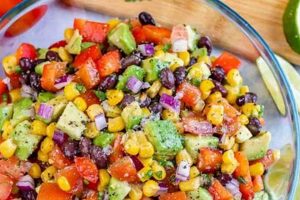
A dish composed primarily of peas, bacon, and a dressing, often featuring other complementary ingredients like lettuce, onion, cheese, or mint. Variations exist, ranging from simple combinations with a vinaigrette to more complex versions incorporating mayonnaise-based dressings and additional vegetables. A classic example might include fresh or frozen peas, crispy bacon bits, crumbled feta cheese, chopped red onion, and a light lemon-herb vinaigrette.
This type of salad offers a balance of flavors and textures. The sweetness of peas contrasts with the salty, smoky bacon, while other components contribute creamy, tangy, or sharp notes depending on the specific recipe. Its versatility makes it suitable for various occasions, from casual lunches and potlucks to more formal gatherings. Historically, peas and bacon have been paired in numerous culinary traditions, reflecting the accessible nature of these ingredients and their complementary flavor profiles. The evolution into a salad format provides a refreshing and lighter take on this classic combination.
Further exploration will cover specific variations of this culinary creation, offering detailed ingredient lists, preparation instructions, and nutritional information. Additionally, the adaptability of this salad to accommodate dietary restrictions and preferences will be addressed.
Tips for a Perfect Pea and Bacon Salad
Optimizing ingredient selection and preparation techniques elevates this simple salad to a culinary delight.
Tip 1: Bacon Preparation: Achieve optimal texture by cooking bacon until crisp but not burnt. Dicing before cooking ensures even browning and easier incorporation into the salad.
Tip 2: Pea Selection: Fresh peas offer superior sweetness and texture, but frozen peas provide a convenient alternative. Ensure frozen peas are thawed and drained thoroughly to prevent excess water in the salad.
Tip 3: Balancing Flavors: The sweetness of peas and saltiness of bacon should be balanced with complementary ingredients. Sharp cheeses, like feta or cheddar, and tangy dressings contribute complexity.
Tip 4: Enhancing Texture: Incorporate textural variety through ingredients like toasted croutons, chopped nuts, or crispy fried onions. This adds a satisfying crunch.
Tip 5: Dressing Choices: Vinaigrettes offer a light and refreshing option, while creamy dressings, like those based on mayonnaise or buttermilk, provide a richer flavor profile. Tailor the dressing to personal preference.
Tip 6: Fresh Herbs: Fresh herbs like mint, chives, or parsley elevate the flavor profile. Add them just before serving for optimal freshness.
Tip 7: Serving Temperature: Serving the salad chilled enhances the flavors and provides a refreshing experience, especially during warmer months.
Attention to these details ensures a balanced, flavorful, and visually appealing salad experience.
By incorporating these tips, one can create a dish that is not only delicious but also visually appealing and satisfying.
1. Ingredient Quality

Ingredient quality significantly impacts the overall success of a pea and bacon salad. The inherent sweetness of fresh peas, ideally picked at peak ripeness, provides a crucial flavor foundation. Using subpar peas, such as those past their prime or improperly stored, can result in a bland or starchy final product. Similarly, bacon quality contributes to the overall balance. Thick-cut, smoked bacon offers a superior depth of flavor and textural complexity compared to thinly sliced, mass-produced alternatives. Selecting high-quality bacon ensures a robust, smoky flavor that complements the sweetness of the peas. Cheese selection further exemplifies the importance of ingredient quality. Artisan cheeses, like a sharp cheddar or creamy feta, contribute nuanced flavors and textures that enhance the salad. Conversely, processed cheese slices detract from the overall sensory experience.
Consider a scenario where wilted lettuce is used. Its limp texture and diminished flavor detract from the overall freshness and vibrancy of the salad. Substituting a flavorful vinaigrette with a generic, store-bought dressing similarly compromises the final dish. The delicate interplay of textures and flavors hinges on the quality of each component. Opting for high-quality ingredients not only elevates the taste but also demonstrates an appreciation for culinary excellence. For example, using freshly shelled peas during their peak season compared to frozen peas can make a noticeable difference in both the sweetness and texture of the salad. The bacon, the other star ingredient, also benefits from careful selection. Dry-cured, smoked bacon offers a depth of flavor often absent in mass-produced alternatives.
Prioritizing ingredient quality within a pea and bacon salad yields a superior culinary outcome. Fresh, vibrant ingredients enhance the sensory experience, from the bright sweetness of the peas to the smoky, savory notes of the bacon. While substitutions may be necessary due to availability or budgetary constraints, understanding the impact of ingredient quality allows for informed decisions. Ultimately, selecting the best possible ingredients elevates a simple pea and bacon salad from ordinary to extraordinary.
2. Flavor Balance

Flavor balance represents a critical aspect of a successful pea and bacon salad recipe. The inherent sweetness of peas necessitates a counterpoint, often provided by the salty, smoky flavor of bacon. However, relying solely on these two primary ingredients risks a simplistic, one-dimensional flavor profile. Strategic incorporation of additional components allows for greater complexity and a more satisfying culinary experience. Acidity, for instance, plays a vital role. A vinaigrette, often incorporating lemon juice or vinegar, cuts through the richness of the bacon and brightens the sweetness of the peas. This tangy element prevents the salad from becoming overly sweet or heavy. Consider the addition of crumbled feta cheese. Its salty, tangy nature further enhances the balance, adding a creamy texture and a slightly pungent note that complements both the peas and bacon. A different approach might utilize a small amount of red onion, offering a sharp, slightly sweet bite that contrasts with the other ingredients. Omitting an acidic element or neglecting to incorporate contrasting flavors risks a bland or unbalanced salad. For example, a pea and bacon salad lacking acidity might taste overly rich and heavy, while one without a salty element might taste flat and uninspired.
The interplay of flavors extends beyond simple contrasts. The specific type of bacon influences the overall balance. Smoked bacon contributes a robust, smoky flavor that pairs well with stronger cheeses and bolder dressings. Pancetta, on the other hand, offers a more subtle, salty flavor that allows for greater flexibility with other ingredients. Furthermore, the choice of other vegetables significantly impacts the final flavor profile. Adding chopped celery provides a crisp, refreshing counterpoint, while incorporating roasted red peppers introduces a sweet, smoky element. Careful consideration of these nuances allows for a tailored flavor profile catering to specific preferences. One could imagine a lighter, summery salad with fresh mint and a lemon vinaigrette, contrasted with a heartier autumnal version incorporating roasted butternut squash and a maple-Dijon dressing. These examples highlight how ingredient choices and their proportions contribute to a well-balanced, nuanced salad.
Achieving flavor balance in a pea and bacon salad requires a thoughtful approach to ingredient selection and proportion. Understanding the interplay between sweet, salty, acidic, and savory elements is essential. Furthermore, recognizing the impact of individual ingredients, such as the type of bacon or the choice of additional vegetables, allows for informed decision-making. This ultimately results in a more complex and satisfying culinary creation that transcends the simple sum of its parts. The principles of flavor balance, when applied effectively, transform this straightforward salad into a culinary expression reflecting a refined palate and attention to detail. Neglecting this critical aspect, however, risks a dish lacking depth and complexity, underscoring the importance of flavor balance in achieving culinary excellence.
3. Textural Contrast

Textural contrast contributes significantly to the overall enjoyment of a pea and bacon salad. A successful recipe considers the interplay of textures, moving beyond mere flavor combinations to engage the sense of touch and create a more dynamic eating experience. This element elevates the dish from simple sustenance to a more complex and satisfying culinary creation.
- Crispy Bacon
Crispy bacon provides the foundation of textural contrast in this salad. Its crunchy texture juxtaposes the softer textures of other ingredients. Achieving optimal crispness requires proper cooking techniques; overcooked bacon becomes brittle and unpleasant, while undercooked bacon lacks the desired textural element. Consider the audible crunch as a key indicator of properly cooked bacon and its contribution to the overall sensory experience.
- Tender Peas
Peas, whether fresh or frozen, offer a tender, slightly sweet contrast to the crispy bacon. Their delicate texture provides a necessary counterpoint to the bolder, crunchier elements. Overcooked peas, however, lose their texture and become mushy, detracting from the intended textural interplay. Properly cooked peas offer a pleasant pop when bitten, adding another dimension to the textural profile.
- Complementary Ingredients
Additional ingredients can further enhance textural contrast. Toasted croutons offer a crunchy element similar to bacon, while nuts, such as slivered almonds or chopped walnuts, provide a different type of crunch. These additions create a multi-layered textural experience that adds complexity and interest. Consider the contrasting textures of crisp romaine lettuce versus softer butter lettuce, each contributing a unique textural element. The inclusion of ingredients like chopped celery or water chestnuts offers a refreshing crispness that further diversifies the sensory experience.
- Dressing Considerations
The dressing itself can influence the perceived texture of the salad. A creamy dressing, while adding flavor, can coat the ingredients and diminish the crispness of bacon or other crunchy elements. A lighter vinaigrette tends to preserve the integrity of individual textures, allowing the contrast to remain prominent. The choice of dressing, therefore, should consider its impact on the overall textural profile of the salad.
The interplay of textures within a pea and bacon salad elevates it beyond a simple combination of ingredients. Crispy bacon, tender peas, and the potential for additional crunchy or smooth elements create a dynamic sensory experience. Careful consideration of these textural components, along with the choice of dressing, transforms the salad into a more complex and satisfying dish, showcasing the importance of textural contrast in achieving culinary excellence.
4. Dressing Choice

Dressing choice significantly influences the overall flavor profile and balance of a pea and bacon salad. The dressing acts as a unifying element, binding the ingredients together while contributing its own distinct characteristics. Careful selection ensures the dressing complements, rather than overpowers, the primary flavors of peas and bacon, enhancing the overall culinary experience. Several factors contribute to an appropriate dressing selection.
- Acidity
Acidity plays a crucial role in balancing the sweetness of peas and the richness of bacon. Vinaigrettes, typically composed of oil and vinegar or lemon juice, provide the necessary acidity. A classic lemon vinaigrette, for example, brightens the flavors and cuts through the richness of the bacon fat. The level of acidity should be carefully calibrated; excessive acidity can overpower the delicate pea flavor, while insufficient acidity can result in a bland or heavy salad. The specific type of vinegar also influences the flavor profile. Apple cider vinegar offers a mild sweetness, while red wine vinegar contributes a more robust, tangy note.
- Creaminess
Creamy dressings, such as those based on mayonnaise, buttermilk, or sour cream, offer a richer, more decadent alternative to vinaigrettes. These dressings coat the ingredients, creating a smoother, more cohesive texture. However, creamy dressings can mask the individual flavors of the components, especially the delicate sweetness of peas. A buttermilk-based dressing, for instance, can add a tangy richness that complements the bacon, while a lighter mayonnaise-based dressing with herbs provides a smoother, more traditional profile.
- Flavor Complexity
Dressing choice provides an opportunity to introduce additional flavor dimensions to the salad. Incorporating herbs, spices, or other flavoring agents enhances complexity and creates a more nuanced flavor profile. A Dijon mustard vinaigrette, for example, adds a sharp, tangy note, while a honey-mustard dressing offers a balance of sweet and savory. Adding fresh herbs like mint or chives directly to the dressing further enhances the flavor profile. Matching the flavor complexity of the dressing to the other salad components ensures a balanced and harmonious final product. For instance, a simple salad with peas, bacon, and lettuce benefits from a lighter dressing, while a more complex salad with additional ingredients like cheese or nuts can support a more robust dressing.
- Consideration of Other Ingredients
The choice of dressing should consider the other ingredients incorporated into the salad. A salad with strong cheeses, like blue cheese or Roquefort, requires a dressing that can stand up to these robust flavors. A simple vinaigrette might be overpowered, while a creamy dressing with complementary flavors provides a better balance. Conversely, a salad with delicate ingredients, such as fresh herbs or baby spinach, benefits from a lighter, less assertive dressing that allows the subtle flavors to shine through. Careful consideration of these factors ensures the dressing enhances the overall composition rather than competing with other elements. For example, a salad incorporating roasted vegetables might benefit from a dressing with smoky or sweet notes, while a salad with fresh, crisp vegetables might be better suited to a lighter, brighter vinaigrette.
Selecting an appropriate dressing elevates the pea and bacon salad beyond a simple combination of ingredients. The dressing contributes not only flavor but also texture and cohesiveness, transforming individual components into a unified and satisfying culinary creation. Careful consideration of acidity, creaminess, flavor complexity, and the interplay with other ingredients ensures the dressing enhances, rather than detracts from, the overall experience. A thoughtfully chosen dressing complements the natural sweetness of peas and the savory richness of bacon, resulting in a balanced and harmonious flavor profile that delights the palate.
5. Presentation
Presentation significantly impacts the perceived value and enjoyment of a pea and bacon salad. While flavor and texture remain paramount, visual appeal enhances the dining experience, transforming a simple dish into a more appealing and appetizing culinary creation. Consideration of color, arrangement, and serving vessel elevates presentation beyond mere functionality, demonstrating care and attention to detail.
- Color Palette
The natural colors of peas and bacon provide a foundation for an appealing presentation. The vibrant green of fresh peas contrasts with the rich brown of the bacon, creating a visually engaging base. Incorporating other colorful ingredients further enhances visual appeal. Bright red cherry tomatoes, for instance, add a pop of color, while slivered almonds or chopped walnuts introduce warm, earthy tones. Consider the contrast between the deep green of spinach and the pale green of butter lettuce, or the vibrancy of chopped red onion against the white of feta cheese. A monochromatic presentation, while potentially elegant, risks appearing bland and unappetizing. Thoughtful color combinations stimulate visual interest and enhance the overall dining experience.
- Arrangement and Plating
The arrangement of ingredients contributes significantly to visual appeal. Simply tossing all ingredients together can result in a haphazard, unappetizing presentation. Consider layering ingredients to create visual depth and texture. A bed of lettuce topped with arranged rows of peas, bacon, and other components offers a more structured and visually appealing presentation than a homogenous mixture. Alternatively, consider composing the salad on individual plates, allowing for greater control over arrangement and portion size. The use of negative space, intentionally leaving portions of the plate empty, can further enhance visual appeal. For example, arranging the salad in a circular pattern on a square plate creates visual interest through the contrast of shapes and the use of negative space.
- Serving Vessel Selection
The choice of serving vessel impacts the overall presentation. A plain, utilitarian bowl might suffice for a casual meal, but a more elegant serving dish elevates the perceived value of the salad. Consider the material, shape, and color of the vessel. A clear glass bowl showcases the vibrant colors of the salad, while a rustic wooden bowl adds a touch of warmth and texture. The size and shape of the bowl should complement the salad’s volume and arrangement. A shallow, wide bowl allows for a more expansive presentation, while a deeper bowl is better suited for a more compact salad. For example, serving the salad in individual ramekins creates a sense of elegance and portion control, while a large platter emphasizes a family-style sharing experience.
- Garnishing Techniques
Garnishing adds a final touch of visual flair and can enhance the overall presentation. A simple sprinkle of chopped fresh herbs, such as parsley or chives, adds a touch of green and freshness. Crumbled bacon bits provide a contrasting texture and reinforce the bacon flavor. A sprinkle of grated cheese adds visual interest and reinforces the cheese’s presence within the salad. Garnishes should complement the existing flavors and colors of the salad, enhancing rather than overpowering the overall presentation. Over-garnishing can detract from the visual appeal, creating a cluttered and unappetizing appearance. A light touch and careful consideration of color and texture create a balanced and visually appealing final product. For example, a sprinkle of paprika might complement a smoky bacon flavor, while a drizzle of balsamic glaze could enhance the sweetness of roasted vegetables incorporated into the salad.
Presentation elevates the pea and bacon salad from a simple dish to a more refined culinary experience. Thoughtful consideration of color, arrangement, serving vessel, and garnishing techniques enhances visual appeal, stimulating appetite and increasing perceived value. While flavor and texture remain crucial, presentation adds another layer of enjoyment, demonstrating attention to detail and an appreciation for the art of culinary creation. A well-presented salad not only tastes delicious but also provides a feast for the eyes, transforming a simple meal into a more memorable and satisfying experience.
Frequently Asked Questions
This section addresses common inquiries regarding pea and bacon salad preparation and variations.
Question 1: Can frozen peas be used?
Frozen peas offer a convenient alternative to fresh peas, particularly when fresh peas are out of season. Ensure complete thawing and thorough draining to prevent excess water from diluting the salad’s flavor and compromising texture.
Question 2: What type of bacon is recommended?
Thick-cut, smoked bacon provides optimal flavor and texture. The smoky notes complement the sweetness of peas, and the thickness ensures a satisfyingly crisp texture when cooked. Alternatives like pancetta or turkey bacon may be substituted, but the flavor profile will differ.
Question 3: How can the salad be made vegetarian?
Omitting the bacon and incorporating a salty cheese, such as feta or halloumi, provides a vegetarian alternative. Toasted nuts or seeds can further enhance the flavor and texture, compensating for the absence of bacon.
Question 4: What dressings complement this salad?
Both vinaigrettes and creamy dressings can complement this salad. Vinaigrettes, particularly those with a lemon or vinegar base, offer a light, tangy counterpoint to the richness of bacon. Creamy dressings, like those based on mayonnaise or buttermilk, provide a richer flavor and smoother texture.
Question 5: How long can the salad be stored?
Refrigeration in an airtight container is recommended. Consume within two days for optimal flavor and texture. The salad’s quality may degrade over time due to moisture from the dressing and vegetables. It’s best to add the dressing just before serving to maintain optimal crispness.
Question 6: Can other vegetables be added?
This salad readily accommodates other vegetables. Chopped lettuce, tomatoes, red onion, or bell peppers enhance flavor and texture. Consider roasted vegetables, such as sweet potatoes or Brussels sprouts, for added complexity and depth. Ingredient compatibility and overall flavor balance should guide selection.
Careful consideration of these frequently asked questions ensures successful pea and bacon salad preparation, accommodating various preferences and dietary needs.
The following section will offer variations on this classic recipe, demonstrating the adaptability and versatility of this simple yet satisfying dish.
Pea and Bacon Salad Recipe
Exploration of the pea and bacon salad recipe reveals a dish offering nuanced flavor profiles and textural complexity. Ingredient quality, from fresh peas to crisp bacon, forms the foundation. Balance, achieved through acidic elements like vinaigrettes or contrasting textures from croutons and nuts, elevates the dish beyond simple components. Dressing selection, whether a light vinaigrette or creamy mayonnaise base, further enhances the overall experience. Finally, thoughtful presentation optimizes visual appeal, transforming a simple salad into a culinary statement. Variations incorporating diverse vegetables and cheeses expand the possibilities, showcasing adaptability and versatility.
Culinary exploration extends beyond mere sustenance; it delves into the interplay of flavors, textures, and presentation. The pea and bacon salad, while seemingly simple, exemplifies this principle. Continued experimentation with ingredients and techniques allows for personalized interpretations, reflecting individual preferences and culinary creativity. This encourages further exploration and refinement of this classic combination, ensuring its continued presence within culinary traditions.