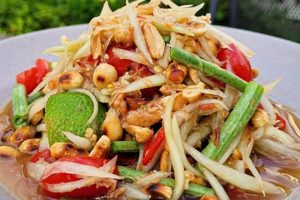
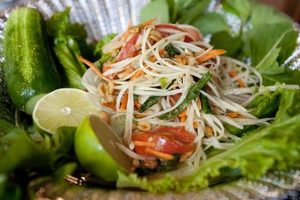
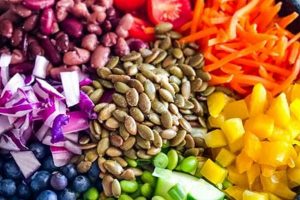
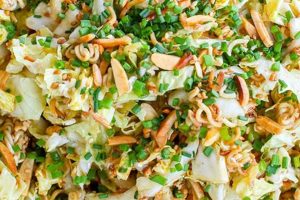
A superior preparation of this Thai dish balances the sweet, sour, salty, spicy, and savory flavors characteristic of Southeast Asian cuisine. It typically features shredded green papaya, tomatoes, green beans, garlic, chilies, fish sauce, lime juice, and palm sugar, often with additions like dried shrimp, peanuts, or crab. Variations exist across regions and individual preferences, impacting ingredient ratios and additions.
Achieving a harmonious blend of these flavors creates a refreshing and vibrant culinary experience. Historically, green papaya salad likely originated in the Mekong River region of Southeast Asia, reflecting the readily available ingredients and regional culinary traditions. Its popularity has spread internationally, becoming a celebrated dish appreciated for its complex flavor profile and textural contrast.
This exploration will delve into the art of crafting a truly exceptional papaya salad. Topics covered will include ingredient selection, essential techniques, regional variations, and tips for balancing flavors to achieve optimal results.
Tips for an Exceptional Papaya Salad
Elevating this dish from simple to extraordinary relies on careful attention to detail. These tips offer guidance for achieving optimal flavor and texture.
Tip 1: Use the Right Papaya: Select firm, green papayas. Avoid those with soft spots or a yellowish hue, as they will be overly sweet and lack the desired crispness.
Tip 2: Balance Flavors: The hallmark of a great papaya salad lies in the harmonious blend of sweet, sour, salty, and spicy. Adjust ingredients like lime juice, fish sauce, and chilies to achieve the desired balance.
Tip 3: Pound, Don’t Chop: Using a mortar and pestle helps release the papaya’s flavors and creates a desirable texture. Gently bruising the ingredients allows them to meld without becoming mushy.
Tip 4: Fresh Ingredients Matter: Utilize the freshest ingredients available. Quality produce, particularly ripe tomatoes and crisp green beans, contributes significantly to the final result.
Tip 5: Tailor to Preference: While traditional recipes provide a foundation, customization allows for personal expression. Adjusting the level of chili, adding roasted peanuts, or incorporating dried shrimp can cater to individual tastes.
Tip 6: Timing is Key: Dress the salad just before serving. This prevents the papaya from becoming overly soft and maintains the vibrant flavors of the ingredients.
Tip 7: Consider Regional Variations: Explore different regional preparations, such as those incorporating fermented fish sauce (pla ra) or shredded carrots, to expand culinary horizons.
By following these guidelines, one can achieve a truly exceptional papaya salad that showcases the dynamic flavors of Southeast Asian cuisine.
By understanding these core principles, individuals can confidently approach crafting papaya salad, transforming simple ingredients into a culinary masterpiece.
1. Ingredient Quality

Ingredient quality plays a pivotal role in determining the outcome of a papaya salad. The inherent flavors of each component contribute to the overall complexity and balance of the final dish. Fresh, ripe produce offers optimal flavor profiles. For example, using a firm, green papaya ensures the desired texture and a subtly sweet, slightly peppery taste. Substandard or overripe papayas can result in a mushy texture and an overly sweet flavor, detracting from the balance of the dish. Similarly, vibrant, ripe tomatoes contribute a necessary sweetness and acidity, while bland or underripe tomatoes will lack the depth of flavor required.
Sourcing high-quality fish sauce is equally critical. Authentic fish sauce provides a nuanced saltiness and umami depth that enhances the other ingredients. Lower-quality fish sauces often lack this complexity and can introduce unwanted off-flavors. Likewise, the choice of chilies impacts the overall spiciness and flavor profile. Fresh chilies offer a cleaner heat, while dried chilies contribute a different layer of complexity. Considering the origin and type of chili allows for precise control over the final level of spice and aromatic notes.
Ultimately, a commitment to ingredient quality elevates the papaya salad experience. The freshness and flavor of each component contribute significantly to the final result. By carefully selecting each element, one ensures a vibrant and balanced dish that showcases the authentic flavors of this Southeast Asian staple. Failing to prioritize ingredient quality compromises the integrity of the dish, potentially resulting in a muted or unbalanced flavor profile. Therefore, sourcing the finest ingredients is paramount in achieving a truly exceptional papaya salad.
2. Flavor Balance

Flavor balance is paramount in achieving an exceptional papaya salad. The dynamic interplay of sweet, sour, salty, spicy, and umami distinguishes this dish. A harmonious blend of these flavor components is essential; an imbalance can result in a dish that is too sweet, overly sour, or excessively spicy, diminishing its appeal. Understanding how these elements interact is crucial for crafting a truly satisfying culinary experience.
- Sweetness
Palm sugar provides the primary sweetness, balancing the sour and spicy elements. The amount of sugar must be carefully calibrated to complement the other flavors. Too much sugar overwhelms the other components, while too little leaves the dish unbalanced. The type of palm sugar also influences the final taste; darker varieties offer a richer molasses-like flavor, while lighter varieties provide a cleaner sweetness.
- Sourness
Lime juice contributes the essential sourness, cutting through the richness of the other ingredients and adding brightness. The acidity of the lime juice balances the sweetness of the palm sugar and the saltiness of the fish sauce. Using freshly squeezed lime juice is critical for achieving the desired vibrancy. Bottled lime juice often lacks the necessary complexity and freshness.
- Saltiness and Umami
Fish sauce introduces both saltiness and umami, providing depth and complexity. The quality of the fish sauce significantly impacts the final result. A good fish sauce adds a nuanced savory flavor that enhances the other ingredients. Fermented fish sauce (pla ra) can also be incorporated, offering a more pungent and intense umami note.
- Spiciness
Chilies introduce the heat element, adding a layer of complexity and stimulating the palate. The type and quantity of chilies used determine the level of spiciness. Bird’s eye chilies offer intense heat, while other varieties, such as Thai chilies, provide a milder heat with varying flavor profiles. The spiciness should complement, not overwhelm, the other flavors.
The interplay of these four elements defines the character of a papaya salad. Achieving the optimal balance requires careful consideration of each ingredient and precise adjustments to quantities. A well-balanced papaya salad offers a complex and harmonious flavor profile that exemplifies the dynamism of Southeast Asian cuisine. The ultimate goal is to create a dish where no single flavor dominates, but rather each component contributes to a unified and satisfying whole.
3. Textural Contrast

Textural contrast is a defining characteristic of a superlative papaya salad. The interplay of various textures elevates the dish beyond simply a combination of flavors. A successful recipe creates a harmonious blend of crisp, crunchy, chewy, and soft elements, offering a multi-sensory dining experience. This intricate textural tapestry enhances the enjoyment and distinguishes a truly exceptional papaya salad.
- Crisp Papaya
The foundation of textural contrast lies in the crispness of the green papaya. Proper shredding techniques, using a sharp knife or a traditional grater, are essential to achieve the desired texture. This crispness provides a refreshing counterpoint to the other ingredients and offers a satisfying bite. Overly ripe or poorly shredded papaya compromises this crucial element, resulting in a mushy and less enjoyable experience.
- Crunchy Peanuts
Roasted peanuts contribute a delightful crunch. The contrast between the smooth papaya and the brittle peanuts enhances the overall textural profile. The peanuts also add a subtle nutty flavor that complements the other ingredients. Salted peanuts intensify the salty element of the dish, while unsalted peanuts offer a more neutral counterpoint, allowing the other flavors to shine.
- Chewy Dried Shrimp
Dried shrimp, while optional, introduce a chewy texture and a concentrated umami flavor. Their texture contrasts with both the crisp papaya and crunchy peanuts, adding another layer of complexity. The dried shrimp also contribute a distinct savory note that enhances the overall flavor profile. The chewiness provides a satisfying textural variation, further enhancing the dining experience.
- Soft Tomatoes
Ripe tomatoes provide bursts of juicy softness and a touch of acidity. They offer a textural counterpoint to the firmer elements, adding a refreshing dimension to the salad. The tomatoes also contribute a subtle sweetness and a vibrant color that enhances the visual appeal of the dish. Cherry tomatoes, with their slightly firmer texture, offer another variation on this textural element.
The harmonious integration of these varying textures distinguishes an exceptional papaya salad. The contrasting elements create a dynamic and engaging culinary experience, highlighting the importance of texture alongside flavor. The careful balance of crisp, crunchy, chewy, and soft components elevates the dish from simple to extraordinary. This textural complexity contributes significantly to the overall enjoyment and appreciation of this vibrant Southeast Asian staple.
4. Proper Technique

Proper technique is crucial in crafting a truly exceptional papaya salad. While quality ingredients provide the foundation, the methods employed in preparation significantly impact the final dish. These techniques, honed over generations, optimize flavor extraction, texture development, and the harmonious integration of ingredients. Understanding and applying these techniques elevates the dish from satisfactory to extraordinary, showcasing the nuanced artistry of this Southeast Asian staple.
- Bruising with Mortar and Pestle
Employing a mortar and pestle is essential for developing the complex flavors of papaya salad. The gentle pounding action bruises the ingredients, releasing their aromatic compounds and facilitating the melding of flavors. This process also creates the desired texture, tenderizing the papaya while maintaining a pleasant firmness. Simply chopping the ingredients would not achieve the same depth of flavor or textural complexity. The mortar and pestle method allows for a nuanced manipulation of the ingredients, resulting in a more harmonious and flavorful dish.
- Order of Ingredient Addition
The sequence in which ingredients are added to the mortar impacts the final balance of flavors. Harder ingredients, like garlic and chilies, are pounded first to release their flavors and create a base. Next, the papaya and other vegetables are added and gently bruised. Finally, the dressing is incorporated and mixed thoroughly. This methodical approach ensures that each ingredient contributes optimally to the final product, avoiding overpowering or under-developing certain flavors. The gradual layering of flavors creates a more complex and balanced taste profile.
- Balancing Flavors Through Adjustment
Continuous tasting and adjustment are essential throughout the preparation process. The balance of sweet, sour, salty, and spicy is a delicate equilibrium that requires careful calibration. Adding small increments of lime juice, fish sauce, or sugar and tasting between additions allows for precise control over the final flavor profile. This iterative approach ensures a harmonious blend of flavors, tailored to individual preferences and ingredient variations. A rigid adherence to a recipe without adjustments can result in an unbalanced or less satisfying outcome.
- Shredding Technique
The method of shredding the papaya affects both texture and flavor absorption. Using a sharp knife or a traditional grater creates long, thin strands that offer a pleasant crispness and absorb the dressing effectively. Alternatively, a julienne peeler can create wider ribbons with a slightly different textural experience. The chosen method impacts both the aesthetic presentation and the way the papaya interacts with the dressing. A coarse chop, for example, would result in uneven texture and less effective flavor absorption.
Mastery of these techniques distinguishes an exceptional papaya salad from a mediocre one. The proper application of these methods ensures optimal flavor development, textural complexity, and a harmonious balance of ingredients. This attention to detail elevates the dish to its full potential, demonstrating a deep understanding of the culinary principles at play. The combination of high-quality ingredients and precise technique results in a truly authentic and satisfying papaya salad experience.
5. Authenticity

Authenticity, in the context of a best papaya salad recipe, signifies adherence to traditional methods and ingredients. It represents a respect for the culinary heritage of the dish, originating in the Mekong River region of Southeast Asia. Authenticity is not merely a stylistic choice; it directly impacts the flavor profile, texture, and overall culinary experience. For example, using a mortar and pestle, rather than a food processor, is crucial for achieving the correct texture and releasing the full flavors of the ingredients. This traditional pounding method bruises, rather than pulverizes, the components, resulting in a nuanced complexity that modern shortcuts cannot replicate. Similarly, employing authentic ingredients like fish sauce, palm sugar, and specific chili varieties contributes significantly to the distinctive flavor profile of an authentic papaya salad. Substituting these with non-traditional counterparts compromises the dish’s integrity, resulting in a less nuanced and authentic outcome.
The pursuit of authenticity extends beyond individual ingredients and techniques. It encompasses an understanding of the cultural context and regional variations of papaya salad. Different regions within Southeast Asia have their own distinct interpretations of the dish, often incorporating unique ingredients or flavor profiles. For example, the addition of pla ra (fermented fish sauce) in some Lao variations adds a pungent umami depth not typically found in Thai versions. Recognizing these regional nuances allows for a deeper appreciation of the dish’s diversity and complexity. Furthermore, understanding the historical evolution of papaya salad, from its humble origins as a peasant dish to its current status as a culinary icon, provides a richer context for appreciating its significance within Southeast Asian cuisine. An authentic approach acknowledges and respects these historical and cultural influences.
Ultimately, authenticity in a papaya salad recipe is a key determinant of its quality. It signifies a commitment to preserving culinary traditions and honoring the cultural heritage of the dish. While adaptation and innovation have their place, an authentic foundation ensures that the core essence of the dish remains intact. This commitment to authenticity translates directly into a superior culinary experience, offering a more nuanced, complex, and ultimately satisfying rendition of this Southeast Asian classic. Challenges may arise in sourcing authentic ingredients or mastering traditional techniques, but the pursuit of authenticity offers a deeper connection to the dish’s origins and a richer appreciation of its culinary significance.
Frequently Asked Questions
This section addresses common inquiries regarding the preparation of exceptional papaya salad. Clarity on these points facilitates successful execution and enhances understanding of this culinary art form.
Question 1: Can ripe papaya be used for this dish?
Ripe papaya possesses a sweetness and soft texture unsuitable for green papaya salad. The dish relies on the firmness and subtle tartness of green papaya for its characteristic flavor and textural profile.
Question 2: What can be substituted for fish sauce?
While some recipes suggest soy sauce or salt as alternatives, these substitutes lack the complex umami and salty notes imparted by authentic fish sauce, significantly altering the flavor profile. Vegetarian alternatives, such as mushroom-based sauces, can offer a closer approximation of the umami component but may not fully replicate the traditional flavor.
Question 3: Is a mortar and pestle essential?
A mortar and pestle is the preferred tool for achieving optimal texture and flavor. Its gentle bruising action releases the papaya’s flavors and softens the ingredients without creating a mushy consistency. While alternative methods exist, they often compromise the final result. A food processor, for instance, can over-process the ingredients, resulting in an undesirable texture.
Question 4: How long can papaya salad be stored?
Papaya salad is best consumed immediately after preparation. Storage leads to textural degradation and flavor alteration as the papaya releases moisture and the dressing continues to interact with the ingredients. Refrigeration can slow this process but does not prevent it entirely.
Question 5: How can the level of spiciness be adjusted?
The amount of chili used directly correlates with the level of spiciness. Start with a conservative amount and gradually increase according to preference. Removing the chili seeds and membranes before pounding reduces the heat intensity. Different chili varieties offer varying levels of heat and flavor nuances, providing additional control over the final spice level.
Question 6: What are common variations of papaya salad?
Numerous regional variations exist, reflecting diverse culinary traditions. Some incorporate ingredients like tomatoes, green beans, carrots, or peanuts. Others utilize fermented fish sauce (pla ra) for a more pungent flavor profile. Exploring these variations offers insight into the diverse interpretations of this dish across Southeast Asia. These variations often reflect local ingredient availability and cultural preferences.
Understanding these frequently addressed points enables a more informed approach to papaya salad preparation, ensuring a satisfying and authentic culinary experience.
Further exploration of specific regional variations will provide additional insights into the diverse interpretations of this dish.
A Pursuit of Excellence
Achieving an exceptional papaya salad involves a multifaceted approach. Ingredient quality, meticulous attention to flavor balance, skillful development of textural contrast, and adherence to proper techniques are essential components. Authenticity, informed by tradition and regional variations, further elevates the culinary experience. From sourcing the freshest papayas to mastering the art of mortar and pestle bruising, each step contributes to the final result. The pursuit of the best papaya salad recipe is a journey of culinary exploration, demanding both precision and a deep appreciation for the delicate interplay of flavors and textures.
Mastery of this dish represents more than simply following a recipe; it embodies a commitment to culinary excellence and a respect for Southeast Asian culinary heritage. Exploration of regional variations and continued refinement of technique offer a path toward deeper understanding and appreciation. The quest for the perfect papaya salad is an ongoing evolution, driven by a passion for authentic flavors and a dedication to culinary artistry.