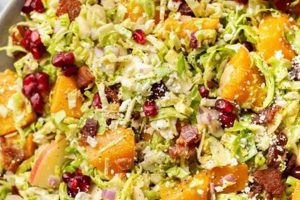
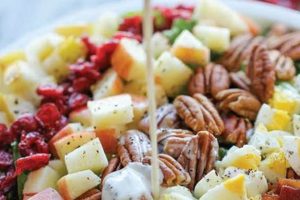
Vibrant and tart salads featuring raw cranberries offer a refreshing counterpoint to heavier dishes. These preparations often incorporate a balance of sweet and savory elements, such as citrus fruits, nuts, cheeses, and flavorful dressings. A classic example combines raw cranberries with oranges, pecans, and a citrus vinaigrette.
Such salads bring a unique flavor profile and textural dimension to meals, particularly during holiday gatherings or as a light lunch option. Cranberries are rich in antioxidants and vitamins, adding nutritional value to these dishes. Historically, cranberries have been used in various culinary applications, and their inclusion in salads showcases their versatility beyond traditional sauces and relishes.
The following sections will explore specific flavor combinations, preparation techniques, and tips for creating the perfect cranberry-centric salad for any occasion.
Tips for Cranberry Salad Success
Optimizing flavor and texture requires attention to key preparation details. The following tips ensure a delightful cranberry salad experience.
Tip 1: Balance Tartness: The natural tartness of raw cranberries benefits from a balancing sweetness. Incorporate ingredients like oranges, apples, or dried fruits such as raisins or cranberries. A touch of maple syrup or honey in the dressing can also complement the cranberry’s sharpness.
Tip 2: Add Textural Variety: Consider incorporating toasted nuts (pecans, walnuts, almonds) or seeds (sunflower, pumpkin) for added crunch. Feta cheese or crumbled goat cheese can introduce a creamy counterpoint.
Tip 3: Choose the Right Dressing: A light vinaigrette complements the fresh flavors. Citrus-based dressings (orange, lemon, or lime) pair well with cranberries. A simple balsamic vinaigrette also offers a pleasant contrast.
Tip 4: Don’t Overdress: Lightly coat the salad with the dressing to prevent the ingredients from becoming soggy. Dress immediately before serving for optimal texture.
Tip 5: Proper Cranberry Preparation: If using fresh cranberries, consider chopping or pulsing them briefly in a food processor to make them easier to eat and distribute flavor more evenly.
Tip 6: Chilling Enhances Flavor: Allow the salad to chill for at least 30 minutes before serving. This allows the flavors to meld and enhances the refreshing quality of the dish.
Tip 7: Garnish Thoughtfully: A simple garnish, such as a sprig of fresh mint or a sprinkle of chopped pecans, elevates the presentation.
By following these guidelines, one can achieve a well-balanced and flavorful cranberry salad that complements any meal.
These tips offer a starting point for creating a delicious cranberry salad, but experimentation with flavors and textures is encouraged.
1. Cranberry Selection

Optimal cranberry selection significantly influences the final quality of fresh cranberry salads. Choosing the right cranberries ensures vibrant flavor and pleasing texture, elevating the dish beyond the ordinary.
- Cranberry Firmness and Appearance
Firm, plump cranberries with a deep red color indicate freshness and optimal quality. Avoid cranberries that appear shriveled, bruised, or have soft spots. Glossy skin suggests recent harvest and proper storage. Selecting firm berries ensures a pleasant texture in the salad, contrasting nicely with other ingredients. Conversely, soft or damaged cranberries can negatively impact both flavor and overall presentation.
- Source and Seasonality
Fresh cranberries are typically available in the fall and winter months. Purchasing from local farmers markets or reputable grocery stores increases the likelihood of obtaining high-quality, recently harvested berries. Out-of-season cranberries may lack the same vibrant flavor and texture. Understanding seasonality allows for optimal selection and peak flavor experiences.
- Organic vs. Conventional Cranberries
Choosing organic cranberries eliminates exposure to pesticides and supports sustainable agricultural practices. While both organic and conventional cranberries can produce excellent salads, the choice often reflects individual preferences and priorities. This decision often aligns with broader dietary choices and values.
- Frozen Cranberries as an Alternative
While fresh cranberries are preferred, frozen cranberries offer a convenient alternative, especially outside of peak season. Ensure they are individually quick frozen (IQF) to maintain texture. Thaw and drain thoroughly before incorporating into a salad to prevent excess moisture. Frozen cranberries can be a valuable resource for year-round cranberry salad creation.
Careful cranberry selection lays the foundation for a successful fresh cranberry salad. By understanding the nuances of quality, sourcing, and preparation, one can maximize flavor, texture, and overall enjoyment of the finished dish. Informed selection elevates the salad from simple to exceptional, creating a memorable culinary experience.
2. Complementary Ingredients

The success of a fresh cranberry salad hinges on the thoughtful selection of complementary ingredients. These elements interact with the cranberries’ tartness, creating a balanced and flavorful profile. Understanding these pairings allows for a nuanced approach to recipe development and flavor customization.
- Sweetness and Acidity
Balancing the intrinsic tartness of cranberries is paramount. Sweet components, such as oranges, apples, or dried fruits like raisins or apricots, provide necessary contrast. A touch of honey or maple syrup in the dressing further enhances this balance. The interplay of sweet and tart creates a dynamic flavor profile, preventing the salad from being overly acidic. For instance, the bright citrus notes of an orange segment complement the deep tartness of cranberries, while the sweetness of dried apricots offers a richer, more concentrated counterpoint.
- Textural Contrasts
A variety of textures elevates a cranberry salad beyond a simple mix of ingredients. Toasted nuts, such as pecans, walnuts, or almonds, provide satisfying crunch. Seeds, like sunflower or pumpkin, offer a similar effect. The inclusion of creamy elements, like feta cheese or crumbled goat cheese, contrasts with the firmness of the cranberries and the crunch of nuts. These textural variations create a more engaging and enjoyable eating experience.
- Aromatic Herbs and Spices
Fresh herbs, like mint or parsley, add a refreshing dimension to cranberry salads. Spices, such as ginger or cinnamon, introduce warmth and complexity, particularly suitable for autumnal variations. These aromatic additions enhance the overall sensory experience, moving beyond basic sweet and tart flavors. A sprinkle of chopped fresh mint brightens the salad, while a pinch of ground cinnamon adds a warm, festive touch.
- Savory Additions
Incorporating savory elements expands the flavor possibilities. Red onion adds a pungent bite, while crumbled bacon or diced pancetta introduces a smoky, salty note. These additions create a more complex and nuanced flavor profile, making the salad suitable for a wider range of occasions and palates. The sharpness of red onion cuts through the richness of other ingredients, while the smoky saltiness of bacon provides a savory counterpoint to the sweet and tart elements.
By strategically combining these complementary ingredients, a simple cranberry salad transforms into a complex and satisfying dish. The interplay of flavors and textures creates a dynamic culinary experience, showcasing the versatility of cranberries beyond traditional applications. Careful consideration of these elements elevates the salad from a side dish to a centerpiece, offering a delightful balance of flavors and textures.
3. Balancing Flavors

Balancing flavors is crucial in fresh cranberry salad recipes due to the inherent tartness of raw cranberries. A successful salad harmonizes this tartness with other flavor profiles, creating a complex and enjoyable culinary experience. Careful consideration of sweetness, acidity, and contrasting elements prevents the salad from being one-dimensional.
- Sweetness as a Counterpoint
Sweet ingredients play a vital role in tempering cranberry tartness. Options include fresh or dried fruits, honey, maple syrup, or even a touch of granulated sugar in the dressing. The degree of sweetness must be carefully calibrated to complement, not overpower, the cranberries. For example, the sweetness of orange segments complements cranberries without masking their distinct character. Dried fruits, like raisins or cranberries, offer a more concentrated sweetness, requiring smaller quantities.
- Acidity’s Role in Complexity
While cranberries contribute significant acidity, other acidic elements can add complexity. Citrus fruits, like oranges, lemons, or limes, offer different levels of tartness and aromatic nuances. Vinegars, such as apple cider or balsamic, introduce depth and complexity to dressings. The interplay of various acidic components creates a more nuanced flavor profile, preventing the salad from tasting solely of cranberries. Lemon juice, for example, offers a brighter acidity than orange juice, while balsamic vinegar contributes a deeper, more complex acidic note.
- Contrasting Flavors and Textures
Contrasting flavors and textures create a multi-dimensional experience. Savory ingredients, like crumbled cheese, toasted nuts, or even bacon, provide a counterpoint to the fruit’s sweetness and acidity. These additions enhance the salad’s complexity and make it a more substantial dish. The saltiness of feta cheese, for example, offsets the sweetness of dried fruit and the tartness of cranberries. The crunch of toasted pecans offers a textural contrast to the softer elements of the salad.
- The Importance of Dressing
The dressing serves as a unifying element, binding the ingredients and contributing to the overall flavor balance. Vinaigrettes, with their blend of oil and acid, are particularly well-suited to cranberry salads. The choice of vinegar, along with additions like herbs, spices, or sweeteners, further refines the flavor profile. A citrus vinaigrette, for example, complements the fruit components, while a balsamic vinaigrette adds a touch of richness and depth. The amount of dressing should be carefully considered to avoid overwhelming the other flavors.
Successfully balancing flavors in a fresh cranberry salad elevates it from a simple side dish to a more complex and satisfying culinary creation. The interplay of sweet, tart, savory, and textural elements creates a dynamic and memorable eating experience. Thoughtful consideration of these factors ensures that the cranberry’s unique character shines while harmonizing with a diverse range of complementary ingredients. This balanced approach transforms the inherent tartness of cranberries into a key strength, resulting in a vibrant and refreshing salad.
4. Texture Variations

Textural variation elevates fresh cranberry salads from simple to complex culinary experiences. The inherent firmness of raw cranberries provides a foundational texture, offering a springy counterpoint to other ingredients. Consideration of contrasting and complementary textures ensures a more dynamic and satisfying sensory experience. A monotonous texture detracts from the overall enjoyment, while a well-considered variety stimulates the palate and enhances appreciation of individual flavors.
Several ingredients introduce textural contrast. Toasted nuts, such as pecans, walnuts, or almonds, contribute a satisfying crunch. Seeds, including sunflower or pumpkin seeds, provide similar textural complexity. These elements juxtapose the cranberries’ firmness, preventing a uniformly dense mouthfeel. Soft, creamy components, like crumbled feta cheese or goat cheese, offer another layer of textural contrast, enhancing the interplay of sensations. For example, a salad combining cranberries, toasted pecans, and crumbled goat cheese offers a dynamic interplay of firm, crunchy, and creamy textures. This combination creates a more engaging and enjoyable eating experience than a salad solely comprising cranberries and other soft ingredients.
Strategic textural variation is essential for achieving a balanced and appealing cranberry salad. Understanding the interplay of textures ensures a more satisfying and memorable culinary experience. The contrast between firm cranberries, crunchy nuts, and creamy cheese exemplifies a well-executed textural strategy. Ignoring textural variation results in a less stimulating and potentially less enjoyable salad. The goal is to create a dish that not only tastes delicious but also offers a stimulating and varied textural profile, maximizing enjoyment and culinary appreciation.
5. Dressing Choices

Dressing choices significantly influence the overall flavor profile and balance of fresh cranberry salads. Given the cranberry’s inherent tartness, the dressing acts as a critical balancing agent, harmonizing the various components while adding its own distinct character. An inappropriate dressing can easily overpower the delicate flavors of the salad, while a well-chosen dressing enhances the interplay of sweet, tart, and savory elements.
Light, bright vinaigrettes often complement cranberry salads best. Citrus-based dressings, utilizing lemon, lime, or orange juice, provide acidity that harmonizes with the cranberries while adding a refreshing zest. The citrus notes enhance the fruit-forward nature of the salad, creating a vibrant flavor profile. Alternatively, a balsamic vinaigrette offers a richer, slightly sweeter counterpoint, complementing the tartness of the cranberries while adding depth. A simple vinaigrette made with apple cider vinegar provides a milder acidity and complements autumnal flavor combinations, particularly those incorporating apples or walnuts. The choice of oil also influences the dressing’s overall character. A light olive oil maintains the salad’s fresh profile, while a nut oil, such as walnut or pecan oil, adds a subtle richness and complements the often-included nuts in these salads. For example, a cranberry salad with oranges and pecans benefits from a citrus vinaigrette made with orange juice and pecan oil, creating a harmonious flavor profile that enhances the existing ingredients.
Careful consideration of dressing choices is essential for achieving a balanced and flavorful fresh cranberry salad. The dressing should complement, not overpower, the other ingredients. Understanding the interplay of acidity, sweetness, and other flavor components within the dressing allows for informed choices that enhance the overall sensory experience. A well-chosen dressing elevates the salad from a simple combination of ingredients to a harmonious and complex dish, highlighting the unique qualities of fresh cranberries. The dressing should unify the diverse elements of the salad, creating a cohesive and satisfying culinary experience.
6. Seasonal Adaptations

Seasonal adaptations enhance fresh cranberry salad recipes by incorporating ingredients that reflect the flavors and produce available during specific times of the year. This approach maximizes freshness and flavor complexity while aligning the salad with the prevailing culinary themes of a given season. The inherent tartness of cranberries provides a versatile base that readily complements both autumnal and winter flavors. For instance, an autumnal cranberry salad might feature roasted butternut squash, toasted pecans, and maple-infused vinaigrette, capturing the essence of the harvest season. Conversely, a winter cranberry salad may incorporate segments of blood orange, pomegranate arils, and pistachios, creating a vibrant and refreshing dish that brightens the colder months.
The availability of specific ingredients dictates seasonal adaptations. Apples and pears reach peak ripeness in the fall, making them ideal additions to autumnal cranberry salads. Citrus fruits, like oranges and grapefruits, are prominent during winter, offering a refreshing counterpoint to heavier holiday meals. Integrating seasonal ingredients not only enhances flavor but also supports local agriculture and reduces the environmental impact associated with transporting produce long distances. Furthermore, seasonal adaptations introduce variety and prevent culinary monotony, ensuring that cranberry salads remain interesting and appealing throughout the year. A spring variation might incorporate fresh strawberries and spinach, offering a lighter and brighter flavor profile. These adaptations demonstrate the versatility of cranberries and their ability to harmonize with diverse seasonal ingredients.
Understanding seasonal adaptations allows for a more nuanced and dynamic approach to fresh cranberry salad recipes. This awareness maximizes flavor potential, utilizes readily available ingredients, and promotes culinary creativity. Adapting recipes to reflect seasonal changes ensures ongoing enjoyment and prevents stagnation, keeping cranberry salads fresh and exciting throughout the year. The ability to adapt recipes also reflects a deeper understanding of culinary principles and enhances one’s ability to create balanced and flavorful dishes using readily available, seasonal ingredients. This approach elevates cranberry salads beyond basic recipes, transforming them into dynamic culinary expressions that reflect the nuances of each season.
Frequently Asked Questions
This section addresses common inquiries regarding fresh cranberry salad recipes, offering clarity and guidance for optimal preparation and enjoyment.
Question 1: How can the tartness of raw cranberries be balanced in a salad?
Balancing tartness involves incorporating sweet and/or savory elements. Sweet fruits (apples, oranges), dried fruits (raisins, cranberries), or sweeteners (honey, maple syrup) can be added. Savory components, such as cheeses or nuts, also provide a counterpoint.
Question 2: What dressings complement fresh cranberry salads best?
Light vinaigrettes, particularly those with citrus (lemon, orange, lime) or balsamic bases, tend to complement the flavors of cranberry salads without overpowering other ingredients. The dressing should enhance, not mask, the other flavors.
Question 3: Can frozen cranberries be used in fresh cranberry salad recipes?
Frozen cranberries can be substituted, especially when fresh cranberries are unavailable. It is essential to thaw and thoroughly drain them before use to prevent excess moisture in the salad. Individually quick-frozen (IQF) cranberries are preferred for better texture retention.
Question 4: How can textural variety be achieved in a cranberry salad?
Incorporating ingredients like toasted nuts (pecans, walnuts), seeds (sunflower, pumpkin), or crumbled cheese (feta, goat) introduces textural contrast to the firmness of cranberries, creating a more dynamic sensory experience.
Question 5: How long can fresh cranberry salad be stored?
Refrigeration in an airtight container is recommended. Ideally, cranberry salad should be consumed within three to five days for optimal quality. The presence of fresh fruits and vegetables may influence storage duration.
Question 6: How can one adapt cranberry salads to different seasons?
Utilize seasonal produce. Autumnal variations might include apples, pears, and butternut squash, while winter versions could feature citrus fruits, pomegranate, and winter greens. This approach maximizes flavor and freshness while aligning with seasonal availability.
Understanding these key aspects of fresh cranberry salad preparation ensures a successful and enjoyable culinary outcome. Proper ingredient selection, flavor balancing, and thoughtful dressing choices are essential considerations.
For further culinary exploration, the following section provides specific recipe examples showcasing the versatility and deliciousness of fresh cranberry salads.
Fresh Cranberry Salad Recipes
Exploration of fresh cranberry salad recipes reveals the significant impact of ingredient selection, flavor balancing, and textural variation on the final product. Careful consideration of these elements transforms the inherent tartness of raw cranberries into a culinary asset, allowing for a diverse range of flavor profiles. Proper dressing selection further enhances the interplay of ingredients, unifying the salad and creating a cohesive culinary experience. Seasonal adaptations maximize freshness and flavor complexity while aligning recipes with readily available produce.
Fresh cranberry salads offer a vibrant and refreshing culinary experience, adaptable to diverse palates and occasions. Continued exploration of flavor combinations and preparation techniques expands culinary horizons, ensuring these dishes remain a dynamic and engaging element of gastronomic exploration. The potential for creativity within this culinary realm remains vast, promising a continuous evolution of fresh cranberry salad recipes for future enjoyment.