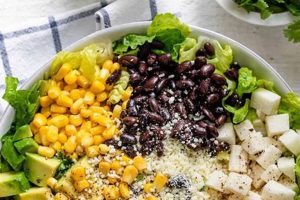
Dishes combining cooked quinoa, various vegetables, herbs, and feta cheese offer a nutritious and flavorful meal option. These salads can range from simple combinations with cucumber, tomato, and red onion to more complex recipes incorporating roasted vegetables, nuts, seeds, and diverse dressings. An example includes a salad with quinoa, roasted sweet potatoes, crumbled feta, chopped parsley, and a lemon-vinaigrette dressing.
Such dishes provide a complete protein source thanks to the quinoa, while the feta contributes calcium and a salty, tangy flavor. The versatility of quinoa allows it to absorb the flavors of accompanying ingredients, making it an excellent base for diverse flavor profiles. Additionally, these salads are often rich in vitamins, minerals, and fiber, promoting satiety and digestive health. Historically, quinoa has been a staple food in the Andean region for centuries, while feta cheese originates from Greece, highlighting the fusion of culinary traditions in these modern salads.
This exploration will delve into specific recipe variations, highlighting ingredient choices, preparation techniques, and nutritional considerations to guide the creation of delicious and healthful quinoa salads featuring feta cheese.
Tips for Quinoa Salad with Feta
Optimizing ingredient selection and preparation methods enhances the flavor and nutritional value of quinoa salads incorporating feta cheese. The following tips offer guidance for creating exceptional dishes.
Tip 1: Rinse the Quinoa: Rinsing quinoa under cold water before cooking removes its natural coating of saponins, which can impart a bitter taste. This step ensures a cleaner, more palatable flavor profile.
Tip 2: Toast the Quinoa (Optional): Toasting dry quinoa in a pan before cooking adds a nutty depth of flavor and enhances its texture. This step is particularly beneficial for salads with bolder flavor components.
Tip 3: Balance Flavors and Textures: Consider incorporating a variety of ingredients with complementary flavors and textures. Crisp vegetables, such as cucumbers and bell peppers, pair well with the creamy feta and fluffy quinoa. Adding toasted nuts or seeds provides a satisfying crunch.
Tip 4: Dress Strategically: The dressing should complement the other ingredients without overpowering them. A light vinaigrette with lemon juice, olive oil, and herbs often works well. Adding the dressing just before serving prevents the salad from becoming soggy.
Tip 5: Explore Different Feta Varieties: Experimenting with different types of feta, such as cow’s milk, sheep’s milk, or a blend, introduces nuanced flavors and textures to the salad.
Tip 6: Incorporate Fresh Herbs: Fresh herbs, like mint, parsley, or dill, add brightness and complexity to the salad. Chopping the herbs finely distributes their flavor evenly.
Tip 7: Proper Storage: Store leftover salad in an airtight container in the refrigerator for up to three days. Add the dressing just before serving to maintain optimal freshness.
By employing these tips, one can elevate a simple quinoa salad with feta into a sophisticated and satisfying culinary experience. Careful attention to detail, from rinsing the quinoa to balancing flavors, ensures a dish that is both nutritious and delicious.
These insights provide a foundation for crafting a variety of quinoa salad recipes featuring feta cheese, tailored to individual preferences and dietary needs.
1. Fluffy Quinoa

Achieving fluffy quinoa is paramount in crafting a successful quinoa salad with feta. Properly cooked quinoa provides a light and airy texture that contrasts pleasantly with the other ingredients, preventing a dense or heavy salad. The following facets detail the key components contributing to perfectly cooked, fluffy quinoa.
- The Importance of the Water Ratio
The ratio of water to quinoa significantly impacts the final texture. Too much water results in mushy quinoa, while too little leads to undercooked, crunchy grains. A general guideline is a 2:1 ratio of water to quinoa, though adjustments may be needed based on specific quinoa varieties and cooking methods. Achieving the correct water balance is crucial for fluffiness.
- Cooking Method: Absorption vs. Boiling
The cooking method also influences the final texture. The absorption method, where quinoa is simmered in a precise amount of water until absorbed, generally yields fluffier results compared to boiling, which can sometimes lead to overcooked quinoa. Controlling the heat and timing during the absorption method ensures optimal fluffiness.
- Fluffing with a Fork
Once the quinoa is cooked and the water absorbed, fluffing it with a fork is essential. This gentle separation of the grains allows steam to escape, preventing stickiness and promoting a light, airy texture. This simple step significantly enhances the overall fluffiness and contributes to a more appealing salad.
- Cooling and Resting
Allowing the cooked quinoa to cool and rest undisturbed for a short period before incorporating it into the salad further enhances fluffiness. This allows the grains to settle and maintain their individual structure, preventing clumping and ensuring a pleasant mouthfeel.
By understanding these factors, one can consistently achieve fluffy quinoa, which serves as the perfect foundation for a delicious and texturally satisfying quinoa salad with feta. The light and airy quinoa complements the creamy feta and other salad components, creating a balanced and enjoyable culinary experience.
2. Crumbled Feta
Crumbled feta cheese plays a pivotal role in quinoa salad recipes, contributing a distinct salty, tangy flavor and creamy texture that complements the other ingredients. Its presence elevates these salads beyond simple grain-based dishes, adding depth and complexity. Understanding the nuances of feta’s contribution is crucial for creating a well-balanced and flavorful salad.
- Flavor Profile
Feta’s characteristic briny and tangy flavor profile provides a counterpoint to the often-mild flavor of quinoa. This contrast enhances the overall taste experience, preventing the salad from being bland. The intensity of the feta’s saltiness can vary depending on its origin and aging, allowing for nuanced flavor adjustments within the recipe.
- Textural Contrast
The creamy, crumbly texture of feta contrasts with the fluffy quinoa and any crisp vegetables included in the salad. This interplay of textures creates a more engaging and satisfying mouthfeel. The size of the feta crumbles can also influence the textural experience; larger crumbles provide distinct pockets of creaminess, while smaller crumbles distribute the flavor and texture more evenly.
- Nutritional Contribution
Beyond flavor and texture, feta contributes to the nutritional value of the salad. It is a source of calcium, protein, and healthy fats. However, it is also relatively high in sodium, a factor to consider when balancing the overall nutritional profile of the dish. Choosing lower-sodium varieties or using feta sparingly can address this concern.
- Interaction with other Ingredients
Feta interacts harmoniously with a variety of ingredients commonly found in quinoa salads. Its saltiness complements the sweetness of roasted vegetables like sweet potatoes or bell peppers, while its tanginess balances the richness of ingredients like olives or avocado. This versatility makes feta a valuable addition to a wide range of quinoa salad recipes.
The strategic incorporation of crumbled feta elevates quinoa salads from simple to sophisticated. By understanding its impact on flavor, texture, and nutrition, one can craft balanced and delicious dishes that showcase the synergy between quinoa and feta. The careful consideration of feta’s properties allows for the creation of quinoa salads tailored to individual preferences and dietary needs.
3. Fresh Vegetables

Fresh vegetables are essential components of quinoa salad recipes featuring feta, contributing vital nutrients, vibrant colors, diverse textures, and contrasting flavors that complement the other ingredients. Their inclusion elevates these salads from simple grain-based dishes to complex and satisfying meals. Understanding the role of fresh vegetables is crucial for maximizing both the nutritional value and culinary appeal of these salads.
- Nutritional Powerhouses
Fresh vegetables provide a wide array of vitamins, minerals, and antioxidants, enhancing the nutritional profile of quinoa salads. Leafy greens like spinach or kale contribute vitamin K and folate, while colorful vegetables like bell peppers and tomatoes offer vitamin C and carotenoids. The inclusion of diverse vegetables ensures a broader spectrum of essential nutrients.
- Textural Variety
Fresh vegetables introduce textural complexity to quinoa salads, contrasting with the fluffy quinoa and creamy feta. Crisp vegetables like cucumbers, bell peppers, and carrots provide a satisfying crunch, while softer vegetables like avocado or roasted sweet potatoes offer a creamy counterpoint. This interplay of textures enhances the overall sensory experience.
- Flavor Dimensions
The diverse flavors of fresh vegetables contribute depth and complexity to quinoa salads. The sweetness of roasted vegetables like beets or corn balances the saltiness of the feta, while the peppery bite of radishes or watercress adds a contrasting element. The careful selection of vegetables allows for the creation of unique and balanced flavor profiles.
- Visual Appeal
The vibrant colors of fresh vegetables enhance the visual appeal of quinoa salads, making them more enticing and appetizing. The deep green of spinach, the bright red of tomatoes, and the vibrant orange of carrots create a visually stimulating dish that encourages consumption. This visual appeal contributes to the overall enjoyment of the meal.
The incorporation of fresh vegetables transforms quinoa salads with feta into nutritionally balanced, texturally diverse, and visually appealing meals. Their strategic selection enhances flavor profiles and contributes to a more satisfying culinary experience. By understanding the multifaceted contributions of fresh vegetables, one can create quinoa salads that are both delicious and healthful.
4. Vibrant Herbs
Vibrant herbs play a crucial role in elevating quinoa salad recipes featuring feta cheese. They contribute not only distinctive aromas and fresh flavors but also visual appeal and nutritional value. Their strategic incorporation transforms a simple salad into a complex culinary experience. The selection and application of these herbs significantly impact the final dish. For instance, mint provides a cooling counterpoint to the salty feta and can brighten the overall flavor profile, while dill offers a subtle anise-like flavor that complements cucumber and lemon. Parsley contributes a fresh, herbaceous note, and oregano introduces a slightly earthy, pungent dimension.
The freshness of the herbs is paramount. Dried herbs can be used in a pinch, but fresh herbs offer a superior flavor and aroma. Chopping or tearing the herbs just before adding them to the salad releases their volatile oils, maximizing their impact. Furthermore, the quantity of herbs used influences the overall taste. A light hand preserves a subtle herbal presence, while a more generous amount creates a bolder flavor profile. For example, a quinoa salad with feta, cucumber, and tomato benefits from a generous amount of fresh mint and dill, while a salad featuring roasted vegetables and feta might be better suited to a more moderate amount of parsley or oregano. Understanding these nuances allows for precise flavor control and customization based on individual preferences.
In summary, the inclusion of vibrant herbs in quinoa salad recipes featuring feta is essential for maximizing flavor complexity, aroma, and visual appeal. Careful consideration of herb selection, freshness, and quantity allows for precise flavor tailoring and elevates the dish from simple to sophisticated. This understanding allows for greater culinary creativity and ensures a balanced, flavorful, and visually appealing final product.
5. Light Vinaigrette
Light vinaigrettes play a crucial role in quinoa salad recipes featuring feta cheese. They provide a necessary acidic element that balances the richness of the cheese and enhances the flavors of the other ingredients without overpowering the delicate nature of the quinoa. The choice of vinaigrette significantly impacts the overall taste and texture of the salad, contributing to a harmonious blend of flavors.
- Acidity and Flavor Balance
The acidity in a light vinaigrette, typically derived from ingredients like lemon juice, vinegar, or a combination thereof, cuts through the richness of the feta and other components like nuts or avocado. This creates a more balanced flavor profile and prevents the salad from feeling too heavy. For example, a lemon vinaigrette brightens the flavors of a salad with cucumber, tomato, and feta, while a red wine vinaigrette adds depth to a salad with roasted vegetables and feta.
- Emulsification and Texture
A properly emulsified vinaigrette, where the oil and acidic components are combined into a stable mixture, coats the ingredients evenly and contributes to a pleasant, smooth texture. This prevents the salad from feeling dry or oily and ensures that the flavors are distributed throughout. The emulsification process also adds a slight creaminess to the vinaigrette, which complements the crumbly texture of the feta.
- Complementary Flavor Profiles
The flavor profile of the vinaigrette should complement the other ingredients in the salad. A vinaigrette with lemon juice, olive oil, and herbs pairs well with Mediterranean-inspired salads featuring feta, olives, and cucumbers. Alternatively, a vinaigrette with balsamic vinegar, Dijon mustard, and honey complements salads with roasted vegetables and feta. The careful selection of vinaigrette ingredients ensures a harmonious blend of flavors.
- Enhancing Ingredient Cohesion
Beyond flavor, a light vinaigrette acts as a binding agent, bringing the various ingredients together. It lightly coats the quinoa, vegetables, and feta, creating a cohesive and enjoyable eating experience. This also helps to distribute the flavors evenly throughout the salad, ensuring that each bite is balanced and flavorful. Furthermore, the vinaigrette prevents the salad from becoming dry and keeps the ingredients fresh.
In conclusion, the selection and preparation of a light vinaigrette are essential steps in crafting a successful quinoa salad with feta cheese. The right vinaigrette enhances the flavor profile, improves the texture, and creates a harmonious blend of ingredients, elevating the dish from a simple combination of components to a well-balanced and satisfying culinary experience. The vinaigrette’s role in balancing flavors, enhancing textures, and unifying ingredients is crucial for achieving a delicious and cohesive salad.
6. Balanced Flavors

Balance is a cornerstone of successful culinary creations, particularly within the context of quinoa salad recipes featuring feta cheese. The inherent mildness of quinoa provides a neutral canvas, requiring careful consideration of contrasting and complementary flavors to achieve a harmonious and satisfying dish. The saltiness of feta contributes a dominant flavor profile, necessitating the incorporation of other ingredients to counterbalance and enhance its presence. A lack of balance can result in a one-dimensional salad, where the saltiness of the feta overwhelms the other flavors, or conversely, a bland dish where no single flavor stands out. For instance, the acidity of a lemon vinaigrette or the sweetness of roasted sweet potatoes offsets the fetas saltiness, preventing it from dominating the palate. The bitterness of kale or the peppery bite of radishes can further contribute to a more complex and balanced flavor profile.
The interplay of textures also contributes to the overall balance. The creamy texture of feta cheese contrasts with the fluffy quinoa, and the addition of crisp vegetables like cucumbers or bell peppers introduces another textural dimension. This variety prevents a monotonous mouthfeel and adds to the sensory experience. Furthermore, the incorporation of fresh herbs like mint or dill introduces aromatic complexity, further enhancing the balance and depth of flavor. A well-balanced quinoa salad with feta offers a symphony of flavors and textures, where each element plays a distinct yet harmonious role. A practical example of achieving balance is pairing feta with roasted sweet potatoes and a balsamic vinaigrette. The sweetness of the potatoes and the tanginess of the vinaigrette offset the fetas saltiness, while the soft texture of the potatoes and the crisp texture of fresh spinach leaves contrast with the creamy feta and fluffy quinoa.
Achieving balanced flavors in a quinoa salad with feta involves careful consideration of ingredient selection, preparation methods, and the interplay of tastes and textures. This balance is not merely about masking the saltiness of feta but integrating it into a complex flavor profile where each element complements and enhances the others. The resulting salad offers a more satisfying and nuanced culinary experience, showcasing the versatility of quinoa and the unique contribution of feta cheese when incorporated thoughtfully. Failure to achieve this balance can result in a dish that is either overly salty or bland, highlighting the importance of understanding the interplay of flavors within this specific culinary context.
Frequently Asked Questions
This section addresses common inquiries regarding quinoa salads incorporating feta cheese, offering practical guidance and clarifying potential uncertainties.
Question 1: Can quinoa salads with feta be prepared in advance?
While the quinoa and other components can be cooked and prepared ahead of time, it’s generally recommended to add the feta and dressing shortly before serving. This prevents the salad from becoming soggy and maintains the feta’s distinct texture.
Question 2: What are suitable substitutes for feta cheese?
Goat cheese offers a similar tangy flavor profile, while halloumi provides a firmer texture that holds its shape well. Ricotta salata is another option, offering a salty and slightly grainy texture.
Question 3: How can sodium content be reduced in these salads?
Opting for lower-sodium feta varieties or using feta more sparingly can help manage sodium intake. Rinsing canned beans or using fresh vegetables also contributes to lower sodium levels.
Question 4: What dressings complement quinoa salads with feta beyond vinaigrettes?
A lemon-tahini dressing offers a creamy, nutty alternative, while a yogurt-based dressing provides a lighter, tangier option. Herbed buttermilk dressings can also complement the flavors of feta and quinoa.
Question 5: How can these salads be adapted for specific dietary needs, such as gluten-free or vegan diets?
Quinoa is naturally gluten-free. For vegan adaptations, replace feta with a plant-based feta alternative or nutritional yeast for a cheesy flavor. Ensure all other ingredients, including the dressing, are also vegan-friendly.
Question 6: How long can leftover quinoa salad with feta be stored?
Properly stored in an airtight container in the refrigerator, leftover salad can typically be enjoyed for up to three days. However, the quality and texture may gradually decline over time.
Addressing these common inquiries provides a more comprehensive understanding of quinoa salads with feta, enabling informed choices regarding ingredient selection, preparation, and storage. These insights facilitate the creation of dishes tailored to individual preferences and dietary requirements.
Further exploration of recipe variations and culinary techniques will enhance one’s ability to create truly exceptional quinoa salads featuring the distinct flavor and texture of feta cheese.
Quinoa Salad Recipes Feta
Exploration of quinoa salad recipes incorporating feta cheese reveals a versatile dish capable of accommodating diverse palates and dietary preferences. Key elements highlighted include the importance of fluffy quinoa as a foundation, the textural and flavor contributions of crumbled feta, the nutritional and sensory enhancement provided by fresh vegetables, the aromatic and flavor complexity introduced by vibrant herbs, and the unifying role of light vinaigrettes. Achieving balanced flavors through strategic ingredient selection and preparation techniques is paramount for maximizing culinary satisfaction. Addressing common inquiries regarding advance preparation, ingredient substitutions, sodium content management, dressing alternatives, and dietary adaptations provides a comprehensive understanding of this adaptable dish.
Culinary experimentation with diverse ingredients and flavor profiles offers boundless opportunities for personalized quinoa salad creations featuring feta cheese. Continued exploration and refinement of techniques will undoubtedly further elevate this dish, solidifying its position as a nutritious, flavorful, and versatile culinary staple.