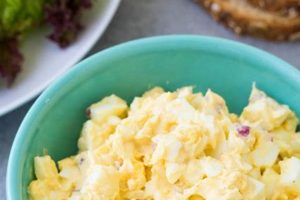
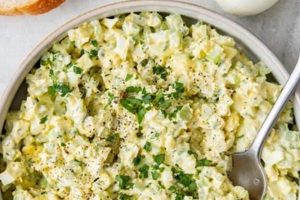
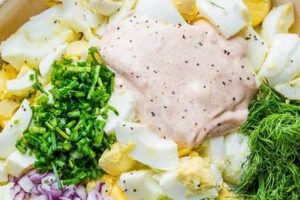
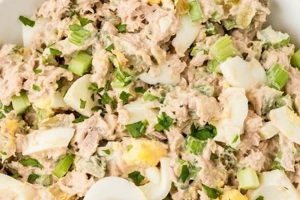
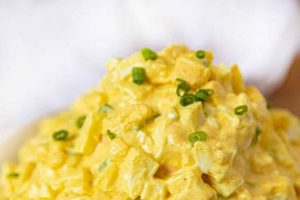
A foundational element in classic egg salad is the emulsified sauce, typically made with oil, eggs, and an acid such as vinegar or lemon juice. This condiment binds the chopped hard-boiled eggs, creating a creamy texture and adding a tangy flavor that complements the richness of the yolks. Variations often include mustard, spices like paprika or celery seed, and sometimes chopped vegetables like celery or onion. This versatile mixture can be enjoyed as a sandwich filling, a salad topping, or a standalone snack.
The creamy texture and tangy flavor profile offered by this key ingredient elevates egg salad beyond simply chopped eggs. Its ability to bind ingredients together creates a cohesive dish, while the richness of the sauce enhances the overall palatability. Historically, similar preparations have been documented across various cultures for centuries, demonstrating the enduring appeal of this simple yet satisfying combination. This culinary staple remains popular today due to its affordability, ease of preparation, and adaptable nature.
The following sections will delve into specific recipes, exploring various techniques for preparing hard-boiled eggs and offering suggestions for customizing the flavor profile with different herbs, spices, and add-ins.
Tips for Elevated Egg Salad
Achieving optimal flavor and texture in egg salad involves attention to detail throughout the preparation process. The following tips offer guidance for creating a superior dish.
Tip 1: Perfect Hard-Boiled Eggs: Avoid overcooking the eggs, which can lead to a rubbery texture and a green ring around the yolk. Gently simmering eggs for the appropriate time, followed by immediate immersion in an ice bath, ensures optimal consistency.
Tip 2: Proper Chopping Technique: Uniformly chopped eggs create a more pleasing texture. Using a sharp knife or an egg slicer helps achieve consistent pieces, preventing an overly mushy or chunky final product.
Tip 3: Balancing Flavor Profiles: The creamy base provides a foundation for a variety of flavors. Consider incorporating Dijon mustard for tang, paprika for a smoky note, or fresh herbs like dill or chives for a brighter taste.
Tip 4: Enhancing Textural Complexity: Finely diced celery or red onion adds a pleasant crunch, while incorporating ingredients like chopped pickles or capers introduces a briny element.
Tip 5: Mayonnaise Selection: The quality of the emulsified sauce significantly impacts the final result. Opting for a high-quality product, or making a homemade version, enhances the overall flavor and texture.
Tip 6: Seasoning Strategically: Proper seasoning elevates the overall flavor profile. Incorporating salt and freshly ground black pepper, along with other spices, enhances the other ingredients.
Tip 7: Chilling for Optimal Flavor: Allowing the egg salad to chill in the refrigerator for at least 30 minutes allows the flavors to meld and develop fully before serving.
By following these tips, one can create egg salad that is both delicious and visually appealing, transforming a simple dish into a culinary delight.
These guidelines provide a foundation for crafting exceptional egg salad. The subsequent sections will offer specific recipe variations, catering to a range of preferences.
1. Binding Agent

The binding agent in a simple egg salad recipe, typically mayonnaise, plays a crucial role in transforming disparate ingredients into a cohesive and palatable dish. Its function extends beyond simply holding the chopped eggs together; it contributes significantly to the overall texture, flavor, and stability of the egg salad.
- Cohesion and Texture
Mayonnaise acts as the glue that binds the chopped egg whites and yolks, preventing a dry, crumbly mixture. The emulsion creates a creamy, smooth texture that coats the egg pieces, resulting in a more enjoyable mouthfeel. Without a sufficient binding agent, the egg salad would lack the desired consistency and be less appealing.
- Flavor Enhancement and Distribution
Mayonnaise contributes a rich, tangy flavor that complements the taste of the eggs. Furthermore, it acts as a vehicle for distributing other flavors throughout the salad, such as those from added mustard, spices, or herbs. The even distribution of the binding agent ensures a consistent flavor profile in each bite.
- Moisture Retention and Stability
Mayonnaise adds moisture to the egg salad, preventing it from becoming dry and unappetizing. This moisture also contributes to the stability of the mixture, preventing separation and maintaining its creamy consistency over time. The emulsified nature of mayonnaise helps retain moisture within the salad.
- Versatility and Customization
The binding agent offers an opportunity for customization. Different types of mayonnaise, such as those flavored with herbs or spices, can be used to create unique flavor profiles. Additionally, the amount of mayonnaise used can be adjusted to achieve the desired consistency, from a lighter, fluffier salad to a richer, denser one.
In summary, the binding agent is essential for creating a simple egg salad that is not only flavorful and texturally pleasing but also structurally sound. The careful selection and application of mayonnaise contribute significantly to the overall success of the dish, elevating it from a basic combination of ingredients to a satisfying culinary experience.
2. Flavor Enhancer

Mayonnaise serves as a significant flavor enhancer in simple egg salad recipes, contributing richness and complexity beyond the taste of plain eggs. Its inherent qualities and interactions with other ingredients create a more palatable and satisfying dish. Understanding its role as a flavor enhancer is crucial for crafting a well-balanced and delicious egg salad.
- Creaminess and Mouthfeel
Mayonnaise adds a creamy texture that coats the palate, enhancing the perception of flavor and creating a more luxurious mouthfeel. This richness complements the relatively mild flavor of hard-boiled eggs, making the overall experience more enjoyable. The creamy texture also allows other flavors to linger on the palate.
- Tanginess and Acidity
The subtle tanginess derived from the vinegar or lemon juice within mayonnaise provides a counterpoint to the richness of the yolks, adding depth and complexity to the flavor profile. This acidity brightens the overall taste and prevents the egg salad from feeling too heavy or bland. The level of tanginess can be adjusted by selecting different types of mayonnaise.
- Flavor Carrier and Synergies
Mayonnaise acts as a carrier for other flavor components, distributing them evenly throughout the salad and facilitating synergistic interactions between ingredients. For instance, the addition of mustard or spices to the mayonnaise enhances their impact by ensuring even distribution and contact with the eggs. This allows for complex flavor combinations.
- Masking Off-Flavors
While not its primary function, mayonnaise can help mask any slight off-flavors that might arise from overcooked eggs, creating a more balanced and palatable final product. Its rich flavor profile can subtly cover less desirable notes, ensuring a consistently enjoyable culinary experience.
The role of mayonnaise as a flavor enhancer in simple egg salad recipes is multifaceted, contributing to the overall sensory experience by adding creaminess, tanginess, and facilitating flavor synergies. Careful consideration of the type and amount of mayonnaise used allows for customization and optimization of the final dish, ensuring a balanced and flavorful egg salad.
3. Texture Creator

Mayonnaise plays a critical role as a texture creator in simple egg salad recipes. Its presence significantly influences the final consistency and mouthfeel, transforming individual components into a cohesive and palatable dish. The interplay between mayonnaise and other ingredients determines the overall textural experience, impacting enjoyment and satisfaction.
The emulsification of oil and egg yolks within mayonnaise provides a smooth, creamy base that coats the chopped egg whites and yolks. This lubrication prevents a dry, crumbly texture, creating a smooth, velvety mouthfeel. The amount of mayonnaise directly correlates with the final consistency: less mayonnaise results in a chunkier, more textured salad, while a higher proportion yields a creamier, smoother product. For example, a classic egg salad sandwich benefits from a creamier consistency, while a topping for a green salad might require a less emulsified, more textured approach. Balancing the proportion of mayonnaise alongside other textural elements like chopped celery or onions creates complexity and elevates the sensory experience.
Beyond its inherent properties, mayonnaise facilitates the incorporation of other ingredients that contribute to texture. Its viscous nature allows for the suspension of finely chopped vegetables, herbs, or spices, distributing them evenly throughout the mixture and preventing settling. This ensures a consistent textural experience in every bite. Furthermore, mayonnaise acts as a buffer, preventing harsher textures from dominating. For instance, the sharp bite of raw onion is mellowed when coated in mayonnaise, contributing flavor without overwhelming the palate. Achieving optimal textural balance relies on understanding the interplay between mayonnaise, eggs, and any additional ingredients. Consideration of the desired final texture creamy, chunky, or somewhere in between guides ingredient selection and preparation techniques, ensuring a satisfying culinary outcome.
4. Emulsion Stabilizer
Mayonnaise functions as an emulsion stabilizer in simple egg salad recipes, preventing separation of the oil and water-based ingredients, ensuring a consistent texture and preventing an oily, unappetizing result. This stabilizing effect is crucial for maintaining the desired creamy consistency and overall palatability of the egg salad.
- Lecithin’s Role
Lecithin, found in egg yolks, acts as a natural emulsifier. Its molecular structure allows it to bind both oil and water, creating a stable emulsion that prevents separation. In mayonnaise, lecithin surrounds oil droplets, preventing them from coalescing and separating from the water-based ingredients like vinegar or lemon juice. This ensures a smooth, homogenous texture throughout the egg salad.
- Preventing Separation Over Time
The emulsion stabilizing property of mayonnaise extends beyond initial mixing. It prevents the salad from separating into oily and watery layers, even after refrigeration or extended periods. This stability is crucial for maintaining the desired consistency and visual appeal, especially when the egg salad is prepared in advance or stored for later consumption. Without a stable emulsion, the egg salad can become visually unappealing and texturally unpleasant.
- Impact on Flavor and Mouthfeel
A stable emulsion ensures even distribution of flavors throughout the egg salad. The prevention of oil separation maintains a consistent creamy texture, contributing to a pleasant mouthfeel. Conversely, a broken emulsion can lead to pockets of oil, resulting in an uneven flavor profile and a greasy texture.
- Influence of Other Ingredients
While mayonnaise primarily stabilizes the emulsion, other ingredients can influence its stability. Adding highly acidic ingredients or excessive amounts of water can disrupt the emulsion. Understanding these interactions allows for informed choices regarding additional ingredients and their potential impact on the overall stability of the egg salad.
The emulsion-stabilizing function of mayonnaise is essential for creating a simple egg salad that is both visually appealing and texturally satisfying. This stability ensures the consistent distribution of flavor and prevents separation, resulting in a homogenous, creamy, and enjoyable culinary experience.
5. Moisture Provider
Mayonnaise contributes significantly to the moisture content of simple egg salad recipes, influencing texture, flavor, and overall palatability. Understanding its role as a moisture provider is crucial for achieving the desired consistency and preventing a dry, unappetizing outcome.
- Enhanced Palatability
Sufficient moisture is essential for a pleasant eating experience. Mayonnaise coats the chopped eggs, preventing a dry, chalky texture and ensuring a smooth, creamy mouthfeel. This lubrication enhances the perception of flavor and makes the egg salad more enjoyable to consume.
- Improved Cohesion
Moisture provided by mayonnaise aids in binding the ingredients together. The emulsified mixture acts as an adhesive, creating a cohesive mass rather than a loose collection of egg pieces. This improved cohesion contributes to the structural integrity of the egg salad, particularly important for applications like sandwich fillings.
- Flavor Delivery and Distribution
Moisture facilitates the distribution of flavors throughout the egg salad. Mayonnaise acts as a solvent, carrying and distributing flavor compounds from other ingredients, such as spices, herbs, or added seasonings. Even moisture distribution ensures a consistent flavor profile in each bite.
- Counteracting Dryness from Other Ingredients
Certain ingredients, such as bread in a sandwich, can absorb moisture from the egg salad. Mayonnaise compensates for this potential dryness, ensuring the filling remains moist and palatable. The moisture content also helps prevent the bread from becoming soggy by creating a barrier between the filling and the bread.
The moisture provided by mayonnaise is integral to the success of a simple egg salad recipe. It contributes to the desired texture, enhances flavor delivery, and ensures a palatable final product. Careful consideration of the amount of mayonnaise used allows for control over the moisture content and optimization of the overall sensory experience.
6. Recipe Versatility
Recipe versatility, a hallmark of simple egg salad utilizing mayonnaise, stems from the condiment’s inherent adaptability. Mayonnaise acts as a blank canvas, readily accepting diverse flavor profiles without compromising its emulsifying and binding properties. This adaptability allows for extensive customization, transforming a basic egg salad recipe into a platform for culinary exploration. The neutral flavor profile of mayonnaise complements both savory and subtly sweet additions. For example, incorporating Dijon mustard and chopped cornichons creates a tangy, piquant variation, while adding sweet pickle relish and a touch of sugar yields a sweeter, more traditional profile. Further extending versatility, the base recipe accommodates textural variations. The creamy mayonnaise binds ingredients seamlessly, whether incorporating crunchy elements like chopped celery or water chestnuts, or creating a smoother, more homogenous blend with finely diced ingredients.
This inherent versatility translates to practical applications. A simple egg salad can transition from a casual lunch sandwich filling to a sophisticated appetizer by adjusting the incorporated ingredients and presentation. Replacing traditional bread with croissants or endive leaves elevates the dish, while adding smoked paprika and chopped chives introduces nuanced flavors suitable for a more formal setting. Dietary restrictions can also be addressed through ingredient substitutions. Avocado mayonnaise offers a vegan alternative, while Greek yogurt provides a lower-fat, higher-protein option. This adaptability ensures that the fundamental concept of egg salad remains accessible to a broad range of dietary preferences and culinary contexts.
In conclusion, the versatility offered by mayonnaise in simple egg salad recipes stems from its neutral flavor profile, adaptable texture, and capacity to bind diverse ingredients. This versatility facilitates both flavor and textural customization, broadening the recipe’s applicability from everyday meals to more refined culinary creations, while also accommodating dietary variations. Understanding this adaptability empowers culinary exploration and ensures egg salad remains a relevant and adaptable dish across diverse contexts.
Frequently Asked Questions
This section addresses common inquiries regarding the preparation and utilization of mayonnaise-based egg salad.
Question 1: What is the ideal mayonnaise-to-egg ratio for egg salad?
The optimal ratio depends on the desired consistency. Generally, one-quarter to one-third cup of mayonnaise per six large hard-boiled eggs provides a balanced texture, but adjustments can be made for creamier or chunkier preferences.
Question 2: How can one prevent watery egg salad?
Excess moisture can stem from overcooked yolks or watery add-ins. Ensuring properly cooked eggs and draining any added ingredients thoroughly helps maintain the desired consistency. Adjusting the mayonnaise quantity can also compensate for excess moisture.
Question 3: What are suitable alternatives to traditional mayonnaise?
Greek yogurt, mashed avocado, or a combination of both offer healthier alternatives while maintaining a creamy texture. These substitutions can also introduce unique flavor profiles.
Question 4: How long can egg salad be stored safely?
Refrigerated egg salad, stored in an airtight container, typically remains safe for consumption for up to five days. However, quality may deteriorate after the first two to three days. Always ensure proper refrigeration and discard any egg salad with an off odor or appearance.
Question 5: Can egg salad be frozen?
Freezing egg salad is not recommended. The mayonnaise base tends to separate upon thawing, resulting in an undesirable texture. It’s best to prepare and consume egg salad within a few days for optimal quality.
Question 6: How can one enhance the flavor of basic egg salad?
Flavor customization options are extensive. Incorporating ingredients such as Dijon mustard, chopped fresh herbs (dill, chives, or parsley), spices (paprika, curry powder, or celery seed), and various chopped vegetables (celery, red onion, or pickles) can elevate the flavor profile beyond the basic recipe.
Addressing these common questions clarifies potential uncertainties regarding egg salad preparation, storage, and customization, ensuring a successful culinary experience.
The following section provides a classic egg salad recipe.
Simple Egg Salad Recipe
This exploration of mayonnaise within the context of simple egg salad recipes has highlighted its multifaceted role. Serving as a binding agent, flavor enhancer, texture creator, emulsion stabilizer, and moisture provider, mayonnaise elevates this dish beyond a mere combination of ingredients. Its versatility allows for extensive customization, accommodating diverse flavor profiles and dietary preferences. Understanding the functionality of mayonnaise empowers culinary creativity, transforming a basic recipe into a platform for personalized expression.
The enduring appeal of egg salad lies in its simplicity and adaptability. Mayonnaise, as a key component, unlocks the potential for culinary exploration within this classic dish. Further experimentation with ingredients and flavor combinations promises continued enjoyment and innovation within the realm of simple egg salad preparation.