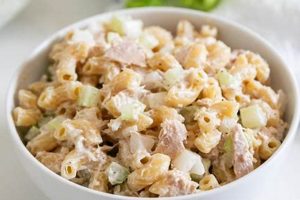
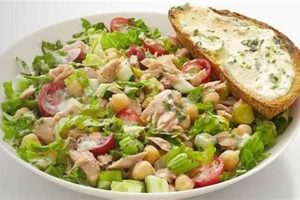
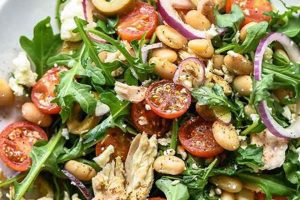
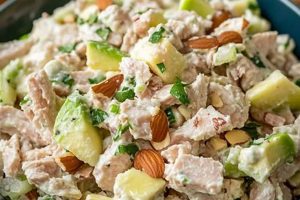
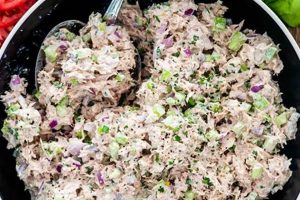
A foundational preparation of this dish typically combines canned tuna with mayonnaise, providing a simple, affordable, and protein-rich meal. Common additions include celery, onion, and seasonings like salt and pepper. This fundamental combination serves as a versatile base, adaptable to diverse palates and dietary preferences.
The accessibility and adaptability of this straightforward dish contribute significantly to its popularity. Its quick preparation requires minimal culinary expertise and readily available ingredients. Historically, canned tuna’s emergence as a pantry staple further solidified this dish’s place as an economical and convenient meal option. Its nutritional value, particularly its protein content, adds to its appeal for those seeking a satisfying and healthy choice.
From variations incorporating different flavor profiles to discussions on nutritional aspects and preparation techniques, the following sections delve deeper into the world of this culinary staple.
Tips for a Superior Tuna Salad
Elevating a simple tuna salad to a culinary delight involves attention to detail and a few key techniques. The following tips offer guidance on ingredient selection and preparation methods to enhance flavor and texture.
Tip 1: Quality Tuna Selection: Opting for high-quality canned tuna packed in water or olive oil significantly impacts the final flavor. Consider varieties like albacore for a richer taste.
Tip 2: Mayonnaise Matters: The choice of mayonnaise plays a crucial role. Experiment with different brands or consider making homemade mayonnaise for enhanced control over flavor and texture.
Tip 3: Fresh Ingredients are Key: Using freshly chopped celery and onion, rather than pre-chopped varieties, elevates the overall freshness and flavor profile.
Tip 4: Seasoning with Purpose: Beyond basic salt and pepper, consider incorporating herbs and spices such as dill, paprika, or a dash of cayenne pepper for added depth.
Tip 5: Texture Enhancement: Adding chopped nuts, such as walnuts or pecans, or water chestnuts provides a textural contrast and enhances the overall sensory experience.
Tip 6: Chilling for Optimal Flavor: Allowing the prepared salad to chill in the refrigerator for at least 30 minutes allows the flavors to meld and develop fully.
Tip 7: Mindful Ingredient Incorporation: Overmixing can result in a mushy texture. Gently fold the ingredients together to maintain the desired consistency.
By applying these tips, one can transform a basic tuna salad into a more sophisticated and flavorful dish. Attention to ingredient quality and preparation methods significantly elevates the dining experience.
With a solid understanding of the preparation techniques and flavor considerations, the following section explores various serving suggestions and recipe adaptations.
1. High-quality Canned Tuna
High-quality canned tuna plays a pivotal role in a basic tuna salad recipe. The tuna’s quality directly influences the overall flavor, texture, and nutritional value of the final dish. Opting for superior canned tuna, typically packed in water or olive oil, yields a more desirable outcome compared to lower-grade options. Tuna packed in oil often exhibits a richer, smoother texture, while water-packed tuna offers a leaner alternative. Specific species, such as albacore, generally possess a milder flavor and firmer texture compared to skipjack. This distinction significantly impacts the final salad’s taste and mouthfeel.
Consider a scenario where two identical tuna salad recipes are prepared, differing only in the tuna quality. One uses a premium albacore packed in olive oil, while the other utilizes a less expensive skipjack packed in water. The discernible difference in the final product highlights the importance of ingredient selection. The albacore version offers a cleaner, more refined flavor profile and a smoother texture, while the skipjack version might exhibit a fishier taste and a coarser consistency. This example demonstrates how a seemingly minor ingredient choice profoundly affects the overall culinary experience.
Understanding the impact of tuna quality allows for informed decisions during recipe preparation. Recognizing the distinctions between different types of canned tuna empowers one to tailor the final dish to specific preferences. This knowledge proves invaluable in consistently achieving a desirable result, transforming a simple tuna salad from a basic meal to a more enjoyable culinary experience. Ultimately, selecting high-quality canned tuna contributes significantly to the overall success of a basic tuna salad recipe.
2. Mayonnaise (as binder)

Mayonnaise serves as the crucial binding agent in a basic tuna salad recipe, transforming disparate ingredients into a cohesive and palatable mixture. Its emulsification properties, derived from the combination of oil and egg yolks, allow it to coat and adhere to the other components, creating the desired creamy texture and facilitating even distribution of flavors. Understanding mayonnaise’s function as a binder is essential for achieving a successful tuna salad.
- Emulsification and Texture:
Mayonnaise’s ability to emulsify, or combine oil and water-based ingredients, is fundamental to its binding role. This characteristic prevents the separation of ingredients, creating a smooth, creamy texture that distinguishes a well-made tuna salad. Without mayonnaise, the tuna, celery, and other additions would remain separate, resulting in a dry, less appealing mixture.
- Flavor Distribution and Enhancement:
Beyond its textural contribution, mayonnaise also acts as a vehicle for flavor. Its inherent richness complements the savory notes of tuna, while its subtle tang enhances the overall flavor profile. The even distribution of mayonnaise throughout the salad ensures a consistent taste experience in every bite. Furthermore, the fat content in mayonnaise carries flavor compounds, enriching the perception of taste.
- Moisture Retention and Palatability:
Mayonnaise contributes to the moisture content of the salad, preventing it from becoming dry and crumbly. This moisture retention enhances the palatability of the dish, making it more enjoyable to consume. The creamy consistency imparted by mayonnaise allows for easy spreading and complements the textures of bread, crackers, or other serving vessels.
- Recipe Adaptability and Customization:
The amount of mayonnaise used influences the final consistency of the tuna salad, offering flexibility in recipe adaptation. A higher mayonnaise content yields a creamier, looser salad, ideal for sandwiches or dips. Conversely, a lower mayonnaise content produces a firmer salad, suitable for stuffing tomatoes or lettuce wraps. This adaptability allows for customization based on individual preferences and intended applications.
The multifaceted role of mayonnaise as a binder, texture enhancer, flavor carrier, and moisture retainer underscores its significance in a basic tuna salad recipe. From its emulsification properties to its influence on flavor distribution and recipe adaptability, mayonnaise’s contributions extend beyond simply holding the ingredients together. A thorough understanding of these aspects allows for informed recipe adjustments and ultimately leads to a more satisfying culinary outcome.
3. Celery (for crunch)

Celery contributes a crucial textural element to a basic tuna salad recipe: crunch. This textural contrast enhances the overall sensory experience, offsetting the softness of the tuna and the creaminess of the mayonnaise. The crisp, watery nature of celery provides a refreshing counterpoint to the richness of the other ingredients, preventing the salad from becoming overly homogenous in texture. This addition elevates a simple tuna salad from a basic combination of ingredients to a more dynamic and enjoyable dish.
Consider a tuna salad prepared without celery. The resulting texture would be uniformly soft and potentially pasty. The absence of a contrasting textural element diminishes the eating experience. Conversely, the inclusion of celery introduces a distinct crunch. Each bite offers a combination of soft and crisp textures, creating a more stimulating and satisfying sensory perception. This seemingly minor addition significantly impacts the overall enjoyment of the dish. Furthermore, the subtle vegetal flavor of celery complements the savory notes of the tuna, adding depth and complexity to the flavor profile.
Understanding the role of celery as a textural component highlights its importance in a basic tuna salad recipe. It demonstrates how a simple ingredient can significantly elevate a dish by adding a contrasting textural element. This knowledge empowers culinary exploration and allows for informed adjustments based on individual preferences. While other ingredients can contribute textural variety, celery’s readily available nature, neutral flavor profile, and distinct crunch solidify its position as a key component in achieving a well-balanced and enjoyable tuna salad.
4. Onion (for flavor)

Onion, while often a subtle component, plays a vital role in a basic tuna salad recipe, adding depth and complexity to the flavor profile. Its sharp, pungent notes balance the richness of the mayonnaise and the savory character of the tuna. The choice of onion variety and preparation method significantly influences the final flavor outcome. Understanding these nuances allows for a more informed approach to creating a well-balanced and flavorful tuna salad.
- Pungency and Flavor Balance:
The inherent pungency of onions, derived from sulfur compounds, provides a crucial counterpoint to the creamy richness of mayonnaise and the savory notes of tuna. This contrast prevents the salad from tasting bland or overly rich. The sharp bite of onion cuts through the fattiness of the mayonnaise, creating a more balanced and refreshing flavor profile. Different onion varieties offer varying levels of pungency, allowing for customized flavor intensity.
- Variety Selection and Flavor Nuances:
The choice of onion variety significantly impacts the final flavor of the tuna salad. Common options include yellow onions, red onions, and white onions. Yellow onions offer a robust, balanced flavor, while red onions contribute a slightly sweeter, milder taste with a hint of sharpness. White onions possess the most pungent flavor, adding a pronounced bite. Selecting the appropriate variety allows for tailoring the flavor profile to individual preferences.
- Preparation Methods and Flavor Intensity:
The preparation method further influences the onion’s contribution to the overall flavor. Finely chopping the onion allows for even distribution and a more pronounced flavor, while dicing it into larger pieces creates pockets of intense flavor. Soaking the chopped onion in cold water for a few minutes can mellow its pungency, resulting in a milder taste. These techniques allow for control over the intensity and integration of the onion flavor within the salad.
- Synergistic Flavor Interactions:
The flavor of onion interacts synergistically with the other ingredients in the tuna salad. It enhances the savory notes of the tuna and complements the tanginess often present in mayonnaise or added relish. This interplay of flavors creates a more complex and nuanced taste experience, elevating the dish beyond a simple combination of individual components. The onion’s flavor acts as a bridge, unifying the various ingredients into a cohesive whole.
The nuanced contribution of onion to a basic tuna salad recipe extends beyond simply adding flavor. Its pungency, variety-specific nuances, adaptable preparation methods, and synergistic interactions with other ingredients demonstrate its multifaceted role in creating a well-balanced and flavorful dish. Understanding these aspects allows for informed choices regarding onion selection and preparation, ultimately leading to a more satisfying culinary outcome.
5. Seasoning (salt & pepper)
Seasoning, primarily with salt and pepper, forms an integral part of a basic tuna salad recipe. These seemingly simple additions play a crucial role in enhancing and balancing the overall flavor profile. Salt and pepper not only elevate the existing flavors of the core ingredients but also contribute to a more nuanced and satisfying culinary experience. Understanding their function and application allows for precise flavor control and optimization.
- Salt’s Impact on Flavor Enhancement:
Salt amplifies the inherent flavors of the tuna, mayonnaise, and other ingredients. It doesn’t simply add a salty taste but rather unlocks and intensifies the existing flavor compounds. Salt’s presence on the palate also reduces bitterness and enhances sweetness, contributing to a more balanced and enjoyable overall taste. Without sufficient salt, the tuna salad can taste bland and lackluster.
- Pepper’s Role in Adding Complexity:
Pepper introduces a layer of complexity to the flavor profile. Its subtle heat and slightly pungent notes contrast the richness of the mayonnaise and the savory character of the tuna. Freshly ground black pepper offers a more pronounced and nuanced flavor compared to pre-ground pepper. The type of pepper used, such as black, white, or even a blend, can further influence the final flavor outcome.
- Balancing Flavors and Achieving Harmony:
The combined effect of salt and pepper creates a harmonious balance within the tuna salad. Salt enhances the savory notes while pepper adds depth and complexity. The careful adjustment of these seasonings ensures that no single flavor dominates, resulting in a well-rounded and cohesive taste experience. The balance achieved through seasoning elevates the dish beyond a simple combination of ingredients.
- Enhancing Palatability and Overall Enjoyment:
Proper seasoning significantly impacts the overall palatability and enjoyment of the tuna salad. Salt and pepper stimulate the taste buds, enhancing the perception of flavor and creating a more satisfying sensory experience. A well-seasoned tuna salad is more likely to be perceived as flavorful and enjoyable compared to an under-seasoned version.
The seemingly basic act of seasoning with salt and pepper significantly influences the final flavor profile of a basic tuna salad recipe. These essential seasonings enhance existing flavors, add complexity, balance the overall taste, and ultimately contribute to a more enjoyable culinary experience. Understanding their individual and combined effects empowers one to achieve precise flavor control and create a truly satisfying tuna salad.
6. Bread or crackers
Bread or crackers function as the delivery vehicle for tuna salad, transforming it from a standalone mixture into a complete and convenient meal. The choice between these options, or the selection of specific types within each category, significantly influences the overall dining experience. Factors such as texture, flavor, and structural integrity contribute to the pairing’s success. Understanding these elements allows for informed decisions that enhance the enjoyment of this simple yet versatile dish.
- Textural interplay:
The texture of the bread or crackers interacts directly with the creamy texture of the tuna salad. A soft, yielding bread provides a gentle contrast, while a crisp, crunchy cracker offers a more pronounced textural counterpoint. The interplay of these textures enhances the sensory experience of consuming tuna salad. For instance, a buttery croissant complements the creamy salad with its flaky layers, while a seeded cracker adds a nutty crunch.
- Flavor Compatibility:
The flavor profile of the bread or crackers should complement the savory flavors of the tuna salad. Neutral-flavored options, such as plain white bread or saltine crackers, provide a blank canvas for the tuna salad to shine. Alternatively, more flavorful choices, like sourdough bread or rye crackers, introduce additional complexity. Pairing a whole-wheat bread with a tuna salad containing dill and lemon, for example, creates a harmonious blend of flavors.
- Structural Integrity:
The chosen vessel must possess sufficient structural integrity to hold the tuna salad without crumbling or becoming soggy. A sturdy bread slice or a robust cracker ensures a mess-free and enjoyable eating experience. Consider the difference between a delicate tea biscuit and a dense multigrain cracker. The latter offers greater stability and prevents the salad from seeping through.
- Versatility and adaptability:
Bread and crackers offer versatility in serving formats. Sandwiches, open-faced toasts, or cracker-topped appetizers provide options for various occasions and preferences. This adaptability allows the same basic tuna salad recipe to be presented in different ways, catering to a range of dining scenarios. A simple change from sliced bread to mini croissants transforms a casual lunch into a more elegant appetizer.
The choice of bread or crackers significantly contributes to the overall enjoyment of a basic tuna salad recipe. The interplay of textures, flavor compatibility, structural integrity, and adaptability influence the final culinary experience. Considering these facets allows for informed decisions that elevate this simple dish from a basic meal to a more considered and satisfying culinary creation.
7. Optional additions
Optional additions represent a pivotal point of distinction between a basic tuna salad recipe and its personalized iterations. While the foundational componentstuna, mayonnaise, celery, onion, and seasoningsestablish the dish’s core identity, optional additions introduce avenues for flavor exploration and customization. These additions, ranging from chopped pickles and hard-boiled eggs to grapes and nuts, transform a standard recipe into a reflection of individual preferences and culinary creativity. They allow for tailoring the flavor profile, texture, and overall complexity of the salad, effectively bridging the gap between a basic preparation and a unique culinary expression.
Consider the impact of incorporating chopped dill pickles. This seemingly simple addition introduces a tangy, briny element that contrasts with the richness of the mayonnaise and the savory notes of the tuna. Alternatively, the inclusion of chopped walnuts introduces a contrasting textural element, adding crunch and a subtle nutty flavor. These examples illustrate how optional additions contribute not only to flavor diversification but also to textural complexity. The practical significance of this understanding lies in the ability to tailor the recipe to specific dietary needs or preferences. For instance, substituting plain Greek yogurt for a portion of the mayonnaise reduces fat content without sacrificing creaminess, while adding chopped apples caters to those seeking a sweeter, fruitier profile.
Understanding the role of optional additions unlocks the full potential of a basic tuna salad recipe. It allows for a shift from a prescribed formula to a canvas for culinary experimentation. The ability to adapt and customize the dish, based on readily available ingredients or individual preferences, transforms a simple meal into a versatile and personalized culinary creation. This approach empowers individuals to not only recreate a classic dish but to also imbue it with their unique culinary signature. This adaptability, facilitated by optional additions, ultimately contributes to the enduring popularity and adaptability of the basic tuna salad recipe.
Frequently Asked Questions
This section addresses common inquiries regarding the preparation and variations of a basic tuna salad recipe. Clarity on these points aims to facilitate a greater understanding of this versatile dish and its adaptable nature.
Question 1: What type of canned tuna is best suited for tuna salad?
While various canned tuna options exist, albacore tuna, packed in either water or oil, is generally preferred for its milder flavor and firmer texture. Water-packed tuna offers a leaner alternative, while oil-packed varieties contribute a richer flavor and smoother consistency. Ultimately, the choice depends on individual preferences and dietary considerations.
Question 2: How can one reduce the caloric content of tuna salad without sacrificing flavor?
Substituting Greek yogurt for a portion of the mayonnaise reduces caloric intake while maintaining a creamy texture. Alternatively, increasing the proportion of vegetables, such as celery and onion, adds volume and nutritional value without significantly impacting flavor.
Question 3: What are some alternatives to celery for added texture?
Chopped water chestnuts, diced apples, or chopped grapes offer textural variations while introducing subtle flavor nuances. These additions can complement or replace celery based on individual preferences.
Question 4: How long can prepared tuna salad be safely stored in refrigeration?
Properly stored in an airtight container, tuna salad typically remains safe for consumption for three to five days when refrigerated. Beyond this timeframe, the risk of bacterial growth increases significantly.
Question 5: Can tuna salad be frozen for later consumption?
While freezing is possible, it is generally not recommended. Freezing alters the texture of mayonnaise-based salads, resulting in a less desirable consistency upon thawing. Fresh preparation is typically preferred for optimal quality.
Question 6: How can one adapt the basic recipe to cater to specific dietary restrictions, such as gluten-free diets?
Serving the tuna salad on gluten-free bread, crackers, or lettuce cups accommodates gluten-free dietary requirements. Ensuring all other added ingredients are also gluten-free is crucial.
Understanding these commonly addressed points provides a solid foundation for approaching tuna salad preparation with confidence. Armed with this knowledge, individuals can adapt the basic recipe to suit individual preferences and dietary needs.
This comprehensive exploration of frequently asked questions concludes the current discussion. The subsequent section will offer a collection of recipe variations to further inspire culinary creativity.
Conclusion
This exploration has traversed the fundamental elements that constitute a basic tuna salad recipe, from the core ingredients to optional additions and serving suggestions. Emphasis has been placed on the importance of ingredient quality, preparation techniques, and the subtle interplay of flavors and textures that contribute to a satisfying culinary experience. The adaptability of this foundational recipe, demonstrated through various modifications and serving options, underscores its enduring appeal and its potential to transcend its basic categorization.
The basic tuna salad recipe, despite its simplicity, offers a platform for culinary expression. Its adaptability allows for continuous reinvention, ensuring its relevance across generations and culinary traditions. Further exploration of flavor combinations and innovative presentation methods promises to extend the legacy of this timeless dish, solidifying its position as a culinary staple for years to come. A deep understanding of its foundational elements empowers individuals to not simply replicate a recipe but to elevate it, transforming a basic preparation into a personalized culinary statement.