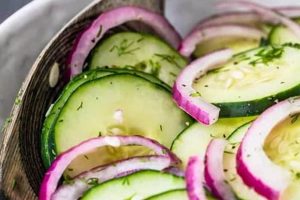
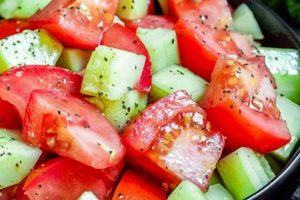
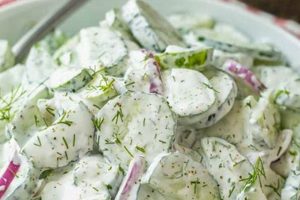
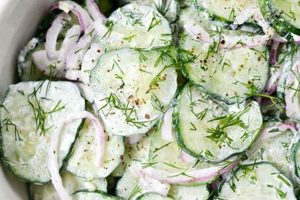
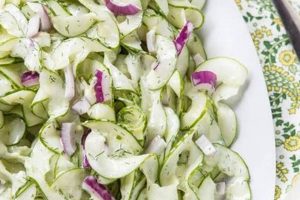
A refreshing and flavorful dish typically composed of thinly sliced red onions and cucumbers, this culinary creation often incorporates other ingredients such as herbs, vinegar, and oil. Variations can include additions like tomatoes, bell peppers, or feta cheese, offering diverse flavor profiles and textures. A simple vinaigrette, sometimes with a touch of sweetness or a hint of lemon, typically dresses the salad. This versatile dish can serve as a light lunch, a side to grilled meats or fish, or a component of a larger buffet.
The crisp, cool nature of this salad makes it a popular choice in warmer months. The pungent red onion provides a bite, balanced by the mild cucumber. Beyond its refreshing qualities, it offers nutritional benefits thanks to the vitamins and antioxidants present in the vegetables. Historically, cucumbers and onions have been cultivated and consumed for millennia, with evidence suggesting their presence in various cuisines across the globe. This simple combination, then, represents a long-standing tradition of utilizing fresh, readily available ingredients to create a flavorful and healthful dish.
This exploration will delve into various aspects of crafting this culinary delight, covering topics including ingredient selection, preparation techniques, variations, and complementary pairings. Further discussion will cover the nutritional value and potential health benefits associated with its consumption.
Tips for a Perfect Red Onion and Cucumber Salad
Achieving optimal flavor and texture requires attention to detail throughout the preparation process. The following tips offer guidance for creating a truly exceptional salad.
Tip 1: Soaking the Red Onion: Soaking thinly sliced red onions in cold water for 10-15 minutes mellows their pungent flavor, resulting in a more palatable and less overpowering taste.
Tip 2: English Cucumber Selection: English cucumbers, known for their thin skin and minimal seeds, offer a superior texture and require no peeling. Their delicate flavor complements the other ingredients without overpowering them.
Tip 3: Thin and Uniform Slicing: Consistent thin slices ensure even flavor distribution and contribute to a pleasant, crisp texture. A mandoline slicer offers optimal precision.
Tip 4: Fresh Herb Incorporation: Fresh herbs such as dill, mint, or parsley elevate the flavor profile. Add these just before serving to maintain their vibrant aroma and appearance.
Tip 5: Balancing Acidity: The right balance of acidity is crucial. While vinegar provides the necessary tang, a touch of sweetness, often from a small amount of sugar or honey, can create a more harmonious flavor profile.
Tip 6: High-Quality Oil: Extra virgin olive oil offers a robust flavor that enhances the overall taste. Other oils, such as avocado or grapeseed oil, can also be used for a slightly different flavor profile.
Tip 7: Seasoning Adjustment: Seasoning should be adjusted based on the chosen ingredients and personal preference. A pinch of salt and freshly ground black pepper is often sufficient, but other spices can be added for a more complex flavor.
Tip 8: Chilling Before Serving: Chilling the salad for at least 30 minutes before serving allows the flavors to meld and enhances the refreshing qualities of the dish.
By following these tips, one can ensure a flavorful and texturally pleasing salad that highlights the freshness of the ingredients. The combination of crisp vegetables, aromatic herbs, and a balanced dressing creates a culinary experience that is both simple and satisfying.
Following these preparation guidelines sets the stage for a delightful culinary experience.
1. Fresh, Crisp Ingredients

The success of a red onion and cucumber salad hinges directly on the freshness and crispness of its primary components. Cucumbers should be firm and unwaxed, preferably English cucumbers due to their thinner skin and reduced seed content. Red onions should exhibit vibrant color and a firm texture. Limp cucumbers or soft onions will result in a watery, less flavorful salad. This textural degradation detracts from the intended refreshing and crisp eating experience. Crisp, fresh ingredients ensure the salad provides a satisfying crunch and vibrant flavor, highlighting the inherent qualities of the vegetables. For example, a cucumber past its prime will have a dull flavor and mushy texture, compromising the overall quality of the salad.
Ingredient quality directly influences the final dish’s flavor profile. Freshly harvested vegetables retain their natural sweetness and optimal moisture content, contributing to a more vibrant taste experience. Conversely, older produce can develop off-flavors and a less appealing texture. Practical applications of this understanding include careful selection at the market, proper storage to maintain freshness, and utilizing ingredients promptly after purchase. Consider sourcing ingredients from local farmers’ markets, where produce is often harvested more recently, maximizing freshness and supporting local agriculture.
Utilizing high-quality, fresh ingredients elevates the simple combination of cucumbers and red onion into a truly exceptional salad. Attention to ingredient selection demonstrates respect for the culinary process and ensures a delightful sensory experience. While seemingly a minor detail, ingredient freshness significantly impacts the salad’s final quality, demonstrating the interconnectedness of ingredient selection and culinary outcome. Neglecting this fundamental principle compromises the potential of this otherwise simple and refreshing dish.
2. Thinly Sliced Vegetables

Thinly slicing vegetables is crucial for a successful red onion and cucumber salad. This technique maximizes surface area, allowing for greater absorption of the vinaigrette, thus enhancing flavor distribution. Moreover, thin slices contribute to a delicate, palatable texture essential for this type of salad.
- Enhanced Flavor Infusion:
Increased surface area from thin slicing allows the marinade or dressing to penetrate the vegetables more effectively. This leads to a more pronounced and evenly distributed flavor throughout the salad. For instance, thinly sliced red onions absorb the vinaigrette’s acidity, mellowing their pungency while infusing them with other complementary flavors. This contrasts with thickly cut onions, where the center may remain sharp and overpowering.
- Improved Texture:
Thinly sliced vegetables create a delicate, almost translucent quality, contributing to a pleasant mouthfeel. This is particularly important for red onions, which can be quite harsh when raw. Thin slicing minimizes their fibrous texture, making them more palatable. The salad becomes easier to eat and enjoy, with each bite offering a harmonious blend of flavors and textures. This delicate texture also allows the vegetables to meld together more seamlessly.
- Visual Appeal:
Thinly sliced vegetables create a visually appealing presentation. The uniform slices create a sense of elegance and refinement. This visual appeal enhances the dining experience, making the salad more inviting. The translucence of thinly sliced cucumbers and onions allows light to pass through, creating a glistening effect that further elevates the visual presentation.
- Even Cooking (When Applicable):
While this salad typically uses raw vegetables, the principle of thin slicing extends to other culinary applications. Thinly sliced vegetables cook more quickly and evenly, ensuring uniform doneness and preventing a mix of undercooked and overcooked pieces. This principle, while not directly applicable to a raw cucumber and red onion salad, highlights the versatility and broader importance of thin slicing in culinary practice.
The practice of thinly slicing vegetables contributes significantly to the overall success of a red onion and cucumber salad. It optimizes flavor absorption, refines texture, and enhances visual appeal. These factors combine to create a more enjoyable and palatable culinary experience, highlighting the importance of this seemingly simple technique.
3. Balanced Vinaigrette

A balanced vinaigrette is essential for a successful red onion and cucumber salad. The vinaigrette provides the foundational flavor profile, complementing the fresh, crisp vegetables. A well-executed vinaigrette elevates the salad beyond a simple combination of ingredients, transforming it into a cohesive and flavorful dish. The balance refers to the harmonious interplay of acidity, sweetness, and oil. Too much acidity can overpower the delicate flavors of the cucumbers and onions, while insufficient acidity can result in a bland salad. A touch of sweetness tempers the acidity, creating a more rounded and palatable flavor profile.
Consider a vinaigrette composed of red wine vinegar, extra virgin olive oil, a touch of Dijon mustard, a pinch of sugar, salt, and pepper. The red wine vinegar provides the necessary acidity, while the olive oil contributes richness and body. The Dijon mustard adds a subtle complexity, and the sugar balances the tartness of the vinegar. Salt and pepper enhance the overall flavor profile. This specific combination exemplifies how individual components contribute to a balanced and flavorful whole. Alternatively, a vinaigrette based on lemon juice, olive oil, honey, and herbs offers a brighter, more citrus-forward profile while maintaining the essential balance of flavors. The choice of vinaigrette should consider the desired final flavor profile and complement the other ingredients.
Understanding the importance of a balanced vinaigrette allows for informed decision-making regarding ingredient selection and proportion adjustments. Mastering this fundamental element of the recipe ensures a consistently delicious and refreshing salad. Challenges may arise from variations in ingredient quality, particularly the acidity of vinegars. Adjusting the sweetness and oil accordingly addresses this variability. This adaptability highlights the practical significance of understanding the interplay of flavors within a vinaigrette and its direct impact on the final culinary outcome. The ability to create and adjust a balanced vinaigrette elevates the preparation of a simple cucumber and red onion salad to a nuanced culinary endeavor.
4. Subtle Sweetness
Subtle sweetness plays a crucial role in a red onion and cucumber salad recipe, balancing the sharpness of the red onion and the sometimes bland nature of the cucumber. This delicate sweetness rounds out the flavor profile of the vinaigrette, preventing excessive tartness and creating a more harmonious taste experience. Without this element, the salad can taste overly acidic or one-dimensional. The sweetness acts as a bridge, unifying the disparate flavors of the onion, cucumber, and vinegar. For instance, a vinaigrette featuring a teaspoon of sugar or a drizzle of honey can transform a sharp, acidic dressing into a balanced and nuanced complement to the fresh vegetables. The perceived sweetness can also be influenced by the ripeness of the produce itself; ripe cucumbers naturally possess a subtle sweetness that contributes to the overall balance.
Several approaches can introduce this essential sweetness. Granulated sugar, honey, maple syrup, or even a pinch of stevia can be incorporated into the vinaigrette. The choice depends on the desired flavor profile and dietary considerations. Honey, for example, adds a subtle floral note, while maple syrup imparts a slightly caramelized flavor. It is crucial to avoid excessive sweetness, which can mask the freshness of the vegetables and overpower the other flavors. A small amount, typically a teaspoon or less per serving, usually suffices. Practical applications of this understanding involve careful tasting and adjustment during vinaigrette preparation. One might start with a smaller amount of sweetener and gradually increase until the desired balance is achieved.
Mastering the application of subtle sweetness within a red onion and cucumber salad recipe significantly contributes to its overall success. This seemingly minor detail elevates the dish from simple to sophisticated, showcasing the complexity achievable through balanced flavor profiles. Challenges can arise from variations in ingredient sweetness. Different varieties of cucumbers and onions exhibit varying levels of natural sugars. Additionally, the acidity of different vinegars requires adjustments in the amount of sweetener used. Recognizing these nuances and adapting accordingly underscores the importance of a discerning palate and the interconnectedness of individual components in creating a harmonious whole.
5. Complementary Herbs

Fresh herbs play a pivotal role in elevating a red onion and cucumber salad from simple to sophisticated. Their aromatic and flavor contributions introduce complexity and depth, complementing the inherent flavors of the vegetables and vinaigrette. Careful herb selection enhances the overall sensory experience, creating a more nuanced and satisfying dish. The choice of herbs significantly influences the final flavor profile; dill, for example, offers a bright, slightly tangy flavor that pairs well with cucumbers, while mint provides a refreshing coolness. Parsley contributes a clean, herbaceous note, while chives offer a subtle oniony flavor that complements the red onion. The selection should consider the overall flavor profile desired and the specific ingredients used in the vinaigrette.
Several culinary herbs exhibit synergistic relationships with cucumbers and red onions. Dill, with its anise-like notes, complements the cucumber’s refreshing coolness. Mint adds a vibrant, invigorating element. Parsley offers a clean, herbaceous counterpoint to the onion’s pungency. Chives contribute a delicate onion flavor that harmonizes with the red onion. These pairings demonstrate how specific herb choices can enhance and amplify the existing flavors in the salad, creating a more balanced and complex taste experience. A salad featuring a lemon vinaigrette, for instance, benefits from the addition of dill or mint, amplifying the bright, citrusy notes. Conversely, a vinaigrette based on red wine vinegar might pair well with parsley or chives, creating a more savory profile.
Understanding the interplay between herbs and the other salad components allows for informed decision-making in recipe development and adaptation. The selection and quantity of herbs significantly impact the overall flavor profile. Overuse can overwhelm the delicate balance of the salad, while insufficient use can fail to achieve the desired complexity. Practical application of this knowledge involves careful consideration of flavor pairings and judicious use of fresh herbs. Challenges may arise from seasonal availability and variations in herb potency. Adapting to these challenges requires flexibility and a willingness to experiment with different combinations to achieve the desired result. The integration of complementary herbs demonstrates how seemingly minor additions can significantly enhance the overall culinary experience.
6. Proper Chilling Time
Proper chilling time is a crucial element in optimizing a red onion and cucumber salad recipe. Chilling allows the flavors of the various componentsthe vegetables, herbs, and vinaigretteto meld and harmonize, resulting in a more cohesive and flavorful final product. Temperature also influences texture, maintaining the desired crispness of the cucumbers and onions.
- Flavor Development:
Chilling allows the vinaigrette to permeate the vegetables, enhancing flavor infusion and distribution. This process allows the sharpness of the red onion to mellow while the cucumber absorbs the nuanced flavors of the dressing and herbs. A minimum of 30 minutes is typically recommended, but extending the chilling time up to two hours can further enhance flavor development, particularly for salads with more complex vinaigrettes.
- Texture Maintenance:
Chilling helps maintain the crispness of the cucumbers and onions. Room temperature can cause these vegetables to wilt, resulting in a less appealing texture. Refrigeration preserves their structural integrity, ensuring a satisfyingly crisp and refreshing bite. Conversely, excessive chilling can cause the vegetables to become overly firm and lose some of their delicate flavor nuances.
- Temperature and Palatability:
A chilled salad offers a more refreshing and enjoyable eating experience, particularly in warmer weather. The cool temperature enhances the crispness of the vegetables and provides a welcome contrast to richer or heavier dishes. Serving the salad at the optimal temperature maximizes its refreshing qualities and complements the overall dining experience.
- Food Safety:
Proper chilling is essential for food safety, particularly for salads containing perishable ingredients. Refrigeration inhibits bacterial growth, reducing the risk of foodborne illness. Maintaining a consistent cold temperature is crucial, especially if the salad is prepared in advance. Adhering to food safety guidelines ensures a safe and enjoyable culinary experience.
The appropriate chilling time for a red onion and cucumber salad balances flavor development, texture maintenance, and food safety. While 30 minutes provides noticeable improvement, extending the chilling time can further enhance the flavor profile, allowing the ingredients to fully meld. However, excessive chilling can negatively impact texture and flavor. Therefore, understanding the role of chilling time allows for informed decision-making and optimization of this seemingly simple yet crucial step in creating a successful and refreshing salad.
7. Versatile Serving Options
The versatility of red onion and cucumber salad lends itself to a wide array of serving options, enhancing its appeal as a culinary staple. This adaptability stems from the salad’s refreshing nature, simple preparation, and compatibility with diverse flavor profiles. It functions effectively as a standalone light lunch, a vibrant side dish, or an element within a larger composed meal. This inherent versatility expands its utility within various culinary contexts, increasing its value as a recipe.
As a standalone dish, this salad offers a light and refreshing meal, particularly suitable for warmer weather. Its simple composition and ease of preparation make it an ideal choice for quick lunches or light dinners. Paired with grilled fish or chicken, the salad’s acidity and crispness cut through the richness of the protein, creating a balanced and satisfying meal. Incorporating the salad into a larger buffet setting provides a refreshing counterpoint to heavier dishes, adding textural and flavor diversity. For example, including feta cheese and olives transforms the salad into a Mediterranean-inspired dish, while adding chopped peanuts and a sesame-ginger dressing creates an Asian-influenced variation. These examples illustrate the salad’s adaptability and its potential to complement a variety of culinary traditions.
Understanding the versatile serving options for this salad allows for greater culinary flexibility and menu planning efficiency. Its adaptability simplifies meal preparation and caters to diverse dietary preferences and occasions. Challenges may arise when pairing the salad with dishes possessing strong or conflicting flavors. Careful consideration of the vinaigrette’s composition and the potential addition of complementary ingredients, such as herbs or nuts, mitigates these challenges. The salad’s inherent versatility and adaptability make it a valuable addition to any culinary repertoire, highlighting the practical significance of understanding its various applications.
Frequently Asked Questions
This section addresses common inquiries regarding red onion and cucumber salad preparation, offering practical solutions and clarifying potential points of confusion.
Question 1: How can one mitigate the pungent flavor of red onions?
Soaking thinly sliced red onions in cold water for 10-15 minutes mellows their sharpness while retaining their crisp texture. This process reduces the intensity of the sulfur compounds responsible for the pungent flavor.
Question 2: What type of cucumber is best suited for this salad?
English cucumbers are generally preferred due to their thin skin, minimal seeds, and mild flavor. This variety requires no peeling, simplifying preparation and contributing to a more delicate texture.
Question 3: What can be done to prevent the salad from becoming watery?
Ensuring the cucumbers and onions are thoroughly dried after washing and using a high-quality extra virgin olive oil helps prevent excess moisture. Additionally, salting the vegetables lightly and allowing them to sit for a few minutes before adding the vinaigrette can draw out excess water.
Question 4: How long can this salad be stored in the refrigerator?
Properly stored in an airtight container, the salad can typically be refrigerated for up to three days. However, optimal flavor and texture are best enjoyed within the first 24 hours.
Question 5: Can this salad be prepared in advance?
The salad can be prepared several hours in advance, excluding the dressing. Adding the vinaigrette just before serving prevents the vegetables from becoming soggy and maintains their crisp texture. Store the vegetables and dressing separately and combine just before serving.
Question 6: Can other vegetables be added to this salad?
While the classic recipe focuses on cucumbers and red onions, other vegetables can be incorporated to create variations. Bell peppers, tomatoes, and chopped fresh herbs like dill or mint can complement the core ingredients. However, consider how additional vegetables might affect the overall flavor balance and texture.
Addressing these common inquiries provides a foundation for successful red onion and cucumber salad preparation. Understanding these practical considerations ensures optimal flavor, texture, and overall culinary satisfaction.
This information serves as a starting point for further exploration of this versatile and refreshing salad. Experimentation with different ingredients and techniques allows for personalized variations and culinary discovery.
Conclusion
Exploration of this subject has revealed the multifaceted nature of a seemingly simple dish. Emphasis on fresh, high-quality ingredients, precise slicing techniques, and a balanced vinaigrette underscores the potential for culinary excellence even within the realm of simple preparations. Proper chilling time, judicious herb selection, and an understanding of the interplay of flavors contribute significantly to the final product’s success. Furthermore, the dish’s adaptability to various serving contexts highlights its practicality and broad appeal.
Culinary practice often hinges on the nuanced execution of fundamental principles. This analysis demonstrates how attention to detail, even in a straightforward recipe, can yield significant improvements in flavor, texture, and overall culinary satisfaction. Further exploration and experimentation with variations promise continued discovery and refinement within this culinary domain. This foundational knowledge empowers continued culinary exploration and personalized adaptations.