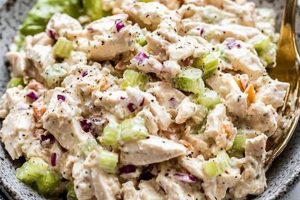
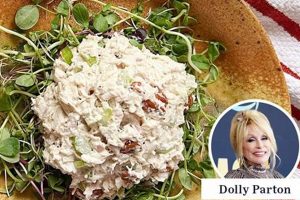
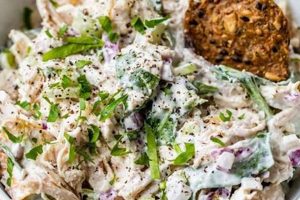
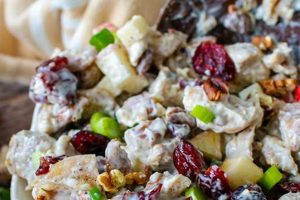
A dish featuring diced or shredded chicken combined with mayonnaise and other ingredients, often including celery, onion, and seasonings, gains a sweet-tart dimension with the addition of dried or fresh cranberries. Variations can incorporate pecans, walnuts, grapes, or apples, offering a range of flavor profiles from savory to tangy. This combination is typically served chilled on bread, crackers, lettuce cups, or as a filling for sandwiches and wraps.
The inclusion of cranberries provides not only a pleasing textural contrast but also a nutritional boost, adding antioxidants and vitamins. Historically, poultry-based salads gained popularity as a luncheon staple, offering a relatively simple yet satisfying meal. The incorporation of fruits like cranberries reflects a culinary trend toward balancing richer ingredients with lighter, brighter flavors. This approach allows for greater complexity in a dish while also appealing to contemporary health-conscious preferences.
Exploring this culinary concept further, the subsequent sections will delve into specific recipe variations, offering guidance on ingredient selection, preparation techniques, and creative serving suggestions. Considerations for dietary restrictions and potential substitutions will also be addressed.
Tips for Cranberry Chicken Salad Preparation
Achieving optimal flavor and texture requires attention to several key elements. The following tips provide guidance for creating a successful dish.
Tip 1: Cranberry Selection: Dried cranberries offer a concentrated sweetness and chewy texture, while fresh cranberries provide a tartness and slightly firmer bite. The choice depends on the desired flavor profile.
Tip 2: Chicken Preparation: Poached or roasted chicken breasts provide the best flavor and texture. Avoid using pre-cooked or canned chicken, as these options tend to be drier and less flavorful.
Tip 3: Mayonnaise Considerations: High-quality mayonnaise is crucial for achieving a creamy, balanced flavor. Consider using light mayonnaise for a lower-fat option, or Greek yogurt for a tangier twist.
Tip 4: Enhancing Flavor Complexity: Incorporating toasted pecans or walnuts adds a welcome crunch and nutty flavor. A touch of Dijon mustard can enhance the savory notes of the dish.
Tip 5: Balancing Sweetness and Tartness: A small amount of honey or maple syrup can be added to balance the tartness of the cranberries, particularly if using fresh cranberries.
Tip 6: Chilling Time: Allowing the salad to chill for at least 30 minutes allows the flavors to meld and develop fully. This step is crucial for optimal enjoyment.
Tip 7: Serving Suggestions: Consider serving the salad on croissants, in lettuce cups, or as a sandwich filling with crisp lettuce and tomato.
By following these tips, one can create a flavorful and satisfying cranberry chicken salad. Attention to ingredient selection, preparation techniques, and chilling time contributes significantly to the overall quality of the final product.
With a firm understanding of these core principles, the following section will explore specific recipe variations, offering step-by-step guidance for culinary success.
1. Chicken (cooked, diced)

Cooked, diced chicken forms the foundational protein component of cranberry chicken salad. The cooking method and dicing technique significantly influence the final product’s texture and flavor. Overcooked chicken results in a dry, stringy salad, while undercooked chicken presents food safety risks. Optimal preparation involves cooking chicken to an internal temperature of 165F (74C) and allowing it to cool completely before dicing. Dicing ensures even distribution throughout the salad and facilitates consistent flavor integration with other ingredients. For instance, uniformly diced chicken absorbs the flavors of the mayonnaise and cranberry more effectively than shredded or coarsely chopped chicken.
The choice of chicken cut also impacts the salad’s character. Chicken breast offers a leaner, milder flavor, while thigh meat provides a richer, more robust taste. Roasting or poaching are preferred cooking methods, as they enhance the chicken’s inherent flavor without adding excess fat. Avoid using pre-cooked or canned chicken, as these options often lack the desired texture and flavor complexity. Consider the overall balance of the recipe when selecting the chicken preparation method. A lighter, brighter cranberry chicken salad may benefit from poached chicken breast, whereas a more savory version might utilize roasted thigh meat. Properly prepared chicken provides a palatable base, allowing the other flavors, such as the tartness of the cranberries, to shine.
Mastering the preparation of cooked, diced chicken is essential for a successful cranberry chicken salad. Careful attention to cooking method, temperature, and dicing technique ensures optimal texture and flavor integration. This foundational element sets the stage for a well-balanced and enjoyable culinary experience, demonstrating the crucial role of properly handled chicken in achieving the desired outcome.
2. Cranberries (dried or fresh)

Cranberries, whether dried or fresh, contribute significantly to the flavor profile and textural complexity of chicken salad. Dried cranberries, often sweetened, impart a concentrated, chewy sweetness that complements the savory chicken and creamy mayonnaise. Their intense flavor permeates the salad, offering a persistent sweetness that balances the other ingredients. Fresh cranberries, conversely, provide a burst of tartness and a slightly firmer texture. Their vibrant acidity cuts through the richness of the mayonnaise, adding a refreshing counterpoint to the savory elements. The choice between dried and fresh cranberries hinges on the desired balance of sweet and tart flavors within the overall composition.
The form of cranberry also influences the salad’s moisture content and visual appeal. Dried cranberries absorb some moisture from the mayonnaise, resulting in a slightly denser, more compact salad. Their deep red color adds visual interest against the lighter background of the chicken and mayonnaise. Fresh cranberries, due to their higher water content, contribute more moisture to the salad, creating a lighter, more refreshing texture. Their bright red hue offers a vibrant pop of color, enhancing the salad’s visual presentation. In practical application, a salad featuring dried cranberries might pair well with a richer bread, while a salad with fresh cranberries might be better suited to a lighter cracker or a bed of lettuce.
Understanding the distinct characteristics of dried and fresh cranberries allows for informed decisions regarding flavor balance, texture, and overall appeal. This knowledge facilitates recipe adaptation to suit specific preferences and desired outcomes. Careful consideration of cranberry type ensures a harmonious blend of flavors and textures, contributing significantly to a successful and satisfying culinary experience. The subtle interplay between the cranberries and other ingredients highlights the importance of this seemingly simple component in shaping the final character of the chicken salad.
3. Mayonnaise (or alternative)

Mayonnaise serves as a crucial binding agent and flavor enhancer in cranberry chicken salad, contributing significantly to its overall texture and palatability. It emulsifies the ingredients, creating a creamy, cohesive mixture that holds the salad together. The richness of mayonnaise complements the lean protein of the chicken and balances the tartness of the cranberries. Furthermore, mayonnaise carries and distributes flavors throughout the salad, ensuring a harmonious blend of ingredients. For instance, the tangy notes of mayonnaise complement the sweetness of dried cranberries, while its richness provides a backdrop for the savory notes of the chicken. Substituting mayonnaise with alternatives, such as Greek yogurt or avocado-based spreads, alters the flavor profile and nutritional content. Greek yogurt introduces a tangier element, while avocado contributes a creamy texture and healthy fats, influencing the overall sensory experience.
The quantity of mayonnaise used directly impacts the salad’s consistency. Too little mayonnaise results in a dry, crumbly texture, hindering the melding of flavors. Conversely, excessive mayonnaise creates a heavy, overly rich salad that obscures the individual flavors of the other ingredients. Careful consideration of the mayonnaise-to-chicken ratio ensures a desirable balance between moisture, flavor, and texture. Practical application involves gradual incorporation of mayonnaise, allowing for adjustments to achieve the desired consistency. For instance, if a lighter, fluffier salad is desired, a smaller quantity of mayonnaise may suffice. If a creamier, richer salad is preferred, a larger quantity might be required. The interplay between mayonnaise and other ingredients like celery, nuts, or onions underscores its role in unifying the components into a cohesive whole.
Understanding mayonnaise’s function within cranberry chicken salad facilitates informed decisions regarding ingredient selection and proportion. The choice between traditional mayonnaise and alternatives offers opportunities to tailor the salad’s flavor and nutritional value to specific preferences. Careful attention to quantity and incorporation technique ensures optimal texture and flavor distribution, crucial for achieving a balanced and satisfying dish. Mayonnaise, therefore, serves not merely as a binding agent but as a critical component influencing the overall sensory experience and culinary success of cranberry chicken salad.
4. Seasoning (salt, pepper)

Seasoning, primarily with salt and pepper, plays a crucial role in elevating the flavor profile of cranberry chicken salad beyond a simple aggregation of ingredients. Salt enhances the inherent flavors of the chicken and other components, amplifying their individual contributions while also creating a cohesive flavor profile. It modulates the sweetness of the cranberries and the richness of the mayonnaise, preventing the salad from tasting bland or one-dimensional. Pepper, whether black or white, adds a subtle layer of complexity, providing a gentle warmth and a contrasting bite that complements the creamy texture. The interplay between salt and pepper creates a balanced foundation upon which the other flavors can build, transforming the salad into a more nuanced and satisfying culinary experience. For example, a properly seasoned salad allows the tartness of the cranberries to shine through, rather than being overwhelmed by the richness of the mayonnaise. Conversely, insufficient seasoning can result in a flat, uninspiring dish, regardless of the quality of the other ingredients.
The specific type and quantity of seasoning used can further refine the flavor profile. Sea salt, with its coarser texture and mineral complexity, can add a subtle crunch and a more pronounced salty flavor. Freshly ground black pepper offers a more robust aroma and flavor compared to pre-ground pepper. Adjusting the ratio of salt to pepper allows for customization based on personal preference and the specific characteristics of the other ingredients. For instance, a salad with a higher proportion of cranberries may benefit from a slightly increased amount of salt to balance the tartness. Practical application involves incremental seasoning, tasting frequently, and adjusting accordingly to achieve the desired balance. Over-seasoning, however, can easily overwhelm the delicate flavors of the other components, highlighting the importance of judicious seasoning practices.
Proper seasoning with salt and pepper is essential for maximizing the flavor potential of cranberry chicken salad. It acts not merely as a flavor enhancer but as a critical component that integrates and elevates the individual flavors of the ingredients. Careful consideration of seasoning type, quantity, and application technique ensures a balanced and harmonious flavor profile, transforming a simple combination of ingredients into a complex and satisfying culinary creation. Understanding the crucial role of seasoning underscores its significance in achieving a well-rounded and enjoyable gastronomic experience.
5. Texture (celery, nuts)
Textural contrast plays a vital role in the overall enjoyment of cranberry chicken salad, preventing a monotonous sensory experience. Incorporating ingredients like celery and nuts provides this crucial dimension, elevating the salad beyond a simple blend of flavors. These additions introduce contrasting levels of crispness and crunch, interacting with the softer textures of the chicken and the chewiness of the cranberries to create a more dynamic and satisfying mouthfeel.
- Celery’s Crispness
Celery contributes a refreshing crispness that cuts through the richness of the mayonnaise and the softness of the chicken. Its fibrous stalks offer a satisfying snap, contrasting with the smoother elements. The slight vegetal flavor of celery also complements the other ingredients without overpowering them. Finely diced celery distributes evenly throughout the salad, ensuring a consistent textural experience in each bite. Its water content contributes to a lighter, more refreshing overall texture.
- Nutty Crunch
Nuts, such as pecans, walnuts, or almonds, introduce a satisfying crunch and a rich, nutty flavor. Toasted nuts enhance this crunch and deepen their flavor profile, adding another layer of complexity to the salad. The fattiness of nuts complements the creamy mayonnaise, while their firm texture contrasts with the softer components. The choice of nut influences the overall flavor profile; pecans offer a buttery sweetness, while walnuts provide a more earthy, robust flavor.
- Balancing Textures
The interplay between the crisp celery, crunchy nuts, tender chicken, and chewy cranberries creates a balanced and dynamic textural experience. This interplay prevents any single texture from dominating, ensuring that each bite offers a variety of sensations. The contrasting textures stimulate the palate, making the salad more engaging and enjoyable.
- Textural Variations
Variations in dicing techniques and nut selection allow for further customization of the salad’s texture. Finely diced celery offers a more subtle crispness, while coarsely chopped celery provides a more pronounced crunch. Similarly, whole or coarsely chopped nuts offer a more substantial bite compared to finely chopped or slivered nuts. These variations allow for tailoring the salad’s texture to individual preferences and desired outcomes.
The strategic incorporation of textural elements like celery and nuts elevates cranberry chicken salad from a simple dish to a more complex and satisfying culinary experience. The interplay of crispness, crunch, and tenderness creates a dynamic mouthfeel that complements the flavor profile, demonstrating the crucial role of texture in achieving a well-balanced and enjoyable salad. Careful consideration of these textural elements allows for customization and refinement, resulting in a dish that appeals to a wider range of palates and preferences.
6. Flavor Balance (Sweet/Tart)
Flavor balance, specifically the interplay between sweet and tart elements, defines the character of cranberry chicken salad. Achieving harmony between these contrasting flavors is crucial for a palatable and enjoyable outcome. The inherent sweetness of the mayonnaise and the tartness of the cranberries must be carefully balanced to avoid an overly sweet or excessively tart result. This balance influences not only the overall taste but also how the other ingredients interact and contribute to the final flavor profile.
- Cranberry Selection
The type of cranberrydried or freshsignificantly influences the sweet/tart balance. Dried cranberries, often sweetened, contribute a more pronounced sweetness, while fresh cranberries offer a sharper tartness. This choice dictates the foundational flavor profile and necessitates adjustments to other ingredients to maintain equilibrium. For instance, a salad with dried cranberries might require less added sweetener compared to one with fresh cranberries. The specific variety of cranberry also plays a role; some varieties possess a naturally higher sugar content than others.
- Mayonnaise Type and Quantity
Mayonnaise contributes both richness and a subtle sweetness. The type of mayonnaise usedfull-fat, light, or flavoredinfluences the overall sweetness. Additionally, the quantity of mayonnaise affects the intensity of both the richness and the sweetness, impacting the balance against the cranberries tartness. Using less mayonnaise allows the cranberry flavor to be more prominent, while using more mayonnaise can mute the tartness.
- Balancing Agents
Additional ingredients can be employed to fine-tune the sweet/tart balance. A touch of honey or maple syrup can enhance sweetness, while a squeeze of lemon juice or a dash of apple cider vinegar can amplify tartness. Dijon mustard, with its tangy notes, can provide a counterpoint to both sweet and tart elements, adding complexity to the flavor profile. The quantity of these balancing agents must be carefully considered to avoid tipping the balance too far in one direction.
- Interaction with Other Ingredients
Other ingredients, such as nuts and celery, indirectly influence the perceived sweet/tart balance. The savory notes of nuts can temper excessive sweetness, while the subtle bitterness of celery can offset excessive tartness. The interplay of these flavors creates a more complex and nuanced flavor profile, highlighting the importance of considering the overall composition when balancing sweet and tart elements.
Mastering the sweet/tart balance is essential for crafting a successful cranberry chicken salad. Careful consideration of cranberry type, mayonnaise selection, balancing agents, and the interaction of other ingredients ensures a harmonious flavor profile that highlights the unique characteristics of each component. This balance transforms a simple combination of ingredients into a complex and satisfying culinary creation.
Frequently Asked Questions
The following addresses common inquiries regarding cranberry chicken salad preparation and variations.
Question 1: What type of cranberries is best suited for chicken salad?
Both dried and fresh cranberries offer distinct advantages. Dried cranberries provide a concentrated sweetness and chewy texture, while fresh cranberries contribute a brighter tartness and a slightly firmer bite. The preferred type depends on individual taste preferences and the desired balance of sweet and tart flavors within the salad.
Question 2: Can alternative proteins be used in place of chicken?
While chicken is traditional, turkey breast offers a viable substitute with a slightly milder flavor. For vegetarian adaptations, chickpeas or cooked quinoa can provide a comparable textural base, though the overall flavor profile will differ significantly.
Question 3: How can the richness of the mayonnaise be adjusted?
Using light mayonnaise or plain Greek yogurt reduces the overall fat content and imparts a tangier flavor. Avocado can also be incorporated for a creamy, healthier alternative, though it will introduce its own distinct flavor.
Question 4: What methods can be employed to enhance the salad’s flavor complexity?
Incorporating toasted nuts, such as pecans or walnuts, adds a welcome crunch and depth of flavor. A touch of Dijon mustard or a squeeze of lemon juice can brighten the flavor profile and balance the sweetness of the cranberries. Fresh herbs, like dill or chives, contribute a refreshing herbal note.
Question 5: How long can cranberry chicken salad be stored safely?
Properly stored in an airtight container in the refrigerator, the salad typically remains safe for consumption for up to three to five days. However, the quality and freshness will gradually decline over time.
Question 6: What are some creative serving suggestions beyond traditional bread or crackers?
Cranberry chicken salad can be served in lettuce cups, on croissants, or as a filling for wraps or sandwiches. It can also be used as a topping for baked potatoes or mixed greens. These variations offer diverse presentation options and expand culinary possibilities.
Addressing these common queries provides a comprehensive understanding of cranberry chicken salad preparation, storage, and variations, enabling informed choices based on individual preferences and culinary goals.
Building upon this foundational knowledge, the following section will delve into specific recipe variations, offering detailed guidance for practical application and culinary exploration.
Conclusion
Exploration of this culinary concept reveals the multifaceted nature of incorporating cranberries into chicken salad. Careful consideration of cranberry type (fresh or dried), mayonnaise selection, and the incorporation of textural elements like celery and nuts significantly impacts the final product. Balancing sweet and tart flavors, along with judicious seasoning, proves essential for achieving a harmonious and palatable outcome. Understanding these nuances allows for informed choices regarding ingredient selection, preparation techniques, and serving suggestions.
The adaptability of this dish to diverse palates and dietary preferences positions it as a versatile culinary option. Continued experimentation with flavor combinations and presentation styles offers further avenues for culinary innovation. This exploration underscores the potential for transforming simple ingredients into a complex and satisfying culinary experience through informed preparation and a nuanced understanding of flavor dynamics.