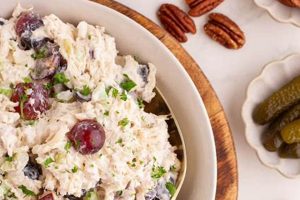
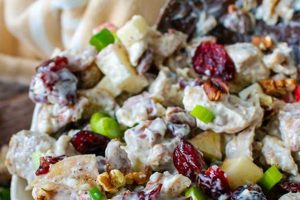
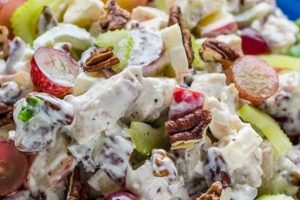
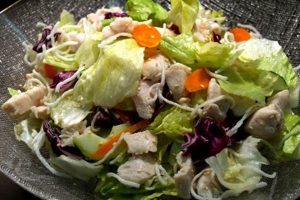
A dish combining cooked chicken, mayonnaise, and often other ingredients like celery, onion, and seasonings creates a quick, adaptable meal or snack. Variations can include grapes, nuts, dried cranberries, or different herbs and spices. A classic example might involve shredded chicken breast, mayonnaise, chopped celery, diced onion, salt, and pepper.
Such dishes offer convenience and nutritional value. They require minimal preparation time and readily available ingredients. The protein content of chicken makes them a satisfying choice, while customizable ingredients allow for varied flavors and textures catering to individual preferences. Historically, similar preparations have existed for centuries, demonstrating enduring popularity rooted in practicality and adaptability.
Further exploration will cover specific ingredient choices, preparation methods, variations for different dietary needs, and creative serving suggestions.
Tips for a Delicious and Effortless Chicken Salad
Achieving a flavorful and satisfying chicken salad requires attention to a few key details. These tips offer guidance for optimal results.
Tip 1: Chicken Selection and Preparation: Opt for high-quality cooked chicken, either roasted, poached, or baked. Avoid pre-cooked, seasoned varieties to maintain control over flavor profiles. Allow the chicken to cool completely before shredding or dicing to prevent a mushy texture.
Tip 2: Mayonnaise Matters: The quality and type of mayonnaise significantly impact the final product. Experiment with different brands or consider making homemade mayonnaise for a richer flavor. Start with a smaller amount and add more as needed to achieve desired consistency.
Tip 3: Balancing Texture and Flavor: Consider the texture and flavor contributions of added ingredients. Finely diced celery and onion provide a classic crunch, while grapes or dried cranberries offer a burst of sweetness. Nuts add another layer of texture and healthy fats.
Tip 4: Seasoning Strategically: Simple seasonings like salt and pepper are essential. Fresh herbs, such as dill or chives, can enhance the flavor profile. Experiment with spices like paprika or curry powder for unique variations.
Tip 5: Chill for Optimal Flavor: Allowing the prepared salad to chill in the refrigerator for at least 30 minutes allows the flavors to meld. This also firms the texture, making it ideal for sandwiches or wraps.
Tip 6: Creative Serving Suggestions: Explore serving options beyond traditional bread. Consider lettuce cups, croissants, crackers, or even as a topping for baked potatoes.
Tip 7: Proper Storage: Store leftover chicken salad in an airtight container in the refrigerator for up to three days. Avoid freezing, as it can negatively affect the texture of the mayonnaise and other ingredients.
By following these tips, one can consistently create a delicious and satisfying chicken salad with minimal effort, maximizing flavor and enjoyment.
These preparation guidelines provide a foundation for creating a versatile dish suitable for various occasions. The following section will offer concluding remarks.
1. Quick Preparation

Quick preparation is a defining characteristic of an easy chicken salad recipe, directly influencing its appeal and practicality. This speed stems from streamlined processes and readily available ingredients, minimizing time investment without sacrificing flavor or nutritional value.
- Pre-cooked Chicken:
Utilizing pre-cooked chicken, whether rotisserie, baked, or poached, significantly reduces preparation time. This eliminates the need for lengthy cooking processes, allowing for quicker assembly. Selecting pre-cooked options streamlines the recipe, aligning with the goal of a quick and easy meal.
- Simple Ingredients:
Recipes emphasizing readily available ingredients like mayonnaise, celery, onion, and common seasonings contribute to speed. These ingredients require minimal processing, often involving simple chopping or dicing. Accessibility and ease of preparation are key factors in the overall speed of the recipe.
- Minimal Cooking:
Beyond the chicken, minimal cooking is required. The recipe primarily involves combining ingredients rather than extensive cooking processes. This lack of elaborate cooking steps drastically reduces the time commitment, aligning with the concept of a quick and easy meal.
- Short Chilling Time:
While chilling enhances flavor melding, even a short chilling period suffices for a palatable result. This allows for consumption soon after preparation, further contributing to the recipe’s quick turnaround time. Flexibility in chilling duration accommodates busy schedules.
These facets of quick preparation underscore the convenience and efficiency of an easy chicken salad recipe. The ability to assemble a flavorful and nutritious meal in minimal time makes it a practical choice for various occasions, from quick lunches to impromptu gatherings.
2. Simple Ingredients

Simplicity in ingredients defines an easy chicken salad recipe, contributing directly to its accessibility and ease of preparation. This focus on common, readily available components allows for efficient creation without compromising flavor or nutritional value. The following facets explore this connection:
- Common Pantry Staples:
Recipes utilizing common pantry staples like mayonnaise, salt, pepper, and onion powder minimize the need for specialized ingredients. These readily available items reduce preparation time and cost, aligning with the recipe’s emphasis on simplicity and accessibility. A well-stocked pantry likely contains these ingredients, enabling spontaneous preparation.
- Versatile Produce:
Simple produce additions like celery, onion, or grapes provide flavor and texture without requiring complex preparation. These readily available ingredients contribute to the recipe’s versatility, allowing for customization based on preference and seasonal availability. The simplicity of these additions enhances the overall ease of preparation.
- Adaptable Protein:
While chicken is the core protein, the recipe adapts to various chicken preparations, from rotisserie to leftover baked chicken. This flexibility simplifies ingredient sourcing and reduces the need for specific cooking methods. The adaptability of the protein component underscores the recipe’s inherent simplicity.
- Minimal Processing:
The ingredients typically require minimal processing, often involving simple chopping or dicing. This contributes to the overall speed and ease of the recipe, minimizing preparation time and effort. The lack of complex processing techniques further reinforces the concept of simplicity.
The emphasis on simple ingredients directly contributes to the ease and accessibility of the recipe. This focus allows for a quick and flavorful meal with minimal effort, making it a practical and appealing choice for a variety of occasions. The simplicity extends beyond ingredient selection to preparation methods, further reinforcing the ease and convenience of the recipe.
3. Versatile Flavors

Flavor versatility is a key attribute of an easy simple chicken salad recipe, contributing significantly to its broad appeal and adaptability. This adaptability stems from the recipe’s capacity to incorporate a wide range of flavor profiles, accommodating diverse palates and preferences. The following facets explore this connection:
- Adaptable Base Recipe:
The fundamental simplicity of the base recipecooked chicken and mayonnaiseprovides a neutral canvas for diverse flavor additions. This neutrality allows for seamless integration of sweet, savory, spicy, or tangy elements without clashing with core ingredients. The adaptable base facilitates experimentation and personalization.
- Complementary Ingredient Choices:
Ingredients like grapes, cranberries, nuts, apples, and various herbs and spices offer complementary flavor dimensions. Sweetness from fruit balances savory notes from the chicken and mayonnaise, while nuts provide earthy undertones and textural contrast. Herbs and spices introduce aromatic complexity, further expanding flavor possibilities.
- Cultural Adaptations:
The recipe lends itself to cultural adaptations, incorporating ingredients and spices reflective of diverse cuisines. Curry powder can create an Indian-inspired variation, while cilantro and lime juice evoke Mexican flavors. This adaptability allows for personalized interpretations based on cultural preferences and culinary traditions.
- Seasonal Variations:
Seasonal ingredients provide opportunities for flavor variation throughout the year. Summer variations might incorporate fresh herbs like dill or mint, while autumn versions might include apples and pecans. This seasonal adaptability keeps the recipe fresh and interesting, aligning with ingredient availability and seasonal preferences.
The versatility of flavors in an easy chicken salad recipe significantly enhances its appeal and adaptability. This flexibility allows for customization based on individual preferences, dietary needs, and seasonal availability. The recipe’s ability to accommodate diverse flavor profiles contributes to its enduring popularity and its suitability for a variety of occasions.
4. Customizable Options

Customization is integral to the appeal of an easy simple chicken salad recipe. Its adaptability allows for modifications based on individual dietary needs, taste preferences, and available ingredients, enhancing the recipe’s practicality and broadening its appeal across diverse culinary landscapes.
- Dietary Adaptations:
The recipe readily accommodates dietary restrictions. Substituting plain Greek yogurt for mayonnaise reduces fat content, addressing health-conscious preferences. Gluten-free bread or lettuce wraps cater to gluten-free diets. Ingredient swaps provide flexibility without compromising flavor or satisfaction, ensuring inclusivity for various dietary needs.
- Flavor Preferences:
Customization extends to flavor profiles. Incorporating curry powder or other spices caters to those seeking bolder tastes. Adding sweet elements like grapes or dried cranberries satisfies preferences for sweeter profiles. The recipe’s adaptability allows for tailored flavor experiences, reflecting individual tastes and culinary preferences.
- Ingredient Availability:
Ingredient substitutions based on availability enhance the recipe’s practicality. Substituting readily available nuts or seeds for more expensive varieties maintains flavor and texture while reducing cost. Utilizing leftover cooked chicken or other proteins further maximizes resourcefulness and minimizes waste, aligning with practical and sustainable cooking practices.
- Textural Variations:
Texture preferences can also be accommodated. Finely dicing ingredients creates a smoother consistency, while coarser chopping provides more textural contrast. Adding chopped nuts or seeds introduces another layer of texture, catering to diverse preferences. This adaptability ensures a satisfying sensory experience tailored to individual preferences.
The customizability of an easy chicken salad recipe underscores its versatility and practicality. This adaptability extends beyond simple ingredient substitutions to encompass broader dietary considerations, flavor preferences, and available resources. The recipes inherent flexibility contributes to its enduring popularity and its suitability for various contexts and occasions.
5. Nutritious Meal

Nutritional value is a significant aspect of an easy simple chicken salad recipe, contributing to its appeal as a healthy and satisfying meal option. This nutritional density arises from the inherent qualities of core ingredients and the potential for incorporating nutrient-rich additions, aligning with health-conscious dietary preferences.
- Lean Protein Source:
Chicken, the primary ingredient, provides lean protein crucial for muscle building, tissue repair, and overall bodily functions. A typical serving contributes significantly to daily protein requirements. Choosing lean chicken breast further maximizes protein content while minimizing fat intake, aligning with healthy dietary guidelines.
- Healthy Fats (Optional):
Incorporating healthy fats through additions like avocados, nuts, or seeds enhances nutritional value. These fats contribute to satiety, support cell function, and provide essential fatty acids. While mayonnaise contains fat, opting for lighter versions or using Greek yogurt as a substitute can reduce overall fat content while maintaining creamy texture.
- Vitamins and Minerals:
Ingredients like celery, onion, and grapes contribute vitamins and minerals essential for various bodily functions. Celery provides Vitamin K, while onions offer Vitamin C and antioxidants. Grapes contribute antioxidants and potassium. These additions enhance the overall nutritional profile of the salad, contributing to a well-rounded meal.
- Fiber Content:
Ingredients like celery and certain fruits and vegetables contribute dietary fiber, promoting digestive health and regularity. Fiber also contributes to satiety, reducing the likelihood of overeating. Incorporating whole-grain bread or crackers for serving further enhances fiber content, maximizing nutritional benefits.
The combination of lean protein, healthy fats, vitamins, minerals, and fiber positions an easy simple chicken salad recipe as a nutritious meal option. This nutritional density, coupled with its ease of preparation and customizable nature, contributes to its appeal as a healthy and convenient meal choice suitable for various dietary preferences and lifestyles. Furthermore, portion control and mindful ingredient selection can further optimize nutritional benefits, aligning with individual health goals.
Frequently Asked Questions
This section addresses common inquiries regarding easy simple chicken salad recipes, providing concise and informative responses to facilitate optimal preparation and enjoyment.
Question 1: What type of chicken is best suited for chicken salad?
Cooked chicken breast, either baked, poached, roasted, or rotisserie, is generally preferred for its lean protein content and neutral flavor profile, allowing other ingredients to shine. Dark meat can be used for a richer flavor, but may result in a slightly drier salad.
Question 2: Can mayonnaise be substituted with healthier alternatives?
Plain Greek yogurt or avocado can be used as healthier alternatives to mayonnaise, reducing overall fat content while maintaining creamy texture. These substitutes also offer distinct flavor profiles that can complement the other ingredients.
Question 3: How long can chicken salad be stored safely in the refrigerator?
Chicken salad should be stored in an airtight container in the refrigerator for no longer than three to four days. Always ensure the chicken is thoroughly chilled before incorporating it into the salad.
Question 4: What are some ways to add more flavor complexity to a basic chicken salad recipe?
Fresh herbs like dill, chives, or parsley can add brightness and complexity. Spices such as curry powder, paprika, or garlic powder offer savory depth. Incorporating ingredients like chopped apples, grapes, or dried cranberries introduces sweetness and textural variation.
Question 5: How can one prevent chicken salad from becoming watery?
Ensure all ingredients, especially the chicken and vegetables, are thoroughly drained before combining. Adding ingredients gradually allows for better control over moisture content. Chilling the salad helps firm the texture and prevent excess moisture.
Question 6: Can chicken salad be frozen?
Freezing is generally not recommended, as it can negatively impact the texture of mayonnaise and other ingredients, resulting in a less desirable consistency upon thawing. It’s best to prepare and consume chicken salad fresh.
Understanding these key aspects ensures optimal preparation and enjoyment of a flavorful and satisfying chicken salad.
This concludes the frequently asked questions section. The following segment offers a summary of key takeaways and concluding remarks.
Easy Simple Chicken Salad Recipe
Exploration of the easy simple chicken salad recipe reveals its enduring appeal stems from a confluence of factors: speed of preparation, readily available ingredients, adaptability to diverse flavor profiles, and inherent nutritional value. From simple combinations of cooked chicken and mayonnaise to more elaborate variations incorporating fruits, nuts, and spices, the recipe provides a versatile foundation for culinary creativity. Its adaptability caters to various dietary needs and personal preferences, solidifying its position as a practical and satisfying meal option.
The enduring popularity of this simple dish underscores the power of culinary resourcefulness and adaptability. Continued exploration of ingredient combinations and flavor profiles promises further evolution, ensuring the easy simple chicken salad recipe remains a staple across kitchens for generations to come. Its accessibility empowers individuals to create personalized versions, reflecting diverse culinary traditions and individual tastes, ultimately contributing to a richer and more flavorful culinary landscape.