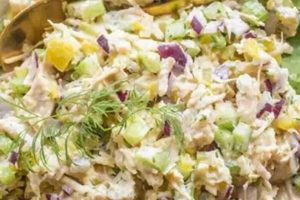
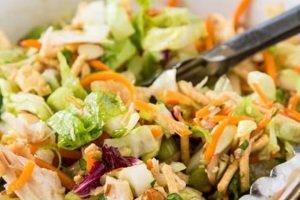
This classic dish combines cooked chicken with mayonnaise, celery, and often grapes, onion, or other complementary ingredients. Variations exist, incorporating diverse flavors and textures through additions like nuts, dried fruits, or different herbs and spices. A well-executed version offers a balance of creamy, savory, and slightly sweet elements.
A readily available and adaptable dish, it serves as a versatile option for quick meals, potlucks, or picnics. Its popularity stems from its ease of preparation, relatively inexpensive ingredients, and satisfying flavor profile. Historically, chicken salad has been a staple in American cuisine, evolving from simple combinations to more elaborate preparations. Its adaptability has ensured its continued presence on tables across generations.
The following sections delve into specific variations, offering detailed instructions and tips for crafting a perfect version suited to individual preferences. Topics covered will include ingredient selection, preparation techniques, and suggestions for serving and presentation.
Tips for an Exceptional Chicken Salad
Elevating this classic dish requires attention to detail and an understanding of the interplay of flavors and textures. The following tips offer guidance for achieving optimal results.
Tip 1: Chicken Selection & Preparation: Opt for high-quality, cooked chicken. Rotisserie chicken offers convenience, while poaching or grilling boneless, skinless breasts allows for greater control over seasoning. Ensure the chicken is cooled completely before shredding or dicing to prevent the mayonnaise from becoming overly thin.
Tip 2: Mayonnaise Matters: Use good quality mayonnaise. The mayonnaise serves as the foundation of the salad’s flavor and texture. Experimenting with different brands or incorporating a touch of Greek yogurt can add complexity.
Tip 3: Balancing Flavors: Achieve a harmonious blend of savory and sweet. The sweetness of grapes or dried cranberries can be balanced with the acidity of a squeeze of lemon juice or the sharpness of red onion. Dijon mustard adds a subtle tang.
Tip 4: Texture Enhancement: Consider incorporating textural elements. Toasted nuts, such as pecans or walnuts, or chopped celery and apples offer a satisfying crunch.
Tip 5: Seasoning with Purpose: Seasoning should enhance, not overpower. Freshly ground black pepper, a pinch of salt, and herbs like dill or tarragon can elevate the overall flavor profile.
Tip 6: Chilling for Optimal Flavor: Allow the salad to chill for at least 30 minutes before serving. Chilling allows the flavors to meld and the salad to firm up.
Tip 7: Creative Serving Suggestions: Explore various presentation options. Serve the chicken salad on croissants, in lettuce cups, or as a filling for tomatoes or avocados.
By applying these tips, one can consistently produce a chicken salad that is both delicious and visually appealing. Attention to these details ensures a satisfying culinary experience.
The following section provides concluding remarks and further inspiration for incorporating this versatile dish into various meal plans.
1. Classic American Dish

Chicken salad’s status as a classic American dish significantly influences its presence in publications like Better Homes and Gardens. The magazine, known for its focus on home cooking and traditional recipes, often features dishes resonant with American culinary heritage. Chicken salad, with its history intertwined with American dining, naturally aligns with this editorial perspective. Its widespread popularity stems from its adaptability, affordability, and ease of preparation, reflecting core values in American home cooking. The dish’s historical evolution from simpler iterations to more complex variations mirrors evolving culinary trends within American households. For example, early versions primarily utilized leftover chicken and mayonnaise, while contemporary recipes frequently incorporate diverse ingredients like grapes, nuts, and various herbs.
The “classic” designation also implies a certain level of familiarity and comfort. Better Homes and Gardens, by featuring chicken salad recipes, taps into this established culinary knowledge, providing readers with both familiar favorites and innovative twists. The magazine acts as a repository for these classic dishes, preserving culinary traditions while also introducing contemporary adaptations. This balance between tradition and innovation resonates with a broad audience, further solidifying chicken salad’s place as a staple American dish.
Understanding the connection between “classic American dish” and the Better Homes and Gardens chicken salad recipe provides insight into the publication’s editorial choices and the enduring appeal of this versatile dish. It highlights the importance of culinary heritage in shaping contemporary food culture. By acknowledging this connection, one gains a deeper appreciation for the recipe’s significance within the broader context of American cuisine. This understanding allows for informed adaptations and continued enjoyment across generations.
2. Simple, Accessible Ingredients

The emphasis on simple, accessible ingredients in a Better Homes and Gardens chicken salad recipe reflects the publication’s core values of practicality and home-cooked meals. Accessibility translates to ingredients readily available in most supermarkets, minimizing specialized shopping trips. This convenience factor directly contributes to the recipe’s appeal for a broad audience. Furthermore, reliance on common pantry staples makes the dish budget-friendly, aligning with the publication’s focus on economical meal solutions. For instance, using readily available ingredients like mayonnaise, celery, and onion allows for cost-effective preparation without sacrificing flavor.
This focus on accessibility extends beyond mere convenience and affordability. It fosters culinary confidence by empowering home cooks with recipes utilizing familiar ingredients. The simplicity of the ingredient list reduces the barrier to entry for novice cooks, encouraging experimentation and culinary exploration. A straightforward recipe featuring common ingredients like cooked chicken and mayonnaise increases the likelihood of successful outcomes, fostering positive cooking experiences. This, in turn, cultivates culinary skills and encourages further exploration of more complex recipes.
Ultimately, the emphasis on readily available components underscores the practical nature of a Better Homes and Gardens chicken salad recipe. It reinforces the notion that delicious, satisfying meals do not necessitate complex or expensive ingredients. This principle aligns with the publication’s commitment to providing accessible and achievable recipes for home cooks of all skill levels. Understanding this connection strengthens the practical significance of the recipe, positioning it as a versatile and dependable option for everyday meals and special occasions alike. This practicality contributes to the recipe’s enduring popularity and its continued relevance in contemporary home kitchens.
3. Versatile Preparation Methods

Versatility in preparation distinguishes a Better Homes and Gardens chicken salad recipe, reflecting adaptability to diverse needs and preferences. This adaptability manifests in several key ways. The core recipe readily accommodates variations in chicken preparation, ranging from using readily available rotisserie chicken to poaching or grilling fresh chicken breasts. This flexibility caters to different time constraints and culinary skill levels. Furthermore, ingredient proportions can be easily adjusted to suit individual tastes. For example, those preferring a chunkier salad might incorporate more chicken and less mayonnaise, while others might opt for a creamier consistency. The recipe’s adaptability extends to ingredient substitutions. Traditional celery can be replaced or augmented with other vegetables like chopped bell peppers or water chestnuts, providing textural and flavor variations.
This inherent versatility allows the recipe to transcend specific occasions or dietary preferences. It can be a quick weeknight meal, a picnic staple, or an elegant appetizer for a more formal gathering. Dietary adaptations are also readily achievable. Substituting Greek yogurt for a portion of the mayonnaise reduces fat content, while incorporating gluten-free bread or crackers ensures inclusivity for those with dietary restrictions. These adaptable elements empower individuals to personalize the recipe, fostering culinary creativity and ownership. Real-life examples include using leftover Thanksgiving turkey in place of chicken or adding curry powder for an Indian-inspired twist.
Understanding the versatility inherent in a Better Homes and Gardens chicken salad recipe expands its practical applications significantly. It transforms a simple recipe into a adaptable foundation for countless variations. This adaptability not only promotes culinary creativity but also reduces food waste by offering a delicious way to utilize leftover cooked chicken or turkey. Ultimately, this versatility contributes to the recipe’s enduring appeal, solidifying its role as a practical and adaptable staple in the home kitchen. The recipes adaptability empowers cooks to cater to diverse preferences and dietary needs, maximizing its utility in various culinary contexts.
4. Adaptable Flavor Profiles
Adaptable flavor profiles represent a crucial element within a Better Homes and Gardens chicken salad recipe. This adaptability stems from the recipe’s inherent simplicity, allowing for a wide range of flavor modifications without compromising the dish’s fundamental character. The neutral base of chicken and mayonnaise provides a blank canvas for incorporating diverse ingredients and seasonings. Sweetness can be introduced through grapes, dried cranberries, or chopped apples. Savory notes can be achieved with the addition of Dijon mustard, celery seeds, or fresh herbs like dill or tarragon. Spices such as curry powder or smoked paprika can introduce ethnic influences, transforming the classic recipe into an exploration of global flavors. This flexibility ensures the recipe remains appealing to a broad range of palates, accommodating individual preferences and dietary needs.
The practical significance of adaptable flavor profiles becomes evident when considering real-world scenarios. A family gathering might call for a traditional version with grapes and celery, while a summer picnic could benefit from the bright flavors of lemon zest and fresh herbs. Dietary restrictions can be accommodated by substituting ingredients or adjusting seasoning. For instance, a low-sodium version could utilize low-sodium mayonnaise and omit added salt, while individuals avoiding certain allergens can substitute ingredients accordingly. The ability to tailor the flavor profile expands the recipe’s utility, ensuring its relevance across diverse culinary situations. Examples include adding chopped jalapenos for a spicy kick, incorporating crumbled bacon for a smoky flavor, or using a blend of fresh herbs for a brighter, more herbaceous profile.
Ultimately, adaptable flavor profiles contribute significantly to the enduring popularity and versatility of the Better Homes and Gardens chicken salad recipe. This adaptability empowers cooks to personalize the dish, fostering culinary creativity and ensuring its continued relevance in the ever-evolving landscape of home cooking. The recipe’s capacity to accommodate a wide range of flavor preferences positions it as a dependable and adaptable option for both everyday meals and special occasions. This adaptability ensures the recipe remains a timeless classic, capable of satisfying diverse palates and adapting to evolving culinary trends.
5. Emphasis on Fresh Ingredients
Better Homes and Gardens, as a publication focused on home cooking and gardening, frequently emphasizes fresh ingredients in its recipes. This emphasis naturally extends to its chicken salad recipe, impacting both the flavor profile and the overall culinary experience. Utilizing fresh ingredients aligns with the magazine’s broader philosophy of promoting healthy, flavorful meals prepared with readily available components. This focus contributes significantly to the recipe’s appeal, highlighting the importance of quality ingredients in achieving optimal results.
- Enhanced Flavor and Aroma:
Fresh ingredients contribute significantly to the vibrancy of the chicken salad. Freshly chopped celery and onion offer a crisp, bright flavor that contrasts with the richness of the mayonnaise and chicken. Fresh herbs, such as dill or parsley, provide an aromatic lift, elevating the overall sensory experience. Examples include using freshly squeezed lemon juice for a brighter citrus note or incorporating freshly ground black pepper for a more pronounced spice. The difference between fresh and dried herbs is readily apparent in the final dish, with fresh herbs offering a more nuanced and vibrant flavor profile.
- Improved Texture and Visual Appeal:
Fresh ingredients contribute significantly to the textural complexity and visual appeal of the salad. Crisp celery and grapes offer a satisfying contrast to the creamy mayonnaise and shredded chicken. The vibrant colors of fresh herbs and vegetables enhance the presentation, making the salad more visually appealing. For instance, incorporating halved red grapes adds a pop of color and a juicy burst of flavor, while using freshly chopped celery provides a satisfying crunch. These textural and visual elements enhance the overall dining experience.
- Nutritional Benefits:
The emphasis on fresh ingredients often translates to increased nutritional value. Fresh produce offers a wider array of vitamins and minerals compared to processed alternatives. Incorporating fresh herbs and vegetables increases the dish’s nutrient density, aligning with Better Homes and Gardens’ focus on healthy eating. For example, using fresh celery and grapes provides dietary fiber and antioxidants. This nutritional component adds another layer of value to the recipe, making it a healthy and satisfying meal option. While mayonnaise remains a calorie-rich ingredient, the inclusion of fresh produce contributes to a more balanced nutritional profile.
- Seasonal Adaptability:
Utilizing fresh ingredients allows for seasonal variations in the chicken salad recipe. Spring versions might incorporate fresh chives and asparagus, while summer variations could feature ripe tomatoes and basil. This adaptability keeps the recipe fresh and exciting throughout the year, offering opportunities for culinary exploration and creativity. For instance, a fall version might include chopped apples and pecans, reflecting the seasonal harvest. This adaptability maximizes the use of seasonally available produce, ensuring optimal flavor and nutritional value.
The emphasis on fresh ingredients in a Better Homes and Gardens chicken salad recipe directly contributes to its appeal, aligning with the publication’s focus on healthy, flavorful home cooking. This focus underscores the impact of quality ingredients on the final dish, demonstrating how simple ingredients, when fresh and properly prepared, can elevate a classic recipe to new heights. This emphasis on freshness ultimately enhances the overall dining experience, transforming a simple chicken salad into a vibrant and satisfying meal.
6. Focus on Balanced Textures
Texture plays a crucial role in the overall enjoyment of a Better Homes and Gardens chicken salad recipe. The publication’s focus on balanced textures reflects a commitment to creating a satisfying sensory experience, elevating the dish beyond simple sustenance. A well-executed chicken salad offers a harmonious interplay of textures, engaging multiple senses and contributing to a more fulfilling culinary experience. The following facets explore this emphasis in detail, highlighting its practical significance within the context of the recipe.
- Creamy Base:
Mayonnaise serves as the foundation of the chicken salad, providing a rich, creamy texture that coats the other ingredients. This creaminess acts as a unifying element, binding the various components together while also contributing a sense of indulgence. The quality of the mayonnaise directly impacts the final texture, influencing the overall creaminess and mouthfeel of the salad. Using a high-quality mayonnaise contributes to a smoother, more luxurious texture.
- Protein Presence:
The chicken itself provides a substantial textural element. Whether diced or shredded, the chicken offers a chewiness that contrasts with the creamy mayonnaise. The size of the chicken pieces influences the overall texture; larger chunks create a more substantial bite, while finely shredded chicken yields a smoother, more delicate texture. The choice depends on individual preferences and the desired final consistency of the salad.
- Crisp and Crunchy Elements:
Incorporating crisp and crunchy elements adds a vital textural dimension. Common additions include chopped celery, diced apples, or toasted nuts. These ingredients introduce a contrasting texture that offsets the creaminess of the mayonnaise and the chewiness of the chicken. The interplay of these contrasting textures creates a dynamic sensory experience. For instance, the snap of celery or the crunch of toasted pecans adds a satisfying element to each bite.
- Balancing Act:
Achieving a balanced texture involves carefully considering the proportions of each ingredient. Too much mayonnaise can result in an overly creamy, heavy salad, while an insufficient amount of crunchy elements can lead to a monotonous texture. The ideal balance provides a harmonious interplay of creamy, chewy, and crisp elements, ensuring a satisfying and dynamic sensory experience. A well-balanced chicken salad engages the palate with a variety of textures, creating a more enjoyable and memorable culinary experience.
The focus on balanced textures in a Better Homes and Gardens chicken salad recipe underscores the publication’s commitment to creating a well-rounded culinary experience. By carefully considering the interplay of textures, the recipe elevates a simple dish into a more complex and satisfying meal. This emphasis on texture enhances the sensory enjoyment of the salad, highlighting the importance of textural balance in achieving culinary excellence. Ultimately, this attention to detail contributes to the recipe’s enduring appeal and its continued relevance in contemporary home kitchens. This understanding empowers cooks to create a chicken salad that is not only flavorful but also texturally satisfying, enhancing the overall dining experience.
7. Reliable, Tested Instructions
Better Homes and Gardens, as a trusted source of culinary guidance, prioritizes reliable, tested instructions in its recipes, including its chicken salad recipe. This commitment to accuracy and reproducibility builds reader confidence, ensuring consistent results and fostering positive cooking experiences. The emphasis on tested instructions reflects the publication’s dedication to providing dependable guidance, empowering home cooks to achieve culinary success. The following facets delve into the implications of reliable, tested instructions within the context of this classic recipe.
- Precision and Clarity:
Reliable instructions emphasize precision and clarity, minimizing ambiguity and reducing the risk of errors. Specific measurements, clear cooking times, and detailed descriptions of techniques ensure consistent results. For example, specifying “one cup of diced celery” eliminates guesswork and ensures a balanced flavor profile. Clear instructions on how to properly dice the celery further contribute to consistent texture and presentation.
- Reproducibility:
Tested instructions promote reproducibility, allowing cooks of varying skill levels to achieve similar outcomes. The rigorous testing process eliminates variables and ensures the recipe works as intended. This reliability fosters confidence and encourages culinary experimentation, empowering home cooks to explore variations with greater assurance of success. Reproducibility allows for consistent results across multiple attempts, regardless of the cook’s experience level.
- Troubleshooting and Anticipation of Challenges:
Thorough testing allows recipe developers to anticipate potential challenges and provide solutions within the instructions. Addressing common issues preemptively minimizes frustration and increases the likelihood of success. For example, instructions might include tips for preventing the salad from becoming watery or suggestions for adjusting seasoning based on personal preferences. This proactive approach empowers cooks to navigate potential pitfalls and achieve optimal results.
- Building Trust and Confidence:
Reliable, tested instructions build trust between the publication and its audience. Readers rely on Better Homes and Gardens for accurate and dependable recipes, fostering a sense of confidence in the kitchen. This trust encourages continued engagement with the publication’s content and strengthens its reputation as a reliable source of culinary guidance. Consistent positive experiences with the publication’s recipes reinforce this trust, encouraging further exploration of its culinary offerings.
The commitment to reliable, tested instructions in the Better Homes and Gardens chicken salad recipe highlights the publication’s dedication to providing practical and dependable culinary guidance. This emphasis on accuracy and reproducibility empowers home cooks to confidently create a delicious and satisfying dish, reinforcing the recipe’s status as a timeless classic. The reliability of the instructions contributes significantly to the recipe’s enduring popularity, making it a trusted choice for both novice and experienced cooks alike. By providing clear, concise, and tested instructions, Better Homes and Gardens empowers its audience to achieve culinary success and enjoy the satisfaction of creating a delicious and dependable dish.
Frequently Asked Questions
This section addresses common inquiries regarding the preparation and variations of chicken salad, providing concise and informative responses.
Question 1: What type of chicken is best suited for chicken salad?
While any cooked chicken can be used, boneless, skinless breasts offer a neutral flavor and tender texture. Rotisserie chicken provides a convenient alternative. Using leftover roasted or poached chicken also minimizes food waste.
Question 2: Can mayonnaise be substituted with other ingredients?
Greek yogurt or plain yogurt can replace a portion of the mayonnaise to reduce fat content while maintaining a creamy consistency. Avocado can also be used for a richer, healthier alternative, but will impart its own distinct flavor.
Question 3: How can one prevent a watery chicken salad?
Ensuring the chicken is thoroughly cooled before mixing with other ingredients prevents excess moisture. Adequately draining canned or frozen ingredients also helps maintain the desired consistency. Over-mixing can also release excess moisture from the ingredients, so gentle folding is recommended.
Question 4: What are common flavor variations for chicken salad?
Incorporating ingredients like grapes, dried cranberries, apples, nuts, or herbs allows for flavor customization. Curry powder, smoked paprika, or a touch of Dijon mustard introduce unique flavor profiles. Experimentation is encouraged to discover preferred combinations.
Question 5: How long can chicken salad be stored?
Properly stored in an airtight container in the refrigerator, chicken salad typically lasts for three to five days. Freezing is generally not recommended, as it can negatively impact the texture and consistency of the mayonnaise-based salad.
Question 6: How can chicken salad be served?
Traditional serving suggestions include bread, croissants, crackers, or lettuce cups. Chicken salad can also be used as a filling for sandwiches, wraps, or even baked potatoes. Consider serving it over a bed of greens for a lighter meal.
By addressing these common questions, individuals can approach chicken salad preparation with greater confidence, ensuring successful and satisfying results.
The following section provides a collection of popular chicken salad recipes, offering inspiration for various flavor combinations and presentation styles.
A Timeless Classic Reimagined
Exploration of the Better Homes and Gardens chicken salad recipe reveals a dish deeply embedded in American culinary tradition. Its enduring popularity stems from a confluence of factors: readily accessible ingredients, adaptable preparation methods, versatile flavor profiles, and an emphasis on fresh, balanced textures. Reliable, tested instructions further solidify its appeal, empowering home cooks to confidently create a satisfying and delicious meal. From classic combinations to innovative variations, the recipe’s adaptability ensures its continued relevance in contemporary kitchens.
The Better Homes and Gardens chicken salad recipe stands as a testament to the enduring power of simple, well-executed dishes. Its adaptability allows for continuous reinvention, ensuring its place at tables for generations to come. Exploration of variations and thoughtful ingredient selection elevates this classic dish from a simple staple to a culinary canvas, reflecting individual tastes and creative expression. Its continued presence in the American culinary landscape underscores its significance as a versatile and dependable dish, capable of satisfying diverse palates and adapting to evolving culinary trends.