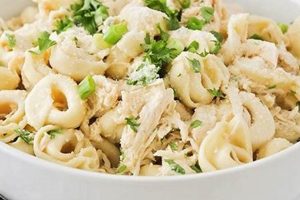
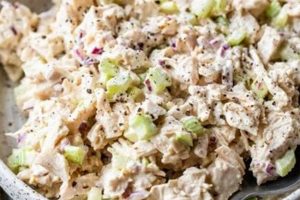
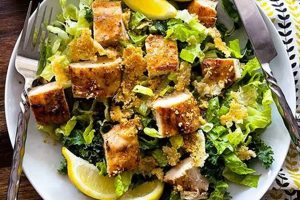
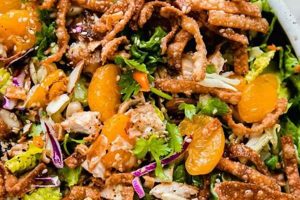
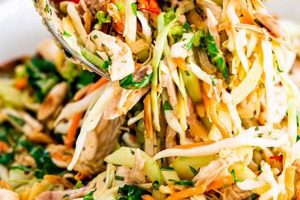
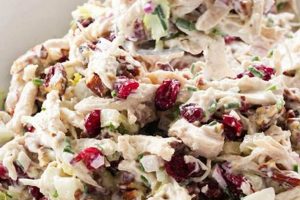
A dish featuring cooked chicken, typically from a rotisserie, combined with various ingredients to create a salad offers a convenient and often nutritious meal option. Common additions include mayonnaise, celery, onion, grapes, nuts, and seasonings. Variations exist, incorporating Greek yogurt, avocado, or different herbs and spices for unique flavor profiles. A focus on lean protein and fresh produce can contribute to a balanced, wholesome meal.
Conveniently prepared chicken combined with fresh, nutrient-rich ingredients offers a time-saving yet healthy meal solution. Utilizing readily available rotisserie chicken reduces preparation time, making it an attractive option for busy individuals. The inclusion of vegetables and fruits provides essential vitamins and minerals. Adjusting ingredients, such as opting for a lighter dressing or incorporating whole grains, allows for further customization to meet individual dietary needs and preferences. This approach to meal preparation has gained popularity as a way to balance convenience with healthful eating.
The following sections will explore specific ingredient combinations, preparation techniques, and nutritional information for creating flavorful and nutritious chicken salads. Variations suitable for specific dietary restrictions, such as gluten-free or low-sodium options, will also be discussed. Finally, tips for storage and serving suggestions will be provided.
Tips for Creating a Healthy Rotisserie Chicken Salad
Maximizing nutritional value and flavor requires careful consideration of ingredients and preparation methods. The following tips offer guidance for creating a wholesome and delicious chicken salad.
Tip 1: Prioritize lean protein. Remove skin and excess fat from the rotisserie chicken before shredding. This reduces saturated fat content while retaining protein.
Tip 2: Incorporate a variety of vegetables. Beyond traditional celery and onion, consider adding chopped bell peppers, cucumbers, shredded carrots, or chopped broccoli for added nutrients and texture.
Tip 3: Choose healthy fats. Instead of relying solely on mayonnaise, consider incorporating avocado, Greek yogurt, or a light vinaigrette. These options offer healthy fats and contribute creamy texture without excessive saturated fat.
Tip 4: Enhance flavor with fresh herbs. Fresh herbs like dill, parsley, chives, or tarragon can elevate the flavor profile without adding excess sodium or calories.
Tip 5: Boost fiber with whole grains. Add cooked quinoa, wild rice, or farro for increased fiber content, promoting satiety and digestive health.
Tip 6: Control sodium content. Opt for low-sodium or no-salt-added ingredients when possible, and season with fresh herbs and spices instead of relying on salt.
Tip 7: Practice safe food handling. Refrigerate the chicken salad promptly after preparation and maintain proper food safety practices to minimize the risk of foodborne illness.
By following these tips, one can create a chicken salad that is both flavorful and supportive of health goals. Thoughtful ingredient selection and preparation methods contribute to a satisfying and nutritious meal.
These practical tips provide a foundation for creating personalized, healthy chicken salads tailored to individual preferences and dietary needs. The following section will offer concluding remarks and further resources.
1. Lean Protein Source

Lean protein forms the foundation of a healthy rotisserie chicken salad, contributing significantly to satiety and providing essential amino acids. Understanding the role of lean protein in this context is crucial for crafting a nutritious and satisfying meal.
- Rotisserie Chicken as a Convenient Source
Rotisserie chicken offers a readily available, convenient source of lean protein. Removing the skin and visible fat before incorporating it into the salad minimizes saturated fat content while maximizing protein intake. This convenience factor contributes to the appeal of rotisserie chicken salad as a quick and healthy meal option.
- Protein’s Role in Satiety and Muscle Maintenance
Protein plays a vital role in promoting satiety, helping to regulate appetite and prevent overeating. Adequate protein intake also supports muscle maintenance and repair, making it an important component of a balanced diet, particularly for those seeking to manage weight or maintain muscle mass. In a rotisserie chicken salad, the protein content contributes significantly to its ability to satisfy hunger and provide sustained energy.
- Complementing Protein with Other Nutrients
While lean protein is essential, a truly healthy rotisserie chicken salad incorporates other nutrient-rich ingredients. Combining the chicken with a variety of fresh vegetables, healthy fats, and optionally, whole grains, creates a balanced meal that provides a broader spectrum of vitamins, minerals, and fiber. The protein from the chicken works synergistically with these other components to create a complete and nutritious dish.
- Alternatives to Rotisserie Chicken
While rotisserie chicken is a popular and convenient choice, alternative lean protein sources can also be incorporated into a healthy chicken salad. Grilled or poached chicken breast, canned tuna or salmon, or even plant-based options like chickpeas or lentils can provide similar nutritional benefits while offering variety and catering to different dietary preferences or restrictions.
Selecting a lean protein source and combining it thoughtfully with other healthy ingredients are key steps in creating a rotisserie chicken salad that contributes to overall well-being. The protein content not only provides essential nutrients but also enhances satiety, making this dish a satisfying and healthful meal option.
2. Fresh, Vibrant Vegetables

Fresh, vibrant vegetables are essential for transforming rotisserie chicken salad from a convenient meal into a truly healthy one. Their inclusion contributes significantly to the nutritional profile and overall appeal of the dish. The inherent nutritional value of vegetables, coupled with their textural and flavor contributions, positions them as a key component in any health-conscious chicken salad recipe.
Vegetables like celery, bell peppers, red onion, carrots, and cucumbers offer an array of vitamins, minerals, and dietary fiber. These nutrients play crucial roles in various bodily functions, from boosting immunity to promoting digestive health. For example, the vitamin C in bell peppers acts as an antioxidant, while the fiber in celery aids in digestion. Furthermore, the vibrant colors of these vegetables often indicate a high concentration of beneficial phytonutrients. The combination of these nutritional benefits makes the inclusion of fresh vegetables vital for a healthy chicken salad.
Beyond nutritional value, fresh vegetables enhance the sensory experience of rotisserie chicken salad. Their crisp textures contrast with the tender chicken, creating a more dynamic and enjoyable mouthfeel. The subtle flavors of vegetables like cucumbers and bell peppers complement the savory chicken without overpowering the palate. This balance of flavors and textures elevates the dish, making it more appealing and satisfying. Moreover, using a variety of colorful vegetables enhances the visual appeal of the salad, making it a more enticing meal.
3. Light, Healthy Dressing

Dressing choices significantly impact the overall healthfulness of rotisserie chicken salad. A light, healthy dressing enhances flavor while minimizing added calories, unhealthy fats, and excessive sodium, aligning with the goals of a nutritious and balanced meal.
- Calorie Control
Traditional mayonnaise-based dressings often contribute a significant number of calories, primarily from fat. Lighter alternatives, such as Greek yogurt, light mayonnaise, or vinaigrettes, offer reduced calorie content without sacrificing flavor or creaminess. This allows for greater portion sizes and flexibility in incorporating other calorie-containing ingredients, such as nuts or dried fruits, while maintaining overall calorie balance.
- Healthy Fat Selection
The type of fat in a dressing plays a crucial role in its health impact. Saturated and trans fats, often found in traditional mayonnaise, should be minimized. Healthier options include dressings based on unsaturated fats, such as those found in olive oil, avocado, or nuts. These fats offer potential health benefits, including supporting heart health and reducing inflammation. Selecting dressings with healthier fats contributes to the overall nutritional value of the salad.
- Sodium Content Management
Excessive sodium intake is a concern for many individuals. Store-bought dressings often contain high levels of sodium. Preparing homemade dressings or selecting low-sodium options allows for greater control over sodium intake. Fresh herbs, spices, and lemon juice can provide flavor alternatives to salt, further reducing sodium content while enhancing the overall taste profile.
- Flavor Enhancement and Versatility
A light, healthy dressing shouldn’t compromise flavor. Vinaigrettes offer diverse flavor profiles, incorporating ingredients like herbs, spices, and citrus fruits. Greek yogurt-based dressings provide a creamy texture while offering a tangy flavor that complements the chicken. The versatility of these dressings allows for customization to suit individual preferences and complements various additional ingredients in the salad.
By prioritizing a light and healthy dressing, the nutritional integrity of the rotisserie chicken salad is preserved. The reduced calorie and unhealthy fat content, controlled sodium levels, and enhanced flavors contribute to a satisfying and health-conscious meal option.
4. Whole Grains (Optional)
While not a traditional component, incorporating whole grains into rotisserie chicken salad elevates its nutritional value and contributes to a more satisfying meal. Whole grains offer a complex carbohydrate source rich in fiber, vitamins, and minerals, complementing the lean protein and vegetables typically found in this dish. Their inclusion transforms a simple chicken salad into a more complete and balanced meal option.
- Enhanced Nutritional Profile
Whole grains like quinoa, farro, or brown rice contribute valuable nutrients often lacking in standard chicken salad recipes. Fiber promotes digestive health and satiety, while B vitamins and minerals like magnesium and iron support various bodily functions. Adding these nutrients diversifies the salad’s nutritional profile, making it a more wholesome meal choice.
- Increased Fiber Content and Satiety
A significant benefit of incorporating whole grains is the substantial increase in dietary fiber. Fiber aids digestion, promotes regularity, and contributes to feelings of fullness. This enhanced satiety can be particularly beneficial for weight management, as it helps regulate appetite and prevent overeating. The added bulk from whole grains also makes the salad more substantial and satisfying.
- Textural and Flavor Complexity
Whole grains introduce textural variety to the often smooth consistency of traditional chicken salad. The nutty flavor and slightly chewy texture of cooked quinoa or the earthy notes of farro provide a pleasant contrast to the tender chicken and crisp vegetables. This interplay of textures and flavors elevates the overall sensory experience of the dish.
- Versatility and Customization
The versatility of whole grains allows for customization based on individual preferences. Quinoa offers a light and fluffy texture, while farro provides a chewier, more robust option. Brown rice adds a mild, nutty flavor and a distinct texture. The choice of whole grain can be tailored to complement the other ingredients and create a personalized flavor profile.
By incorporating whole grains, rotisserie chicken salad transcends its role as a simple, convenient meal and becomes a nutrient-rich, satisfying dish. The added fiber, vitamins, and minerals, combined with the textural and flavor enhancements, contribute to a more complete and balanced meal that supports overall well-being. This optional addition transforms the salad into a more substantial and healthful option.
5. Flavorful Herbs and Spices

Flavorful herbs and spices play a crucial role in creating a healthy and delicious rotisserie chicken salad. They provide depth and complexity without relying on excess sodium or unhealthy fats, aligning perfectly with the principles of a health-conscious recipe. Their judicious use elevates the sensory experience while contributing to the overall nutritional value of the dish.
- Sodium Reduction and Flavor Enhancement
Herbs and spices offer a powerful strategy for reducing sodium content without sacrificing flavor. Fresh or dried herbs like dill, parsley, chives, and tarragon impart distinct flavors that complement the chicken and other ingredients. Spices such as paprika, cumin, and coriander add warmth and complexity. By relying on these natural flavor enhancers, the need for added salt is minimized, contributing to a healthier sodium profile.
- Antioxidant and Anti-inflammatory Properties
Many herbs and spices possess antioxidant and anti-inflammatory properties, offering potential health benefits beyond flavor enhancement. Turmeric, known for its vibrant color and earthy flavor, contains curcumin, a potent antioxidant with anti-inflammatory effects. Similarly, herbs like oregano and rosemary contain compounds with antioxidant properties. Incorporating these spices contributes to the overall healthfulness of the salad.
- Versatility and Flavor Customization
The wide array of available herbs and spices allows for extensive flavor customization. A blend of dill, parsley, and lemon zest creates a bright, citrusy profile, while a combination of paprika, cumin, and chili powder offers a smoky, Southwestern flair. This versatility enables the creation of diverse flavor combinations to suit individual preferences and complement other ingredients in the salad.
- Fresh vs. Dried Herbs and Spices
Both fresh and dried herbs and spices can be used effectively in rotisserie chicken salad. Fresh herbs offer a vibrant, delicate flavor, while dried herbs provide a more concentrated, intense taste. When substituting dried herbs for fresh, a general rule of thumb is to use one-third the amount of dried herbs as fresh. Understanding the nuances of fresh and dried herbs allows for optimal flavor development in the salad.
The strategic use of flavorful herbs and spices elevates rotisserie chicken salad from a simple dish to a culinary creation. By minimizing sodium, enhancing flavor complexity, and contributing potential health benefits through antioxidant and anti-inflammatory properties, herbs and spices play an integral role in crafting a truly healthy and delicious meal. Their versatility allows for endless customization, making each iteration a unique and satisfying experience.
Frequently Asked Questions
This section addresses common inquiries regarding the preparation and consumption of healthy rotisserie chicken salad.
Question 1: How long can rotisserie chicken salad be safely stored in the refrigerator?
Properly stored rotisserie chicken salad should be consumed within three to five days. Ensure storage in an airtight container at a temperature of 40F (4C) or below.
Question 2: What are the best methods for reducing sodium content in rotisserie chicken salad?
Sodium content can be minimized by utilizing low-sodium or no-salt-added ingredients, incorporating fresh herbs and spices for flavor enhancement, and avoiding pre-packaged seasoning mixes. Rinsing canned ingredients can also help reduce sodium levels.
Question 3: Can rotisserie chicken salad be frozen?
While freezing is possible, it is generally not recommended. Freezing can negatively impact the texture of the ingredients, particularly mayonnaise-based dressings, resulting in a less desirable consistency upon thawing.
Question 4: What are suitable alternatives to mayonnaise for a healthier dressing?
Greek yogurt, avocado, and light vinaigrettes offer healthy alternatives to mayonnaise. These options provide creaminess and flavor while reducing saturated fat and calorie content.
Question 5: How can one ensure the rotisserie chicken used is of optimal quality?
Selecting a reputable grocery store or rotisserie known for fresh products is recommended. Visually inspect the chicken for signs of spoilage, such as discoloration or unpleasant odor, before purchase and consumption.
Question 6: What are some healthy serving suggestions for rotisserie chicken salad?
Rotisserie chicken salad can be served on whole-grain bread, crackers, lettuce cups, or as a filling for bell peppers or tomatoes. These options offer diverse presentation methods and contribute to a balanced meal.
Addressing these common questions aims to provide a comprehensive understanding of healthy rotisserie chicken salad preparation and consumption. Careful consideration of these points contributes to a safe and enjoyable culinary experience.
The next section will offer a selection of healthy rotisserie chicken salad recipes.
Conclusion
Exploration of the concept of a “rotisserie chicken salad recipe healthy” reveals the potential for creating a convenient, nutritious, and satisfying meal. Emphasis on lean protein from rotisserie chicken, incorporation of fresh vegetables, and utilization of light, healthy dressings contribute to a balanced nutritional profile. Optional additions of whole grains and strategic use of herbs and spices further enhance the dish’s health benefits and flavor complexity. Careful consideration of ingredient selection, portion control, and safe food handling practices ensures a wholesome and enjoyable culinary experience.
The versatility of rotisserie chicken salad allows for adaptation to individual dietary needs and preferences. Continued exploration of creative ingredient combinations and flavor profiles offers opportunities for culinary innovation while maintaining a focus on health and well-being. Thoughtful preparation transforms a simple convenience item into a delicious and nutritious meal option.