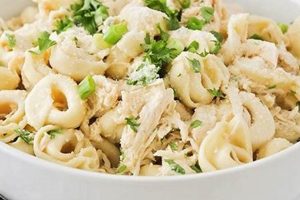
A dish featuring cooked chicken, often diced or shredded, combined with mayonnaise and curry powder forms the foundation of this preparation. Additional ingredients such as dried fruit (raisins, cranberries), nuts (almonds, cashews), vegetables (celery, onion, grapes), and herbs (chives, cilantro) can be incorporated to create varied flavor profiles. This mixture is typically served chilled on bread, croissants, or crackers, or used as a filling for lettuce wraps.
The blend of savory chicken, creamy mayonnaise, and aromatic curry powder offers a flavorful and satisfying meal option. Its adaptable nature allows for customization based on dietary preferences and ingredient availability. From simple lunchtime fare to elegant tea sandwiches, the versatility of this combination has cemented its place in culinary traditions worldwide. The cool, refreshing qualities of this dish also make it particularly appealing in warmer climates or seasons.
The following sections will delve deeper into variations on this culinary theme, exploring specific ingredient combinations, preparation techniques, and serving suggestions designed to enhance the dining experience.
Tips for an Exceptional Curried Chicken Salad Sandwich
Elevating this classic dish involves careful consideration of ingredient selection, preparation methods, and presentation. The following tips offer guidance for creating a truly memorable culinary experience.
Tip 1: Chicken Selection: Opting for high-quality, cooked chicken, whether roasted, poached, or baked, significantly impacts the final flavor. Avoid pre-cooked, processed chicken for optimal results.
Tip 2: Curry Powder Customization: Experimenting with different curry powder blends allows for tailored flavor profiles. Madras curry powder offers a vibrant, slightly tangy flavor, while a milder korma blend provides a gentler aromatic experience.
Tip 3: Mayonnaise Enhancement: Incorporating Greek yogurt into the mayonnaise adds a tangy complexity and reduces overall fat content without sacrificing creaminess.
Tip 4: Textural Diversity: Adding finely diced celery, apples, or grapes introduces a refreshing crunch and contrasts the creamy base. Toasted nuts or seeds contribute an additional layer of texture and flavor.
Tip 5: Fresh Herb Integration: Freshly chopped cilantro, chives, or mint elevate the flavor profile with a bright, herbaceous note. These additions should be incorporated just before serving to maintain their vibrancy.
Tip 6: Fruit Accents: Dried fruits such as cranberries, raisins, or apricots complement the curry’s warmth and add a touch of sweetness. Soaking the fruit in warm water or juice before adding prevents dryness and enhances their flavor.
Tip 7: Chilling Time: Allowing the prepared mixture to chill in the refrigerator for at least 30 minutes allows the flavors to meld and develop depth.
By employing these tips, one can ensure a balanced and flavorful outcome, showcasing the versatile nature of this popular dish. Attention to detail, from ingredient selection to chilling time, ultimately elevates the dining experience.
These guidelines provide a foundation for creating a truly exceptional dish. The subsequent section will offer concluding remarks and further inspiration for culinary exploration.
1. High-quality Chicken
High-quality chicken plays a crucial role in a curried chicken salad sandwich recipe. The chicken’s flavor and texture significantly influence the overall culinary experience. Tender, flavorful chicken elevates the dish, while dry, bland chicken diminishes its appeal. The impact extends beyond taste, affecting the sandwich’s structural integrity. Moist chicken contributes to a desirable texture, whereas dry chicken can result in a crumbly, less satisfying sandwich.
Consider the difference between using freshly roasted chicken breast versus pre-packaged, processed chicken. Roasted chicken offers a richer, more nuanced flavor and a moist, tender texture. Pre-packaged chicken, often subjected to processing and preservatives, tends to lack the same depth of flavor and can be dry. This distinction becomes readily apparent in the final product. A sandwich made with roasted chicken offers a more enjoyable culinary experience compared to one made with processed chicken.
Selecting high-quality chicken ensures the curried chicken salad sandwich delivers optimal flavor and texture. Prioritizing fresh, properly cooked chicken, such as roasted or poached, yields superior results. While cost considerations may tempt the use of less expensive alternatives, the compromise in quality often detracts from the overall enjoyment. Investing in quality ingredients, specifically the chicken, pays dividends in the final product, highlighting the significance of this core component in the recipe’s success.
2. Balanced Curry Blend

The success of a curried chicken salad sandwich hinges significantly on the nuanced selection and balance of spices within the curry powder. A thoughtfully constructed curry blend elevates the dish beyond a simple combination of ingredients, transforming it into a complex and flavorful experience. Understanding the components of a balanced curry blend and their interaction with other ingredients allows for tailored flavor profiles and optimized culinary outcomes.
- Spice Complexity:
Curry powder is not a monolithic entity but a complex mixture of various spices. Common components include turmeric, cumin, coriander, ginger, fenugreek, and chili pepper. The precise blend and proportions of these spices dictate the final flavor profile. A balanced blend avoids the dominance of any single spice, allowing the nuanced interplay of flavors to emerge. For example, the earthy warmth of turmeric complements the bright citrus notes of coriander, while the subtle bitterness of fenugreek balances the heat of chili pepper. This interplay creates a multi-dimensional flavor experience crucial for a successful curried chicken salad sandwich.
- Heat Level:
The desired level of heat plays a significant role in balancing the curry blend. The amount of chili pepper or other spicy elements within the mix directly influences the perceived spiciness. Careful consideration of the other ingredients, such as the sweetness of fruit or the tanginess of mayonnaise, is essential. A balanced blend harmonizes the heat with other flavor components, preventing it from overpowering the dish. For instance, a mild curry blend might be preferred if the recipe includes sweet grapes or raisins, whereas a spicier blend might complement a recipe with tart apples or a tangy yogurt-based dressing.
- Freshness of Spices:
The freshness of the spices within the curry blend dramatically impacts the overall flavor. Spices gradually lose their potency and aromatic complexity over time. Using fresh, high-quality spices ensures the intended flavor profile is achieved. Freshly ground spices offer the most vibrant flavor, but pre-ground blends are acceptable if stored correctly in airtight containers away from heat and light. The difference between fresh and stale spices becomes evident in the final dish, affecting both the aroma and taste. A sandwich made with fresh spices offers a more vibrant and nuanced flavor profile compared to one made with stale spices.
- Customization and Experimentation:
While pre-mixed curry powders offer convenience, customizing the blend allows for precise flavor control and creativity. Experimenting with different spice combinations, adjusting proportions, and incorporating unique regional blends unlocks a world of flavor possibilities. This level of customization allows chefs to tailor the curry blend to specific recipe requirements and personal preferences. For example, a Madras curry powder, known for its vibrant and slightly tangy character, might be chosen for a more assertive flavor profile, while a milder Korma blend might be preferred for a more delicate balance.
The interplay of these facetsspice complexity, heat level, freshness, and customizationdetermines the final character of the curry blend, directly influencing the overall success of the curried chicken salad sandwich. Achieving a harmonious balance within the curry blend ensures the dish offers a complex, nuanced, and satisfying culinary experience. The subsequent sections will explore the importance of other key ingredients, including mayonnaise, textural additions, and bread selection, in completing the curried chicken salad sandwich recipe.
3. Creamy Base (Mayonnaise)
Mayonnaise serves as the crucial binding agent in a curried chicken salad sandwich, contributing significantly to texture, flavor, and overall palatability. Its creamy consistency coats the other ingredients, facilitating cohesion and preventing a dry, crumbly mixture. This binding action directly impacts the sandwich’s structural integrity, allowing it to hold its shape and preventing excessive spillage. Beyond its functional role, mayonnaise contributes a rich, tangy flavor that complements the spice profile of the curry powder. The interplay between the creamy richness of mayonnaise and the complex aromatics of curry powder creates a balanced and satisfying flavor profile. For instance, a richer mayonnaise, perhaps one made with olive oil, might enhance the earthy notes of the curry, while a lighter, tangier mayonnaise might better complement a brighter, citrus-forward curry blend.
The quantity of mayonnaise used also influences the final outcome. Too little mayonnaise results in a dry, difficult-to-manage mixture, impacting both the sandwich’s construction and enjoyment. Conversely, excessive mayonnaise creates an overly rich, potentially messy sandwich. Achieving the correct balance ensures optimal moisture, flavor, and texture. Consider the contrast between a sandwich with just enough mayonnaise to bind the ingredients, creating a cohesive, flavorful filling, and a sandwich overloaded with mayonnaise, resulting in a sloppy, overly rich experience. This highlights the practical significance of understanding the role and appropriate usage of mayonnaise in the recipe.
Mayonnaise, therefore, plays a multifaceted role in a curried chicken salad sandwich, extending beyond simply binding ingredients. It contributes significantly to the overall texture, flavor profile, and structural integrity of the sandwich. Achieving the correct balance ensures a harmonious blend of flavors and textures, culminating in a satisfying culinary experience. Careful consideration of mayonnaise type and quantity is crucial for achieving the desired outcome, underscoring its essential role in a successful curried chicken salad sandwich recipe. Subsequent discussions will explore the contributions of other key ingredients, building upon this understanding to create a comprehensive guide to crafting this classic dish.
4. Textural Additions

Textural additions play a vital role in elevating a curried chicken salad sandwich from agreeable to exceptional. These elements introduce contrasting sensations, enriching the sensory experience beyond the baseline flavors of chicken, curry, and mayonnaise. The interplay of textures adds complexity and prevents the sandwich from becoming monotonous. Consider the difference between a uniformly smooth chicken salad and one punctuated by the crisp snap of celery, the satisfying crunch of toasted almonds, or the juicy pop of grapes. This textural diversity engages multiple sensory receptors, enhancing overall enjoyment.
Several ingredients contribute desirable textural contrasts. Finely diced celery and red onion offer a refreshing crispness, while chopped apples or grapes introduce a juicy burst. Toasted nuts, such as almonds, walnuts, or pecans, provide a satisfying crunch and nutty flavor. Seeds, like sunflower or pumpkin, can also be incorporated for a similar effect. The choice of textural additions should complement the existing flavor profile. For instance, the sweetness of grapes might harmonize with a milder curry blend, while the sharpness of red onion might balance a spicier curry. Beyond individual ingredients, the size and shape of the additions influence the perceived texture. Finely diced ingredients offer a subtle textural variation, whereas coarsely chopped components provide a more pronounced contrast. This allows for fine-tuning the sensory experience based on specific preferences.
The considered inclusion of textural elements demonstrates an attention to detail crucial for culinary excellence. It transforms a simple curried chicken salad sandwich into a multi-dimensional culinary experience. The careful selection and incorporation of textural additions contribute significantly to the overall enjoyment, demonstrating a deep understanding of the interplay between flavor, texture, and sensory perception. This principle extends beyond curried chicken salad, applying to a broad range of culinary creations where textural contrast enhances enjoyment.
5. Fresh Herbs

Fresh herbs contribute a vibrant and aromatic dimension to curried chicken salad sandwiches, elevating them beyond the foundational flavors of chicken, curry, and mayonnaise. Their inclusion introduces a bright, herbaceous counterpoint to the richness of the other ingredients, creating a more complex and balanced flavor profile. The volatile oils present in fresh herbs impart aromatic nuances that enhance the overall sensory experience. Proper selection and application of these herbs are essential for maximizing their impact.
- Herb Selection:
The choice of herbs significantly influences the final flavor profile. Cilantro, with its bright, citrusy notes, pairs well with the warm spices in curry powder. Mint offers a refreshing coolness, contrasting the richness of the mayonnaise. Chives contribute a subtle oniony flavor that complements the savory chicken. Parsley, while milder, adds a fresh, herbaceous note. Dill, with its slightly anise-like flavor, can also be a compelling addition. The selection should complement the specific curry blend used and personal preferences.
- Quantity and Incorporation:
The quantity of herbs used impacts the intensity of their flavor. Too much can overpower the other ingredients, while too little might render them imperceptible. A general guideline is to start with a small amount and adjust to taste. Incorporating the herbs towards the end of the preparation process preserves their delicate flavors and prevents them from becoming dull during prolonged mixing or chilling. Gentle folding ensures even distribution without bruising the leaves.
- Freshness and Storage:
The freshness of the herbs directly impacts their flavor and aroma. Using fresh, vibrant herbs is crucial for optimal results. Storing herbs properly extends their lifespan. Wrapping them in a damp paper towel and placing them in a sealed container in the refrigerator helps maintain their freshness. Alternatively, storing herbs upright in a glass of water in the refrigerator, similar to cut flowers, can also prolong their viability. Dried herbs, while convenient, lack the vibrancy and aromatic intensity of fresh herbs and are generally not recommended as a substitute in this application.
- Complementary Flavors:
Fresh herbs can be strategically employed to complement or contrast other flavor components within the curried chicken salad. For instance, mint can balance the heat of a spicier curry blend, while cilantro can enhance the citrus notes of a milder curry. The interplay between the herbs and other ingredients contributes to a more nuanced and balanced flavor profile. Experimentation is key to discovering harmonious combinations that enhance the overall culinary experience.
The judicious use of fresh herbs elevates the curried chicken salad sandwich, transforming it from a simple combination of ingredients into a more complex and flavorful culinary creation. The interplay between the herbs’ aromatic and flavor profiles and the other components of the sandwich highlights the importance of thoughtful ingredient selection and application in achieving a balanced and satisfying result. The addition of fresh herbs exemplifies how seemingly minor details can significantly enhance culinary creations.
6. Appropriate Bread

Bread selection significantly influences the overall sensory experience of a curried chicken salad sandwich. The bread acts as both a structural vessel and a flavor component, interacting directly with the filling. Its texture, flavor, and structural integrity contribute to the sandwich’s overall palatability and enjoyment. Choosing an appropriate bread enhances the complementary flavors and textures, while an unsuitable choice can detract from the carefully crafted balance.
Several factors merit consideration when selecting bread. A sturdy bread, such as sourdough, whole wheat, or a crusty baguette, provides a robust foundation that can withstand the moisture of the curried chicken salad without becoming soggy. Conversely, a delicate bread, like white sandwich bread, might become overly saturated and compromise the structural integrity of the sandwich. Flavor compatibility is equally important. A sourdough’s tangy notes can complement the spices in the curry, while a multigrain bread’s nutty undertones can enhance the savory elements of the chicken. The bread’s texture also plays a role. A crusty bread offers a satisfying contrast to the creamy filling, while a softer bread provides a more homogenous textural experience. Consider a croissant: its buttery richness can either harmonize with or clash against the curry’s complexity, depending on the specific spice blend. A whole wheat bread’s earthy notes might complement a milder curry, whereas a rye bread’s assertive flavor might overpower a more delicate blend.
The choice of bread underscores the interconnectedness of ingredients in a seemingly simple dish. Careful consideration of the bread’s texture, flavor, and structural integrity ensures that it complements, rather than detracts from, the curried chicken salad. Understanding these factors allows for informed decisions that elevate the overall dining experience. Overlooking the importance of bread selection can compromise even the most meticulously prepared filling, demonstrating the significance of this often-underappreciated component. The bread’s role extends beyond mere containment; it actively participates in the sensory symphony, impacting the overall perception of the dish.
Frequently Asked Questions
This section addresses common inquiries regarding the preparation and enjoyment of curried chicken salad sandwiches.
Question 1: What type of chicken is best suited for this recipe?
Roasted or poached chicken breast offers optimal flavor and texture. While other cuts can be used, the white meat provides a clean canvas for the curry flavors.
Question 2: Can the mayonnaise be substituted with a healthier alternative?
Greek yogurt or a combination of Greek yogurt and mayonnaise offers a lower-fat, higher-protein alternative while maintaining a creamy consistency. Avocado can also be used for a vegan option, but will alter the flavor profile.
Question 3: How long can curried chicken salad be stored in the refrigerator?
Properly stored in an airtight container, it can be refrigerated for up to three days. Beyond this timeframe, quality and safety may be compromised.
Question 4: What types of bread are recommended for curried chicken salad sandwiches?
Sturdy breads like sourdough, whole wheat, or a crusty baguette hold up well against the moisture of the filling. Croissants or other richer breads offer a more decadent option.
Question 5: How can the spiciness of the dish be adjusted?
The amount of curry powder used directly influences the heat level. Start with a smaller amount and gradually increase to achieve the desired spiciness. Alternatively, choosing a milder curry powder blend can reduce the overall heat. Incorporating sweet ingredients, like raisins or grapes, can also help balance the spice.
Question 6: Can frozen chicken be used in this recipe?
While frozen chicken can be used, it is essential to thaw it thoroughly and ensure it is cooked to a safe internal temperature before incorporating it into the salad. Freshly cooked chicken generally yields a superior result in terms of both flavor and texture.
Understanding these key aspects of preparation and storage contributes to a successful and enjoyable culinary experience.
The following section will provide a complete recipe with detailed instructions for crafting a delicious curried chicken salad sandwich.
Curried Chicken Salad Sandwich Recipe
This exploration has delved into the multifaceted nature of the curried chicken salad sandwich recipe, highlighting the interplay of ingredients, textures, and flavors that contribute to a successful outcome. From the foundational importance of high-quality chicken to the nuanced selection of curry powder, each component plays a crucial role in the final product. The creamy base, provided by mayonnaise or alternatives, binds the ingredients while contributing richness and tang. Textural additions introduce complexity, preventing monotony and engaging a broader sensory experience. Fresh herbs provide aromatic lift and vibrancy, while the careful selection of bread ensures structural integrity and flavor compatibility.
Culinary success hinges on a thorough understanding of these elements and their synergistic potential. Careful consideration of each ingredient and its contribution to the overall composition elevates this seemingly simple sandwich to a culinary expression. The potential for customization, through variations in curry blends, textural additions, and herb combinations, allows for personalized interpretations, reflecting individual preferences and culinary creativity. This exploration serves as a foundation for further experimentation and a deeper appreciation for the nuanced art of crafting a truly exceptional curried chicken salad sandwich.