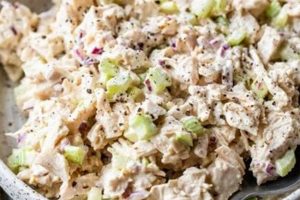
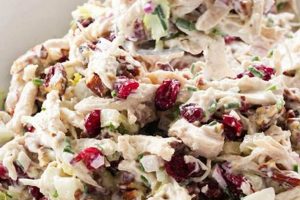
A combination of cooked chicken, mayonnaise, and often other ingredients like celery and onion forms the foundation of this classic dish. The addition of walnuts and cranberries introduces textural contrast and a sweet-tart flavor profile that complements the savory base. Variations can include different types of mayonnaise, seasonings like Dijon mustard or curry powder, and the use of grapes or apples in place of cranberries.
This specific combination of ingredients offers a balanced nutritional profile. Chicken provides protein, walnuts contribute healthy fats, and cranberries offer antioxidants. The blend of flavors and textures makes it a versatile dish, suitable for sandwiches, wraps, salads, or as a standalone appetizer. The relative ease of preparation and adaptability to different tastes have contributed to its enduring popularity.
Further exploration will delve into specific recipes, variations on the core ingredients, tips for optimal preparation, and serving suggestions to elevate this dish from simple fare to a culinary delight.
Tips for Preparing Chicken Salad with Walnuts and Cranberries
Optimizing the preparation of this dish involves attention to detail and ingredient selection. The following tips provide guidance for achieving superior results.
Tip 1: Chicken Selection and Preparation: Using high-quality, cooked chicken is paramount. Roasting or poaching chicken breasts yields optimal flavor and texture. Avoid pre-cooked or processed chicken for best results.
Tip 2: Walnut Toasting: Toasting walnuts enhances their flavor and provides a satisfying crunch. Spread chopped walnuts on a baking sheet and toast in a preheated oven at 350F (175C) for 5-7 minutes, or until fragrant.
Tip 3: Cranberry Selection: Dried cranberries are recommended; however, fresh cranberries can be used if finely chopped. Consider sweetened versus unsweetened varieties based on personal preference.
Tip 4: Mayonnaise Choice: High-quality mayonnaise forms the base of the dressing. Experiment with different varieties, such as olive oil-based mayonnaise, for flavor variations.
Tip 5: Balancing Flavors: A touch of acidity enhances the overall flavor profile. Consider adding a squeeze of lemon juice or a small amount of Dijon mustard to balance the sweetness of the cranberries.
Tip 6: Seasoning: Salt and freshly ground black pepper are essential seasonings. Experiment with other spices, such as celery seed, paprika, or a pinch of cayenne pepper, for additional complexity.
Tip 7: Chilling and Serving: Chilling the salad for at least 30 minutes allows the flavors to meld. Serve chilled on bread, crackers, lettuce cups, or as a side dish.
By following these tips, one can achieve a well-balanced and flavorful chicken salad that showcases the complementary flavors of walnuts and cranberries.
This detailed guidance facilitates the creation of a truly exceptional dish, highlighting the versatility and appeal of this classic combination. The following section will offer concluding remarks and serving suggestions.
1. Chicken (cooked, diced)

Cooked, diced chicken forms the foundational ingredient in chicken salad with walnuts and cranberries. Its preparation and quality significantly influence the overall dish’s flavor, texture, and nutritional value. Understanding the nuances of chicken selection and preparation is crucial for creating a successful salad.
- Cooking Methods
Various cooking methods, including roasting, poaching, grilling, and baking, yield distinct flavor profiles and textures. Roasting or poaching generally produces moist, tender chicken ideal for salad. Grilling imparts a smoky flavor, while baking offers a balance between moisture and texture. The chosen cooking method should complement the desired overall flavor profile of the salad.
- Chicken Type
Different cuts of chicken, such as breasts, thighs, or a combination, impact the salad’s nutritional content and richness. Chicken breasts offer a leaner protein source, while thighs contribute more fat and flavor. The selection depends on individual dietary preferences and desired taste outcomes.
- Dicing Technique
The size and consistency of the diced chicken affect the salad’s texture and mouthfeel. Uniformly diced pieces ensure even distribution throughout the salad and contribute to a pleasant eating experience. Larger pieces offer a more substantial bite, while smaller pieces blend seamlessly with other ingredients.
- Quality and Freshness
Using fresh, high-quality chicken is essential for optimal flavor and food safety. Avoid pre-cooked or processed chicken, as these options often compromise flavor and texture. Proper storage and handling of raw chicken are critical for preventing bacterial contamination and ensuring food safety.
The careful consideration of these facets related to cooked, diced chicken contributes significantly to the overall quality and enjoyment of chicken salad with walnuts and cranberries. The choice of cooking method, chicken type, dicing technique, and attention to quality and freshness collectively influence the final product, ensuring a delicious and satisfying culinary experience.
2. Mayonnaise (base, binder)
Mayonnaise serves as the foundational element in chicken salad, binding the ingredients and providing the characteristic creamy texture. Its quality and type significantly influence the overall flavor profile and sensory experience. Understanding the role of mayonnaise in this specific context requires exploring its various facets, from its emulsifying properties to its potential variations.
- Emulsification and Texture
Mayonnaise is an emulsion of oil and egg yolks, stabilized by lecithin present in the yolks. This emulsion creates a smooth, creamy texture that coats the chicken and other ingredients, binding them together and providing a cohesive mouthfeel. The stability of this emulsion is crucial for preventing the salad from becoming watery or separating.
- Flavor Profile
Mayonnaise contributes a tangy, rich flavor derived from the combination of oil, egg yolks, and vinegar or lemon juice. This base flavor interacts with the other ingredients, enhancing their individual characteristics while creating a balanced overall profile. The quality of the ingredients used in the mayonnaise itself directly impacts the final flavor of the salad.
- Variations and Substitutions
Numerous mayonnaise variations exist, offering diverse flavor profiles and dietary accommodations. For instance, olive oil mayonnaise imparts a fruity, peppery note, while avocado oil mayonnaise offers a milder flavor and healthier fat profile. Greek yogurt or plain yogurt can serve as lower-fat alternatives, although they may alter the texture and require adjustments to other ingredients for optimal flavor balance.
- Quantity and Incorporation
The amount of mayonnaise used influences the salad’s consistency and richness. Too little mayonnaise results in a dry, crumbly salad, while too much creates an overly rich and heavy texture. Proper incorporation ensures even distribution and prevents pockets of excessive mayonnaise, contributing to a harmonious blend of flavors and textures.
The selection, quality, and proper incorporation of mayonnaise are pivotal to the success of chicken salad with walnuts and cranberries. It acts not merely as a binding agent but as a crucial component that influences the overall flavor, texture, and sensory experience. Careful consideration of these factors ensures a balanced and enjoyable culinary creation.
3. Walnuts (texture, flavor)

Walnuts contribute significantly to the textural and flavor complexity of chicken salad incorporating cranberries. Their distinct characteristics elevate this dish beyond a simple combination of ingredients, offering a nuanced sensory experience. Understanding the role of walnuts in this specific culinary context requires exploring their various facets, from their textural contribution to their nutritional value.
- Textural Contrast
Walnuts introduce a satisfying crunch that contrasts with the softer textures of chicken and mayonnaise. This textural interplay adds depth and interest to each bite, preventing a monotonous mouthfeel. The coarseness of the chop influences the perceived texture, with finely chopped walnuts providing a subtle crunch and coarsely chopped pieces offering a more pronounced textural contrast.
- Flavor Profile
Walnuts possess a rich, earthy, slightly bitter flavor that complements the savory chicken and tart cranberries. Their inherent oils contribute to the overall richness of the salad without overpowering the other flavors. Toasting the walnuts before adding them to the salad intensifies their flavor and enhances their crunch.
- Nutritional Value
Walnuts are a good source of healthy fats, including omega-3 fatty acids, which offer various health benefits. Their inclusion in chicken salad enhances the nutritional value of the dish, contributing to a more balanced and wholesome meal. This nutritional aspect adds another layer of appeal to the inclusion of walnuts in this recipe.
- Visual Appeal
The visual contrast provided by the light brown color of walnuts against the lighter background of the chicken and mayonnaise enhances the overall presentation of the salad. Their distinct shape and size add visual interest, making the salad more appealing. This visual element contributes to a more satisfying dining experience.
The interplay of these facets highlights the essential role of walnuts in chicken salad with cranberries. Their contribution extends beyond mere texture and flavor, enriching the dish with nutritional value and visual appeal. The strategic inclusion of walnuts elevates this classic dish, transforming it into a more complex and satisfying culinary experience.
4. Cranberries (tartness, sweetness)
Cranberries contribute a crucial dimension to chicken salad with walnuts, providing a counterpoint to the richness of the mayonnaise and the earthiness of the walnuts. Their unique flavor profile, characterized by a balance of tartness and sweetness, adds depth and complexity to the overall composition. An exploration of the various facets of cranberries reveals their significance within this culinary context.
- Flavor Balance
The hallmark of cranberries lies in their distinctive balance of tartness and sweetness. This duality prevents the salad from becoming overly sweet or savory, creating a harmonious flavor profile. The specific level of tartness and sweetness can vary based on the type of cranberry used dried cranberries often contain added sugar, while fresh cranberries offer a more pronounced tartness.
- Textural Contribution
Cranberries, whether dried or fresh, offer a pleasant chewiness that complements the crunch of the walnuts and the tenderness of the chicken. This textural variation adds another layer of interest to the salad, enhancing the overall sensory experience. The size and preparation of the cranberries influence their textural impact whole cranberries provide a more substantial chew, while chopped cranberries offer a more integrated texture.
- Visual Interest
The vibrant red color of cranberries provides a striking visual contrast against the other ingredients in the salad. This pop of color enhances the presentation, making the dish more visually appealing. This visual element plays a significant role in the overall perception and enjoyment of the salad.
- Nutritional Benefits
Cranberries are known for their antioxidant properties and potential health benefits. Their inclusion in the salad contributes to its nutritional value, aligning with contemporary trends towards healthier eating. This nutritional aspect adds another dimension to the appeal of incorporating cranberries into chicken salad.
The interplay of these facets underscores the importance of cranberries in chicken salad with walnuts. Their contribution extends beyond mere flavor, influencing the texture, visual appeal, and nutritional profile of the dish. The carefully calibrated balance of tartness and sweetness, coupled with their textural and visual contributions, elevates this classic combination, transforming it into a more nuanced and satisfying culinary experience.
5. Seasoning (salt, pepper, herbs)
Seasoning plays a critical role in the overall flavor profile of chicken salad with walnuts and cranberries. It elevates the inherent flavors of the core ingredients, creating a balanced and harmonious taste experience. The judicious use of salt, pepper, and herbs transforms a simple combination of ingredients into a nuanced and flavorful dish. Salt enhances the savory notes of the chicken and walnuts, while pepper adds a subtle heat and complexity. Herbs contribute aromatic depth and freshness, balancing the richness of the mayonnaise and the sweetness of the cranberries. For instance, fresh dill or chives can brighten the flavor profile, while parsley adds a subtle earthiness.
The interplay between different seasonings allows for a wide range of flavor profiles. A classic combination of salt, pepper, and a pinch of celery seed provides a traditional taste. More adventurous palates might explore the addition of paprika for a smoky note, or a touch of cayenne pepper for a hint of heat. Fresh or dried herbs, such as thyme, oregano, or tarragon, can be incorporated to complement the existing flavors and create a more complex profile. The quantity of each seasoning should be carefully considered, as over-seasoning can mask the delicate flavors of the core ingredients, while under-seasoning can result in a bland and uninspiring dish. Taste testing throughout the preparation process is crucial for achieving the desired balance.
Careful consideration of seasoning is essential for creating a well-balanced and flavorful chicken salad with walnuts and cranberries. The synergistic relationship between salt, pepper, and herbs elevates the individual flavors of the core ingredients, resulting in a more complex and satisfying culinary experience. Understanding the impact of each seasoning allows for precise flavor control and customization, enabling the creation of a dish tailored to individual preferences. The practical application of this understanding transforms a simple recipe into a culinary expression, demonstrating the importance of seasoning in achieving culinary excellence.
6. Optional additions (celery, onion, grapes)

Optional additions, such as celery, onion, and grapes, offer opportunities to further customize the flavor and textural profile of chicken salad with walnuts and cranberries. These additions introduce complexity and variety, allowing for a broader range of flavor experiences. Celery contributes a crisp, vegetal note and a refreshing counterpoint to the richness of the mayonnaise. Its subtle bitterness complements the sweetness of the cranberries and the earthiness of the walnuts. Onion, whether red, white, or green, adds a pungent sharpness that cuts through the richness of the salad. The choice of onion variety influences the intensity of the flavor, ranging from the mild sweetness of red onion to the more assertive bite of white or green onions. Grapes, particularly seedless green grapes, provide a burst of sweetness and a juicy texture that contrasts with the crunch of the walnuts and the chewiness of the cranberries. They offer a lighter alternative to the more intense sweetness of dried fruits, contributing to a balanced flavor profile.
The strategic incorporation of these optional additions can significantly impact the overall character of the chicken salad. For example, a combination of finely diced celery and red onion creates a classic flavor profile, reminiscent of traditional chicken salad recipes. The addition of grapes introduces a sweeter, fruitier dimension, while omitting celery altogether results in a denser, richer salad. The quantity of each addition should be carefully considered, ensuring that no single ingredient overwhelms the others. A delicate balance allows each flavor to shine through, creating a harmonious and nuanced taste experience. Consider the context of the meal when incorporating these additions. A lighter, grape-centric salad might complement a summer picnic, while a more savory, celery and onion-focused salad might pair well with a heartier meal.
Understanding the impact of optional additions, such as celery, onion, and grapes, empowers culinary creativity and customization within the framework of chicken salad with walnuts and cranberries. These additions, while optional, offer significant potential to refine the flavor and texture of the dish, catering to individual preferences and specific culinary contexts. Their judicious use transforms a basic recipe into a personalized culinary expression, demonstrating the transformative power of nuanced ingredient choices.
Frequently Asked Questions
This section addresses common inquiries regarding chicken salad incorporating walnuts and cranberries, providing concise and informative responses.
Question 1: Can other nuts be substituted for walnuts?
Other nuts, such as pecans, almonds, or cashews, can be substituted for walnuts, although the flavor profile will change accordingly. Pecans offer a sweeter, buttery flavor, while almonds provide a slightly more neutral taste. Cashews introduce a creamy texture and delicate flavor.
Question 2: What is the best way to store prepared chicken salad?
Prepared chicken salad should be stored in an airtight container in the refrigerator for up to three days. Ensure the salad is thoroughly chilled before serving.
Question 3: Can this salad be frozen?
Freezing is not recommended, as the mayonnaise-based dressing can separate upon thawing, resulting in an undesirable texture.
Question 4: How can the sweetness of the salad be adjusted?
The sweetness can be adjusted by using sweetened or unsweetened dried cranberries. Adding a squeeze of lemon juice or a touch of apple cider vinegar can balance excessive sweetness.
Question 5: What are some suitable serving suggestions beyond sandwiches and wraps?
This salad can be served on lettuce cups, crackers, or as a filling for croissants or baked potatoes. It also pairs well with a simple green salad or as a dip with vegetables.
Question 6: How can food safety be ensured during preparation?
Proper handling and storage of raw chicken are crucial. Ensure all surfaces and utensils are thoroughly cleaned after contact with raw chicken. The salad should be chilled promptly after preparation.
Addressing these frequently asked questions provides a comprehensive understanding of the preparation, storage, and variations within chicken salad recipes incorporating walnuts and cranberries. The information presented here equips individuals with the knowledge to create and enjoy this dish safely and effectively.
The following section will offer concluding remarks and a summary of key takeaways.
Conclusion
Exploration of this culinary combination reveals a dish offering versatility and flavor complexity. Careful selection and preparation of ingredients, including properly cooked chicken, toasted walnuts, and tart cranberries, contribute significantly to the final product. Understanding the role of mayonnaise, both as a binder and flavor component, allows for textural and taste optimization. Further refinement through considered seasoning and the potential inclusion of optional ingredients like celery, onion, or grapes allows for personalized variations catering to individual preferences. Addressing common preparation and storage inquiries ensures consistent, high-quality results and promotes safe food handling practices.
This examination underscores the potential for culinary creativity within seemingly simple recipes. Emphasis on quality ingredients and thoughtful preparation elevates this classic combination beyond basic fare. The adaptability of this dish to diverse palates and occasions positions it as a timeless culinary staple, inviting continued exploration and enjoyment.