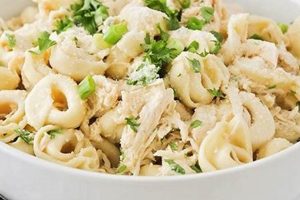
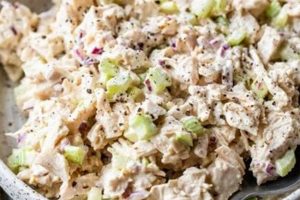
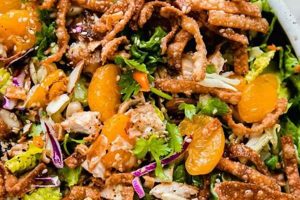
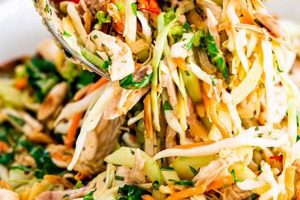
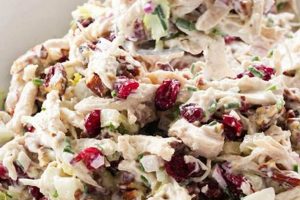
A dish featuring gently simmered chicken, shredded or diced, and combined with other ingredients to create a flavorful, often lighter, salad. Typical additions might include mayonnaise, celery, onion, herbs, and spices. Variations can range from simple combinations to more complex preparations incorporating fruits, nuts, or unique dressings. This preparation method yields moist, tender chicken, ideal for salads as it readily absorbs flavors.
This cooking method offers a healthy and versatile approach to preparing poultry. Poaching retains the chicken’s natural moisture and nutrients, resulting in a lean protein source suitable for various dietary needs. Compared to frying or grilling, poaching avoids added fats and promotes a cleaner flavor profile, allowing the other salad components to shine. Historically, poaching has been a favored technique for its simplicity and efficiency, requiring minimal equipment and oversight.
The following sections will delve into specific variations, offering detailed instructions and tips for crafting the perfect iteration. From classic combinations to innovative twists, readers will discover a range of options suitable for everyday meals, picnics, or more formal gatherings. Nutritional information and suggested pairings will also be provided.
Tips for a Superior Preparation
Achieving optimal results requires attention to detail throughout the process. These guidelines offer insights into enhancing flavor, texture, and overall quality.
Tip 1: Gentle Simmering: Maintain a low simmer, avoiding a rolling boil, to ensure the chicken remains tender and does not become tough or dry. The poaching liquid should barely tremble.
Tip 2: Flavorful Poaching Liquid: Enhance the chicken’s inherent flavor by incorporating aromatics into the poaching liquid. Consider additions such as onion, garlic, herbs, peppercorns, or lemon slices.
Tip 3: Proper Cooling: Allow the poached chicken to cool completely before shredding or dicing. This prevents the meat from becoming mushy and helps it retain its shape.
Tip 4: Consistent Chicken Size: For even cooking and a pleasing texture in the final salad, ensure the chicken pieces are relatively uniform in size.
Tip 5: Balanced Dressing: The dressing should complement the chicken and other ingredients without overpowering them. Adjust the amount of mayonnaise or other dressing components to achieve a harmonious balance.
Tip 6: Fresh Ingredients: Utilizing fresh, high-quality ingredients elevates the overall flavor profile. Opt for crisp vegetables, vibrant herbs, and recently purchased mayonnaise.
Tip 7: Chilling Before Serving: Allowing the salad to chill for at least 30 minutes before serving allows the flavors to meld and enhances the overall experience.
By adhering to these recommendations, one can create a truly exceptional dish that highlights the delicate flavors and textures of this classic preparation.
These practical insights provide a foundation for culinary success, empowering individuals to create a dish that satisfies both the palate and nutritional requirements. The concluding section offers final thoughts and encourages exploration of the provided recipe variations.
1. Poaching Method

The poaching method forms the foundation of a successful poached chicken salad recipe. It directly impacts the chicken’s texture, moisture content, and ability to absorb flavors, ultimately influencing the final dish’s quality. Gentle simmering in liquid, as opposed to boiling, preserves the chicken’s delicate structure, preventing it from becoming dry or stringy. This technique also allows for the infusion of subtle flavors from aromatics added to the poaching liquid, such as herbs, spices, or vegetables. For instance, poaching chicken with lemon and thyme imparts a bright, citrusy flavor, while poaching with ginger and garlic creates a more savory profile. The choice of poaching liquid, whether water, broth, or a combination, further contributes to the overall taste and complexity of the chicken and, consequently, the salad.
Understanding the nuances of poaching is crucial. Overcooking results in tough, dry chicken, while undercooking compromises food safety. Maintaining a consistent, low simmer ensures even cooking and optimal moisture retention. The poaching liquid should never reach a rolling boil. The chicken is cooked when its internal temperature reaches 165F (74C). Proper cooling, after removing the chicken from the poaching liquid, is also essential. Allowing the chicken to cool completely before shredding or dicing prevents it from becoming mushy and helps it retain its shape when combined with other salad ingredients. This attention to detail elevates the final dish from merely acceptable to truly exceptional.
Mastery of the poaching method is essential for achieving a superior poached chicken salad. It lays the groundwork for a flavorful, tender, and visually appealing dish. The poaching method’s influence extends beyond the chicken itself, affecting the overall balance and harmony of flavors within the salad. Selecting the appropriate poaching liquid and aromatics, monitoring the cooking process diligently, and employing proper cooling techniques are key steps in achieving culinary excellence.
2. Chicken Selection

Chicken selection significantly influences the final quality of a poached chicken salad recipe. The chosen cut impacts flavor, texture, and overall appeal. Understanding the characteristics of different chicken parts allows for informed decisions aligning with desired outcomes. Considerations include bone-in versus boneless, skin-on versus skinless, and white versus dark meat.
- Bone-in Chicken:
Bone-in chicken, while requiring deboning after poaching, often yields a more flavorful and moist result. The bones contribute richness and depth to the meat during the cooking process. Examples include bone-in chicken breasts or thighs. This choice benefits those prioritizing flavor over convenience.
- Boneless, Skinless Chicken:
Boneless, skinless chicken breasts offer convenience and a leaner protein source. While potentially less flavorful than bone-in options, they simplify preparation and cater to those seeking a lower-fat option. This selection suits time-constrained individuals or those adhering to specific dietary restrictions.
- White Meat vs. Dark Meat:
White meat, primarily from the breast, offers a milder flavor and a leaner profile. Dark meat, from thighs and drumsticks, possesses a richer, more robust flavor and a higher fat content, contributing to greater moisture retention during poaching. The choice depends on individual preferences regarding taste and dietary considerations.
- Freshness and Quality:
Prioritizing fresh, high-quality chicken ensures optimal flavor and texture in the final salad. Look for chicken with a firm texture, no discoloration, and minimal odor. Proper storage and handling are crucial for maintaining quality and preventing bacterial growth. Selecting fresh chicken contributes significantly to both the safety and enjoyment of the final dish.
Careful chicken selection enhances the poached chicken salad experience. Aligning the chicken choice with desired flavor, texture, and dietary goals elevates the final dish. Whether opting for the richer flavor of bone-in chicken or the convenience of boneless, skinless cuts, the choice significantly impacts the overall satisfaction derived from this versatile dish.
3. Flavorful Additions

Flavorful additions play a crucial role in elevating poached chicken salad recipes beyond basic preparations. These additions introduce complexity, depth, and balance, transforming a simple combination of ingredients into a culinary experience. The strategic incorporation of herbs, spices, vegetables, fruits, and nuts significantly impacts the final dish’s sensory profile. Understanding the interplay of these elements allows for the creation of unique and satisfying flavor combinations.
Aromatic herbs, such as tarragon, dill, or chives, impart distinct fragrances and subtle nuances. Spices, like paprika, cumin, or curry powder, introduce warmth and complexity. The addition of finely diced vegetables, such as celery, red onion, or bell peppers, contributes textural contrast and vegetal notes. Fruits, like grapes, dried cranberries, or apples, offer sweetness and a refreshing counterpoint to the savory chicken. Nuts, such as almonds, walnuts, or pecans, provide crunch and enhance the overall richness. For example, a combination of fresh dill, lemon zest, and toasted almonds creates a bright and layered flavor profile, while a blend of curry powder, golden raisins, and chopped walnuts offers a more exotic and savory experience. The choice of flavorful additions depends on individual preferences and the desired overall flavor profile.
Careful consideration of flavorful additions ensures a harmonious balance and prevents any single element from dominating the palate. The quantity and proportion of each addition should complement the delicate flavor of the poached chicken. Overuse can overwhelm the subtle nuances, while insufficient incorporation may result in a bland and uninspiring dish. Mastering the art of incorporating flavorful additions allows for the creation of customized poached chicken salad recipes tailored to specific tastes and preferences. This understanding empowers culinary exploration and elevates a simple dish into a personalized culinary creation.
4. Dressing Choice
Dressing choice profoundly influences the overall character of a poached chicken salad recipe. It acts as a unifying element, binding the various components while contributing flavor, moisture, and textural complexity. The dressing’s role extends beyond simply coating the ingredients; it establishes the dominant flavor profile and determines whether the salad leans toward creamy richness, tangy brightness, or savory depth. The selection must harmonize with the chicken and other additions, creating a balanced and cohesive culinary experience.
Classic choices include mayonnaise-based dressings, often enriched with ingredients like sour cream, yogurt, or buttermilk. These provide creaminess and a mild tang. Vinaigrettes, typically composed of oil and vinegar, offer a lighter, brighter alternative, highlighting the chicken’s delicate flavor. The specific type of oil and vinegar influences the final taste; for example, olive oil lends a subtle fruitiness, while apple cider vinegar contributes a crisp acidity. More adventurous options might incorporate tahini, yogurt, or even pureed avocado for unique flavor profiles and textures. A lemon-herb vinaigrette complements a salad with fresh herbs and vegetables, while a creamy dill dressing enhances a salad featuring grapes and walnuts. Understanding these relationships allows for informed decisions that elevate the overall sensory experience.
Effective dressing selection requires careful consideration of the interplay between flavors and textures. A heavy, creamy dressing might overwhelm a salad featuring delicate herbs and vegetables, whereas a light vinaigrette could prove insufficient to bind a salad with heartier components like nuts or dried fruits. The quantity of dressing also plays a crucial role; too much can render the salad soggy, while too little can result in a dry, unappealing dish. Mastering dressing choice empowers the creation of balanced, flavorful poached chicken salads tailored to individual preferences. This understanding ensures the dressing complements rather than masks the other carefully selected ingredients, culminating in a harmonious and satisfying culinary creation.
5. Textural Elements

Textural elements contribute significantly to the overall enjoyment of a poached chicken salad recipe. A successful salad engages multiple senses, and texture plays a crucial role alongside flavor. Consideration of textural contrast elevates the dish from merely palatable to genuinely satisfying. The interplay of creamy, crunchy, and tender elements creates a dynamic sensory experience, enhancing the perception of flavor and promoting enjoyment. Incorporating a variety of textures adds depth and complexity.
The inherent tenderness of poached chicken provides a foundation for textural exploration. This soft, yielding base allows for the incorporation of contrasting elements without creating an imbalance. Crisp vegetables, such as celery, water chestnuts, or chopped bell peppers, offer a refreshing counterpoint to the chicken’s softness. Nuts, like toasted almonds, walnuts, or pecans, introduce a satisfying crunch. Seeds, such as sunflower or pumpkin seeds, provide a subtle textural variation and contribute nutritional value. Even the choice of fruit can influence texture; crisp apples or grapes offer a juicy burst, while dried cranberries or raisins provide a chewier element. For example, a salad featuring poached chicken, crisp celery, toasted pecans, and dried cranberries offers a dynamic interplay of textures, enhancing the overall appeal.
Strategic incorporation of textural elements demonstrates culinary expertise and enhances the dining experience. Thoughtful consideration of texture transforms a simple poached chicken salad into a multi-dimensional dish. Achieving textural balance prevents any single element from dominating, ensuring a harmonious and satisfying interplay. This understanding allows for the creation of complex and engaging salads that cater to a range of palates and preferences.
6. Freshness of Ingredients
Ingredient freshness significantly impacts the overall quality and enjoyment of a poached chicken salad recipe. Fresh ingredients possess vibrant flavors, optimal textures, and superior nutritional value, contributing to a more appealing and wholesome dish. Conversely, using less-than-fresh ingredients can result in a salad with diminished flavor, compromised texture, and potential food safety concerns. This connection between freshness and quality underscores the importance of ingredient selection in achieving a successful outcome. The delicate nature of poached chicken, in particular, necessitates fresh accompaniments to prevent flavors from becoming muddled or textures from becoming unpleasant. For example, using wilted celery or soft, browned lettuce detracts from the overall appeal, whereas crisp, vibrant produce enhances both the visual presentation and the sensory experience.
The impact of ingredient freshness extends beyond the immediate sensory experience. Freshly prepared dressings, using high-quality oils and vinegars, contribute brighter flavors and a more pleasing texture compared to pre-made or older dressings. Using freshly squeezed lemon or lime juice, rather than bottled concentrates, provides a noticeable difference in flavor intensity and complexity. Similarly, freshly chopped herbs offer more vibrant aromas and flavors compared to dried or older herbs. These seemingly small details contribute significantly to the overall culinary experience. The choice between freshly roasted and store-bought nuts, for instance, can noticeably impact the flavor and textural complexity of the salad. Freshly roasted nuts offer a more pronounced flavor and a superior crunch, enhancing the overall sensory experience. These practical applications demonstrate the tangible benefits of prioritizing ingredient freshness.
Prioritizing fresh, high-quality ingredients represents a commitment to culinary excellence and elevates the poached chicken salad from a simple dish to a truly satisfying experience. While convenience occasionally dictates compromises, understanding the profound impact of ingredient freshness empowers informed decisions. Recognizing the link between fresh components and the final product’s quality underscores the importance of thoughtful ingredient selection in achieving culinary success. This understanding promotes the creation of dishes that not only satisfy the palate but also provide nutritional value and enhance overall enjoyment. Ultimately, prioritizing freshness optimizes both the sensory experience and the health benefits derived from this versatile and popular dish.
Frequently Asked Questions
This section addresses common inquiries regarding poached chicken salad recipes, offering clarity and practical guidance for achieving optimal results. Understanding these key aspects empowers culinary success and ensures a satisfying dining experience.
Question 1: What is the best way to prevent poached chicken from becoming dry?
Maintaining a gentle simmer, avoiding a rolling boil, is crucial. The poaching liquid should barely tremble. Overcooking results in dry, stringy chicken. Using a thermometer to ensure the chicken reaches an internal temperature of 165F (74C) without exceeding it helps prevent overcooking.
Question 2: Can frozen chicken be used for poaching?
While fresh chicken is recommended for optimal flavor and texture, frozen chicken can be used if thawed completely before poaching. Ensure the chicken is thawed safely, either in the refrigerator or under cold running water. Avoid thawing at room temperature to prevent bacterial growth. Thawing time depends on the chicken’s size and the thawing method.
Question 3: How long should chicken be poached?
Poaching time depends on the chicken’s size and thickness. Generally, boneless, skinless chicken breasts require 10-15 minutes, while bone-in pieces may take 20-30 minutes. Using a meat thermometer to verify the internal temperature reaches 165F (74C) ensures both safety and optimal texture.
Question 4: What can be used as a substitute for mayonnaise in the dressing?
Greek yogurt, plain yogurt, or avocado offer healthier alternatives to mayonnaise, providing creaminess and a different flavor profile. Pureed cottage cheese or ricotta cheese can also be used, offering a lighter texture. These substitutions cater to various dietary preferences and restrictions.
Question 5: How long can poached chicken salad be stored?
Properly stored in an airtight container in the refrigerator, poached chicken salad typically lasts for 3-4 days. Ensure the salad is thoroughly chilled before storing. Discard any salad left at room temperature for more than two hours to prevent bacterial growth.
Question 6: Can poached chicken salad be frozen?
Freezing is not generally recommended, as it can negatively impact the texture of the chicken and other ingredients, particularly mayonnaise-based dressings. Freezing can cause the dressing to separate and become watery upon thawing, resulting in a less appealing final product.
Understanding these frequently asked questions empowers individuals to create exceptional poached chicken salads. Attention to detail throughout the preparation process, from ingredient selection to storage, ensures a satisfying and safe culinary experience.
The following section provides a collection of curated recipes demonstrating the versatility of this classic dish.
Conclusion
This exploration of poached chicken salad recipes has highlighted the multifaceted nature of this seemingly simple dish. From the poaching method’s impact on the chicken’s texture to the nuanced interplay of flavors and textures introduced by various additions, each element contributes significantly to the final product. The selection of fresh, high-quality ingredients, coupled with a careful consideration of dressing choice and textural balance, elevates the dish from basic sustenance to a culinary creation. Understanding these fundamental principles empowers informed decision-making throughout the preparation process, ensuring a consistently satisfying result.
The versatility of poached chicken salad allows for endless variations, catering to a diverse range of palates and dietary preferences. Continued exploration of flavor combinations and textural nuances promises further culinary discoveries. The potential for customization ensures this classic dish remains a relevant and adaptable option for various occasions, from casual lunches to more formal gatherings. Ultimately, a well-executed poached chicken salad offers not only a delicious and nutritious meal but also a testament to the transformative power of culinary expertise.