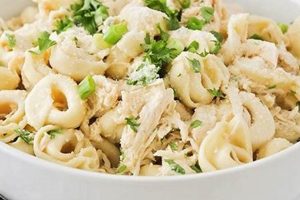
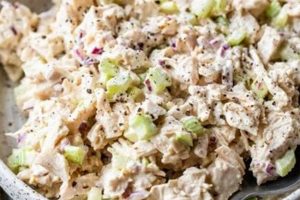
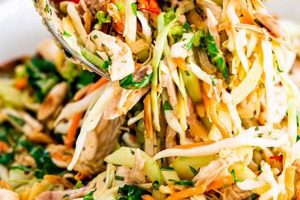
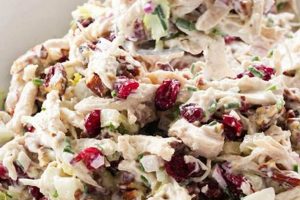
A concise set of instructions for preparing a basic chicken salad typically involves cooked chicken, mayonnaise, and seasonings. Common additions include celery, onion, and grapes. Variations can range from classic preparations to those incorporating diverse ingredients and flavor profiles, offering a versatile dish suitable for sandwiches, salads, or crackers.
Quick preparation and adaptability make this dish a popular choice. Its relatively low cost and reliance on readily available ingredients contribute to its widespread appeal. Historically, chicken salad emerged as a way to utilize leftover cooked chicken, reflecting resourcefulness and evolving culinary practices. Its enduring popularity speaks to its satisfying flavor and convenient nature.
The following sections will explore specific ingredient choices, step-by-step preparation methods, and creative serving suggestions for a delicious and satisfying meal.
Tips for a Superior Chicken Salad
Optimizing a chicken salad involves careful consideration of ingredients and techniques. The following tips provide guidance for achieving a flavorful and well-balanced result.
Tip 1: Chicken Selection: Utilizing high-quality, properly cooked chicken significantly impacts the final product. Rotisserie chicken offers a convenient and flavorful shortcut. Alternatively, poaching or baking chicken breasts provides greater control over seasoning and texture.
Tip 2: Mayonnaise Matters: Mayonnaise serves as the foundation of the salad’s flavor profile. Experimenting with different brands or types, such as olive oil-based mayonnaise, allows customization of richness and tanginess.
Tip 3: Texture Enhancement: Achieving desirable textural contrast can be accomplished by incorporating finely diced celery, onion, or apple. Nuts, such as chopped pecans or walnuts, offer additional crunch.
Tip 4: Seasoning Strategies: Classic seasonings like salt, pepper, and paprika provide a balanced base. Fresh herbs, including dill, chives, or tarragon, add depth and complexity. A touch of Dijon mustard enhances savory notes.
Tip 5: Balancing Flavors: A touch of sweetness can balance the savory elements. Consider incorporating dried cranberries, chopped grapes, or a small amount of honey.
Tip 6: Chilling Time: Allowing the prepared salad to chill for at least 30 minutes in the refrigerator allows flavors to meld and enhances overall enjoyment.
Tip 7: Serving Suggestions: Chicken salad offers versatility in presentation. Serve it on bread, croissants, crackers, lettuce cups, or as a filling for tomatoes or avocados.
By following these tips, one can elevate a simple chicken salad to a culinary creation offering satisfying flavor and textural complexity.
This exploration of key preparation techniques and ingredient considerations provides a comprehensive guide to crafting a superior chicken salad experience.
1. Ingredients

Ingredient selection is paramount in determining the character of a simple chicken salad. The quality, proportions, and combinations of ingredients directly influence the final flavor, texture, and overall appeal. Understanding the role of each component allows for informed choices and customization to achieve desired results.
- Protein: Chicken
Cooked chicken forms the base of the salad. While various cooking methods suffice, using pre-cooked rotisserie chicken offers convenience. Alternatively, poaching or baking boneless, skinless chicken breasts offers control over seasoning and ensures a tender texture. The amount of chicken relative to other ingredients dictates the heartiness of the salad.
- Binder: Mayonnaise
Mayonnaise provides the creamy texture and tangy flavor that binds the salad together. Full-fat mayonnaise offers richness, while lighter versions provide a lower-calorie option. Greek yogurt can also be substituted for a portion of the mayonnaise to create a lighter, tangier salad. The quantity of mayonnaise influences the salad’s consistency and richness.
- Aromatics: Celery and Onion
Celery and onion contribute crucial textural and flavor dimensions. Finely diced celery adds a refreshing crunch, while finely chopped onion offers a subtle sharpness. These aromatics enhance the overall complexity of the salad and provide balance to the richness of the mayonnaise and chicken. Their proportions influence the final flavor profile.
- Seasoning and Flavor Enhancers
Salt and pepper are fundamental seasonings, while other additions can personalize the flavor profile. A touch of Dijon mustard adds complexity. Fresh herbs, such as dill or chives, contribute brightness. Sweet elements, like dried cranberries or grapes, can balance savory notes. Careful consideration of these ingredients allows for tailored flavor combinations.
The interplay of these ingredients defines the overall quality and enjoyment of the chicken salad. Harmonious balance in flavor and texture, achieved through thoughtful ingredient selection and proportioning, results in a satisfying culinary experience. The choice of ingredients opens avenues for creativity, allowing for variations ranging from classic to innovative interpretations.
2. Preparation Method
The preparation method significantly influences the final quality and character of a simple chicken salad. Proper techniques ensure optimal texture, flavor development, and food safety. Understanding the steps involved and their impact contributes to a successful outcome.
- Chicken Preparation
The chicken’s consistency is crucial. Over-processed chicken results in a mushy texture, while coarsely chopped chicken lacks cohesion. Achieving a balance between these extremes is essential. Dicing cooked chicken into uniform, bite-sized pieces ensures even distribution within the salad and contributes to a pleasing texture.
- Ingredient Incorporation
The order and method of incorporating ingredients affect the final product. Adding ingredients gradually allows for even distribution and prevents overmixing. Gently folding ingredients together, rather than vigorous stirring, maintains the integrity of the components and prevents a dense or compacted texture. This approach ensures that flavors meld harmoniously.
- Seasoning and Flavor Adjustment
Seasoning incrementally allows for careful flavor development. Initial seasoning provides a foundation, while subsequent adjustments refine the balance. Tasting and adjusting throughout the process ensures a well-balanced final product, preventing over- or under-seasoning. This iterative approach maximizes flavor complexity and ensures a satisfying result.
- Chilling and Resting
Chilling the prepared salad allows flavors to meld and enhances the overall experience. A minimum of 30 minutes in the refrigerator allows the ingredients to harmonize, creating a more cohesive and flavorful salad. This resting period contributes to a more enjoyable and well-balanced final product.
Careful attention to each stage of the preparation method contributes significantly to the overall quality and enjoyment of the chicken salad. Proper techniques maximize flavor development, optimize texture, and ensure a safe and satisfying dish. The resulting salad benefits from the careful execution of these steps, demonstrating the crucial role of preparation in creating a successful outcome.
3. Flavor Balance

Flavor balance is crucial for a successful simple chicken salad. A harmonious blend of flavors elevates the dish beyond a mere combination of ingredients, creating a complex and satisfying culinary experience. Careful consideration of contrasting and complementary tastes ensures a well-rounded and enjoyable salad.
- Savory Foundation
The savory base of chicken and mayonnaise establishes the foundation of the flavor profile. High-quality chicken contributes inherent savory notes, while mayonnaise provides richness and tang. This foundation provides a canvas upon which other flavors can build, ensuring a balanced overall taste.
- Acidity and Brightness
Ingredients that provide acidity and brightness cut through the richness of the mayonnaise and chicken, creating a more dynamic flavor profile. Lemon juice, vinegar, or pickles offer a tart counterpoint, balancing the richness and preventing the salad from becoming overly heavy. This element contributes to a refreshing and vibrant taste experience.
- Textural Contrast and Flavor Enhancement
Textural elements like celery and onion provide more than just crunch; they also contribute nuanced flavors. Celery offers a refreshing, slightly vegetal note, while onion adds a subtle sharpness. These elements enhance complexity and prevent a monotonous texture and flavor profile, making each bite more interesting.
- Sweetness and Aromatic Complexity
A touch of sweetness balances the savory and acidic components, adding depth and complexity to the flavor profile. Incorporating ingredients like grapes, dried cranberries, or a small amount of honey creates a more nuanced flavor experience, preventing the salad from being one-dimensional. Aromatic herbs and spices, such as dill, chives, or paprika, add further depth and complexity.
Achieving flavor balance in a simple chicken salad requires a thoughtful approach to ingredient selection and proportion. The interplay of savory, acidic, sweet, and aromatic notes creates a symphony of flavors that elevate the dish from simple to exceptional. A well-balanced chicken salad offers a more satisfying and complete culinary experience, demonstrating the importance of flavor balance in recipe development.
4. Texture
Texture plays a vital role in the overall enjoyment of simple chicken salad. The interplay of varying textures creates a more engaging and satisfying sensory experience. Understanding the contributions of different ingredients and preparation techniques allows for deliberate manipulation of texture to achieve desired results.
- Chicken Consistency
The texture of the chicken itself significantly influences the final product. Shredded chicken creates a finer, more delicate texture, while diced chicken offers more substantial bite. Over-processing the chicken can lead to a mushy, unappealing consistency. The chosen preparation method directly impacts the chicken’s textural contribution to the salad.
- Vegetable Additions
Incorporating vegetables introduces textural contrast and complexity. Crisp vegetables like celery and onion provide a refreshing crunch, juxtaposing the softer textures of the chicken and mayonnaise. The size of the vegetable pieces influences the intensity of the crunch, offering further control over the final textural profile.
- Binding Agent Influence
The choice and quantity of binding agent, typically mayonnaise, impacts the overall texture. A higher proportion of mayonnaise results in a creamier, smoother salad, while using less creates a chunkier, more textured experience. Alternative binders, such as Greek yogurt, can contribute a lighter, tangier texture.
- Supplemental Ingredients
Additional ingredients, like nuts or dried fruit, can further enhance textural complexity. Nuts, such as pecans or walnuts, offer a satisfying crunch, while dried fruits, like cranberries or raisins, contribute a chewy element. These additions provide layers of texture that elevate the overall sensory experience.
The careful consideration of texture in a simple chicken salad demonstrates an understanding of the multifaceted nature of culinary enjoyment. Balancing contrasting textures creates a more dynamic and satisfying dish, highlighting the importance of texture alongside flavor in recipe development. A well-executed balance of textures elevates the simple chicken salad from basic to delightful.
5. Serving Options

Serving options significantly impact the versatility and enjoyment of simple chicken salad. Thoughtful presentation elevates the dining experience, transforming a basic dish into a customizable and appealing meal. Understanding various serving methods allows for adaptation to different occasions and preferences.
- Bread and Sandwiches
Chicken salad finds a natural home between slices of bread. Various bread types, from classic white bread to whole wheat, sourdough, or croissants, offer different textural and flavor dimensions. Sandwiches can be simple or elaborate, incorporating lettuce, tomato, and other fillings to complement the chicken salad. The choice of bread influences the overall flavor profile and presentation.
- Salads and Wraps
Utilizing chicken salad as a component within a larger salad offers a lighter and more refreshing approach. Serving the chicken salad atop a bed of mixed greens, with complementary vegetables and a light vinaigrette, creates a balanced and nutritious meal. Alternatively, using large lettuce leaves or tortillas as wraps provides a convenient and portable option.
- Crackers and Appetizers
Chicken salad serves as an excellent appetizer or snack when paired with crackers or crudits. The crispness of crackers complements the creamy texture of the salad, offering a satisfying contrast. This serving method is particularly suitable for casual gatherings or as a light lunch option.
- Stuffed Vegetables and Fruits
For a more visually appealing and flavorful presentation, chicken salad can be used to stuff vegetables like tomatoes, avocados, or bell peppers. This method adds an element of elegance and enhances the overall dining experience. The natural flavors of the vegetables complement the chicken salad, creating a harmonious and satisfying dish.
The diverse serving options for simple chicken salad highlight its adaptability and versatility. From casual sandwiches to elegant appetizers, the chosen presentation influences the overall dining experience. Considering these options allows for customization to suit various occasions and preferences, demonstrating the adaptability of this classic dish.
6. Storage
Proper storage is essential for maintaining the quality and safety of simple chicken salad. Because the salad contains perishable ingredients like chicken and mayonnaise, neglecting appropriate storage practices can lead to bacterial growth and spoilage, posing health risks. Effective storage preserves the salad’s flavor, texture, and nutritional value, ensuring a safe and enjoyable culinary experience. For example, leaving chicken salad at room temperature for extended periods, particularly in warm environments, creates ideal conditions for bacterial proliferation. Conversely, prompt refrigeration after preparation significantly inhibits bacterial growth, extending the salad’s shelf life and preserving its quality.
Practical application of storage principles involves utilizing airtight containers and maintaining a consistent refrigerator temperature below 40F (4C). Transferring leftover chicken salad to a clean, airtight container minimizes exposure to air and contaminants, further inhibiting spoilage. Consistent refrigeration ensures that the salad remains within a safe temperature range, preventing bacterial growth. Furthermore, avoiding repeated temperature fluctuations by minimizing the time the salad spends outside of refrigeration helps maintain its quality. For instance, transferring a large batch of chicken salad to individual serving-size containers for future meals reduces the number of times the entire batch is exposed to temperature fluctuations, preserving its freshness and quality more effectively than repeatedly accessing a single large container.
Adhering to appropriate storage practices safeguards against foodborne illnesses and maximizes the shelf life of simple chicken salad. Understanding the impact of temperature and air exposure on perishable ingredients underscores the importance of proper storage techniques. Consistent implementation of these practices contributes to both food safety and the preservation of culinary quality, demonstrating the integral role of storage in responsible food handling and maximizing enjoyment of prepared dishes. Neglecting proper storage not only compromises the quality of the chicken salad but also poses significant health risks associated with consuming spoiled food.
7. Variations

The inherent simplicity of chicken salad provides a versatile foundation for culinary exploration. Variations on the basic recipe allow for customization based on individual preferences, dietary restrictions, or available ingredients. Exploring these variations expands the culinary possibilities of this adaptable dish, demonstrating its potential beyond a standard preparation. Understanding the impact of ingredient substitutions and additions provides a framework for creating personalized versions tailored to specific needs and tastes.
- Fruit and Nut Inclusions
The addition of fruits and nuts introduces contrasting textures and flavors. Sweet and tart fruits, such as grapes, apples, cranberries, or dried apricots, offer a counterpoint to the savory base. Nuts, including walnuts, pecans, or almonds, provide crunch and enhance the richness. These additions create a more complex flavor profile and textural experience. For example, incorporating grapes adds a juicy sweetness, while toasted pecans provide a buttery crunch. These additions can transform a simple chicken salad into a more sophisticated and nuanced dish.
- Spice and Herb Integration
Incorporating various spices and herbs allows for customized flavor profiles. Curry powder creates an Indian-inspired variation, while a blend of Italian herbs offers a Mediterranean twist. Fresh herbs, like dill, tarragon, or parsley, provide bright, herbaceous notes. Adjusting the types and quantities of spices and herbs allows for a wide range of flavor experiences. A dash of smoked paprika adds a smoky depth, while fresh cilantro provides a vibrant, citrusy aroma. These additions cater to individual preferences and allow for diverse culinary explorations.
- Alternative Binding Agents
Substituting or supplementing mayonnaise with alternative binding agents alters the texture and flavor profile. Greek yogurt offers a tangier, lighter alternative, while avocado provides a creamy, healthy option. These substitutions can address dietary restrictions or preferences for lighter flavors and textures. Using Greek yogurt creates a tangier, lower-fat version, while mashed avocado adds a creamy richness and healthy fats. Such variations cater to diverse dietary needs and flavor preferences.
- Vegetable Enhancements
Expanding beyond the traditional celery and onion, incorporating other vegetables enhances both nutritional value and flavor complexity. Water chestnuts offer a crisp, refreshing element, while bell peppers contribute sweetness and color. Chopped cucumbers add a refreshing coolness, and shredded carrots introduce a subtle sweetness and vibrant color. These additions create a more substantial and visually appealing salad. For instance, diced bell peppers introduce both crunch and sweetness, while water chestnuts offer a unique, mild flavor and satisfying texture. These additions contribute to a more substantial and satisfying meal.
These variations demonstrate the adaptability of the simple chicken salad recipe. By incorporating diverse ingredients and adjusting proportions, the basic formula can be transformed to cater to a wide range of tastes and dietary preferences. These creative adaptations highlight the inherent versatility of chicken salad and its potential as a canvas for culinary expression, showcasing its ability to be both a simple staple and a gourmet delight. From classic combinations to innovative interpretations, the possibilities for customization are vast, making chicken salad a truly versatile and enduring dish.
Frequently Asked Questions
This section addresses common inquiries regarding the preparation and enjoyment of chicken salad, providing concise and informative responses to facilitate a successful culinary experience.
Question 1: What type of chicken is best suited for chicken salad?
While various cooked chicken options are suitable, using rotisserie chicken offers convenience and robust flavor. Alternatively, poached or baked chicken breasts allow greater control over seasoning and ensure tender texture. Canned chicken, while convenient, often results in a drier salad.
Question 2: How long can chicken salad be safely stored in the refrigerator?
Properly stored in an airtight container within a refrigerator maintained below 40F (4C), chicken salad typically remains safe for consumption for three to five days. However, relying on visual and olfactory cues is crucial. If the salad exhibits any signs of spoilage, such as an off odor or discoloration, it should be discarded immediately.
Question 3: Can chicken salad be frozen?
While freezing is possible, it is generally not recommended. Freezing can negatively impact the texture of the mayonnaise, leading to a separated and less desirable consistency upon thawing. If freezing is necessary, it is advisable to freeze the chicken and other ingredients separately and combine them with the mayonnaise after thawing.
Question 4: How can one reduce the calorie content of chicken salad?
Substituting a portion of the mayonnaise with plain Greek yogurt reduces overall fat and calorie content while adding a tangy flavor. Using light mayonnaise or incorporating additional vegetables, such as chopped cucumbers or bell peppers, also contributes to a lighter, lower-calorie salad.
Question 5: What are common allergens to consider when preparing chicken salad?
The most common allergens in chicken salad are eggs, due to the presence of mayonnaise, and nuts, if included as an ingredient. Individuals with sensitivities to these ingredients should exercise caution and ensure ingredient lists are carefully checked. Providing ingredient information when serving to others is also advisable.
Question 6: How can one prevent chicken salad from becoming watery?
Excess moisture from ingredients like celery or grapes can contribute to a watery consistency. Thoroughly draining these ingredients before incorporating them into the salad helps mitigate this issue. Additionally, ensuring the chicken is not overcooked and is properly drained helps prevent excess moisture.
These responses offer practical guidance for navigating common challenges and ensuring a safe and enjoyable chicken salad experience. Careful consideration of these points contributes to successful preparation and consumption.
This comprehensive exploration of frequently asked questions provides valuable insights into the nuances of chicken salad preparation and enjoyment. The following section offers concluding remarks and a summary of key takeaways.
Conclusion
Preparation of a simple chicken salad, while seemingly straightforward, benefits from careful consideration of several key elements. Ingredient selection significantly impacts flavor profiles and textural complexity. Proper preparation techniques, including chicken handling and ingredient incorporation, ensure optimal results. Attention to flavor balance, through the interplay of savory, acidic, and sweet notes, elevates the dish beyond basic categorization. Thoughtful consideration of texture enhances the sensory experience, while diverse serving options demonstrate the dish’s versatility. Proper storage practices maintain food safety and quality, and creative variations expand culinary possibilities.
Chicken salad’s enduring popularity stems from its adaptable nature and potential for both simplicity and sophistication. Exploration of these nuances transforms a basic combination of ingredients into a culinary creation offering a wide range of possibilities. Application of these principles allows for the consistent creation of a satisfying and enjoyable dish, demonstrating the potential of culinary artistry within a seemingly simple preparation.