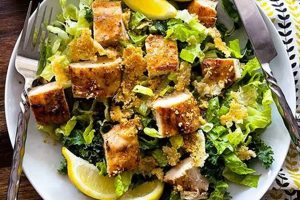
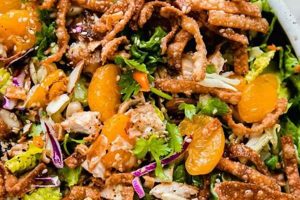
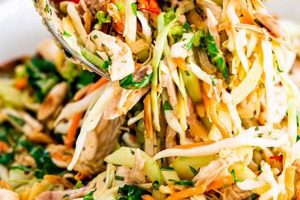
A dish featuring grilled chicken breast atop a bed of fresh greens, often romaine or a spring mix, combined with quintessential southwestern ingredients. These ingredients typically include corn, black beans, avocado, bell peppers (often red onion and jalapenos), and a vibrant, zesty dressing, such as a cilantro-lime vinaigrette or a creamy avocado ranch. Variations may incorporate other elements like tortilla strips, shredded cheese (Monterey Jack or cheddar), and diced tomatoes. A popular example involves marinated and grilled chicken strips served with corn, black beans, avocado, bell peppers, red onion, and a cilantro-lime vinaigrette over romaine lettuce.
This culinary creation offers a balanced and nutritious meal option. The grilled chicken provides lean protein, while the salad base contributes essential vitamins and fiber. The inclusion of southwestern staples like beans, corn, and avocado adds further nutritional value, offering healthy fats, complex carbohydrates, and antioxidants. The customizable nature of this salad allows for adjustments to dietary preferences and restrictions. Furthermore, its fresh and vibrant flavors, coupled with the ease of preparation, make it a desirable choice for both casual weeknight dinners and more festive occasions. Its popularity has risen in recent decades, reflecting a broader trend towards healthier eating and an appreciation for diverse culinary influences.
The following sections will delve into specific aspects of crafting this dish, exploring variations in ingredient selection, marinade preparation, grilling techniques, dressing options, and assembly instructions.
Tips for a Perfect Southwest Salad
Optimizing ingredient selection and preparation techniques elevates this dish from simple to exceptional. Attention to detail ensures a flavorful and satisfying culinary experience.
Tip 1: Marinate the Chicken: Marinating the chicken for at least 30 minutes, preferably longer, enhances its flavor and tenderness. A simple marinade of lime juice, olive oil, chili powder, cumin, and garlic infuses the chicken with characteristic southwestern notes.
Tip 2: Grill Chicken to Perfection: Achieving optimal grill temperature ensures proper cooking and prevents drying. Chicken should be cooked until its internal temperature reaches 165F (74C). Avoid overcooking, which can result in tough, dry meat.
Tip 3: Balance Flavors and Textures: Consider a variety of textures and flavors when selecting ingredients. The creaminess of avocado complements the crunch of romaine lettuce and the sweetness of corn. The addition of tortilla strips provides an enjoyable textural contrast.
Tip 4: Dressing Matters: The right dressing enhances the overall flavor profile. A vibrant cilantro-lime vinaigrette or a creamy avocado ranch dressing complements the southwestern flavors. Dress the salad just before serving to prevent the lettuce from wilting.
Tip 5: Customize to Preference: Adapt ingredients based on individual dietary needs and preferences. Black beans can be substituted with pinto beans, and different types of cheese or vegetables can be incorporated to suit individual tastes.
Tip 6: Freshness is Key: Utilizing fresh, high-quality ingredients significantly impacts the salad’s overall flavor. Ripe avocados, crisp lettuce, and freshly grilled chicken contribute to a more enjoyable dining experience.
Tip 7: Proper Storage: Store leftover chicken and salad components separately to maintain freshness. Refrigerate promptly and consume within a few days.
By adhering to these guidelines, one can consistently produce a flavorful and satisfying salad that embodies the essence of southwestern cuisine.
The following section will offer a complete recipe, incorporating these tips for a culinary masterpiece.
1. Grilled Chicken

Grilled chicken serves as the foundational protein component of a grilled chicken southwest salad. Its presence significantly influences the dish’s overall nutritional profile and flavor dynamic. The grilling process imparts a smoky char and enhances the inherent savory notes of the chicken, complementing the fresh, vibrant flavors characteristic of southwestern cuisine. The lean protein content of grilled chicken contributes to the salad’s satiety value, making it a substantial and fulfilling meal. The method of grilling, whether over direct heat or indirect heat, further impacts the final texture and taste of the chicken. Direct grilling results in a crispier exterior, while indirect grilling yields a more tender and juicy result. This adaptability allows for customization based on individual preferences.
Consider the impact of substituting grilled chicken with other protein sources. Using fried chicken, for instance, increases the fat content and alters the flavor profile, potentially overpowering the delicate balance of the southwest ingredients. Opting for a plant-based protein like tofu shifts the nutritional content and requires different marinades and cooking methods to achieve desirable flavors and textures. These examples illustrate the crucial role grilled chicken plays in defining the dish’s identity. Furthermore, variations in the grilling process, such as the use of specific wood chips or marinades, introduce nuanced smoky or herbaceous undertones, elevating the complexity of the overall flavor experience.
Understanding the integral role of grilled chicken within this salad allows for informed choices regarding preparation methods and ingredient pairings. Selecting appropriate grilling techniques ensures optimal texture and flavor, while thoughtful marinade choices further enhance the chicken’s compatibility with the other salad components. This knowledge ultimately contributes to a more balanced and satisfying culinary outcome. Careful consideration of these elements allows for a cohesive and flavorful final product that exemplifies the essence of a well-executed grilled chicken southwest salad.
2. Southwest Flavors
Southwest flavors form the core identity of a grilled chicken southwest salad, distinguishing it from other salad variations. These flavors, inspired by the cuisines of the American Southwest, introduce a unique profile characterized by a blend of earthy, spicy, and bright notes. Understanding the components of this flavor profile is crucial for accurately representing and appreciating the dish.
- Chiles and Spices:
Chiles, such as chipotle, ancho, and jalapeo, contribute varying levels of heat and complexity. Ground spices like cumin, coriander, and chili powder add warm, earthy undertones. The interplay of these elements creates a layered flavor experience, crucial for the authentic southwest taste. For instance, the smoky depth of chipotle powder complements the brightness of fresh cilantro, a common pairing in southwest cuisine. In the salad, these flavors infuse the marinade for the grilled chicken and often influence the dressing, tying all components together.
- Citrus and Herbs:
Citrus juices, primarily lime and sometimes orange, provide a refreshing acidity that balances the richness of other ingredients. Fresh herbs like cilantro and oregano introduce vibrant, aromatic notes. Lime juice, for example, brightens the flavors of a creamy avocado dressing and complements the smokiness of grilled chicken. These elements contribute to the overall freshness and vibrancy that characterizes southwest cuisine and prevents the salad from feeling heavy.
- Corn and Beans:
Corn and beans, particularly black beans or pinto beans, provide a textural and flavorful foundation. Corn adds a touch of sweetness, while beans offer an earthy depth and contribute to the salad’s heartiness. These ingredients are staples in southwest cuisine, representing the region’s agricultural heritage. Their inclusion in the salad offers a nutritional boost and contributes to a more satisfying meal. The slight sweetness of corn balances the spice from the chiles, creating a harmonious flavor profile.
- Avocado:
Avocado contributes a creamy richness and healthy fats, complementing the other ingredients. Its mild flavor serves as a canvas for the more assertive spices and herbs. The creamy texture of avocado contrasts with the crisp lettuce and other vegetables, adding another layer of sensory experience. The healthy fats in avocado enhance the absorption of fat-soluble vitamins from other salad components, increasing the nutritional value of the dish.
The interplay of these four facetschiles and spices, citrus and herbs, corn and beans, and avocadodefines the “southwest” in a grilled chicken southwest salad. Each element contributes distinct characteristics, culminating in a balanced and complex flavor profile that sets this salad apart. Understanding the role of each component allows for creative variations and ensures an authentic representation of this regional cuisine. The resulting salad is not merely a sum of its parts but a harmonious blend of flavors and textures, reflecting the rich culinary heritage of the American Southwest.
3. Fresh Ingredients
Fresh ingredients are paramount to a successful grilled chicken southwest salad, significantly impacting the overall flavor, texture, and nutritional value. The vibrancy and quality of each component contribute to the dish’s appeal and highlight the characteristic freshness of Southwestern cuisine. Utilizing fresh produce elevates the salad from a simple meal to a flavorful and nutritious culinary experience.
- Lettuce and Greens:
Crisp lettuce forms the foundation of the salad, providing a refreshing counterpoint to the other ingredients. Romaine, butter lettuce, or a spring mix offer varied textures and flavors. Wilted or bruised lettuce detracts from the salad’s appeal, while fresh, vibrant greens enhance the overall presentation and contribute to a more enjoyable eating experience. The choice of greens influences the salad’s texture and subtly impacts the flavor profile, with romaine providing a sturdy crunch and butter lettuce offering a delicate sweetness.
- Vegetables:
Fresh vegetables such as tomatoes, bell peppers, red onion, and corn contribute essential vitamins, minerals, and antioxidants. Their bright colors and crisp textures enhance the salad’s visual appeal and provide a refreshing contrast to the richness of the grilled chicken and avocado. Using ripe, in-season vegetables maximizes their flavor contribution. For example, a vibrant red tomato adds a burst of sweetness and acidity, while a crisp bell pepper offers a refreshing crunch and vegetal flavor.
- Herbs and Cilantro:
Fresh herbs, particularly cilantro, are essential for authentic southwest flavors. Cilantro adds a bright, citrusy note that complements the other ingredients. Its delicate leaves wilt quickly, so using freshly chopped cilantro just before serving maximizes its flavor impact and visual appeal. Other herbs, such as oregano or parsley, can be incorporated based on personal preference, but cilantro remains a defining element of the southwest flavor profile. The aromatic oils in fresh cilantro release their full potential when added at the last minute, creating a vibrant burst of flavor with each bite.
- Avocado:
Ripe avocado adds a creamy texture and healthy fats to the salad. Its mild flavor enhances the other ingredients without overpowering them. Using a perfectly ripe avocado is crucialan underripe avocado will lack flavor and have a hard texture, while an overripe avocado will be mushy and may have an off-putting flavor. The creamy richness of a ripe avocado provides a satisfying contrast to the crisp vegetables and adds a layer of complexity to the salad.
The emphasis on fresh ingredients in a grilled chicken southwest salad directly correlates with the overall quality and enjoyment of the dish. The freshness of each component not only enhances the taste and texture but also ensures maximum nutritional value. The interplay of fresh, crisp vegetables, vibrant herbs, and perfectly ripe avocado elevates the salad, creating a balanced and satisfying meal that embodies the essence of southwest cuisine. By prioritizing ingredient quality, one can create a truly exceptional and flavorful culinary experience.
4. Vibrant Dressing

Vibrant dressing is essential to a successful grilled chicken southwest salad, acting as a unifying element that harmonizes the diverse flavors and textures. The dressing not only adds moisture and flavor but also contributes to the overall sensory experience. A well-chosen dressing enhances the inherent southwestern characteristics of the salad, complementing the smoky grilled chicken, fresh vegetables, and earthy spices. The right dressing elevates the salad from a simple combination of ingredients to a cohesive and flavorful dish.
- Flavor Profile:
The dressing’s flavor profile should complement the existing southwest flavors present in the salad. Common choices include cilantro-lime vinaigrette, chipotle ranch, or avocado crema. A cilantro-lime vinaigrette, for example, provides a bright, citrusy counterpoint to the richness of the grilled chicken and avocado, while a chipotle ranch adds a smoky heat that complements the spices used in the chicken marinade. The dressing’s flavor should enhance, not overpower, the other ingredients, creating a balanced and harmonious taste experience. A dressing that is too sweet or too acidic can disrupt this balance.
- Texture and Consistency:
The dressing’s texture and consistency affect the overall mouthfeel of the salad. A vinaigrette offers a light and refreshing texture, allowing the individual ingredients to shine, while a creamy dressing, like avocado ranch, adds richness and coats the ingredients more thoroughly. The choice depends on personal preference and the desired balance of flavors and textures. A thick, heavy dressing may weigh down the salad, while a thin, watery dressing might not adequately coat the ingredients. The ideal dressing clings lightly to the components, adding flavor and moisture without making the salad soggy.
- Acidity and Balance:
Acidity in the dressing plays a crucial role in balancing the richness of the other ingredients. Lime juice or vinegar adds brightness and cuts through the fattiness of the avocado and grilled chicken. The level of acidity should be carefully considered to complement, not overpower, the other flavors. Too much acidity can make the salad taste sharp and unpleasant, while too little can result in a bland and uninspiring dish. The balance of acidity with other flavor components, such as sweetness or spice, creates a more complex and satisfying taste profile.
- Visual Appeal:
The dressing’s visual appeal contributes to the overall presentation of the salad. A vibrant green cilantro-lime vinaigrette or a creamy white avocado ranch enhances the salad’s visual appeal, making it more appetizing. The color and texture of the dressing should complement the colors of the other ingredients, creating a visually harmonious dish. A brightly colored dressing can add a pop of visual interest, while a creamy dressing can create a sense of richness and indulgence. The way the dressing coats the ingredients also affects the visual presentation. A glossy dressing can make the salad look more appealing, while a dull or watery dressing can detract from its overall appearance.
The vibrant dressing acts as the final touch, tying all the elements of the grilled chicken southwest salad together. It enhances the flavors, balances the textures, and elevates the visual presentation. Choosing the right dressing is crucial for creating a cohesive and satisfying dining experience. Whether a light vinaigrette or a creamy dressing is preferred, the vibrant dressing ultimately defines the character of the salad and its connection to the fresh, bold flavors of the Southwest. By carefully considering the flavor profile, texture, acidity, and visual appeal of the dressing, one can ensure that it complements the other components and creates a truly exceptional and well-balanced salad.
5. Balanced Nutrition
Balanced nutrition, a cornerstone of healthy living, finds a delicious expression in a well-crafted grilled chicken southwest salad. This dish offers a compelling example of how culinary enjoyment can be seamlessly integrated with nutritional principles. Exploring the nutritional components of this salad reveals a carefully orchestrated balance of macronutrients and micronutrients, contributing to overall well-being and demonstrating the potential for flavorful meals to support a healthy lifestyle.
- Lean Protein:
Grilled chicken provides a substantial source of lean protein, essential for building and repairing tissues, supporting immune function, and maintaining healthy metabolism. Unlike fried chicken or other protein sources with higher saturated fat content, grilled chicken contributes to a healthier nutritional profile. In the context of the salad, the lean protein from chicken complements the fiber and complex carbohydrates from vegetables, promoting satiety and preventing blood sugar spikes. This combination makes the salad a satisfying and sustaining meal.
- Healthy Fats:
Avocado, a key ingredient in southwest salads, contributes healthy monounsaturated fats, crucial for heart health, brain function, and nutrient absorption. These healthy fats also enhance the bioavailability of fat-soluble vitamins present in the other salad components. Compared to salads relying on less nutritious fat sources like creamy dressings or croutons, the avocado in a southwest salad provides a more beneficial fat profile, supporting overall health while adding a creamy texture and rich flavor.
- Complex Carbohydrates:
Ingredients like black beans, corn, and the various vegetables in the salad offer complex carbohydrates, a valuable source of sustained energy and dietary fiber. Unlike simple carbohydrates that can lead to rapid blood sugar fluctuations, complex carbohydrates provide a more gradual release of energy, promoting stable blood sugar levels and contributing to longer-lasting satiety. The fiber content further aids digestion and contributes to overall gut health. This contrasts with salads containing refined grains or added sugars, which offer less nutritional value and can contribute to unhealthy weight gain.
- Vitamins and Minerals:
The diverse array of vegetables in a southwest saladincluding bell peppers, tomatoes, and leafy greensprovides a rich source of essential vitamins and minerals. These micronutrients play vital roles in various bodily functions, supporting immune health, cell function, and overall well-being. The inclusion of fresh produce ensures a higher concentration of these nutrients compared to salads relying on processed ingredients. For instance, the bell peppers contribute Vitamin C, an antioxidant that supports immune function, while the tomatoes offer lycopene, linked to various health benefits. The variety of colorful vegetables maximizes the range of micronutrients consumed in a single meal.
The grilled chicken southwest salad exemplifies how a balanced and flavorful meal can contribute to optimal nutrition. The strategic combination of lean protein, healthy fats, complex carbohydrates, and a variety of vitamins and minerals creates a synergistic effect, supporting overall health and well-being. This salad stands as a testament to the fact that nutritious eating does not necessitate sacrificing flavor or enjoyment. It showcases the potential for culinary creativity to align seamlessly with nutritional principles, offering a delicious and effective way to nourish the body while satisfying the palate.
6. Easy Preparation
The ease of preparation is a significant factor contributing to the popularity of the grilled chicken southwest salad recipe. This attribute makes the dish a practical choice for busy weeknight meals or casual gatherings, where time constraints often dictate menu decisions. Examining the components of this ease reveals a streamlined process that simplifies both ingredient preparation and assembly, making the salad an accessible and appealing option for a wide range of individuals, regardless of culinary expertise.
- Minimal Pre-cooking Requirements:
The primary cooking task involves grilling the chicken, a relatively straightforward process requiring minimal active cooking time. Unlike more complex recipes involving multiple cooking stages or intricate techniques, the grilled chicken southwest salad focuses on a single, manageable cooking element. This minimizes the overall preparation time and simplifies the cooking process, making it accessible even to novice cooks. Once the chicken is grilled, the remaining steps primarily involve assembling pre-prepared ingredients, further streamlining the process.
- Accessibility of Ingredients:
The ingredients for this salad are readily available in most grocery stores. Common staples like lettuce, tomatoes, corn, black beans, and chicken breast are easily accessible, eliminating the need for specialized or hard-to-find ingredients. This accessibility reduces the planning and shopping time associated with preparing the meal. Furthermore, the recipe’s adaptability allows for substitutions based on ingredient availability or personal preferences, increasing its practicality.
- Simple Assembly:
Once the chicken is grilled and the vegetables are chopped, assembling the salad requires minimal effort. The process involves combining the ingredients in a bowl or arranging them on individual plates. This simple assembly makes the dish ideal for casual settings and reduces the cleanup required afterward. Unlike more elaborate salads involving layered components or intricate arrangements, the grilled chicken southwest salad prioritizes simplicity and efficiency.
- Adaptability and Customization:
The recipe’s adaptability allows for variations based on individual preferences and dietary needs. Ingredients can be easily added or omitted without compromising the fundamental character of the dish. This flexibility makes the salad suitable for a variety of dietary restrictions and preferences, further enhancing its convenience. For example, vegetarians can substitute the chicken with grilled tofu or halloumi, while those seeking lower carbohydrate options can reduce the amount of corn or beans. This adaptability makes the recipe highly versatile and suitable for a wide range of individuals and occasions.
The ease of preparation associated with the grilled chicken southwest salad recipe significantly contributes to its versatility and appeal. The streamlined process, accessible ingredients, simple assembly, and adaptability make the dish an ideal choice for those seeking a nutritious and flavorful meal without extensive time commitment in the kitchen. This combination of convenience and culinary satisfaction positions the salad as a practical and appealing option for a variety of dining occasions, from quick weeknight dinners to casual social gatherings.
7. Customizable Options

Customization represents a significant advantage of the grilled chicken southwest salad, allowing adaptation to individual dietary needs, preferences, and available ingredients. This flexibility transforms the recipe from a fixed formula into a versatile template, empowering individuals to create personalized versions while retaining the fundamental characteristics of the dish. Exploring the various facets of customization reveals the extensive possibilities for tailoring the salad to specific requirements and preferences.
- Dietary Adaptations:
Dietary restrictions pose no barrier to enjoying this versatile salad. Gluten-free versions are readily achieved by omitting tortilla strips or using gluten-free alternatives. Vegetarian or vegan adaptations can substitute grilled chicken with plant-based proteins such as tofu, tempeh, or beans. Managing sodium intake can be accomplished by using low-sodium beans and dressings or omitting added salt. These adaptations showcase the salad’s inclusivity, ensuring its accessibility for a wide range of dietary needs without compromising flavor or satisfaction.
- Ingredient Preferences:
Personal preferences regarding ingredients are easily accommodated. Dislike cilantro? Parsley or chives offer suitable alternatives. Prefer a different type of bean? Black beans can be readily exchanged for pinto, kidney, or cannellini beans. Aversion to spicy flavors? Omitting jalapeos or opting for milder chili powders allows for customization to individual spice tolerances. This flexibility allows for creative exploration and ensures a satisfying culinary experience tailored to individual tastes.
- Seasonal Variations:
Seasonal produce seamlessly integrates into the salad, enhancing flavor and maximizing nutritional value. Summer corn offers a burst of sweetness, while winter squash provides a hearty, warming element. Spring greens contribute a delicate texture and flavor, while fall root vegetables offer earthy notes and satisfying density. Embracing seasonal ingredients elevates the salad beyond a static recipe, transforming it into a dynamic reflection of the time of year and the availability of fresh, local produce.
- Creative Exploration:
The core components of the saladgrilled chicken, southwest flavors, and fresh vegetablesserve as a foundation for culinary creativity. Adding roasted sweet potatoes introduces a caramelized sweetness and textural complexity. Incorporating quinoa or farro adds a nutty flavor and boosts the protein content. A sprinkle of toasted pepitas or sunflower seeds enhances the crunch and introduces healthy fats. Such additions showcase the potential for customization to transform the salad into a personalized culinary canvas, reflecting individual creativity and preferences.
The customizable nature of the grilled chicken southwest salad elevates it beyond a simple recipe. It becomes a framework for personalized culinary expression, accommodating a spectrum of dietary needs, ingredient preferences, and creative inspirations. This adaptability not only enhances the dish’s practicality but also celebrates the individual’s role in crafting a meal that is both delicious and personally satisfying. This inherent flexibility ensures its continued appeal as a adaptable and enjoyable culinary creation.
Frequently Asked Questions
This section addresses common inquiries regarding the preparation and variations of grilled chicken southwest salad.
Question 1: What is the best way to prevent grilled chicken from drying out?
Marinating the chicken for at least 30 minutes helps retain moisture. Grilling over medium heat, rather than high heat, also prevents the chicken from drying out. Using a meat thermometer to ensure the chicken reaches an internal temperature of 165F (74C) without overcooking is crucial.
Question 2: Can other types of beans be used besides black beans?
Pinto beans, kidney beans, or cannellini beans can be substituted for black beans. The choice of beans can be based on personal preference or dietary considerations. Each type of bean offers a slightly different flavor and texture, allowing for variations in the salad’s overall profile.
Question 3: What are some suitable alternatives to cilantro?
If cilantro is not preferred, parsley, chives, or dill can be used as substitutes. These herbs offer alternative flavor profiles while still complementing the other ingredients in the salad. However, it is important to note that cilantro contributes significantly to the authentic southwest flavor profile.
Question 4: Can this salad be made ahead of time?
While the salad is best assembled just before serving, components can be prepared in advance. Grilled chicken, chopped vegetables, and dressing can be stored separately and combined shortly before consumption. This allows for efficient meal preparation without compromising the freshness and texture of the salad.
Question 5: How can the spiciness of the salad be adjusted?
The level of spiciness can be controlled through the choice of chiles and spices. Omitting jalapeos or using a milder chili powder reduces the heat. Conversely, incorporating hotter peppers or adding a pinch of cayenne pepper increases the spiciness. Adjusting the amount of chili powder in the marinade also allows for customization of the spice level.
Question 6: What are some healthy dressing options besides vinaigrette?
A creamy avocado ranch dressing or a Greek yogurt-based dressing offer healthy alternatives to traditional ranch dressings. These options provide a creamy texture while reducing the amount of saturated fat and calories. They also complement the southwest flavors of the salad without overpowering the other ingredients.
Understanding these common points of inquiry helps ensure successful preparation and customization of a flavorful and nutritious grilled chicken southwest salad. Careful consideration of these aspects contributes to a satisfying and personalized culinary experience.
The following section will offer a comprehensive recipe guide, incorporating the insights and tips provided throughout this article.
Grilled Chicken Southwest Salad Recipe
Exploration of the grilled chicken southwest salad recipe reveals a dish characterized by a harmonious blend of flavors, textures, and nutritional considerations. From the lean protein of grilled chicken to the vibrant flavors of southwest spices and the freshness of key ingredients, each component contributes to a balanced and satisfying meal. The ease of preparation, coupled with extensive customization options, further enhances the recipe’s appeal, allowing for adaptations based on individual dietary needs and preferences. The analysis encompassed ingredient selection, preparation techniques, dressing options, nutritional value, and potential variations, offering a comprehensive understanding of the dish’s construction and adaptability.
The grilled chicken southwest salad recipe stands as a testament to the potential for culinary creativity to align with nutritional principles. Its adaptability ensures its continued relevance in a dynamic culinary landscape, offering a flavorful and healthful option for both novice cooks and seasoned culinary enthusiasts. Continued exploration of ingredient combinations and regional variations promises further evolution of this versatile and satisfying dish.