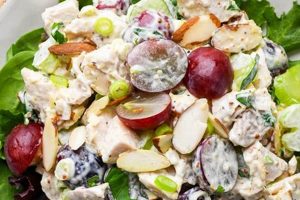
Dishes categorized as such typically combine cooked chicken, often diced or shredded, with mayonnaise-based dressings infused with curry powder and other complementary spices. Variations may include fruits like grapes or apples, vegetables such as celery or onion, and nuts like almonds or cashews. A simple example involves combining cooked chicken with mayonnaise, curry powder, raisins, and chopped celery.
These dishes offer a flavorful and convenient meal option. The blend of savory chicken, creamy dressing, and aromatic spices creates a complex and satisfying flavor profile. The inclusion of fruits and vegetables adds textural contrast and nutritional value. Historically, such combinations likely originated from the fusion of British culinary traditions with the flavors of Indian cuisine, reflecting the cultural exchange during the British Raj. Their adaptability to different palates and dietary needs has contributed to their enduring popularity.
Further exploration will cover diverse variations on this culinary theme, including regional adaptations, ingredient substitutions for dietary restrictions, and tips for achieving optimal flavor and texture.
Tips for Exceptional Chicken Curry Salad
Achieving optimal flavor and texture requires attention to several key elements within these recipes. Careful selection of ingredients and thoughtful preparation contribute significantly to the overall quality of the dish.
Tip 1: Chicken Selection: Opting for high-quality, properly cooked chicken is paramount. Roasted or poached chicken breasts offer excellent flavor and texture. Alternatively, rotisserie chicken provides a convenient shortcut.
Tip 2: Mayonnaise Base: Full-fat mayonnaise provides a richer, creamier base, though reduced-fat versions can be substituted for lighter preparations. Greek yogurt can also be incorporated for a tangier flavor and lower fat content.
Tip 3: Curry Powder Complexity: Experimenting with different curry powder blends allows for customization of flavor profiles. Freshly ground spices intensify the aromatic notes.
Tip 4: Balancing Sweetness and Acidity: Incorporating sweetness through ingredients like raisins, apples, or mango chutney enhances complexity. A touch of acidity from lemon juice or vinegar balances the richness.
Tip 5: Texture and Crunch: Adding textural elements through chopped celery, nuts, or seeds elevates the sensory experience. Toasted nuts offer enhanced flavor.
Tip 6: Chilling and Resting: Allowing the salad to chill for at least 30 minutes before serving allows the flavors to meld and the salad to firm up, enhancing the overall enjoyment.
Tip 7: Creative Ingredient Combinations: Explore diverse flavor combinations by incorporating ingredients like grapes, cranberries, red onion, or bell peppers. Consider regional variations with ingredients like toasted coconut or chopped peanuts.
Attention to these details ensures a well-balanced and flavorful dish. By understanding the interplay of ingredients and techniques, one can consistently create exceptional chicken curry salads.
From classic preparations to innovative variations, the versatility of these recipes allows for endless culinary exploration. The following section will provide a concluding overview of key takeaways and potential avenues for further experimentation.
1. Chicken (cooked, diced)

Cooked, diced chicken forms the foundational protein component of chicken curry salad recipes. Its preparation method significantly influences the final dish’s flavor and texture. While pre-cooked options like rotisserie chicken offer convenience, roasting or poaching chicken specifically for the salad allows for greater control over seasoning and moisture content. Dicing the chicken into uniform pieces ensures even distribution throughout the salad and consistent bite size. Overcooked chicken can result in a dry, stringy texture, detracting from the overall quality. Conversely, undercooked chicken presents food safety risks. Therefore, achieving the proper internal temperature during cooking is crucial.
Consider a scenario where one uses leftover roasted chicken seasoned with herbs like thyme and rosemary. This imparts subtle herbal notes to the final salad, adding depth of flavor. In contrast, using poached chicken allows for a cleaner canvas, highlighting the curry spices and other ingredients. The size of the dice also impacts the experience. A finer dice integrates more seamlessly with the other components, while a larger dice provides more distinct chicken presence in each bite. These nuances demonstrate the impact of chicken preparation on the overall character of the chicken curry salad.
Understanding the importance of properly cooked, diced chicken is fundamental to creating a successful chicken curry salad. It ensures not only a palatable texture but also optimal flavor integration. Mastery of this element allows for greater control over the final product, paving the way for culinary creativity and personalized variations. This careful consideration elevates the dish beyond a simple combination of ingredients, transforming it into a carefully crafted culinary experience.
2. Curry Powder (flavorful blend)

Curry powder stands as a defining element in chicken curry salad recipes, contributing significantly to the characteristic flavor profile. Its complex composition, derived from a blend of various spices, offers a nuanced and layered taste experience. Understanding the role and variations of curry powder is essential for crafting a well-balanced and flavorful salad.
- Spice Composition:
Curry powder blends typically include turmeric, cumin, coriander, and chili powder. Variations may incorporate ginger, fenugreek, mustard seeds, cinnamon, cloves, and other spices. The specific combination and proportion of these spices influence the final flavor, ranging from mild and earthy to pungent and fiery. A Madras curry powder, for example, tends to be hotter than a Korma curry powder due to a higher chili content. Choosing the right curry powder blend is crucial for achieving the desired flavor profile in the salad.
- Flavor Profile:
The interplay of spices within curry powder creates a complex flavor profile. Turmeric provides earthy notes and a vibrant yellow hue. Cumin contributes a warm, earthy aroma. Coriander offers citrusy and slightly sweet undertones. Chili powder introduces heat and pungency. The balance of these components determines the overall taste experience, ranging from savory and warm to spicy and complex. This complexity adds depth and character to the chicken curry salad.
- Freshness and Quality:
The freshness and quality of curry powder significantly impact the flavor of the final dish. Freshly ground spices offer the most vibrant and intense flavor. Pre-ground curry powders can lose their potency over time, resulting in a duller taste. Storing curry powder in an airtight container in a cool, dark place helps preserve its flavor and aroma. Using high-quality curry powder elevates the overall sensory experience of the chicken curry salad.
- Customization and Experimentation:
The versatility of curry powder allows for customization and experimentation. Blending individual spices allows for precise control over the flavor profile. Adjusting the proportions of different spices can tailor the intensity of heat, sweetness, and earthiness. This adaptability enables cooks to create unique and personalized chicken curry salad recipes. Exploring different curry powder variations enhances creativity and culinary exploration.
The selection and utilization of curry powder significantly influence the final character of a chicken curry salad. A well-chosen curry powder elevates the dish beyond a simple combination of ingredients, contributing depth, complexity, and a distinctive flavor profile. Understanding the nuances of curry powder empowers culinary creativity and allows for the development of truly exceptional chicken curry salads. Further exploration of complementary ingredients and preparation techniques enhances the overall culinary experience.
3. Mayonnaise (or alternative base)
The binding agent, whether mayonnaise or an alternative, plays a crucial role in chicken curry salad recipes, influencing texture, flavor, and overall palatability. This creamy element serves to unite the diverse ingredients, creating a cohesive and enjoyable culinary experience. Understanding the various options and their respective characteristics allows for informed choices tailored to individual preferences and dietary needs.
- Traditional Mayonnaise:
Traditional mayonnaise, an emulsion of oil, egg yolks, and an acidic element like vinegar or lemon juice, provides a rich, creamy texture and tangy flavor that complements the curry spices. Full-fat mayonnaise offers the most luxurious mouthfeel, while reduced-fat versions provide a lighter option. The emulsified nature of mayonnaise creates a smooth, cohesive consistency that binds the ingredients together effectively. This classic choice delivers a familiar and satisfying experience in chicken curry salad.
- Greek Yogurt:
Greek yogurt offers a tangier and lighter alternative to mayonnaise. Its higher protein content contributes to a more substantial texture while providing a lower fat option. The tanginess of Greek yogurt balances the richness of the curry spices and other ingredients. Using Greek yogurt also adds a subtle tangy note that enhances the overall flavor profile. This substitution caters to health-conscious individuals without compromising flavor or texture.
- Avocado:
Mashed avocado provides a creamy, vegan alternative to mayonnaise. Its rich, buttery flavor complements the curry spices while offering healthy fats and a vibrant green hue. Avocado adds a unique creaminess distinct from mayonnaise, contributing a different textural dimension. The healthy fats in avocado enhance the nutritional value of the salad. This option caters to vegan diets and provides a unique flavor profile.
- Other Alternatives:
Other alternatives include sour cream, crme frache, or a combination of mayonnaise and Greek yogurt. Sour cream provides a tangy flavor similar to Greek yogurt but with a higher fat content. Crme frache offers a richer, tangier flavor profile than sour cream. Blending mayonnaise and Greek yogurt allows for customization of texture and flavor, balancing richness and tanginess. These options provide further flexibility in tailoring the chicken curry salad to specific preferences.
The choice of binding agent significantly impacts the overall character of chicken curry salad. From the classic richness of mayonnaise to the tangy lightness of Greek yogurt or the unique creaminess of avocado, each option offers distinct characteristics that influence the final dish. Careful selection allows for personalized adaptations catering to individual preferences, dietary needs, and desired flavor profiles. This considered approach elevates the salad from a simple combination of ingredients to a carefully crafted culinary creation.
4. Fruits/Vegetables (texture, flavor)

The incorporation of fruits and vegetables into chicken curry salad recipes extends beyond mere embellishment; it represents a crucial element contributing to textural complexity, flavor enhancement, and nutritional value. Strategic selection and preparation of these components elevates the dish from basic to nuanced, offering a more complete sensory and nutritional experience. The following facets explore the diverse roles fruits and vegetables play in these culinary creations.
- Textural Contrast:
Fruits and vegetables introduce varied textures that contrast with the tender chicken and creamy dressing. Crisp elements like celery, diced apples, or water chestnuts provide a refreshing crunch. Softer additions, such as grapes or raisins, offer a juicy burst. This interplay of textures creates a dynamic mouthfeel that enhances overall enjoyment. The strategic combination of crisp and soft elements prevents a monotonous texture, making each bite more engaging.
- Flavor Enhancement:
The inherent sweetness of fruits like grapes, apples, or mango complements the savory spices in the curry powder, adding depth and complexity to the flavor profile. Tartness from cranberries or dried cherries provides a contrasting note that balances the richness of the mayonnaise. The aromatic notes of certain vegetables, such as red onion or bell peppers, further enhance the overall flavor composition. This careful balancing of sweet, tart, and savory elements creates a more nuanced and satisfying taste experience.
- Nutritional Enrichment:
Fruits and vegetables enrich chicken curry salad with essential vitamins, minerals, and dietary fiber. Nutrient-rich additions like grapes (antioxidants), apples (fiber), and celery (vitamin K) contribute to a more wholesome meal. These additions not only enhance flavor and texture but also contribute to a more balanced and nutritious diet. The inclusion of these elements elevates the dish beyond a simple indulgence, transforming it into a more health-conscious choice.
- Visual Appeal:
The vibrant colors of fruits and vegetables contribute to the visual appeal of chicken curry salad, making it more enticing. The bright green of celery, the deep red of grapes, or the vibrant orange of carrots add visual interest to the creamy base. This visual appeal enhances the overall dining experience, stimulating appetite and adding a touch of elegance to the presentation. Careful consideration of color combinations allows for aesthetically pleasing presentations that elevate the dish beyond a simple meal.
The incorporation of fruits and vegetables in chicken curry salad recipes is integral to achieving a well-rounded and satisfying culinary experience. These elements contribute not only textural and flavor complexity but also nutritional value and visual appeal. Understanding the diverse roles these components play allows for informed choices that elevate the dish from basic to exceptional, demonstrating a thoughtful approach to culinary creation.
5. Nuts/Seeds (optional crunch)

Nuts and seeds, while optional, offer a significant textural and flavor dimension to chicken curry salad recipes. Their inclusion introduces a desirable crunch that contrasts with the softer elements of the salad, creating a more dynamic and enjoyable mouthfeel. Beyond texture, nuts and seeds contribute distinct flavor profiles that complement the curry spices and other ingredients. For example, toasted almonds provide a nutty richness and subtle sweetness, while slivered cashews offer a delicate buttery flavor. Sunflower seeds introduce a mild, nutty taste and pleasing crunch, while pumpkin seeds contribute a slightly sweeter and earthier note. The choice of nuts or seeds influences the overall flavor profile of the salad, allowing for customization based on individual preferences.
The practical significance of incorporating nuts and seeds lies in their ability to elevate a simple chicken curry salad to a more complex and satisfying culinary experience. The added crunch provides textural interest, preventing a monotonous mouthfeel. Furthermore, the flavor contributions of different nuts and seeds create opportunities for nuanced flavor combinations. For instance, the combination of toasted almonds and golden raisins introduces a complementary interplay of nutty and sweet notes, while the addition of sunflower seeds provides a lighter, more neutral crunch. These subtle yet impactful additions demonstrate the importance of considering textural and flavor elements in recipe development.
In summary, the inclusion of nuts and seeds in chicken curry salad recipes, while optional, offers substantial benefits in terms of texture and flavor enhancement. Their strategic use elevates the overall sensory experience, transforming a simple salad into a more complex and satisfying dish. The choice of specific nuts or seeds allows for personalized flavor profiles and textural variations, demonstrating the importance of considering these seemingly minor components in achieving culinary excellence.
6. Seasoning (salt, pepper, etc.)
Seasoning represents a crucial, albeit often overlooked, aspect of chicken curry salad recipes. Appropriate seasoning elevates the inherent flavors of the ingredients, creating a balanced and harmonious flavor profile. Careful consideration of seasoning choices and techniques distinguishes a bland salad from a truly exceptional one.
- Salt:
Salt enhances the savory notes of the chicken and spices, creating a more pronounced and satisfying flavor. It also plays a critical role in balancing sweetness from fruits like grapes or raisins and acidity from dressings or added lemon juice. Insufficient salt results in a flat, underwhelming taste, while excessive salt overpowers the other flavors. Judicious salting is crucial for achieving a well-balanced flavor profile. For example, kosher salt, with its larger crystals, offers greater control over salting, preventing over-salting.
- Black Pepper:
Freshly ground black pepper adds a subtle heat and complexity that complements the curry spices. Its pungent aroma enhances the overall sensory experience. Pre-ground pepper loses its volatile oils over time, resulting in a diminished flavor impact. Freshly grinding peppercorns releases these aromatic oils, providing a more intense and nuanced flavor. The subtle heat of black pepper complements the warmth of the curry spices without overpowering the other flavors.
- Additional Seasonings:
Beyond salt and pepper, additional seasonings can further enhance the flavor profile. A pinch of cayenne pepper adds a touch of heat, while a dash of smoked paprika introduces a smoky depth. Garlic powder or onion powder can amplify the savory notes. These additions, used sparingly, contribute layers of complexity and nuance to the overall flavor composition. For example, a pinch of cayenne pepper complements the warmth of curry powder, creating a more complex flavor profile.
- Balancing Flavors:
The art of seasoning lies in achieving balance. Each seasoning plays a specific role, and careful consideration must be given to the interplay of flavors. The sweetness of fruits, the tanginess of the dressing, the savory notes of the chicken, and the warmth of the curry spices must harmonize. Adjusting seasoning throughout the preparation process, tasting and re-seasoning as needed, ensures a well-balanced and flavorful final product. Over-seasoning can mask the delicate nuances of the other ingredients, while under-seasoning results in a bland and uninspired dish.
Seasoning acts as the conductor of flavor in chicken curry salad recipes. It harmonizes the diverse ingredients, enhancing their individual characteristics while creating a unified and delicious whole. Careful attention to seasoning choices and techniques elevates the dish beyond a simple combination of ingredients, transforming it into a carefully crafted culinary experience. Understanding the nuances of seasoning empowers culinary creativity and allows for the development of truly exceptional chicken curry salads.
Frequently Asked Questions
This section addresses common inquiries regarding chicken curry salad recipes, providing clear and concise information to facilitate successful preparation and enjoyment.
Question 1: What type of chicken is best suited for chicken curry salad?
While various cooked chicken options suffice, roasted or poached chicken breasts offer optimal flavor and texture. Rotisserie chicken provides a convenient alternative.
Question 2: Can mayonnaise be substituted with healthier alternatives?
Greek yogurt or mashed avocado offer healthier alternatives to mayonnaise, providing lower fat content or vegan options while maintaining creamy consistency.
Question 3: How can the level of spiciness be adjusted?
Spiciness can be adjusted by selecting curry powders with varying heat levels. Madras curry powder offers more heat, while Korma provides a milder option. Additional cayenne pepper can increase spiciness incrementally.
Question 4: What fruits and vegetables complement chicken curry salad?
Traditional choices include grapes, raisins, apples, celery, and red onion. However, culinary exploration with ingredients like dried cranberries, chopped bell peppers, or mandarin oranges is encouraged.
Question 5: How long can chicken curry salad be stored?
Properly stored in an airtight container in the refrigerator, chicken curry salad typically lasts for three to five days. Ensuring proper refrigeration maintains food safety and optimal quality.
Question 6: Can chicken curry salad be served warm?
While traditionally served cold, variations incorporating warm chicken and a tempered dressing exist. However, the delicate balance of flavors and textures often benefits from chilling, allowing flavors to meld.
Understanding these key aspects ensures consistent and flavorful results when preparing chicken curry salad. Addressing these common inquiries facilitates culinary success and enhances enjoyment of this versatile dish.
The subsequent section offers a collection of curated chicken curry salad recipes demonstrating diverse flavor profiles and ingredient combinations.
Chicken Curry Salad Recipes
Examination of chicken curry salad recipes reveals a dish offering remarkable versatility and flavor complexity. From the foundational elements of cooked chicken and curry powder to the nuanced additions of fruits, vegetables, nuts, and carefully chosen seasonings, each component contributes to the final culinary experience. Understanding the interplay of these ingredients, along with proper preparation techniques, allows for the creation of dishes ranging from simple and satisfying to complex and innovative. The adaptability of these recipes to diverse dietary preferences and flavor profiles further underscores their enduring appeal.
Culinary exploration within this domain offers a journey through a spectrum of flavors and textures. The potential for customization, from the selection of curry powder to the incorporation of unique fruits and vegetables, encourages experimentation and personalization. Chicken curry salad recipes represent not merely a dish, but a canvas for culinary creativity, inviting further exploration and discovery within the realm of flavor and texture. The continued evolution of these recipes promises a vibrant and exciting culinary future.