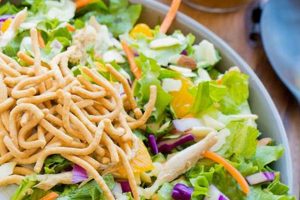
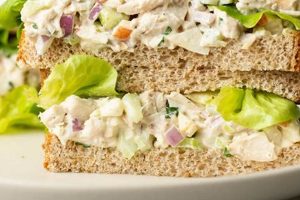
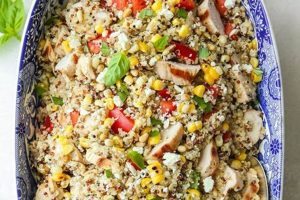
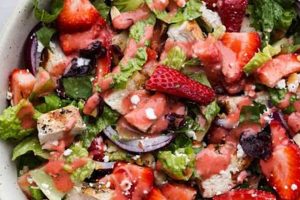
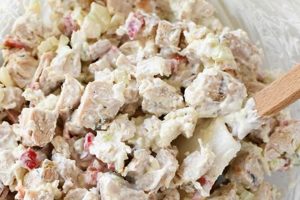
A dish combining cooked chicken, apples, and a binding agent, often mayonnaise or yogurt, characterizes this culinary creation. Additional ingredients frequently include celery, grapes, nuts, and spices, yielding a variety of flavors and textures. Variations exist, ranging from simple mixtures ideal for quick lunches to more complex presentations suitable for festive gatherings.
This blend offers a balance of protein, fiber, and vitamins. The lightness of the apples complements the richness of the chicken, creating a satisfying yet refreshing meal. Historically, such combinations of fruit and protein reflect culinary resourcefulness and a drive to create balanced dishes using readily available ingredients. This type of salad provides a versatile option for picnics, potlucks, or light dinners, adaptable to diverse dietary preferences through ingredient substitutions.
Further exploration will delve into specific ingredient combinations, preparation techniques, nutritional information, and creative serving suggestions, empowering readers to prepare their own delicious and healthy versions of this classic dish.
Tips for a Perfect Chicken Apple Salad
Optimizing ingredient selection and preparation techniques enhances the flavor and texture of this versatile dish. Attention to detail ensures a satisfying culinary experience.
Tip 1: Chicken Selection: Utilizing pre-cooked rotisserie chicken offers convenience. Alternatively, poaching or grilling boneless, skinless breasts provides a healthier, flavor-controlled option. Dicing the chicken into uniform pieces promotes even distribution throughout the salad.
Tip 2: Apple Choice: Crisp, tart apples like Granny Smith or Honeycrisp provide textural contrast and prevent rapid browning. Dicing apples into similarly sized pieces ensures balanced flavor in each bite.
Tip 3: Binding Agent: Traditional mayonnaise offers a creamy richness. Greek yogurt or a combination of yogurt and mayonnaise provides a lighter, tangier alternative.
Tip 4: Flavor Enhancement: Incorporating ingredients like chopped celery, grapes, walnuts, or dried cranberries elevates the complexity of the salad. Fresh herbs such as dill or tarragon introduce subtle aromatic notes.
Tip 5: Seasoning: A touch of salt and freshly ground black pepper enhances the inherent flavors. A dash of lemon juice brightens the overall taste profile and helps prevent apple browning.
Tip 6: Chill Time: Allowing the salad to chill for at least 30 minutes in the refrigerator allows the flavors to meld, resulting in a more harmonious taste experience.
Tip 7: Serving Suggestions: This salad can be enjoyed on its own, served on bread or crackers, or used as a filling for lettuce wraps or sandwiches.
By following these guidelines, one can elevate this simple dish into a culinary delight. Attention to detail yields optimal flavor and textural balance.
These insights equip individuals to create a personalized chicken apple salad experience, catering to individual preferences and dietary needs.
1. Ingredients

Ingredients form the foundation of a chicken apple salad recipe, directly influencing its flavor profile, nutritional value, and overall appeal. The careful selection and combination of ingredients determine the final character of the dish. For instance, the choice of apple variety significantly impacts the salad’s sweetness and texture. A tart apple like Granny Smith offers a crisp, acidic counterpoint to the savory chicken, while a sweeter variety like Fuji contributes a milder, more delicate flavor. Similarly, the inclusion of ingredients like celery adds a refreshing crunch, while walnuts provide a contrasting richness and textural depth. The type of binding agent, whether mayonnaise, yogurt, or a vinaigrette, further shapes the salad’s creaminess and tang.
The quality and freshness of ingredients also play a crucial role. Using fresh, crisp produce and properly cooked chicken ensures optimal flavor and texture. Pre-cooked or leftover chicken can be utilized efficiently, while incorporating seasonal apples enhances both flavor and nutritional benefit. Understanding ingredient interactions, such as the potential for certain fruits to brown when exposed to air, allows for proactive measures like adding a squeeze of lemon juice to maintain visual appeal and prevent oxidation. Considering dietary restrictions and preferences allows for ingredient substitutions. For example, using Greek yogurt instead of mayonnaise reduces fat content while adding protein and tang. Substituting dried cranberries for grapes offers a lower-sugar alternative with concentrated flavor.
Mastery of ingredient selection and combination empowers culinary creativity and ensures a successful chicken apple salad outcome. Careful consideration of individual components and their interactions allows for the creation of a dish tailored to specific tastes and dietary needs. This understanding elevates the simple act of combining ingredients into a nuanced culinary endeavor.
2. Proportions

Proportions within a chicken apple salad recipe significantly influence the final product’s balance, texture, and overall enjoyment. The ratio of chicken to apple, the amount of binding agent, and the volume of supplementary ingredients like celery or nuts all contribute to the salad’s character. A recipe dominated by chicken may feel heavy and lack the refreshing contrast provided by the apple, while an overabundance of apple can result in a salad that lacks substance and textural complexity. An excess of mayonnaise can overwhelm the other flavors and create a cloying texture, whereas too little may result in a dry, crumbly mixture. Consider a scenario where a recipe calls for two cups of diced chicken and one cup of diced apple. This ratio establishes a foundation where the chicken provides heartiness while the apple lends a refreshing lightness. Altering this ratio, such as using equal parts chicken and apple, shifts the balance, resulting in a salad with a more pronounced apple presence. Similarly, adding a half-cup of chopped celery introduces a crisp, vegetal element, but increasing this amount to a full cup might overpower the other flavors and textures.
Understanding ingredient proportions empowers culinary control. Recipes provide guidelines, but individual preferences and desired outcomes may necessitate adjustments. A preference for a creamier salad might require a higher ratio of mayonnaise, while a desire for a lighter texture may call for a reduction in the binding agent. Adapting proportions based on the specific ingredients used is also crucial. For example, if using a particularly tart apple variety, a slight increase in the amount of sweetener might be necessary to balance the flavor profile. Practical experimentation and tasting throughout the preparation process enable refinement and customization. Starting with a base recipe and incrementally adjusting ingredient quantities based on taste and texture allows one to develop a personalized version of the dish that perfectly suits individual preferences.
Mastering proportions in a chicken apple salad recipe extends beyond simply following instructions; it involves understanding the interplay of ingredients and how their relative quantities contribute to the final product. This knowledge enables informed adjustments and empowers individuals to create a salad that perfectly balances flavor, texture, and personal preference. The practical application of this understanding elevates the dish from a simple combination of ingredients to a carefully crafted culinary creation.
3. Preparation Method
Preparation methods significantly influence the final quality and character of a chicken apple salad recipe. Different techniques impact not only the taste and texture but also the safety and presentation of the dish. Understanding these methods allows for informed choices and ensures optimal results.
- Ingredient Preparation
Initial preparation lays the groundwork for the entire dish. Dicing the chicken and apple into uniform pieces ensures even distribution of flavor and texture. Improper knife skills can lead to unevenly sized pieces, affecting both the aesthetic appeal and the eating experience. Washing produce thoroughly removes potential contaminants, while techniques like soaking diced apples in a lemon water solution prevent browning and maintain visual appeal. Over-handling ingredients, particularly the chicken, can lead to a less desirable texture.
- Combining Ingredients
The order and manner in which ingredients are combined influence the final texture and flavor integration. Adding the binding agent gradually, while gently folding the ingredients together, prevents overmixing, which can result in a mushy salad. Incorporating delicate ingredients like grapes or herbs towards the end of the mixing process preserves their integrity and prevents them from being crushed. The even distribution of the binding agent ensures all ingredients are coated, contributing to a harmonious flavor profile.
- Chilling and Serving
Chilling allows the flavors to meld and the salad to develop its optimal texture. Refrigerating the mixture for at least 30 minutes enhances the overall taste experience. Serving the salad chilled enhances its refreshing qualities. Presentation also plays a role. Serving the salad in a bowl, on a bed of lettuce, or as a sandwich filling influences the dining experience. Garnishing with fresh herbs or a sprinkle of nuts elevates the visual appeal and adds a final layer of flavor.
- Food Safety Practices
Adhering to food safety practices during preparation is paramount to prevent foodborne illnesses. Proper handwashing, using clean utensils and cutting boards, and storing ingredients at safe temperatures are crucial steps. Ensuring the chicken is cooked to a safe internal temperature before incorporating it into the salad minimizes the risk of bacterial contamination. Avoiding cross-contamination between raw and cooked ingredients is essential for maintaining food safety. Refrigerating leftovers promptly and consuming them within a safe timeframe prevents bacterial growth and ensures continued enjoyment of the dish.
Each stage of preparation, from initial ingredient handling to final presentation, contributes to the overall success of a chicken apple salad recipe. Careful attention to these methods ensures not only a delicious and visually appealing dish but also a safe and satisfying culinary experience. By understanding the nuances of each technique, individuals can confidently create a high-quality salad that caters to both palate and peace of mind.
4. Flavor Balance
Flavor balance within a chicken apple salad recipe constitutes a crucial element, elevating it from a simple combination of ingredients to a harmonious and satisfying dish. This balance hinges on the interplay of sweet, savory, acidic, and textural components. The inherent sweetness of apples, particularly varieties like Fuji or Gala, requires a savory counterpoint, provided by the chicken. This savory element, whether derived from roasted, poached, or grilled chicken, establishes a foundational flavor contrast. However, relying solely on these two elements risks a simplistic and potentially bland outcome. Introducing acidity, through ingredients like lemon juice or vinegar, brightens the overall profile and cuts through the richness of the chicken and the sweetness of the apple. This acidity also serves a practical purpose, preventing enzymatic browning of the apple and maintaining its fresh appearance.
Texture plays an equally vital role in flavor balance. The tender chicken and crisp apple offer a pleasing textural contrast, further enhanced by the addition of ingredients like celery or walnuts. Celery provides a refreshing crunch, while walnuts contribute a satisfying density. The binding agent, whether mayonnaise, yogurt, or a vinaigrette, also influences the textural experience, adding creaminess or tang. Consider a scenario where a sweeter apple variety, like Honeycrisp, is used. The increased sweetness might necessitate a higher proportion of lemon juice or the inclusion of a tart dried cranberry to balance the profile. Conversely, if using a leaner chicken breast, the addition of toasted nuts can introduce a richness that might otherwise be lacking. These adjustments highlight the dynamic nature of flavor balance and the need for adaptability based on specific ingredient choices.
Achieving flavor balance in a chicken apple salad recipe is not a static formula but rather a dynamic process involving careful consideration of individual ingredients and their interactions. Understanding the interplay of sweet, savory, acidic, and textural elements allows for informed adjustments and empowers culinary creativity. This understanding transforms the act of assembling a salad into a nuanced exercise in flavor composition, resulting in a dish that is not only delicious but also exhibits a harmonious complexity.
5. Serving Suggestions
Serving suggestions enhance the versatility and enjoyment of a chicken apple salad recipe. Presentation transcends mere aesthetics, impacting perceived flavor and overall dining experience. A simple shift in serving style can transform the same salad from a casual lunch to an elegant appetizer. Consider the classic presentation: served in a bowl, perhaps garnished with a sprinkle of paprika or chopped fresh herbs. This approach offers a straightforward, satisfying meal. However, the same salad nestled within crisp lettuce cups elevates the presentation, introducing a refreshing textural element and transforming the dish into a lighter, more visually appealing option. Similarly, using the salad as a sandwich filling, whether on crusty bread or flaky croissants, adds another dimension to the experience. The bread’s texture complements the salad, creating a more substantial meal. These variations demonstrate how serving suggestions impact not only visual appeal but also the overall culinary experience.
Further extending serving suggestions, consider incorporating the salad into a larger meal context. Served alongside grilled fish or roasted vegetables, it functions as a refreshing counterpoint, balancing richer flavors. Alternatively, presented as a canap on small toasts or crackers, the salad becomes an elegant appetizer at a more formal gathering. These examples illustrate the adaptability of the chicken apple salad and how thoughtful serving suggestions can transform it to suit various occasions and palates. The practical application of these suggestions empowers culinary creativity, allowing individuals to personalize the dish and maximize its appeal. For instance, substituting endive leaves for lettuce cups introduces a subtle bitterness that complements the sweetness of the apple, demonstrating how ingredient choices within serving suggestions can further refine the flavor profile.
In conclusion, serving suggestions represent a crucial element within a chicken apple salad recipe, impacting far more than just presentation. They influence the perceived flavor, the overall dining experience, and the suitability of the dish for various occasions. Understanding this connection empowers culinary versatility, enabling the transformation of a basic salad into a diverse range of appealing and satisfying meals. This understanding underscores the importance of considering not only the ingredients within the salad itself but also the broader context in which it is served.
6. Dietary Adaptations

Dietary adaptations play a crucial role in modifying chicken apple salad recipes to accommodate specific health needs, preferences, or restrictions without sacrificing flavor or satisfaction. Understanding these adaptations empowers individuals to personalize the dish while maintaining its core appeal. This involves careful consideration of ingredient substitutions, portion control, and preparation techniques.
- Managing Fat and Cholesterol
Traditional chicken apple salad recipes often incorporate mayonnaise, which contributes significant fat and cholesterol. Dietary adaptations for managing these components frequently involve substituting lower-fat alternatives. Greek yogurt, for instance, offers a creamy texture with a tangy flavor profile and a substantial reduction in fat and cholesterol compared to mayonnaise. Avocado mayonnaise or pureed avocado can provide a healthier, plant-based alternative, contributing healthy fats and a creamy consistency. Reducing the overall quantity of binding agent or using a lighter vinaigrette dressing can further minimize fat content while maintaining flavor and moisture. Choosing leaner chicken breast over darker meat also contributes to a lower-fat outcome.
- Addressing Gluten Sensitivity
Gluten sensitivity necessitates careful consideration of all ingredients and preparation methods. Ensuring the chicken is not breaded or seasoned with gluten-containing ingredients is a primary concern. Traditional mayonnaise is typically gluten-free, but verifying the label is essential. Cross-contamination during preparation should be avoided by using dedicated cutting boards and utensils. When serving the salad with bread or crackers, gluten-free options are readily available and offer a suitable alternative. Lettuce wraps or serving the salad over a bed of greens provide gluten-free presentation options.
- Accommodating Sugar Restrictions
Individuals managing blood sugar levels or adhering to low-sugar diets can adapt chicken apple salad recipes through ingredient selection and portion control. Choosing tart apples, such as Granny Smith, over sweeter varieties helps minimize natural sugar content. Limiting or omitting dried fruit additions like cranberries or raisins further reduces sugar intake. Using sugar-free sweeteners in the dressing or opting for a vinaigrette-based dressing can also offer a lower-sugar alternative. Portion control is crucial in managing overall carbohydrate and sugar intake. Consuming smaller portions or balancing the salad with other low-sugar, high-fiber components can contribute to a more balanced meal.
- Adapting to Vegetarian/Vegan Diets
Adapting chicken apple salad for vegetarian or vegan diets centers on replacing the chicken with a suitable plant-based protein source. Chickpeas, lentils, or edamame offer comparable texture and nutritional value. Tofu, prepared in a way that mimics the texture of chicken, can also be used. Ensuring all other ingredients align with vegetarian or vegan restrictions, such as using agave nectar instead of honey, is essential. Vegan mayonnaise options are available commercially, providing a suitable replacement for traditional mayonnaise. Nutritional yeast can add a savory, cheesy flavor element to the salad, enhancing its appeal for those avoiding dairy products.
These dietary adaptations demonstrate the inherent flexibility of the chicken apple salad recipe. By thoughtfully substituting ingredients and adjusting preparation techniques, individuals can modify the dish to align with a wide range of dietary needs and preferences. This adaptability ensures that the chicken apple salad remains a versatile and enjoyable meal option for a diverse population, regardless of dietary restrictions.
Frequently Asked Questions
This section addresses common inquiries regarding chicken apple salad recipes, providing concise and informative responses to clarify potential uncertainties.
Question 1: How long can chicken apple salad be stored safely?
Properly stored in an airtight container in the refrigerator, chicken apple salad typically remains safe for consumption for up to three to five days. Factors influencing shelf life include ingredient freshness and storage temperature consistency.
Question 2: What measures prevent apple browning in the salad?
Soaking diced apples in a solution of lemon juice and water inhibits enzymatic browning. The citric acid in lemon juice lowers the pH, preventing oxidation and maintaining the apple’s fresh appearance.
Question 3: Can alternative proteins be substituted for chicken?
Plant-based proteins like chickpeas, lentils, or edamame offer viable alternatives to chicken, catering to vegetarian or vegan dietary preferences. Tofu, prepared to mimic chicken’s texture, also serves as a suitable substitute.
Question 4: What are optimal apple varieties for this recipe?
Crisp, tart apples such as Granny Smith or Honeycrisp are preferred for their textural contrast and balanced sweetness. These varieties hold their shape well and offer a refreshing counterpoint to the richness of the chicken.
Question 5: How can the salad’s fat content be reduced?
Substituting Greek yogurt or avocado mayonnaise for traditional mayonnaise significantly reduces fat content without compromising creaminess. Using a lighter vinaigrette dressing or reducing the overall quantity of binding agent also lowers fat intake.
Question 6: Can this salad be frozen for later consumption?
Freezing chicken apple salad is generally not recommended. The mayonnaise-based dressing separates upon thawing, compromising texture and flavor. Freezing also alters the apple’s texture, resulting in a less appealing final product. It is best to prepare and consume the salad fresh.
Understanding these aspects ensures the successful preparation and enjoyment of a flavorful and satisfying chicken apple salad. Careful attention to storage, ingredient selection, and dietary adaptations maximizes the dish’s versatility.
This concludes the frequently asked questions section. The following sections will delve into specific recipe variations and offer detailed preparation instructions.
Chicken Apple Salad Recipe
Exploration of the chicken apple salad recipe has revealed its adaptability and culinary potential. From ingredient selection and preparation techniques to flavor balance and dietary adaptations, the dish offers a range of possibilities. Key factors highlighted include the importance of ingredient quality, the impact of proportions on flavor and texture, and the role of preparation methods in achieving optimal results. Serving suggestions demonstrate the dish’s versatility, extending from casual lunches to elegant appetizers. Furthermore, dietary adaptations ensure its accessibility to a diverse range of individuals, accommodating various health needs and preferences without compromising flavor or satisfaction. The frequently asked questions section addresses common concerns, providing practical guidance for successful preparation and storage.
Chicken apple salad represents more than a simple combination of ingredients; it embodies culinary creativity and adaptability. Understanding the underlying principles of flavor balance, ingredient interaction, and preparation techniques empowers individuals to personalize the dish and elevate it from a basic salad to a culinary expression. This knowledge encourages further exploration and experimentation within the culinary realm, promoting continued appreciation for the versatility and potential of simple ingredients transformed into satisfying and flavorful meals.