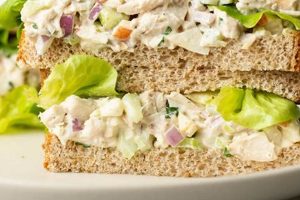
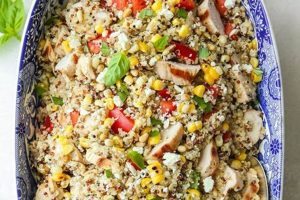
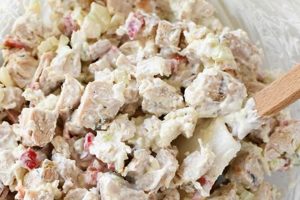
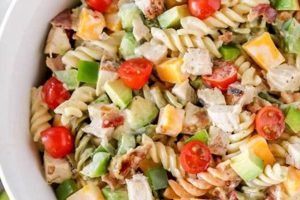
A dish combining cooked chicken, mayonnaise, and bacon often includes additional ingredients like celery, onion, grapes, or nuts. Variations exist, incorporating different seasonings, herbs, and dressings, allowing for customized flavor profiles ranging from classic to innovative. A simple version might involve diced chicken, crumbled bacon, mayonnaise, and chopped celery, while more complex versions could feature curry powder, dried cranberries, or toasted pecans.
This savory combination offers a balance of protein, healthy fats, and diverse textures. Its adaptability makes it suitable for various occasions, from a quick lunch to a picnic or potluck contribution. Historically, chicken salad emerged as a way to utilize leftover cooked chicken, evolving from simple mixtures to more elaborate preparations influenced by regional culinary traditions and ingredient availability. The addition of bacon introduces a smoky, salty element, elevating the flavor profile and enhancing its appeal.
Further exploration could delve into specific recipes, nutritional information, variations based on dietary restrictions, and tips for achieving optimal flavor and texture. Discussions about the origins of chicken salad and the role of bacon in different culinary traditions could also provide valuable context.
Tips for a Superior Chicken Salad with Bacon
Achieving optimal flavor and texture requires attention to detail and careful selection of ingredients. These tips offer guidance for creating a truly exceptional dish.
Tip 1: High-Quality Ingredients are Key: Opt for fresh, high-quality chicken. Roasting or grilling the chicken specifically for the salad enhances the depth of flavor. Similarly, using thick-cut, high-quality bacon contributes significantly to the overall taste and texture.
Tip 2: Proper Bacon Preparation: Cook bacon until crisp but not burnt. Remove excess grease by placing the cooked bacon on a paper towel-lined plate. Crumble or chop the bacon into desired pieces after it has cooled.
Tip 3: Consider the Chicken Texture: Shredding or dicing the chicken into uniform pieces ensures even distribution throughout the salad and creates a pleasant mouthfeel. Avoid over-processing the chicken, as it can result in a mushy texture.
Tip 4: Balance of Flavors: The mayonnaise serves as the base, but its flavor can be enhanced with additions like Dijon mustard, apple cider vinegar, or a squeeze of lemon juice. These ingredients add complexity and balance the richness of the bacon and mayonnaise.
Tip 5: Freshness of Produce: Use crisp, fresh produce such as celery, onions, or grapes. These elements contribute texture and a refreshing counterpoint to the richness of the other ingredients.
Tip 6: Seasoning is Crucial: Season the salad thoughtfully. Freshly ground black pepper, salt, and herbs like dill or chives can elevate the overall flavor profile. Taste and adjust seasonings as needed.
Tip 7: Chilling Enhances Flavor: Allow the salad to chill for at least 30 minutes before serving. Chilling allows the flavors to meld and results in a more cohesive and enjoyable culinary experience.
By following these guidelines, one can create a chicken salad with bacon that is not only delicious but also showcases careful preparation and attention to detail.
This exploration of tips provides a foundation for crafting an exceptional dish, leading naturally to a concluding summary of the key elements for success.
1. High-quality Chicken
The foundation of a successful chicken salad with bacon rests upon the quality of its core ingredient: the chicken. Selecting and preparing high-quality chicken significantly influences the final dish’s overall flavor, texture, and enjoyment. This segment explores the multifaceted aspects of “high-quality chicken” and its impact on this classic recipe.
- Flavor Enhancement
High-quality chicken possesses a richer, more pronounced flavor that elevates the entire salad. Chicken raised on a healthy diet and allowed to mature properly develops a depth of flavor often absent in conventionally raised poultry. This inherent flavor becomes a crucial component, complementing the smokiness of the bacon and other ingredients. Free-range or pasture-raised chickens often exhibit this characteristic.
- Textural Integrity
Beyond flavor, high-quality chicken offers superior texture. The meat is typically firmer and more succulent, holding its shape well when mixed with other ingredients. This prevents a mushy or watery consistency, a common issue with lower-quality chicken. Proper cooking methods, such as roasting or grilling, further enhance this desirable texture.
- Nutritional Value
High-quality chicken often boasts a better nutritional profile. Chickens raised in healthier environments and fed nutritious diets may contain higher levels of beneficial nutrients and lower levels of unhealthy fats. This nutritional advantage contributes to a more wholesome and satisfying meal.
- Overall Culinary Experience
Ultimately, using high-quality chicken elevates the overall culinary experience. The interplay of enhanced flavor, desirable texture, and nutritional value creates a more enjoyable and satisfying dish. The investment in superior chicken translates directly into a more rewarding sensory experience.
The selection of high-quality chicken provides a significant advantage when crafting chicken salad with bacon. The enhanced flavor profile, improved texture, and potential nutritional benefits contribute significantly to the final product. Investing in superior poultry forms the cornerstone of a truly exceptional dish, allowing the nuanced flavors of bacon and other ingredients to shine through without compromise.
2. Crisp Bacon

Crisp bacon plays a pivotal role in a chicken salad recipe featuring this ingredient. Its texture and flavor contribute significantly to the overall sensory experience. The crispness offers a textural counterpoint to the softer elements of the chicken and mayonnaise, introducing a satisfying crunch. Furthermore, the rendered fat during cooking enhances the bacon’s flavor, imparting a savory richness that complements the other ingredients. This interplay of textures and flavors elevates the dish beyond a simple combination of components.
The contrast between the crisp bacon and the creamy chicken salad is not merely textural; it also affects flavor perception. The salty, smoky notes of crisp bacon cut through the richness of the mayonnaise-based salad, preventing the dish from becoming overly heavy. Consider a scenario where soft, chewy bacon is used: the texture would blend with the chicken and mayonnaise, diminishing the textural contrast. The flavor, too, would be less intense, lacking the concentrated savoriness developed during the crisping process. This exemplifies the practical significance of crisp bacon in the recipe.
Achieving optimal crispness requires careful cooking. Overcooked bacon becomes brittle and loses its nuanced flavor, while undercooked bacon contributes an unpleasant chewiness and an excess of grease. The ideal crispness is achieved when the bacon is cooked until golden brown and rigid, but not to the point of shattering. This balance ensures the bacon provides the desired textural and flavor enhancement to the chicken salad, demonstrating its essential role in the overall composition. Therefore, understanding the importance of crisp bacon ensures a more balanced and satisfying culinary outcome.
3. Balanced Flavors
Balanced flavors are essential for a successful chicken salad recipe that includes bacon. The inherent richness of mayonnaise and the smoky saltiness of bacon necessitate careful consideration of counterbalancing elements. Without these, the salad can become overly rich or excessively salty, diminishing overall enjoyment. Balance is achieved through the strategic incorporation of ingredients that provide acidity, sweetness, or freshness. For example, the acidity of lemon juice or apple cider vinegar cuts through the richness of the mayonnaise, while the sweetness of grapes or dried cranberries offsets the saltiness of the bacon. The addition of fresh herbs like dill or chives introduces a bright, herbaceous element that further enhances complexity.
Consider a scenario where a chicken salad recipe with bacon relies solely on mayonnaise, chicken, and bacon. The resulting dish, while potentially palatable, would likely be heavy and one-dimensional. The absence of balancing flavors would limit the complexity and overall sensory experience. However, by introducing diced celery for a crisp, vegetal note, and a squeeze of lemon juice for brightness, the salad transforms. The celery provides textural contrast while its subtle bitterness balances the richness. The lemon juice adds a refreshing acidity that cuts through the fat of the mayonnaise and bacon, creating a more harmonious flavor profile. This illustrates the practical significance of flavor balance in achieving a well-rounded and enjoyable dish.
Understanding the interplay of flavors is fundamental to creating a successful chicken salad with bacon. The strategic inclusion of acidic, sweet, or fresh ingredients prevents the dish from becoming dominated by any single element. This balance allows the distinct flavors of the chicken, bacon, and other components to shine through, resulting in a more nuanced and satisfying culinary experience. The purposeful incorporation of balancing elements ultimately distinguishes a simple mixture from a well-crafted and flavorful salad.
4. Fresh Ingredients
Fresh ingredients are crucial for a high-quality chicken salad with bacon. Freshness directly impacts flavor, texture, and overall enjoyment. Consider the difference between freshly roasted chicken and chicken that has been stored for several days. The freshly roasted chicken offers a more vibrant, succulent flavor and a pleasing texture. Similarly, crisp, fresh celery and onion provide a satisfying crunch and a clean taste, contrasting with the richness of the bacon and mayonnaise. Using fresh, high-quality ingredients elevates the entire dish, creating a more complex and enjoyable culinary experience. Conversely, using stale or low-quality ingredients can result in a bland, unappetizing salad with compromised texture and flavor.
The impact of fresh ingredients extends beyond individual components. They interact synergistically, creating a more harmonious and balanced flavor profile. Freshly squeezed lemon juice adds brightness and acidity that cuts through the richness of the mayonnaise and bacon, while freshly ground black pepper enhances the overall savory notes. Imagine using bottled lemon juice or pre-ground pepper; the flavors would be duller and less vibrant, diminishing the overall impact. This highlights the importance of using fresh ingredients throughout the recipe, not just for individual components, but for the synergistic effect they create.
Prioritizing fresh ingredients demonstrates a commitment to quality and enhances the overall dining experience. While convenience may tempt one to use pre-packaged or processed ingredients, the difference in taste and texture is often significant. Fresh ingredients contribute to a brighter, more vibrant flavor profile and a more satisfying textural experience. The extra effort required to select and prepare fresh components elevates the chicken salad with bacon from a simple meal to a culinary delight. This understanding of the role of fresh ingredients underscores their importance in achieving a superior final product.
5. Proper Seasoning
Proper seasoning is paramount in a chicken salad recipe with bacon. It elevates the dish beyond a simple combination of ingredients, transforming it into a cohesive and flavorful experience. Seasoning enhances the inherent flavors of the chicken, bacon, and other components, creating depth and complexity. Without proper seasoning, the salad can taste bland and one-dimensional, failing to capitalize on the potential of its individual ingredients. This exploration delves into the crucial aspects of seasoning within this specific culinary context.
- Salt and Pepper as the Foundation
Salt and freshly ground black pepper form the foundational layer of seasoning. Salt enhances the natural flavors of the ingredients, while pepper adds a subtle heat and complexity. The quantity of salt should be carefully considered, balancing the saltiness of the bacon and avoiding over-salting. Freshly ground black pepper offers a more vibrant flavor than pre-ground pepper, contributing significantly to the overall taste profile.
- Herbaceous Enhancements
Fresh herbs introduce a bright, aromatic dimension. Dill, chives, or parsley complement the richness of the bacon and mayonnaise, adding a refreshing counterpoint. The herbs should be added towards the end of the preparation to retain their vibrant flavor and aroma. Dried herbs can be used as a substitute, but fresh herbs offer a more pronounced and nuanced flavor profile.
- Acidity as a Balancing Agent
A touch of acidity, such as lemon juice or apple cider vinegar, balances the richness of the mayonnaise and bacon. The acidity brightens the overall flavor profile, preventing the salad from becoming overly heavy. The amount of acid should be carefully measured to avoid overpowering the other flavors. This acidic element plays a crucial role in achieving a well-rounded and harmonious flavor balance.
- The Importance of Tasting and Adjusting
Tasting and adjusting seasoning throughout the preparation process is essential. Individual palates vary, and the saltiness of the bacon can also fluctuate. Tasting allows for precise adjustments, ensuring the final seasoning is perfectly balanced. This iterative process is crucial for achieving optimal flavor and customizing the salad to individual preferences.
Proper seasoning is not merely an afterthought; it is an integral part of creating a successful chicken salad with bacon. The careful balance of salt, pepper, herbs, and acidity elevates the dish, allowing the individual flavors to harmonize and creating a more complex and satisfying culinary experience. The nuanced interplay of these elements transforms a simple mixture into a well-seasoned and flavorful salad, demonstrating the essential role of proper seasoning in achieving culinary excellence.
6. Mayonnaise Choice
Mayonnaise serves as the foundational binding element in chicken salad, significantly influencing the final product’s overall flavor, texture, and richness. The choice of mayonnaise, therefore, becomes a crucial consideration in a chicken salad recipe featuring bacon. Different types of mayonnaise, each with its distinct characteristics, can either enhance or detract from the balance of flavors and the desired textural profile. Careful selection ensures that the mayonnaise complements, rather than overwhelms, the other ingredients, contributing to a cohesive and enjoyable culinary experience. This exploration delves into the nuanced aspects of mayonnaise selection within this specific culinary context.
- Flavor Profile
Mayonnaise varieties exhibit diverse flavor profiles. Standard mayonnaise offers a creamy, tangy base, while some artisanal mayonnaises incorporate additional flavors like roasted garlic, herbs, or spices. In a chicken salad with bacon, a neutral-flavored mayonnaise allows the smokiness of the bacon and the other ingredients to shine through. Alternatively, a flavored mayonnaise can introduce complementary notes, such as a hint of smoked paprika or roasted garlic, enhancing the overall complexity. However, strongly flavored mayonnaises can potentially overpower the delicate balance of the salad, requiring careful consideration.
- Texture and Consistency
Texture and consistency vary among mayonnaise types. Some are thick and creamy, while others are lighter and more fluid. The choice depends on the desired texture of the final salad. A thicker mayonnaise creates a denser, creamier salad, whereas a lighter mayonnaise results in a looser, more delicate texture. The presence of bacon, which contributes its own textural element, further influences this decision. A thicker mayonnaise can better bind the ingredients together when chunkier elements like bacon are present, ensuring a cohesive final product.
- Acidity Level
Mayonnaise formulations differ in their acidity levels. Higher acidity can cut through the richness of the bacon and mayonnaise, providing a refreshing counterpoint. Lower acidity can contribute to a richer, creamier flavor profile. The desired balance of flavors within the salad dictates the appropriate acidity level. If the bacon is particularly smoky and salty, a higher acidity mayonnaise can help balance those intense flavors. Conversely, if a milder flavor profile is desired, a lower acidity mayonnaise might be preferred.
- Ingredient Quality
Ingredient quality significantly impacts the overall flavor and texture of mayonnaise. High-quality mayonnaises typically utilize better oils, eggs, and seasonings, resulting in a superior taste and a smoother texture. Lower-quality mayonnaises may contain additives or fillers that can negatively impact the flavor and texture of the final salad. Given that mayonnaise serves as a primary component, opting for a high-quality version enhances the overall culinary experience.
The selection of mayonnaise should be a deliberate decision based on the interplay of these factors. The chosen mayonnaise should complement the bacon, chicken, and other ingredients, contributing to a balanced and flavorful salad. Careful consideration of flavor profile, texture, acidity, and ingredient quality ensures that the mayonnaise enhances, rather than detracts from, the overall culinary experience. By understanding the nuanced role of mayonnaise, one can create a chicken salad with bacon that is not only delicious but also reflects a thoughtful approach to ingredient selection and flavor composition.
7. Textural Contrast
Textural contrast is a critical element in a successful chicken salad recipe with bacon, elevating it from a simple mixture to a multi-sensory experience. The interplay of different textures creates a more dynamic and engaging culinary experience. This contrast prevents the salad from becoming monotonous, adding depth and complexity to each bite. The presence of bacon, with its inherent crispness, provides a natural opportunity to explore and exploit textural variations within the salad.
- Crisp Bacon
The crispness of the bacon provides a foundational textural contrast against the softer elements of the salad. Properly cooked bacon, rendered until crisp but not brittle, offers a satisfying crunch that juxtaposes the tenderness of the chicken and the creaminess of the mayonnaise. This interplay of crisp and soft textures is fundamental to a well-balanced chicken salad. Imagine biting into a salad where all components share the same soft texture; the experience would be significantly less interesting and less satisfying.
- Tender Chicken
The chicken, typically shredded or diced, offers a tender counterpoint to the crisp bacon. The method of preparation influences the chicken’s texture; shredded chicken provides a finer, more delicate texture, while diced chicken offers a slightly more substantial chew. This textural interplay between the chicken and bacon creates a dynamic mouthfeel, enhancing enjoyment.
- Creamy Mayonnaise
Mayonnaise contributes a creamy, smooth texture that binds the ingredients together. The thickness of the mayonnaise influences the overall texture of the salad. A thicker mayonnaise creates a denser, more substantial salad, while a thinner mayonnaise yields a lighter, more delicate consistency. This creamy element acts as a textural bridge between the crisp bacon and the tender chicken.
- Additional Textural Elements
The incorporation of additional ingredients can further enhance textural contrast. Chopped celery or red onion introduces a crisp, vegetal element, while grapes or nuts offer a burst of juiciness or crunch. These additions create a multi-layered textural experience, preventing the salad from becoming one-dimensional. For instance, the snap of finely diced celery provides a refreshing contrast to the other ingredients, enhancing the overall sensory experience.
The careful consideration of textural contrast significantly contributes to the success of a chicken salad recipe with bacon. The interplay of crisp, tender, creamy, and potentially crunchy or juicy elements creates a dynamic and engaging sensory experience. This balance of textures elevates the dish, making it more than just a sum of its parts. The understanding and manipulation of textural elements distinguishes a well-composed chicken salad from a simple mixture, demonstrating the crucial role of textural contrast in achieving culinary excellence.
Frequently Asked Questions
This FAQ section addresses common inquiries regarding chicken salad recipes incorporating bacon, providing concise and informative responses.
Question 1: What type of bacon works best in chicken salad?
Thick-cut, smoked bacon generally yields optimal flavor and texture. Thinner bacon tends to become overly crispy, while unsmoked bacon lacks the characteristic smoky depth.
Question 2: How can one prevent the bacon from becoming soggy in the salad?
Ensure the bacon is thoroughly cooled and patted dry before incorporating it into the salad. Adding the bacon just before serving also helps maintain its crispness.
Question 3: Can other meats be substituted for chicken?
While chicken is traditional, turkey or ham can be substituted. However, the flavor profile will change accordingly. Adjust seasonings to complement the chosen meat.
Question 4: What are the best storage practices for chicken salad with bacon?
Store the salad in an airtight container in the refrigerator for up to three days. For optimal food safety, do not leave the salad at room temperature for extended periods.
Question 5: How can the recipe be adapted for different dietary needs, such as gluten-free or low-fat?
Gluten-free bread or crackers can be used for serving. For a lower-fat version, consider using reduced-fat mayonnaise or Greek yogurt and reducing the amount of bacon. Adjust seasonings accordingly.
Question 6: How can one enhance the flavor of the chicken salad beyond the basic recipe?
Experiment with various seasonings, herbs, and add-ins. Consider incorporating roasted red peppers, chopped pecans, dried cranberries, or a touch of curry powder. These additions introduce complexity and depth of flavor.
These responses offer practical guidance for preparing and enjoying chicken salad with bacon, emphasizing the importance of ingredient selection, preparation techniques, and storage practices.
This FAQ section serves as a valuable resource, providing clarity and addressing common concerns. This information facilitates a deeper understanding and empowers culinary exploration, naturally leading into recipe variations.
Chicken Salad Recipe with Bacon
Exploration of this classic dish reveals the importance of nuanced ingredient selection and preparation. High-quality chicken, crisp bacon, balanced flavors, fresh ingredients, proper seasoning, appropriate mayonnaise choice, and considered textural contrasts contribute significantly to the final product. Each element plays a crucial role, from the foundational flavors of chicken and bacon to the balancing notes of acidity and freshness provided by complementary ingredients. The interplay of textures, from the crisp bacon to the creamy mayonnaise and tender chicken, further elevates the dish, creating a multi-sensory experience. Careful attention to these details transforms a simple combination of ingredients into a cohesive and satisfying culinary creation.
Culinary success hinges on a thorough understanding of these fundamental principles. By appreciating the nuanced interplay of ingredients and techniques, one can elevate chicken salad with bacon from a basic dish to a culinary expression. This exploration serves as a foundation for further experimentation and refinement, encouraging a thoughtful approach to ingredient selection, flavor balance, and textural complexity. The potential for customization and creativity within this seemingly simple dish is vast, offering opportunities to explore individual preferences and elevate culinary experiences.