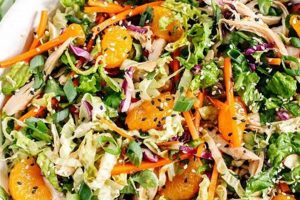
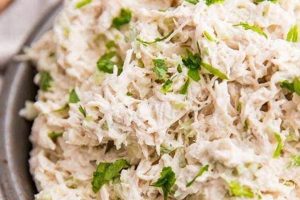
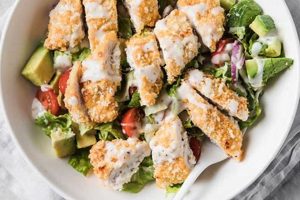
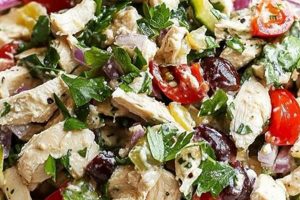
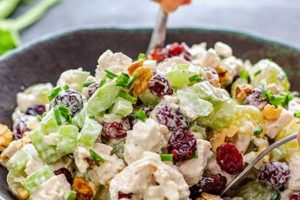
A combination of cooked chicken, cherries (fresh, dried, or candied), and other complementary ingredients forms the core of this dish. Variations abound, incorporating diverse elements such as nuts, cheeses, vegetables, and a variety of dressings. A simple example might feature grilled chicken breast, dried cherries, pecans, crumbled blue cheese, and a vinaigrette dressing over mixed greens.
This type of salad offers a balance of sweet and savory flavors, providing a refreshing and potentially nutritious meal option. The inclusion of fruit adds natural sweetness and vitamins, while lean protein from the chicken contributes to satiety. Historically, fruit and meat combinations have appeared in various cuisines, reflecting seasonal availability and culinary traditions. The modern iteration often emphasizes lighter preparations, aligning with contemporary health-conscious trends.
Further exploration will delve into specific ingredient choices, dressing options, preparation methods, and potential variations to create a personalized culinary experience. Nutritional information and suggested serving recommendations will also be provided.
Tips for a Successful Preparation
Optimizing ingredient selection and preparation techniques enhances the final dish.
Tip 1: Chicken Selection: Employing pre-cooked rotisserie chicken expedites the process. Alternatively, grilling or poaching fresh chicken breasts offers greater control over flavor and texture. Avoid overcooking for optimal tenderness.
Tip 2: Cherry Variety: Fresh, dried, or candied cherries each impart distinct flavors and textures. Fresh cherries offer a bright, tart sweetness, while dried cherries provide a chewy texture and concentrated flavor. Candied cherries introduce a pronounced sweetness.
Tip 3: Complementary Ingredients: Nuts, such as pecans, walnuts, or almonds, introduce textural complexity and healthy fats. Crumbled cheeses, like blue cheese, feta, or goat cheese, contribute salty and tangy notes.
Tip 4: Green Selection: A bed of mixed greens, spinach, or romaine lettuce provides a foundation for the salad. Consider incorporating other vegetables like chopped celery, bell peppers, or red onion for added flavor and nutrients.
Tip 5: Dressing Choices: Vinaigrettes, particularly those with a touch of sweetness or acidity, complement the combined flavors. A simple balsamic vinaigrette or a honey-lime dressing offers a balanced counterpoint to the sweet cherries and savory chicken.
Tip 6: Balancing Flavors: Achieve a harmonious balance between sweet, savory, and tangy elements. Adjust the proportions of ingredients and dressing components to achieve the desired flavor profile.
Tip 7: Presentation: Thoughtful plating enhances the dining experience. Arrange the salad components attractively on individual plates or a serving platter.
Careful attention to these details ensures a flavorful and visually appealing result.
By understanding the nuances of ingredient selection and preparation, one can elevate this simple salad to a culinary masterpiece.
1. Ingredient Quality

Ingredient quality significantly impacts the overall flavor and enjoyment of a chicken cherry salad. Fresh, ripe cherries offer a burst of sweetness and juiciness that complements the savory chicken. Using high-quality chicken, whether freshly cooked or rotisserie, ensures a tender and flavorful protein component. Subpar ingredients, such as overripe or bruised cherries or dry, overcooked chicken, can detract from the intended balance and freshness of the salad. For instance, using plump, sweet cherries in season elevates the flavor profile compared to using bland, out-of-season cherries. Similarly, opting for free-range chicken contributes a richer, more nuanced flavor compared to conventionally raised chicken.
The choice of supporting ingredients also plays a crucial role. Fresh, crisp lettuce provides a vibrant base, while stale or wilted greens diminish the overall appeal. Nuts and cheeses should be selected for their flavor and texture, contributing to the salad’s complexity. Rancid nuts or bland cheese can negatively impact the final product. Consider the example of using freshly toasted pecans, which offer a delightful crunch and nutty aroma, versus using pre-packaged, stale pecans that lack flavor and texture. Selecting a high-quality olive oil for the vinaigrette adds a depth of flavor absent in lower-grade oils.
Prioritizing ingredient quality ensures the chicken cherry salad delivers a balanced and satisfying culinary experience. Attention to detail in ingredient selection directly translates to a more flavorful and enjoyable final product. Neglecting quality can result in a salad that falls short of its potential, highlighting the critical connection between ingredient quality and the overall success of the recipe.
2. Flavor Balance

Flavor balance is paramount in a successful chicken cherry salad recipe. The inherent sweetness of cherries necessitates careful consideration of other ingredients to prevent an overly sweet or unbalanced profile. Achieving harmony among sweet, savory, acidic, and salty elements is key to a pleasant and satisfying culinary experience. This balance distinguishes a well-crafted salad from a simple mixture of ingredients.
- Sweetness of Cherries
The type of cherry employed significantly influences the overall sweetness. Fresh cherries offer a bright, tart sweetness, while dried cherries provide a more concentrated, almost chewy sweetness. Candied cherries contribute the most intense sweetness. Selecting the appropriate cherry variety sets the foundation for balancing the other flavors. For example, using intensely sweet candied cherries might require a more acidic dressing or the addition of tangy cheese to counterbalance the sweetness.
- Savory Element of Chicken
The chicken provides the primary savory counterpoint to the cherries. The cooking method and any added seasonings impact the savory depth. Grilled or roasted chicken offers a more pronounced savory flavor compared to poached or boiled chicken. Incorporating herbs and spices during cooking further enhances the savory notes. A simple marinade of olive oil, garlic, and herbs can significantly contribute to the overall flavor balance.
- Acidity and Tanginess
Acidity plays a critical role in cutting through the richness of the chicken and the sweetness of the cherries. This is often achieved through the dressing, which might incorporate vinegar, citrus juice, or other acidic components. The addition of tangy cheese, such as feta or blue cheese, also contributes to the acidic balance. A balsamic vinaigrette, for example, provides a pleasant tartness that complements the other flavors. A squeeze of fresh lemon juice further brightens the salad.
- Salty and Nutty Notes
Salty and nutty elements further enhance the complexity of the salad. Nuts, such as pecans or walnuts, offer both a textural contrast and a subtle salty, earthy flavor. Cheese adds saltiness and can introduce other flavor notes depending on the variety. A sprinkle of sea salt or the inclusion of salty cheeses, like feta or Parmesan, completes the flavor profile. Toasted pecans provide a crunchy texture and complement the sweetness of the cherries and the savory notes of the chicken.
The interplay of these four elementssweet, savory, acidic, and saltydefines the flavor profile of the chicken cherry salad. Careful consideration of each component ensures a harmonious balance, creating a more satisfying and enjoyable dining experience. The ultimate goal is to achieve a synergy where each element complements the others, resulting in a well-rounded and flavorful salad. A successful balance results in a dish that is neither too sweet nor too savory, but rather a delightful combination of contrasting yet complementary flavors.
3. Textural Contrast

Textural contrast significantly contributes to the overall enjoyment of a chicken cherry salad recipe. A combination of textures elevates the sensory experience beyond mere flavor. The interplay of soft, crunchy, chewy, and smooth elements creates a dynamic and engaging mouthfeel, enhancing the complexity and satisfaction derived from each bite. This dynamic textural profile distinguishes a well-composed salad from a monotonous one. For example, the tenderness of poached chicken juxtaposed against the crisp snap of fresh lettuce and the satisfying crunch of toasted nuts offers a multi-dimensional textural experience.
Several ingredients contribute to textural variation within a chicken cherry salad. The chicken itself can offer a range of textures depending on the cooking method. Grilled chicken provides a slightly charred exterior and a tender interior, while shredded chicken offers a finer, more delicate texture. The choice of cherries also influences texture: plump, fresh cherries burst with juiciness, while dried cherries offer a chewier consistency. Nuts, such as almonds or pecans, introduce a satisfying crunch. Crumbled cheese adds a creamy or crumbly element depending on the variety. Leafy greens, like crisp romaine or tender spinach, contribute yet another layer of texture. Consider the contrast between the smooth creaminess of goat cheese and the crisp, watery crunch of celery, both of which can enhance the textural profile of the salad.
Understanding the interplay of textures enables the creation of a more compelling and satisfying chicken cherry salad. The intentional combination of contrasting textures elevates the dining experience, offering a more nuanced and enjoyable culinary creation. Failure to consider textural variety can result in a dish that, while perhaps flavorful, lacks the dynamic interplay that elevates a simple salad to a more memorable and satisfying meal. The practical significance of this understanding lies in the ability to craft a dish that not only tastes good but also offers a stimulating and enjoyable sensory experience through a considered combination of textures.
4. Dressing Selection
Dressing selection is critical to a successful chicken cherry salad recipe. The dressing should complement and enhance the other ingredients, not overpower them. It contributes to the overall flavor balance and textural experience, unifying the diverse elements into a cohesive and enjoyable dish. A well-chosen dressing elevates the salad from a simple combination of ingredients to a carefully composed culinary creation.
- Acidity Level
The acidity of the dressing plays a crucial role in balancing the sweetness of the cherries and the richness of the chicken. A vinaigrette with a moderate acidity level, such as one made with balsamic vinegar, red wine vinegar, or apple cider vinegar, provides a refreshing counterpoint to the other flavors. An overly acidic dressing can overwhelm the delicate flavors of the other ingredients, while a dressing lacking acidity can result in a cloying or unbalanced flavor profile. For instance, a bright lemon vinaigrette can cut through the richness of the chicken and complement the sweetness of the cherries, while a heavy, creamy dressing might mask these delicate flavors. The correct acidity level enhances the overall balance and enjoyment of the salad.
- Sweetness and Savory Notes
The dressing can further contribute to the balance of sweet and savory notes in the salad. A vinaigrette with a touch of honey or maple syrup can complement the sweetness of the cherries, while the incorporation of savory herbs, such as Dijon mustard or fresh herbs, can enhance the savory notes of the chicken. A honey-mustard vinaigrette, for example, offers a blend of sweet and savory flavors that harmonize with the other ingredients. Care should be taken not to overdo the sweetness or savory notes in the dressing, as this can disrupt the overall balance of the salad.
- Oil Choice
The type of oil used in the dressing affects both the flavor and the texture of the salad. Extra virgin olive oil offers a robust flavor that complements many ingredients, while lighter oils, such as grapeseed or avocado oil, provide a more neutral base. The oil also contributes to the mouthfeel of the salad. A heavier oil can create a richer, more coating dressing, while a lighter oil results in a more delicate and refreshing dressing. For example, a walnut oil-based vinaigrette adds a nutty complexity that pairs well with both chicken and cherries, whereas a lighter grapeseed oil allows the flavors of the other ingredients to shine through.
- Consistency and Texture
The consistency of the dressing also plays a role in the overall experience. A thinner vinaigrette lightly coats the ingredients, allowing their individual flavors and textures to stand out. A thicker dressing, such as a creamy dressing made with mayonnaise or yogurt, provides a more substantial coating and can contribute to a richer, more decadent experience. The choice depends on the desired outcome and the overall composition of the salad. A creamy dressing might work well with a salad containing heartier ingredients, while a lighter vinaigrette is often preferred for salads with delicate greens and lighter flavors. For instance, a creamy ranch dressing might overwhelm a delicate chicken cherry salad, whereas a light and tangy vinaigrette enhances the fresh flavors of the ingredients.
Ultimately, the dressing chosen for a chicken cherry salad should harmonize with the other ingredients, enhancing their flavors and textures without overpowering them. The careful consideration of acidity, sweetness, oil choice, and consistency ensures a well-balanced and enjoyable culinary experience. The selection of the appropriate dressing is an integral component of a successful chicken cherry salad recipe, unifying the diverse elements and elevating the dish to its full potential.
5. Presentation

Presentation significantly impacts the perceived value and enjoyment of a chicken cherry salad recipe. While flavor and texture remain paramount, visual appeal enhances the dining experience. A thoughtfully presented salad entices the appetite and elevates the dish from a simple meal to a more refined culinary offering. This connection between presentation and enjoyment stems from the inherent human appreciation for aesthetics and the psychological impact of visual cues on perceived flavor.
Several factors contribute to effective presentation. The choice of serving dish plays a foundational role. A simple white plate provides a neutral backdrop that allows the colors of the salad to stand out. Alternatively, a rustic wooden bowl can impart a more informal, natural aesthetic. The arrangement of ingredients also influences visual appeal. Distributing ingredients evenly, rather than clumping them together, creates a more balanced and visually engaging composition. For example, arranging slices of grilled chicken breast around the perimeter of the plate with a mound of mixed greens and cherries in the center creates a visually appealing contrast of colors and textures. Garnishes, such as chopped fresh herbs or a sprinkle of toasted nuts, add a final touch of visual interest and can complement the flavors of the salad. A sprinkle of chopped parsley or chives adds a touch of freshness and color, while a drizzle of balsamic glaze provides a touch of elegance and visual contrast. Consider the impact of serving the salad in individual ramekins for a more formal presentation or arranging it artfully on a platter for a family-style meal.
Thoughtful presentation elevates the dining experience. While a well-composed chicken cherry salad will undoubtedly taste delicious regardless of presentation, a visually appealing arrangement enhances the enjoyment and perceived value of the dish. This understanding has practical significance for both home cooks and professional chefs, emphasizing the importance of visual appeal as a key component of a successful culinary creation. The extra effort invested in presentation demonstrates care and attention to detail, transforming a simple salad into a more memorable and satisfying dining experience.
Frequently Asked Questions
This section addresses common inquiries regarding chicken cherry salad preparation and variations.
Question 1: Can frozen cherries be used in this recipe?
While fresh cherries are preferred for optimal flavor and texture, frozen cherries can be substituted. Ensure they are fully thawed and drained before incorporating them into the salad to prevent excess moisture.
Question 2: What type of chicken is best suited for this salad?
Grilled or roasted chicken breasts offer excellent flavor and texture. Rotisserie chicken provides a convenient shortcut. Avoid using chicken with strong flavors, such as smoked or barbequed, as these can overpower the delicate balance of the salad.
Question 3: How can the salad be adapted for dietary restrictions?
Substitutions can accommodate various dietary needs. For gluten-free versions, ensure all ingredients, including the dressing, are gluten-free. Dairy-free options can be achieved by omitting cheese or using dairy-free alternatives. Vegetarian adaptations can utilize grilled halloumi or tofu in place of chicken.
Question 4: How long can the salad be stored?
Prepared salad is best consumed within 24 hours for optimal freshness. If storing, keep the dressing separate and add it just before serving to prevent the greens from wilting. Store the chicken and cherry mixture separately from the greens.
Question 5: What are some alternative dressing options?
While vinaigrettes are often preferred, other dressings can complement this salad. A poppy seed dressing or a light honey-lime dressing can provide interesting flavor variations. Creamy dressings, however, may not be ideal as they can overpower the delicate flavors of the salad.
Question 6: Can this salad be served as a main course or a side dish?
Its versatility allows it to be served as either a main course or a side dish. As a main course, it offers a balanced combination of protein, fruits, and vegetables. As a side dish, it complements grilled meats or fish.
Understanding these common points of inquiry facilitates successful preparation and enjoyment of a versatile and flavorful chicken cherry salad.
This concludes the frequently asked questions section. The following section will offer concluding remarks and recipe variations.
Chicken Cherry Salad Recipe
This exploration of chicken cherry salad recipes has delved into the multifaceted aspects of this culinary creation. From ingredient selection and flavor balance to textural contrast and presentation, each component contributes to the overall success of the dish. The importance of fresh, high-quality ingredients, the interplay of sweet and savory elements, and the strategic use of contrasting textures have been highlighted. Proper dressing selection, emphasizing complementary flavors and appropriate acidity, has been underscored. Finally, the impact of thoughtful presentation on enhancing the dining experience has been addressed. The versatility of this salad, adaptable to various dietary needs and serving occasions, has also been noted.
Chicken cherry salad offers a canvas for culinary creativity. Understanding the fundamental principles outlined herein empowers experimentation with diverse ingredients, flavor profiles, and presentations. The potential for personalized variations, reflecting individual preferences and dietary considerations, positions this salad as a continually evolving culinary concept. Further exploration and adaptation of these principles promise continued enjoyment and culinary discovery.