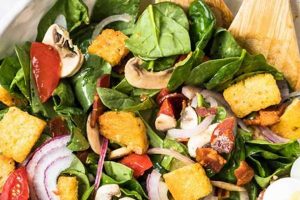
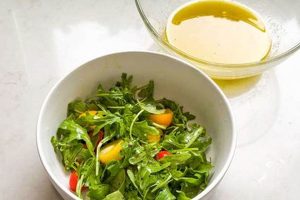
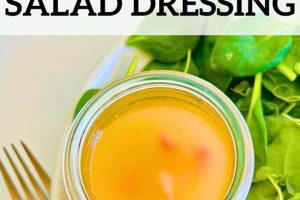
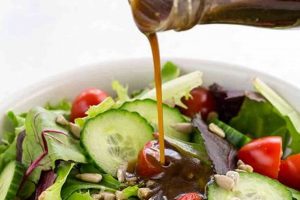
A classic emulsion of oil, vinegar, and Dijon mustard, this type of dressing forms a creamy, piquant sauce ideal for coating leafy greens, vegetables, or proteins. A simple version typically includes Dijon mustard, a neutral oil such as canola or grapeseed, vinegar (often red wine or white wine vinegar), salt, and pepper. More complex variations may incorporate honey, maple syrup, minced garlic, shallots, or fresh herbs like tarragon or chives.
The sharp bite of Dijon mustard balanced by the acidity of vinegar and the richness of oil creates a flavorful foundation that enhances the taste of various ingredients. Its versatility makes it suitable for a wide range of salads, from simple green salads to more composed salads featuring roasted vegetables, grilled meats, or cheeses. Its historical roots can be traced back to French cuisine, where mustard-based dressings have long been a staple.
The following sections will delve into specific ingredient ratios, techniques for achieving perfect emulsification, and creative variations to customize this versatile dressing. Guidance on selecting appropriate oils and vinegars for different flavor profiles will also be provided, along with suggestions for pairing the dressing with specific salad ingredients.
Tips for Crafting an Excellent Vinaigrette
Creating a well-balanced and flavorful vinaigrette requires attention to detail and an understanding of the interplay between ingredients. The following tips offer guidance on achieving optimal results.
Tip 1: Ingredient Quality Matters: The foundation of a superb vinaigrette lies in using high-quality ingredients. Opt for fresh, flavorful oils, vinegars, and mustards. Freshly ground pepper and high-quality salt also significantly impact the final taste.
Tip 2: Balance is Key: A successful vinaigrette hinges on the harmonious balance of acidity, sweetness, and richness. Adjust the ratio of vinegar to oil to suit individual preferences, starting with a classic 1:3 ratio (vinegar to oil) and adjusting from there.
Tip 3: Emulsification Techniques: Proper emulsification creates a creamy, stable dressing that clings to salad ingredients. Whisk the ingredients vigorously or use a blender or food processor for a smoother, more consistent texture.
Tip 4: Flavor Exploration: Experiment with different types of vinegar and mustard to discover unique flavor profiles. Red wine vinegar offers a robust tang, while white wine vinegar provides a lighter, brighter acidity. Exploring different mustards beyond Dijon, such as whole grain or stone-ground, can add complexity and depth.
Tip 5: Fresh Herbs and Aromatics: Incorporating fresh herbs like chives, parsley, or tarragon, or minced garlic and shallots, can elevate the vinaigrette’s aroma and flavor. Add these elements towards the end of the preparation to retain their freshness.
Tip 6: Seasoning and Adjustment: Taste the vinaigrette throughout the preparation process and adjust the seasoning as needed. Remember that the flavors will meld and intensify over time. A touch of honey or maple syrup can balance excessive acidity if needed.
Tip 7: Proper Storage: Store leftover vinaigrette in an airtight container in the refrigerator for up to a week. Shake well before serving as some separation may occur.
By understanding these fundamental principles, one can consistently create flavorful vinaigrettes that enhance any salad. Experimentation and attention to detail are crucial for achieving desired results.
The following section will explore specific recipe variations and offer pairing suggestions for various salad ingredients.
1. Dijon Mustard

Dijon mustard plays a crucial role in a Dijon vinaigrette, acting as the emulsifying agent and contributing significantly to the dressing’s characteristic flavor profile. Its smooth texture and tangy, slightly spicy taste derived from brown or black mustard seeds, white wine, and spices, form the backbone of the vinaigrette. Without Dijon mustard, the emulsion would not hold, and the dressing would lack the distinct depth of flavor. Consider, for example, a simple salad of mixed greens. Dressed with a basic oil and vinegar mixture, the salad might taste bland. However, the addition of Dijon mustard transforms the dressing, adding a layer of complexity that complements the greens and any other salad components.
The specific type of Dijon mustard used can further influence the final result. A coarse-ground Dijon mustard will impart a more robust, textured flavor, while a smooth Dijon will create a more refined, subtle taste. This distinction allows for customization based on the desired outcome. For instance, a heartier salad with roasted vegetables might benefit from a vinaigrette made with coarse-ground Dijon, while a delicate salad with fresh herbs might be better suited to a smooth Dijon vinaigrette. The quality of the Dijon mustard also impacts the final flavor; a higher-quality mustard typically offers a more nuanced and complex taste profile.
Understanding the importance of Dijon mustard in a Dijon vinaigrette allows for informed decision-making when selecting ingredients and crafting the dressing. Choosing the appropriate type of Dijon mustard and considering its impact on the overall flavor profile can elevate a simple salad to a culinary experience. While other emulsifying agents could theoretically be used, none replicate the unique flavor profile that Dijon mustard contributes. This understanding underscores the essential role of Dijon mustard within the broader context of vinaigrette preparation.
2. Oil

Oil forms the foundation of a Dijon vinaigrette, providing body, texture, and influencing the overall flavor profile. The choice of oil significantly impacts the final taste and mouthfeel of the dressing, making it a crucial ingredient to consider.
- Flavor Profile
Different oils possess distinct flavor characteristics that can complement or contrast with the other vinaigrette components. Extra virgin olive oil, for example, lends a robust, peppery flavor, while avocado oil offers a mild, buttery taste. Neutral oils like grapeseed or canola oil allow the other ingredients, such as the Dijon mustard and vinegar, to take center stage.
- Texture and Mouthfeel
Oil contributes to the vinaigrette’s texture and mouthfeel. A lighter oil like grapeseed oil creates a thinner, more delicate dressing, whereas a heavier oil like extra virgin olive oil results in a richer, more substantial vinaigrette. The desired texture depends on the specific salad and personal preference.
- Emulsification
Oil plays a critical role in the emulsification process, combining with the Dijon mustard and vinegar to create a stable, creamy dressing. The type of oil can influence the stability of the emulsion. Generally, oils with a higher proportion of monounsaturated fats, like olive oil, create more stable emulsions.
- Health Considerations
Different oils offer various health benefits. Olive oil, for example, is rich in monounsaturated fats and antioxidants, while flaxseed oil is a good source of omega-3 fatty acids. Incorporating these oils into a Dijon vinaigrette can contribute to a healthier diet.
The careful selection of oil is integral to crafting a successful Dijon vinaigrette. By considering the flavor profile, texture, emulsification properties, and health benefits of various oils, one can create a dressing that perfectly complements the salad and satisfies individual preferences. A poorly chosen oil can negatively impact the taste and texture of the entire dish, highlighting the importance of this key ingredient.
3. Vinegar
Vinegar provides the essential acidic counterpoint to the richness of the oil and the pungency of the mustard in a Dijon vinaigrette. Its role extends beyond mere sourness; it balances the flavors, brightens the palate, and contributes to the overall complexity of the dressing. The selection of vinegar significantly impacts the final character of the vinaigrette.
- Acidity Level and Type
Vinegars vary in acidity levels, which directly influences the vinaigrette’s sharpness. Common choices include red wine vinegar, white wine vinegar, apple cider vinegar, and balsamic vinegar. Red wine vinegar offers a robust, fruity acidity, while white wine vinegar provides a lighter, crisper tang. Apple cider vinegar introduces a subtly sweet and tart note, whereas balsamic vinegar contributes a deeper, more complex sweetness. The specific type of vinegar chosen should complement the other ingredients and the overall flavor profile desired.
- Flavor Profile
Beyond acidity, vinegars possess unique flavor profiles that can enhance the complexity of the vinaigrette. For instance, a champagne vinegar adds a delicate, effervescent note, while a sherry vinegar contributes a nutty, slightly oxidized character. These nuances allow for a wide range of flavor combinations and customization within the basic vinaigrette framework.
- Balancing Act
The correct balance of vinegar to oil is crucial for a successful vinaigrette. Too much vinegar can make the dressing overly sharp, while too little can result in a bland, oily mixture. A typical starting ratio is one part vinegar to three parts oil, but this can be adjusted to personal preference and the specific ingredients used. The balance between acidity and richness is key to a well-rounded dressing.
- Impact on Emulsification
Vinegar plays a crucial role in the emulsification process, helping to create a stable mixture with the oil and mustard. Its acidity helps to bind the ingredients together, preventing separation and ensuring a smooth, creamy texture. The type and strength of the vinegar can influence the stability of the emulsion, highlighting the importance of choosing the right vinegar for the desired result.
The considered selection of vinegar is paramount to crafting a well-balanced and flavorful Dijon vinaigrette. Its interplay with the other ingredients, its contribution to the overall balance, and its impact on the emulsion make it an essential element. By understanding the different types of vinegar and their respective characteristics, one can elevate a simple vinaigrette to a nuanced and complex culinary creation. The right vinegar can make the difference between a mediocre dressing and a truly exceptional one.
4. Seasoning

Seasoning is the critical final step in crafting a balanced and flavorful Dijon vinaigrette. It elevates the dressing beyond a simple mixture of ingredients, transforming it into a harmonious blend where each component complements the others. Proper seasoning enhances the inherent flavors of the Dijon mustard, oil, and vinegar, creating a cohesive and satisfying culinary experience. Without careful attention to seasoning, even the highest quality ingredients can fall flat, resulting in a lackluster dressing.
- Salt
Salt is fundamental to seasoning, enhancing the perception of sweetness and suppressing bitterness. In a Dijon vinaigrette, salt not only balances the acidity of the vinegar but also amplifies the complexity of the mustard and oil. The type of salt used can influence the final taste. Kosher salt, with its larger crystals, offers a clean, consistent salinity, while sea salt can impart subtle mineral notes. The amount of salt required depends on the other ingredients and personal preference, but it’s crucial to season gradually, tasting frequently to avoid over-salting.
- Pepper
Freshly ground black pepper adds a layer of aromatic complexity and subtle heat to the vinaigrette. Its sharp bite contrasts with the richness of the oil and the tang of the vinegar, creating a more dynamic flavor profile. Pre-ground pepper lacks the vibrancy and depth of freshly ground pepper, making a noticeable difference in the final result. The amount of pepper used can be adjusted to personal preference, but a light touch is typically sufficient to enhance the overall flavor without overpowering the other ingredients.
- Additional Flavor Enhancers
Beyond salt and pepper, other seasonings can further enhance the complexity of a Dijon vinaigrette. A pinch of sugar or a touch of honey can balance excessive acidity and add a subtle sweetness. Minced garlic or shallots contribute a pungent savory note, while a dash of cayenne pepper introduces a hint of heat. Herbs, such as fresh thyme, oregano, or chives, can add a fresh, aromatic dimension. These additional seasonings offer opportunities for customization and allow for the creation of unique flavor profiles tailored to specific salad ingredients.
- Tasting and Adjustment
The most crucial aspect of seasoning is the continuous tasting and adjustment throughout the preparation process. Flavors meld and develop over time, so it’s essential to taste the vinaigrette after each addition and adjust the seasoning accordingly. This iterative process ensures that the final dressing achieves a harmonious balance of flavors, where no single element dominates. The ultimate goal is to create a vinaigrette that complements the salad ingredients, enhancing their flavors rather than masking them.
Seasoning a Dijon vinaigrette is not merely a perfunctory step but rather a crucial element in achieving a well-balanced and flavorful dressing. The careful consideration of salt, pepper, and other flavor enhancers, combined with continuous tasting and adjustment, elevates the vinaigrette from a simple mixture to a complex and nuanced culinary creation. The interplay of these seasonings with the Dijon mustard, oil, and vinegar ultimately determines the success of the dressing and its ability to enhance the overall dining experience.
5. Emulsification
Emulsification is fundamental to the creation of a successful Dijon vinaigrette, transforming individual ingredients into a cohesive and creamy dressing. This process involves combining two immiscible liquidsin this case, oil and vinegarinto a stable mixture. Dijon mustard, with its unique properties, acts as the emulsifying agent, facilitating this critical transformation.
- The Role of Dijon Mustard
Dijon mustard contains natural emulsifiers, primarily lecithin, which have both hydrophilic (water-loving) and lipophilic (fat-loving) properties. These properties allow lecithin molecules to surround tiny droplets of oil, preventing them from coalescing and separating from the vinegar. This creates a stable emulsion where the oil is evenly dispersed throughout the vinegar, resulting in the creamy texture characteristic of a well-made vinaigrette.
- The Mechanics of Whisking
Whisking vigorously, or using a blender or food processor, provides the mechanical energy needed to break down the oil into smaller droplets. This increased surface area allows the emulsifying agents in the Dijon mustard to more effectively coat the oil droplets, promoting a stable emulsion. Without sufficient agitation, the oil and vinegar would quickly separate, resulting in a broken and oily dressing.
- Factors Affecting Stability
Several factors can influence the stability of a vinaigrette emulsion. The ratio of oil to vinegar, the type of oil used, and even the temperature can impact how well the emulsion holds. A higher proportion of oil to vinegar typically creates a more stable emulsion. Certain oils, such as extra virgin olive oil, are more readily emulsified due to their chemical composition. Temperature fluctuations can also destabilize an emulsion, leading to separation. Storing the vinaigrette at a consistent, cool temperature helps maintain its stability.
- Visual Cues of a Stable Emulsion
A stable emulsion exhibits a smooth, creamy texture and a uniform appearance, with the oil and vinegar thoroughly blended together. A properly emulsified Dijon vinaigrette will cling to salad ingredients, coating them evenly. Conversely, a broken emulsion will appear separated, with distinct layers of oil and vinegar visible. The dressing will be thin and watery, failing to coat the salad ingredients effectively.
The success of a Dijon vinaigrette hinges on the proper emulsification of its components. The interplay between the Dijon mustard, oil, and vinegar, facilitated by mechanical agitation and influenced by various factors, ultimately determines the texture, stability, and overall quality of the dressing. A thorough understanding of the emulsification process is essential for consistently creating a well-balanced and flavorful vinaigrette that enhances any salad.
6. Customization

Customization lies at the heart of a Dijon vinaigrette recipe, offering a remarkable degree of flexibility and allowing for the creation of dressings tailored to individual preferences and specific culinary applications. The inherent simplicity of the basic formulaDijon mustard, oil, and vinegarprovides a blank canvas for exploration and innovation. This adaptability makes the Dijon vinaigrette a versatile tool in the culinary repertoire, capable of complementing a wide array of flavors and textures.
The adaptability of a Dijon vinaigrette stems from the interchangeability of its core components and the potential for incorporating additional ingredients. Different types of oils, each with its unique flavor profile, can be employed to create distinct variations. For example, swapping extra virgin olive oil for walnut oil transforms the character of the vinaigrette, introducing nutty and earthy notes. Similarly, the choice of vinegar offers further customization options. Substituting red wine vinegar with champagne vinegar introduces a bright, effervescent quality. These seemingly simple substitutions can dramatically alter the final flavor profile, offering a spectrum of possibilities.
Beyond the core ingredients, the incorporation of additional flavor enhancers unlocks further potential for customization. Honey or maple syrup adds a touch of sweetness, balancing the acidity and creating a more nuanced flavor profile. Minced garlic or shallots introduce a savory depth, while fresh herbs like chives, tarragon, or parsley contribute a burst of freshness. Spices, such as a pinch of red pepper flakes or a dash of smoked paprika, add warmth and complexity. The possibilities are virtually limitless, allowing for the creation of vinaigrettes that perfectly complement specific salad ingredients or suit individual taste preferences.
The ability to customize a Dijon vinaigrette recipe offers significant practical advantages. It allows for the creation of dressings that enhance the flavors of specific salad components, creating harmonious and balanced flavor combinations. A vinaigrette intended for a robust salad with roasted vegetables might benefit from the addition of balsamic vinegar and minced garlic, while a lighter vinaigrette featuring fresh herbs and lemon juice might better complement a delicate salad with fresh greens and seafood. This adaptability makes the Dijon vinaigrette a valuable tool for home cooks and professional chefs alike, enabling them to create bespoke dressings tailored to specific culinary needs.
In conclusion, the capacity for customization is an integral aspect of the Dijon vinaigrette, transforming a simple formula into a versatile and adaptable culinary asset. The interplay of interchangeable core ingredients and the potential for incorporating a wide range of additional flavor enhancers provides endless opportunities for creativity and allows for the creation of dressings perfectly suited to individual tastes and specific culinary applications. This adaptability underscores the enduring appeal and practical significance of the Dijon vinaigrette in the culinary world.
Frequently Asked Questions
This section addresses common inquiries regarding the preparation and utilization of Dijon vinaigrette.
Question 1: What is the ideal ratio of oil to vinegar in a Dijon vinaigrette?
A classic ratio is three parts oil to one part vinegar. However, this can be adjusted based on personal preference and the specific types of oil and vinegar used. A milder vinegar might require a lower ratio, while a more robust vinegar could tolerate a higher proportion.
Question 2: Can other types of mustard be substituted for Dijon mustard?
While other mustards can be used, they will alter the flavor profile. Stone-ground or whole-grain mustard will introduce a more textured and pungent flavor, while yellow mustard will result in a milder, sweeter dressing. Dijon mustard’s specific flavor profile is integral to a classic Dijon vinaigrette.
Question 3: How can separation be prevented in a Dijon vinaigrette?
Thorough emulsification is key to preventing separation. Vigorous whisking or the use of a blender or food processor helps create a stable emulsion. Storing the vinaigrette in an airtight container at a consistent, cool temperature also helps maintain its stability.
Question 4: How long can Dijon vinaigrette be stored?
Properly stored in an airtight container in the refrigerator, Dijon vinaigrette can typically last for up to one week. However, the freshness of the ingredients used will influence its shelf life. Always check for any signs of spoilage before consuming.
Question 5: What types of salads are best suited for Dijon vinaigrette?
Dijon vinaigrette’s versatility makes it suitable for a wide variety of salads. It pairs well with leafy greens, roasted vegetables, grilled meats, and even heartier salads incorporating grains or legumes.
Question 6: Can Dijon vinaigrette be used for marinades?
Yes, Dijon vinaigrette’s robust flavor profile makes it an excellent base for marinades, particularly for chicken, fish, or pork. The acidity in the vinegar helps tenderize the meat, while the mustard and other flavor components contribute depth and complexity.
Understanding these fundamental aspects of Dijon vinaigrette preparation and storage ensures optimal results. Experimentation and adaptation based on individual preferences are encouraged.
The following section will provide a selection of recipe variations showcasing the versatility of Dijon vinaigrette.
Conclusion
Exploration of the components and techniques involved in crafting a Dijon vinaigrette reveals the interplay of seemingly simple ingredients to create a complex and versatile dressing. Emphasis on ingredient quality, proper emulsification, and balanced seasoning underscores the importance of attention to detail in achieving optimal flavor and texture. Customization through variations in oil, vinegar, and additional flavor enhancers highlights the adaptability of this classic dressing.
Mastery of the Dijon vinaigrette provides a foundational skill applicable to a wide range of culinary endeavors. The ability to create and adapt this fundamental dressing empowers culinary exploration and enhances the enjoyment of a variety of dishes. Further experimentation and refinement of technique promise continued culinary discovery and satisfaction.