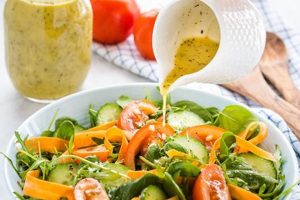
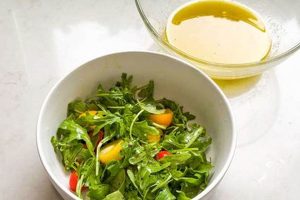
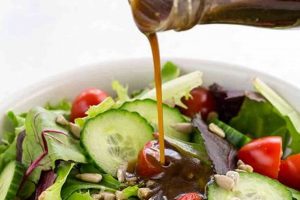
A simple vinaigrette for spinach often involves just a few pantry staples: oil, vinegar, and seasonings. For example, a classic combination might include olive oil, balsamic vinegar, Dijon mustard, garlic, salt, and pepper. The simplicity of these ingredients makes creating a flavorful dressing quick and convenient.
Convenient and flavorful dressings enhance the enjoyment of fresh spinach, encouraging consumption of this nutrient-rich leafy green. A well-balanced dressing complements spinach’s mild flavor without overpowering it, while also adding healthy fats and contributing to a satisfying meal. Historically, simple vinaigrettes have been a cornerstone of culinary traditions in various cultures, highlighting the enduring appeal of fresh, unprocessed ingredients.
This article will further explore various simple dressing options for spinach salads, considering different flavor profiles, dietary restrictions, and creative ingredient combinations to elevate a basic salad to a culinary delight. Specific recipes, nutritional information, and tips for preparation will be provided.
Tips for Simple Spinach Salad Dressings
Creating a flavorful yet uncomplicated dressing for spinach salads involves understanding a few key principles. The following tips offer guidance on achieving optimal results.
Tip 1: Balance Flavor Profiles: Strive for a balance between acidity, sweetness, and savory notes. A dressing that is too acidic can be harsh, while excessive sweetness can mask the spinach’s delicate flavor. Savory elements, such as garlic, onion, or herbs, provide depth and complexity.
Tip 2: Emulsify Properly: A proper emulsion prevents the dressing from separating. Whisk the oil and vinegar vigorously or use a blender to create a stable, creamy texture.
Tip 3: Consider the Spinach: Baby spinach has a milder flavor than mature spinach. Adjust the intensity of the dressing accordingly.
Tip 4: Seasoning is Key: Salt and freshly ground black pepper are essential for enhancing the overall flavor. Experiment with other seasonings like dried herbs, spices, or a pinch of red pepper flakes.
Tip 5: Use High-Quality Ingredients: The quality of the ingredients directly impacts the final taste. Opt for extra virgin olive oil, high-quality vinegar, and fresh herbs whenever possible.
Tip 6: Taste and Adjust: Before tossing the dressing with the spinach, taste and adjust the seasonings as needed. This allows for fine-tuning the flavor to achieve the desired balance.
Tip 7: Dress Just Before Serving: To prevent the spinach from wilting, add the dressing immediately before serving.
By following these tips, one can consistently create delicious and effortless dressings that complement the natural flavors of spinach, resulting in a satisfying and nutritious salad.
This exploration of simple dressings provides a foundation for creating flavorful spinach salads. The following section will conclude with suggestions for further experimentation and recipe variations.
1. Fresh Ingredients

Fresh ingredients are fundamental to a high-quality, easy spinach salad dressing. The vibrancy and complexity of flavors achievable with fresh components are difficult to replicate with processed substitutes. Freshly squeezed lemon juice, for example, offers a brightness and nuanced acidity that bottled lemon juice often lacks. Similarly, freshly minced garlic provides a pungent, aromatic note that powdered garlic cannot match. The use of fresh herbs, such as dill, mint, or chives, introduces another layer of flavor and textural complexity, elevating the overall sensory experience.
The impact of ingredient freshness extends beyond flavor. Fresh produce typically contains higher levels of vitamins and nutrients, contributing to the nutritional value of the salad. Furthermore, the emphasis on fresh ingredients often translates to a cleaner flavor profile, allowing the natural taste of the spinach to shine through. This is particularly important for easy dressings where the goal is to enhance, not mask, the spinach’s delicate flavor. Consider a simple vinaigrette made with fresh extra virgin olive oil, ripe tomatoes, and fragrant basil. The combination of these fresh ingredients creates a vibrant, flavorful dressing that complements the spinach perfectly. Conversely, using stale herbs or low-quality oil can negatively impact the dressing’s flavor, undermining its intended purpose.
Prioritizing fresh ingredients represents a commitment to quality and flavor. While some compromises might be necessary for convenience, understanding the crucial role of fresh components in creating a truly delicious and easy spinach salad dressing empowers informed choices. This knowledge allows for strategic substitutions when fresh ingredients are unavailable while maintaining an appreciation for their significant contribution to the overall culinary experience.
2. Balanced Flavors
Balance is crucial in crafting a successful easy spinach salad dressing. The inherent mildness of spinach necessitates a dressing that complements, not overwhelms. A harmonious blend of sweet, sour, salty, and potentially bitter or umami notes elevates the overall flavor profile. An overly acidic dressing can render the salad unpleasant, while excessive sweetness can mask the spinach’s delicate taste. The interplay of these flavor components is paramount. Consider a raspberry vinaigrette: the sweetness of the berries balances the tartness of the vinegar, preventing an overly acidic dressing. Adding a pinch of salt further enhances the flavors, creating a well-rounded profile that complements the spinach.
Achieving balanced flavors does not require complex procedures or a multitude of ingredients. Simplicity, a defining characteristic of easy dressings, can be maintained while still delivering a complex flavor profile. A lemon-tahini dressing, for example, balances the acidity of lemon with the nutty richness of tahini. A touch of garlic and a pinch of salt complete the dressing, demonstrating that a few well-chosen ingredients can deliver a surprisingly sophisticated flavor. The balance achieved in these simple dressings ensures the spinach remains the star, enhancing its natural flavors rather than obscuring them.
Understanding the importance of balanced flavors empowers culinary creativity and ensures the creation of consistently delicious and easy spinach salad dressings. It provides a framework for experimentation with different flavor combinations and ingredient substitutions, enabling one to tailor dressings to individual preferences and dietary needs. This knowledge translates to a more satisfying culinary experience, where even the simplest of salads becomes a source of genuine enjoyment. By focusing on balance, one ensures that every element contributes to the final flavor profile, creating a harmonious and delightful salad dressing.
3. Simple Techniques
Efficiency in the kitchen often hinges on streamlined processes, particularly when aiming for effortless meal preparation. Simple techniques are therefore central to the concept of an easy spinach salad recipe dressing. Minimizing complexity, these techniques ensure that creating a flavorful dressing remains accessible and time-efficient, aligning with the overarching goal of convenience.
- Whisking:
Whisking represents a fundamental technique in dressing preparation. Vigorous whisking emulsifies oil and vinegar, creating a cohesive dressing rather than a separated mixture. This simple action is crucial for achieving a desirable texture and ensuring the even distribution of flavors across the salad. The ease and accessibility of whisking contribute significantly to the simplicity of the overall dressing preparation.
- Shaking:
Shaking offers an alternative to whisking, especially suitable for smaller quantities or when a whisk is unavailable. Combining dressing ingredients in a sealed jar and shaking vigorously achieves a similar emulsifying effect. This technique simplifies the process further, reducing the need for additional utensils and minimizing cleanup.
- Mincing and Chopping:
Basic knife skills, such as mincing garlic or chopping fresh herbs, play a role in enhancing the flavor complexity of simple dressings. While these actions require minimal effort, they significantly contribute to the overall sensory experience. Finely minced garlic distributes its pungent flavor evenly, while chopped fresh herbs add brightness and textural interest.
- Measuring:
Accurate measurement of ingredients ensures consistent flavor profiles and prevents imbalances. While precise measurements are not always essential for simple dressings, a general understanding of ingredient ratios contributes to a balanced and palatable outcome. This basic technique helps maintain control over the final product, avoiding overly acidic or excessively sweet dressings.
These simple techniques demonstrate that creating a delicious and easy spinach salad dressing need not involve complex procedures. The emphasis on efficiency and accessibility underscores the convenience factor, making these dressings an appealing option for quick and healthy meal preparation. By mastering these fundamental techniques, one can consistently produce flavorful dressings with minimal effort, transforming a simple salad into a satisfying culinary experience.
4. Versatile Options
Versatility is a key attribute of easy spinach salad recipe dressings, reflecting adaptability to various dietary needs and preferences. This adaptability stems from the inherent simplicity of these dressings, allowing for modifications and substitutions without compromising ease of preparation. The ability to cater to diverse palates and dietary restrictions enhances the practicality and appeal of these dressings, ensuring their relevance in a wide range of culinary contexts. For example, a basic vinaigrette can easily be adapted to be vegan by substituting honey with maple syrup or agave nectar. Similarly, allergies can be accommodated by switching to alternative oils or omitting specific ingredients. This inherent flexibility ensures that individuals with dietary limitations can still enjoy a flavorful and convenient spinach salad.
The practical significance of versatile options becomes particularly evident when considering different flavor profiles. A simple lemon vinaigrette can be transformed into a creamy dressing by adding a dollop of Greek yogurt or a spoonful of tahini. Herbs and spices offer further avenues for customization, allowing for the creation of dressings ranging from bright and herbaceous to warm and subtly spiced. This capacity for flavor adaptation ensures that easy spinach salad dressings remain interesting and appealing, preventing palate fatigue and encouraging regular consumption of this nutrient-rich leafy green. Moreover, the ability to incorporate seasonal ingredients allows for year-round enjoyment, utilizing readily available produce to create fresh and flavorful dressings tailored to the time of year. A summer dressing might feature ripe tomatoes and basil, while a winter version could incorporate roasted butternut squash and pecans.
In summary, versatility in easy spinach salad recipe dressings extends beyond mere adaptability. It represents a core principle that enhances their practical value and broadens their appeal. This adaptability empowers individuals to tailor dressings to individual needs and preferences, ensuring accessibility and enjoyment across diverse dietary landscapes. The ability to effortlessly create a range of flavor profiles using simple techniques and readily available ingredients solidifies the role of these dressings as a convenient and healthful culinary staple. By embracing versatility, one unlocks the full potential of easy spinach salad dressings, transforming a basic salad into a personalized and satisfying culinary experience.
5. Quick Preparation

The defining characteristic of an easy spinach salad recipe dressing is its speed of preparation. Time efficiency is paramount, making these dressings a practical choice for busy individuals seeking healthy and flavorful meals without extensive culinary effort. Quick preparation hinges on simplified techniques and readily available ingredients, ensuring that a delicious dressing can be created in minutes.
- Minimized Processing:
Easy dressings often rely on minimal processing of ingredients. Instead of elaborate chopping or pureeing, ingredients might be coarsely chopped or left whole. This minimizes preparation time and preserves the natural flavors of the components. For instance, a simple lemon vinaigrette requires only juicing a lemon and whisking it with oil and seasonings, eliminating the need for complex processing steps.
- Pantry Staples:
Reliance on common pantry staples contributes significantly to the speed of preparation. Ingredients like olive oil, vinegar, mustard, and common spices are readily available in most kitchens, eliminating the need for specialized ingredients or trips to the grocery store. This readily available nature of the ingredients streamlines the process, enabling quick assembly of a flavorful dressing.
- Streamlined Techniques:
Simple techniques such as whisking, shaking, or minimal chopping are central to quick preparation. These techniques minimize the need for specialized equipment or complex procedures, ensuring that anyone can create a delicious dressing quickly and efficiently. A classic balsamic vinaigrette, for example, requires only whisking together oil, vinegar, and a touch of Dijon mustard, demonstrating the efficiency of streamlined techniques.
- Adaptable Recipes:
Adaptable recipes further enhance the speed of preparation. The ability to substitute ingredients or adjust quantities based on available resources or personal preferences streamlines the process. For instance, a simple vinaigrette can be adapted to incorporate different types of vinegar or oil based on what is readily available, ensuring that a flavorful dressing can be created quickly regardless of specific ingredient availability.
The emphasis on quick preparation reinforces the convenience and practicality of easy spinach salad recipe dressings. By minimizing processing, utilizing pantry staples, employing streamlined techniques, and offering adaptable recipes, these dressings become an accessible and appealing option for individuals seeking nutritious and flavorful meals without sacrificing valuable time. The efficiency of preparation ensures that incorporating fresh spinach into one’s diet remains a simple and sustainable practice.
6. Healthy Fats
The inclusion of healthy fats is an integral aspect of creating a nutritious and flavorful easy spinach salad recipe dressing. These fats, primarily unsaturated fats, contribute significantly to both the sensory experience and the nutritional value of the salad. They provide a richness and mouthfeel that enhances the overall palatability of the dressing while also delivering essential fatty acids crucial for various bodily functions. Moreover, healthy fats facilitate the absorption of fat-soluble vitamins present in the spinach and other salad components, maximizing the nutritional benefits of the meal. Olive oil, a staple in many easy dressings, exemplifies this connection, providing monounsaturated fats linked to cardiovascular health and improved cholesterol levels. Avocado oil, another popular choice, offers similar benefits with a slightly different flavor profile. Nut oils, such as walnut or almond oil, contribute polyunsaturated fats, including omega-3 fatty acids known for their anti-inflammatory properties. The selection of healthy fats in a dressing directly influences its nutritional contribution.
The practical implications of incorporating healthy fats into easy spinach salad recipe dressings are substantial. Beyond their flavor-enhancing properties, these fats contribute to satiety, promoting a feeling of fullness and satisfaction after a meal. This aspect is particularly relevant for individuals seeking to manage weight or maintain healthy eating habits. Furthermore, the inclusion of healthy fats aligns with dietary guidelines that emphasize the importance of these fats in a balanced diet. For example, a dressing made with flaxseed oil provides a significant source of alpha-linolenic acid (ALA), an essential omega-3 fatty acid that the body cannot produce on its own. Incorporating such ingredients into easy dressings offers a convenient way to increase intake of beneficial fats without requiring complex culinary preparations. The conscious choice of healthy fats, therefore, elevates a simple spinach salad from a basic side dish to a nutritionally valuable component of a balanced meal.
In conclusion, the incorporation of healthy fats into easy spinach salad recipe dressings represents a confluence of flavor, nutrition, and convenience. These fats play a crucial role in enhancing the palatability of the dressing, contributing essential fatty acids, and facilitating nutrient absorption. Their inclusion aligns with dietary guidelines and promotes satiety, supporting healthy eating habits. Understanding the role and benefits of healthy fats empowers informed choices in dressing selection and preparation, ultimately contributing to a more nutritious and satisfying culinary experience. The challenge lies in selecting high-quality oils and incorporating them in balanced proportions to maximize their benefits without compromising the overall flavor profile of the salad.
7. Minimal Cleanup

Minimal cleanup is a significant factor contributing to the appeal of easy spinach salad recipe dressings. The convenience of these dressings extends beyond rapid preparation; it encompasses the entire process, from ingredient assembly to post-meal dishwashing. A simple dressing, by definition, minimizes the number of ingredients and utensils required, inherently reducing cleanup. This efficiency is particularly appealing for weeknight meals or situations where time constraints are a factor. For instance, a classic vinaigrette requires only a bowl and whisk, eliminating the need for blenders or food processors that often necessitate more extensive cleaning. Furthermore, dressings made directly in the serving bowl eliminate an extra dish, further streamlining the post-meal cleanup process. This consideration aligns with the overarching goal of simplicity and ease associated with these dressings. A streamlined cleanup process reduces the overall effort associated with meal preparation, making healthy eating a more sustainable and appealing lifestyle choice.
The practical implications of minimal cleanup extend beyond mere convenience. Reduced dishwashing translates to water conservation, aligning with environmentally conscious practices. Fewer utensils also mean less time spent scrubbing and more time available for other activities. This aspect is particularly relevant for individuals with busy schedules or those seeking to maximize efficiency in their daily routines. Furthermore, minimizing cleanup contributes to a more enjoyable cooking experience. The prospect of a mountain of dirty dishes can often deter individuals from preparing home-cooked meals. Easy dressings, by their nature, alleviate this concern, encouraging more frequent preparation of fresh, healthy meals at home. For example, a simple lemon-tahini dressing requires only a small bowl and whisk, significantly reducing cleanup compared to more complex dressings involving multiple ingredients and appliances.
In conclusion, minimal cleanup represents a key component of the “easy” aspect of spinach salad recipe dressings. It streamlines the entire meal preparation process, from start to finish, enhancing convenience and encouraging healthier eating habits. By minimizing the number of dishes and utensils required, these dressings reduce cleanup time, conserve water, and contribute to a more enjoyable cooking experience. This understanding reinforces the value of simple dressings as a practical and sustainable component of a healthy lifestyle. The challenge lies in balancing the desire for minimal cleanup with the potential for more complex flavor profiles achievable with additional ingredients or specialized equipment. However, with careful planning and prioritization, one can achieve both culinary satisfaction and effortless cleanup, making healthy eating a truly convenient and enjoyable experience.
Frequently Asked Questions
This section addresses common inquiries regarding simple spinach salad dressings, offering concise and informative responses to clarify potential uncertainties and provide practical guidance.
Question 1: How can one prevent homemade vinaigrette from separating?
Vigorous whisking while slowly drizzling the oil into the vinegar helps create a stable emulsion. Alternatively, using a blender or food processor ensures thorough emulsification. Adding a small amount of Dijon mustard also acts as an emulsifier, helping bind the ingredients together.
Question 2: What are suitable substitutes for olive oil in spinach salad dressings?
Avocado oil offers a neutral flavor and high smoke point, making it a suitable substitute. Other options include grapeseed oil, walnut oil, or flaxseed oil, each imparting a unique flavor profile. The choice depends on individual preferences and the desired flavor outcome.
Question 3: Can simple dressings be made ahead of time?
While some dressings can be prepared in advance, it’s generally recommended to dress spinach salads immediately before serving to prevent wilting. Dressings can be stored separately and added just before consumption.
Question 4: How can one adapt dressings for individuals with dietary restrictions?
Substitutions offer flexibility for various dietary needs. Maple syrup or agave nectar can replace honey for vegan options. Specific allergens, such as nuts or dairy, can be omitted or substituted with alternatives like sunflower seed butter or coconut yogurt.
Question 5: What are some strategies for enhancing the flavor of simple dressings?
Fresh herbs, spices, and aromatics elevate flavor profiles. Consider incorporating minced garlic, grated ginger, chopped chives, or a pinch of red pepper flakes. Freshly ground black pepper and high-quality sea salt are essential for enhancing overall taste.
Question 6: How does one determine the right balance of flavors in a dressing?
Start with a basic vinaigrette recipe and adjust according to personal preference. Taste and adjust seasonings gradually, ensuring a balance of sweet, sour, and savory notes. Avoid overpowering the delicate flavor of the spinach.
Understanding these frequently asked questions empowers informed decision-making in crafting delicious and convenient spinach salad dressings. The subsequent section will explore specific recipe examples, illustrating these principles in practical applications.
The following recipes provide tangible examples of how to create simple, yet flavorful spinach salad dressings. Each recipe highlights different flavor profiles and techniques discussed throughout this article.
Easy Spinach Salad Recipe Dressing
Exploration of easy spinach salad recipe dressing reveals the confluence of simplicity, flavor, and nutrition. Emphasis on fresh, high-quality ingredients, balanced flavor profiles, and efficient techniques underscores the accessibility and appeal of these dressings. Versatility in adapting recipes to individual dietary needs and preferences expands their practical application. Quick preparation and minimal cleanup further enhance convenience, promoting sustainable healthy eating habits. Incorporation of healthy fats elevates nutritional value, contributing to overall well-being. Understanding these core principles empowers informed choices in dressing selection and creation.
Culinary exploration continually evolves. Continued experimentation with diverse ingredients, flavor combinations, and techniques will undoubtedly yield further innovation within the realm of simple spinach salad recipe dressings. This ongoing evolution promises an expanding repertoire of flavorful, convenient, and healthful options, enriching culinary experiences and promoting the consumption of nutrient-rich foods.