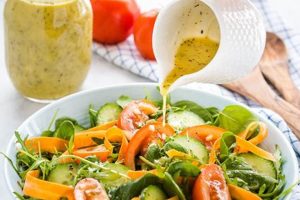
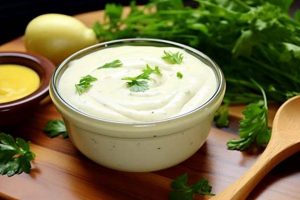
A warm bacon vinaigrette enhances fresh spinach, creating a flavorful contrast between the crisp greens and savory dressing. This type of dressing typically involves rendering bacon fat and combining it with vinegar, often apple cider or red wine, along with seasonings like Dijon mustard, garlic, and sweeteners such as honey or maple syrup. Variations can include additions like shallots, crumbled bacon bits, or red pepper flakes for extra flavor and texture.
The appeal lies in the balanced combination of sweet, savory, tangy, and smoky flavors. The rendered bacon fat adds a richness and depth not found in traditional vinaigrettes, while the acidic vinegar cuts through the fat, preventing the dressing from becoming overly heavy. This balance makes it a versatile option, suitable for not only spinach salads but also other greens like kale or romaine, as well as roasted vegetables or grain bowls. Historically, the use of bacon fat in cooking has been a way to utilize every part of the pig and avoid waste, making this dressing a practical and flavorful choice.
This article will delve further into specific variations of this dressing, exploring different ingredients and techniques for achieving optimal flavor and texture. It will also offer suggestions for complementary salad ingredients and provide guidance on storage and serving.
Tips for a Superior Spinach and Bacon Salad Dressing
Achieving a well-balanced and flavorful dressing requires attention to detail. These tips offer guidance for optimal results.
Tip 1: High-Quality Bacon Makes a Difference: Thick-cut, smoked bacon yields the best flavor and texture. Avoid pre-cooked or overly processed varieties.
Tip 2: Render Bacon Fat Slowly: Low and slow cooking renders the fat evenly, preventing burning and maximizing flavor extraction.
Tip 3: Balance Acidity Carefully: The vinegar should complement the richness of the bacon fat without overpowering it. Taste and adjust accordingly.
Tip 4: Emulsify Thoroughly: Proper emulsification creates a creamy, cohesive dressing that clings to the spinach leaves. A whisk or immersion blender facilitates this process.
Tip 5: Seasoning is Key: Freshly ground black pepper, minced garlic, and a touch of Dijon mustard enhance the overall flavor profile.
Tip 6: Sweetness in Moderation: A small amount of honey or maple syrup balances the savory and acidic elements, but avoid excessive sweetness.
Tip 7: Incorporate Bacon Bits: Crispy bacon bits add a delightful textural element to the finished salad.
By following these tips, one can create a dressing that elevates a simple spinach salad to a culinary delight. The balance of flavors and textures ensures a satisfying and memorable dining experience.
These techniques lay the groundwork for creating a variety of delicious spinach salads tailored to individual preferences.
1. Bacon Quality

Bacon quality significantly impacts the overall flavor profile of a spinach and bacon salad dressing. The nuances of the bacon’s smokiness, saltiness, and fat content directly translate into the final dressing’s character. Understanding the various factors that contribute to bacon quality allows for informed decisions that elevate the sensory experience.
- Thickness of Cut
Thick-cut bacon offers a substantial meaty flavor and texture, contributing more effectively to the dressing’s savoriness. Thinner cuts tend to render more quickly and can become crispy, which, while desirable for some applications, may not be ideal for a smooth, emulsified dressing. Thick-cut bacon provides a more robust flavor base.
- Smoking Process
The type of wood used in the smoking process imparts distinct flavor characteristics to the bacon. Hickory smoking provides a traditional, robust smoky flavor, while applewood offers a milder, sweeter smoke. The chosen smoking method directly influences the complexity of the final dressing. Experimenting with different smoked bacons can lead to unique flavor profiles.
- Curing Method
Dry-cured bacon typically possesses a more concentrated flavor and firmer texture compared to wet-cured bacon. The curing process affects the bacon’s salt content and moisture level, influencing how it renders and contributes to the dressing’s overall balance. Dry-curing often results in a more intense, complex flavor.
- Fat-to-Meat Ratio
The proportion of fat to lean meat in the bacon impacts the richness and texture of the dressing. Bacon with a higher fat content contributes more rendered fat, leading to a creamier, more luxurious dressing. Understanding this ratio allows for adjustments to other ingredients to maintain balance.
Careful consideration of these elements allows for the creation of a spinach and bacon salad dressing tailored to specific preferences. Selecting high-quality bacon with desirable characteristics sets the foundation for a truly exceptional culinary experience. The interplay between these factors contributes to a more nuanced and satisfying dressing.
2. Fat Rendering

Fat rendering is crucial in creating a flavorful and texturally appealing spinach and bacon salad dressing. The process of slowly extracting fat from bacon forms the foundation of the dressing’s richness and depth. The rendered bacon fat carries the smoky, savory flavors that define this classic dressing. Understanding the nuances of fat rendering allows for optimal flavor extraction and control over the final product.
- Temperature Control
Maintaining a low and consistent temperature during rendering prevents burning and ensures even fat extraction. High heat can scorch the bacon, imparting bitter flavors to the rendered fat. Gentle heat allows the fat to melt gradually, maximizing flavor development and producing a cleaner, more palatable end product. This control over temperature is essential for a balanced dressing.
- Cooking Method
Several methods exist for rendering bacon fat, each offering distinct advantages. Pan-frying, oven-baking, and slow cooking methods each influence the final product’s flavor profile and texture. Pan-frying provides more direct heat, allowing for quicker rendering, while oven-baking offers a more hands-off approach with even heat distribution. Slow cooking extracts the maximum amount of fat, resulting in a richer flavor profile.
- Clarification and Storage
Once rendered, the bacon fat can be further clarified by straining it through a fine-mesh sieve or cheesecloth. This removes any remaining bacon particles, resulting in a cleaner and more stable fat suitable for storage. Properly stored, rendered bacon fat can last for several months in the refrigerator. Clarification enhances the dressing’s visual appeal and prevents rancidity.
- Flavor Infusion
During the rendering process, aromatic ingredients like garlic, onions, or herbs can be added to the bacon to infuse the fat with additional flavors. This creates a more complex and layered flavor profile in the final dressing. The infused fat contributes a depth of flavor beyond the bacon itself, enhancing the overall sensory experience.
The quality of rendered bacon fat directly influences the overall quality of the spinach and bacon salad dressing. Careful attention to temperature control, cooking method, clarification, and potential flavor infusions contributes significantly to the dressing’s final flavor and texture. Mastering fat rendering elevates a simple spinach salad into a culinary experience.
3. Vinegar Acidity
Vinegar acidity plays a pivotal role in a spinach and bacon salad dressing recipe, providing a necessary counterpoint to the richness of the rendered bacon fat. The acidity not only balances the fattiness but also brightens the overall flavor profile, adding a refreshing tang that enhances the other ingredients. This balance is crucial for preventing the dressing from becoming overly heavy or cloying. The specific type of vinegar chosen influences the final flavor profile. For example, apple cider vinegar offers a mild, fruity acidity that complements the smokiness of the bacon, while red wine vinegar provides a sharper, more robust tang. The level of acidity, indicated by the percentage of acetic acid in the vinegar, also affects the dressing’s overall balance. A higher acidity level requires careful balancing with other ingredients, particularly sweeteners, to achieve a harmonious flavor profile.
The chemical interaction between the vinegar’s acidity and the fat molecules in the dressing creates an emulsion, contributing to the dressing’s texture and stability. The vinegar helps to disperse the fat droplets throughout the dressing, preventing separation and creating a creamy consistency. This emulsification is further enhanced by the addition of emulsifying agents like Dijon mustard, which contains lecithin, a natural emulsifier. Achieving a stable emulsion is critical for a visually appealing and palatable dressing. Furthermore, the acidity of the vinegar can subtly tenderize the spinach leaves, enhancing their texture and making them more palatable. The interaction between the acidic dressing and the spinach occurs over time, so it’s beneficial to dress the salad shortly before serving. Consider a dressing featuring apple cider vinegar and a touch of maple syrup paired with rendered bacon fat and crispy bacon bits. The apple cider vinegars mild acidity balances the sweetness of the maple syrup and the smokiness of the bacon, creating a complex and harmonious flavor profile.
Understanding the influence of vinegar acidity is crucial for creating a well-balanced and flavorful spinach and bacon salad dressing. Careful selection of the vinegar type and attention to its acidity level allow for precise control over the final flavor profile, ensuring a harmonious balance between richness, brightness, and tang. The practical application of this knowledge allows for greater creativity and control in the kitchen, enabling the creation of dressings tailored to specific preferences and ingredient combinations. Selecting the appropriate vinegar and balancing its acidity with other components contributes significantly to the overall success of the recipe.
4. Emulsification Technique

Emulsification is essential for creating a harmonious spinach and bacon salad dressing. It unites the disparate elements fat, vinegar, and seasonings into a stable, cohesive mixture. Without proper emulsification, the dressing separates, resulting in an oily layer on top and a watery layer below, compromising both flavor and texture. A successfully emulsified dressing exhibits a creamy consistency that clings evenly to the spinach leaves, ensuring each bite delivers a balanced blend of flavors. The emulsification process involves dispersing tiny droplets of one liquid (the dispersed phase, in this case, the fat) within another liquid (the continuous phase, typically the vinegar) that would not normally mix. This requires energy input, typically through whisking or blending. The energy disrupts the surface tension between the two liquids, allowing the fat to break down into smaller droplets and disperse evenly throughout the vinegar. The addition of an emulsifying agent, such as Dijon mustard (which contains lecithin), further stabilizes the emulsion. Emulsifying agents contain molecules with both hydrophilic (water-attracting) and lipophilic (fat-attracting) ends. These molecules position themselves at the interface between the oil and vinegar droplets, creating a barrier that prevents the droplets from coalescing and separating.
Consider the difference between simply shaking a mixture of oil and vinegar and whisking it vigorously. Shaking provides minimal energy input, resulting in large, unstable fat droplets that quickly separate. Whisking, however, provides the necessary energy to break down the fat into smaller droplets and create a more stable, albeit temporary, emulsion. The addition of Dijon mustard to the whisked mixture further stabilizes the emulsion, ensuring a long-lasting, creamy dressing. Another example lies in the use of an immersion blender, which provides significantly more energy than whisking. This results in an extremely fine emulsion, creating a luxuriously smooth and stable dressing. The choice of technique depends on the desired texture and the availability of equipment.
A stable emulsion is crucial for the overall quality and sensory experience of a spinach and bacon salad dressing. Understanding the principles of emulsification and employing appropriate techniques, whether through vigorous whisking, the incorporation of emulsifying agents, or the use of an immersion blender, ensures a harmonious blend of flavors and a pleasing texture. Failure to achieve proper emulsification results in a separated, unbalanced dressing that detracts from the overall enjoyment of the dish. Mastering emulsification techniques empowers culinary control over the final product, elevating the simple combination of spinach, bacon, and dressing into a cohesive and satisfying culinary creation.
5. Seasoning Balance

Seasoning balance is paramount in a successful spinach and bacon salad dressing recipe. It elevates the inherent flavors of the core ingredientsspinach, bacon, and fatwithout masking their individual contributions. This balance involves a nuanced interplay of salt, sweetness, acidity, and aromatics, each element playing a critical role in the overall sensory experience. The saltiness of the bacon, often amplified by the curing process, requires careful moderation. Additional salt may be necessary, but over-salting can easily overwhelm the other flavors. Sweetness, often introduced through a touch of honey, maple syrup, or sugar, tempers the saltiness and acidity, adding depth and complexity. Acidity, derived from the vinegar, cuts through the richness of the bacon fat, providing a refreshing counterpoint. Aromatics, such as garlic, onion, or pepper, contribute further complexity, enhancing the overall flavor profile. The interplay of these elements creates a symphony of flavors that harmonize rather than compete.
Consider a dressing where the sweetness of maple syrup offsets the smoky saltiness of the bacon, while the acidity of apple cider vinegar provides a refreshing tang. A touch of black pepper adds a subtle warmth, further enhancing the complexity. This harmonious balance ensures that no single flavor dominates, allowing the individual components to shine while contributing to a unified whole. Conversely, an overly sweet dressing masks the savory nuances of the bacon, while excessive acidity can make the dressing unpleasantly sharp. A lack of seasoning results in a flat, uninteresting dressing that fails to complement the spinach. The specific balance of seasonings can also be adjusted to complement different bacon varieties. For instance, a dressing for hickory-smoked bacon might emphasize the smoky notes with a touch of smoked paprika, while a dressing for applewood-smoked bacon could highlight the sweeter notes with a hint of cinnamon. Adapting the seasoning profile to the specific bacon used ensures a harmonious pairing.
Understanding the delicate balance of seasonings is crucial for creating a spinach and bacon salad dressing that truly elevates the dish. It transforms a simple combination of ingredients into a cohesive and flavorful experience, showcasing the synergy between seemingly disparate elements. Achieving this balance requires careful consideration of the individual components and their interactions, ensuring that each contributes to the overall harmony of flavors. The practical application of these principles empowers culinary creativity and control, allowing for the development of dressings tailored to specific preferences and ingredient combinations. This nuanced understanding of seasoning balance is essential for achieving culinary excellence.
Frequently Asked Questions
This section addresses common inquiries regarding the preparation and utilization of spinach and bacon salad dressings.
Question 1: Can the dressing be prepared in advance?
Yes, the dressing can be prepared up to three days in advance and stored in an airtight container in the refrigerator. Allow the dressing to come to room temperature before serving to enhance the flavors and facilitate emulsification.
Question 2: What type of spinach is best suited for this dressing?
Baby spinach is often preferred for its tender texture and mild flavor, which complements the richness of the dressing. However, mature spinach can also be used, particularly if the leaves are young and fresh. Remove thick stems and thoroughly wash the spinach before using.
Question 3: How can one prevent the spinach from wilting when dressed?
Dress the spinach immediately before serving to minimize wilting. Thoroughly drying the spinach leaves after washing also helps prevent excess moisture from diluting the dressing and contributing to wilting.
Question 4: Can other greens be used in place of spinach?
Yes, this dressing complements other greens like kale, romaine, or arugula. Heartier greens may benefit from a slightly more acidic dressing to balance their stronger flavors.
Question 5: What can be done if the dressing separates after refrigeration?
Re-emulsify the dressing by whisking vigorously or briefly blending with an immersion blender. Gentle warming may also help to recombine the ingredients. Add a small amount of additional vinegar if needed.
Question 6: How can the nutritional value of this salad be enhanced?
Adding other ingredients, such as chopped hard-boiled eggs, crumbled goat cheese, toasted nuts, or dried cranberries, can enhance the salad’s nutritional value and textural complexity. These additions complement the flavor profile of the dressing while offering a wider range of nutrients.
Understanding these key aspects of preparation and utilization contributes to a more successful and enjoyable culinary experience. By addressing potential challenges and exploring variations, one can fully appreciate the versatility and flavor potential of this classic dressing.
Further exploration of complementary salad ingredients and serving suggestions will enhance the understanding and appreciation of this versatile dressing.
Spinach and Bacon Salad Dressing Recipe
This exploration of spinach and bacon salad dressing recipes has highlighted the critical elements contributing to a successful outcome. Bacon quality, fat rendering technique, vinegar selection, emulsification method, and seasoning balance each play a crucial role in the final flavor profile and textural experience. Understanding the interplay of these factors allows for informed decision-making, empowering culinary control over the final product. From the selection of thick-cut, smoked bacon to the careful balance of sweet and acidic components, each step contributes to the overall harmony of flavors.
Culinary exploration extends beyond mere sustenance; it delves into the nuanced interplay of ingredients and techniques. The creation of a well-executed spinach and bacon salad dressing exemplifies this principle. The seemingly simple combination of ingredients transforms into a complex and satisfying culinary experience through careful consideration and precise execution. This exploration encourages further experimentation and refinement, inviting culinary enthusiasts to personalize and elevate this classic combination. The potential for variation and adaptation ensures that spinach and bacon salad dressings remain a timeless and adaptable culinary staple.